Biohacker Summit 2020 Helsinki
Inside Biohacker Summit 2020 Helsinki: the resilience edition
By Teemu Arina · · Updated
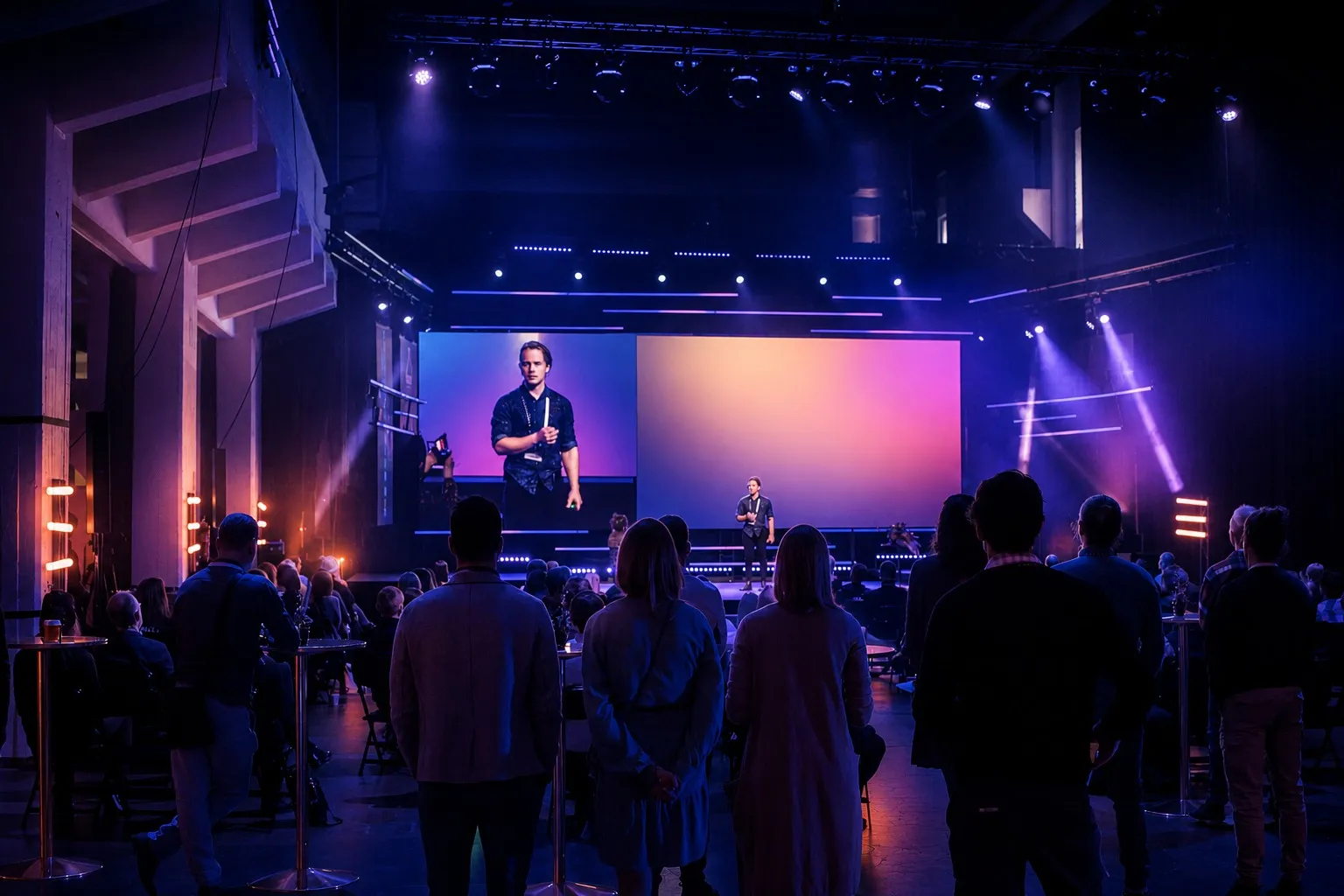
Biohacker Summit 2020 Helsinki took place on 16 and 17 October 2020, at a moment when most of the conference world had fallen silent. That context shaped everything. Where other editions chased performance, this one kept returning to a single word, and interrogating it: resilience. Not as a slogan for bouncing back, but as something with a physiology, a philosophy and a daily practice attached.
Resilience was defined before it was sold
Teemu Arina opened by refusing the quick version. Resilience is not bought, downloaded or completed in a month, he argued, describing it instead as iterative and cumulative, beginning at a cellular level and extending outward to the organism and beyond it. He returned in a second session to Stoicism, not as ornament but as a tool, setting Epictetus, born into slavery, against Marcus Aurelius, emperor of Rome, to make the point that circumstance does not determine character.
He also made a case for the room itself. Screens had preserved communication through the pandemic but not the strange electricity of physical presence. "Most amazing discoveries happen through chance," he said. "That is serendipity: accidental, fruitful discoveries."
Dr. Molly Maloof gave the concept scientific edges, describing resilience not merely as a return to normal but as a coping outcome, a developmental trajectory and a personality trait at once, with heart rate variability as a measurable sign of the body's adaptability. She avoided the era's most seductive error, the fantasy that stress could be abolished at all.
Siim Land made that explicit. Stress, in his framing, was first a biological event, an imbalance in homeostasis rather than a mood. He walked through Hans Selye's General Adaptation Syndrome, alarm, resistance, then the fork between recovery and exhaustion, before borrowing Nassim Nicholas Taleb's antifragility for the stranger claim: that some things improve under stress rather than merely surviving it.
Hanna Markuksela turned the same subject into something immediately usable, mapping the nervous system into hypoarousal, optimal arousal and hyperarousal, and insisting that under acute stress the frontal cortex, the part required for judgment, is the first thing to go offline.
A pandemic edition that argued the real pandemic was elsewhere
The authors of the Biohacker's Handbook gave the year's most pointed talk under a deliberately absurd title, Flu Kung-Fu, arguing that health is not defended in the moment of crisis but cultivated long before it. Bruce Lee appeared as a prototype biohacker, fusing techniques and refusing rigid schools. The body appeared as a holobiont rather than a machine: a collection of bones, microbiome and muscles, but also of history and experience. Covid-19, they argued, had exposed rather than created the deeper problem, since the real pandemic is ill health.
Veli-Jussi Jalkanen took the least glamorous route to the same conclusion, proposing two principles for everyday immunity, boost circulation and reduce inflammation, and pointing out that the lymphatic system, unlike arterial blood, has no pump and depends on movement to work at all.
Circulation, prevention and the case for measuring early
Nils Kämpe described microcirculation as a hidden network of one hundred thousand kilometres, and made the point that the heart creates pressure but cannot on its own push blood through the capillary beds. Normunds Daudiss brought the same logic to Europe's biggest killer, arguing that the danger of heart disease lies in its invisibility, and citing a Latvian screening study in which abnormalities were found in 10% of children over twelve.
Dr. Olli Sovijärvi presented a platform built on the same instinct, with a Resilience Index summarising roughly fifty laboratory markers across eleven physiological categories, on the grounds that the existing model is less a health care system than a sick care one. Chris Moore reduced the argument to an equation he called the most important in medicine, N equals one: a treatment that works for 99% of participants offers little comfort to the 1% it fails.
Dr. Sandra Porthan applied the same objection to sex. Men largely operate on a 24-hour hormonal rhythm, she said, while women live through an additional 28-day pattern affecting energy, recovery, mood, inflammation and performance, which makes a male template a poor default.
Food, forest and the microbes we stopped meeting
Ester Reitsma called organ meats the most nutrient-dense food on the planet, making the case through bioavailable fat-soluble vitamins and heme iron. Charlene Gisele Bourliout, a former Cambridge law graduate and London litigator, arrived at nose-to-tail eating by a longer route, arguing that what now looks like a carnivore trend was once simply how humans ate.
Piritta Fors made the year's most unexpected argument, framing the biodiversity crisis as a human health crisis through what she called the biodiversity hypothesis, and pointing to the ADELE project, in which participants dipped their hands in forest microbe powder three times a day for two weeks. Aivis Vegers asked the audience to reconsider the tree itself, noting that the visible trunk misleads us about where the organism actually lives, and offered a method as much as a thesis: "I have more questions when I go to sleep than I have answers when I wake up in the morning."
Jaakko Halmetoja built a functional elixir on stage from cacao paste, cacao powder, coconut milk and MCT oil, with reishi and chaga as the immune argument. Hardi Põder explained why chaga resists the farm: unlike reishi, shiitake and maitake it depends on a living birch and a clean northern forest.
The talks that questioned the premise
Stefan Chmelik delivered the edition's most useful heresy, telling a room steeped in self-optimization that meditation, the cleanest of modern biohacks, simply does not work for many people, and pointing beneath heart rate variability to the vagus nerve as the more fundamental target.
Olli Posti argued for self-authorship over protocol, borrowing the Greek distinction between chronos, clock time, and kairos, the right moment, and asking people to become the map maker rather than a better rule-follower. Ilkka Koppelomäki was blunter still: the most important biohacking tool was a notebook, not a wearable. "Do not just biohack yourself without thinking about where it is leading," he said.
Pekka Hyysalo supplied the argument no framework could. Describing the skiing accident that ended his career, and a rehabilitation he refused to romanticise, he called one summer in hospital the most boring he had ever lived, and located recovery not in perfection but in permission to enjoy an incomplete process.
What the edition was reaching for
Dr. Jose Cordeiro pushed hardest in the other direction, recasting ageing as an engineering problem and the primary risk factor behind the diseases that kill most people. Eduard de Wilde was more modest, treating ageing as a maintenance problem and starting his nine hacks with cold exposure, a familiar Nordic ritual repurposed as a biological tool.
Between them sat the argument the year forced on everyone present. Alex Azzi put it most plainly: information had become abundant to the point of saturation, and people had not gathered in Helsinki in the middle of a pandemic to acquire more of it. They had come to be in a room together.
Session recaps
Every session from Helsinki has its own written recap:
- Ayurveda As Ancient Biohacking: Preventive Health Through The Body’s Oldest Signals
- BENEFITS OF EATING ORGAN MEAT
- Benefits Of Tree Extracts: Lignophenols, Phenols And Biological Resilience
- Biohacking Women Put Female Physiology Back At The Centre
- Breath Of Fire: Resetting Systems And Awakening Inner Fire At Biohacker Summit 2020 Helsinki
- Breathwork To Start The Day: Building Resilience And Nasal Breathing With Leigh Ewin
- Petri Varis Made The Case For Recovery, Not Just Resilience
- CREATING THE LIFE YOU WANT
- FIGHTING BACK AFTER YOU LOSE YOUR HEALTH
- Flu Kung-Fu: The Art Of Preventive Health And Biohacking Immunity
- FUTURE COSMETICS FOR THE HUMAN MICROBIOME
- Gong Yoga Turned A Summit Hall Into A Chamber Of Presence
- Hacking the Breathspan for an Optimal Life
- Health Benefits Of Ecological Construction Materials And The Karg Cabin
- Health Benefits Of Kombucha: Understanding Microbes And Organic Acids
- Heart Health Innovations Promised A New Front In The Fight Against Europe’s Biggest Killer
- Functional Cacao And Medicinal Mushrooms: Synergistic Strategies For Boosting Immunity
- Improving Microcirculation And Vasomotion For Better Health, Immunity And Life
- Improving Immunity With Optimized Sitting
- Introduction To Flexbeam And Red Light Therapy With Sarah Turner
- Kangaroo Jumps Demo Showed How Rebound Fitness Turned Exercise Into Therapy And Play
- A Keto Crusade Began In Helsinki
- Why Meditation Failed So Many, And What Stefan Chmelik Said Could Replace It
- Nervous System Regulation And Resilience: Practical Tools For Stress And Optimal Performance
- Online Clinic For Preventive Health: How Health DX Tried To Turn Blood Tests Into A Road Map For Better Living
- Becoming A Resilient Being
- Opening Stoicism In A Time Of Uncertainty
- Personalising Health the Nordic Way
- The Power Of Community & Connection: Building The Global Biohacker Hub
- Resilience On A Polluted Planet And Guide To Healthy Living
- RETURN TO AN ANCESTRAL & PRIMAL DIET TO THRIVE IN MODERN TIMES
- Shrooming Is Booming: How Chaga Was Cast As Nature’s Immune Ally
- Quality Lifestyle Design And The Radical Case For Personal Freedom
- Stronger By Stress: How Siim Land Argued For Resilience In An Age Of Chaos
- THE DEATH OF DEATH: IS IMMORTALITY POSSIBLE?
- The Lifestyle Of Longevity: Nine Hacks To Optimize Healthspan And Vitality
- Tiera Live Put Esports Under The Biohacker’s Microscope
- VITAMINS FROM NATURE
- WHAT IS RESILIENCE AND CAN IT BE CULTIVATED?
Frequently asked questions
When was Biohacker Summit 2020 Helsinki held?
On 16 and 17 October 2020, at a moment when most of the conference world had fallen silent. That context shaped the programme: where other editions chased performance, this one kept returning to a single word and interrogating it, resilience.
What was the edition's central argument?
That resilience has a physiology, a philosophy and a daily practice attached, rather than being a slogan for bouncing back. Teemu Arina described it as iterative and cumulative, beginning at a cellular level and extending outward to the organism and beyond.
Who spoke at the 2020 Helsinki summit?
Speakers included Teemu Arina on resilience and Stoicism, Molly Maloof and Siim Land on stress, Hanna Markuksela on nervous system regulation, Olli Sovijärvi on preventive testing, Stefan Chmelik on why meditation fails many people, and Jose Cordeiro on ageing as engineering.
About the event
Biohacker Summit 2020 Helsinki took place in Helsinki on 16 and 17 October 2020. The series continues at HOLOLIFE Summit 2026 Amsterdam on 14 and 15 November 2026.
Comments
Loading comments…