Biohacker Summit 2020 Helsinki
Breathwork To Start The Day: Building Resilience And Nasal Breathing With Leigh Ewin
By Teemu Arina · · Updated
A Morning Ritual Rooted In The Body
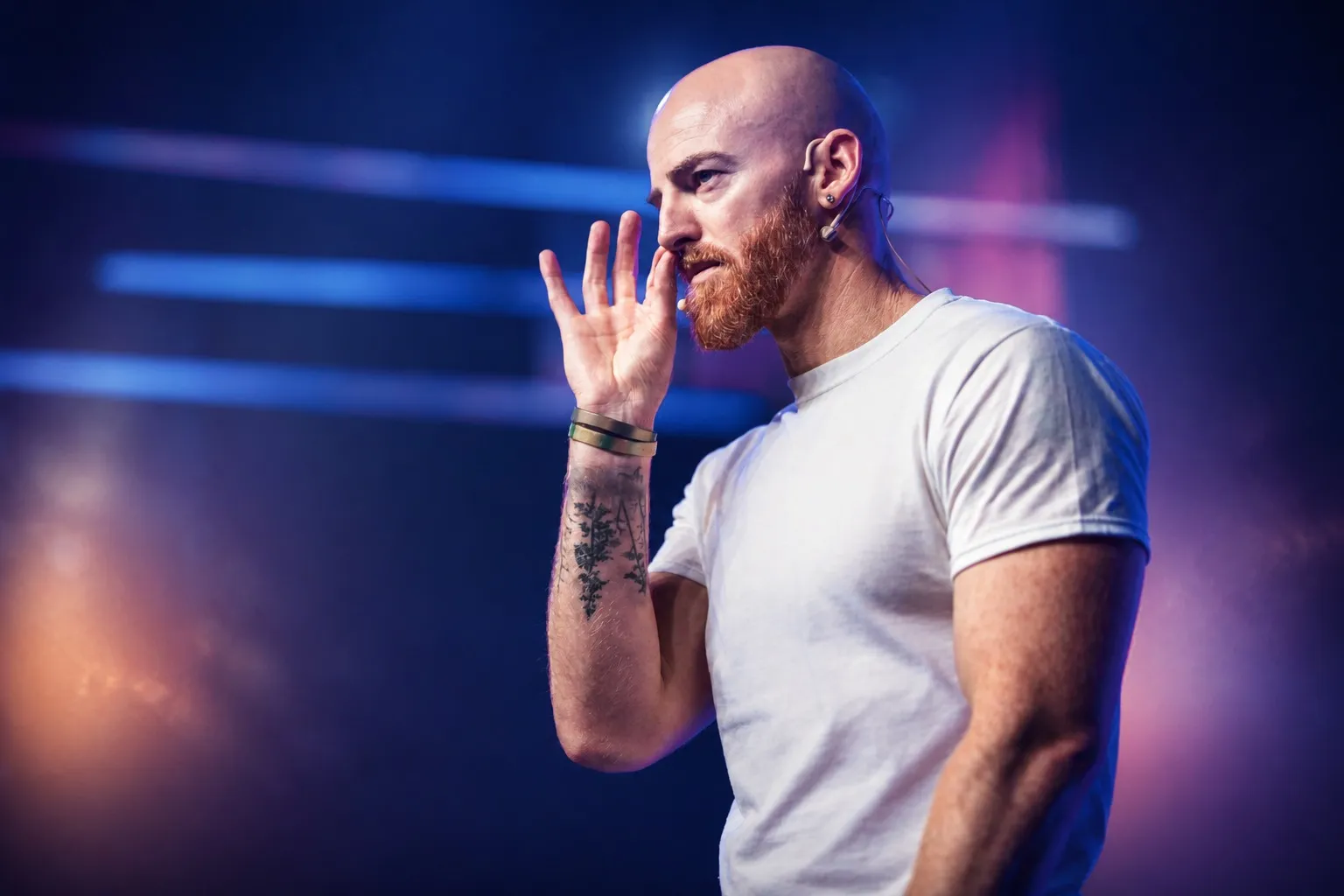
At Biohacker Summit 2020 Helsinki, held in Helsinki, Finland, on 16 October 2020, breathwork coach and Nasal.io founder Leigh Ewin turned a simple biological function into a compelling case for resilience, hygiene and calm.
“We have a little bit of time here at the start of the day to build a resilient breath,” Ewin told the audience, opening a session that was less lecture than guided awakening. His proposition was deceptively simple: the body already knew how to protect itself, if only people would return to breathing through the nose.
Why The Nose Matters
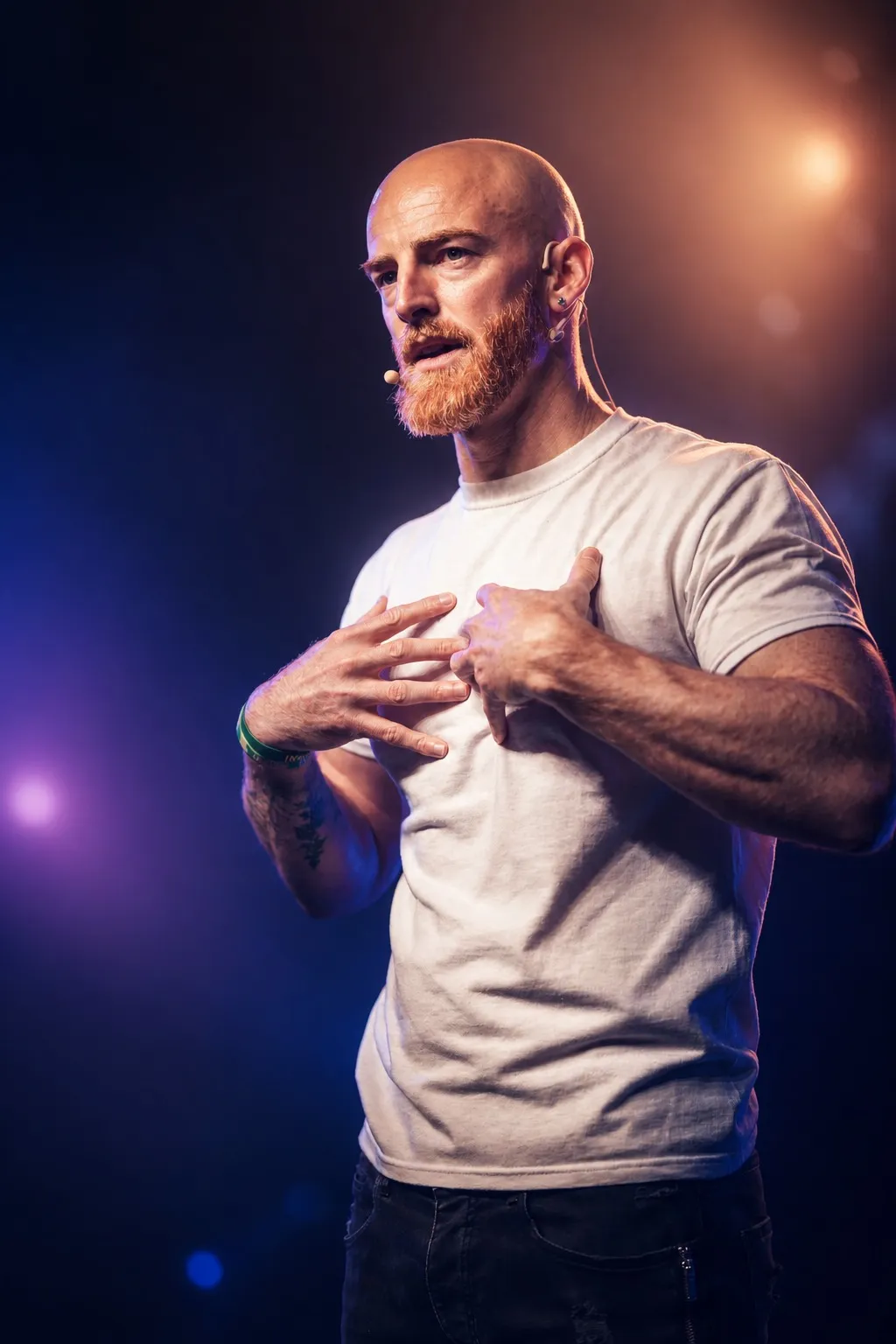
Ewin’s central argument rested on anatomy rather than mysticism. The nose, he said, was not a decorative passageway but a sophisticated frontline defence system. Tiny hairs at the nostrils filtered larger particles. Mucus trapped bacteria and pathogens. Cilia, the microscopic hairs deeper inside, helped move unwanted matter towards the throat, where it could be swallowed and destroyed by stomach acid.
“The body is naturally designed to breathe through the nose to protect and support your system,” he said.
In a year defined by airborne anxiety and heightened awareness of infection, that message carried unusual force. Ewin also pointed to a practical public health benefit: nasal breathing, by helping retain moisture and reduce expelled droplets, could cut viral droplet transmission by around 50%.
The Molecule Behind The Method
What gave the session its scientific backbone was Ewin’s emphasis on nitric oxide, a molecule generated in the paranasal sinuses during nasal breathing. He described it as a vasodilator, capable of opening the branches of the lungs and improving respiratory efficiency. Just as importantly, he said, nitric oxide brought antifungal and antibacterial benefits.
The claim was not framed as miracle cure rhetoric. Instead, Ewin presented nasal breathing as a built-in physiological advantage, one that modern habits had too often sidelined.
Opening The Airways
The session moved quickly from explanation to practice. Ewin invited participants to observe their breathing and acknowledge that for many, nasal breathing did not come easily. Differences in nostril size, he noted, were common, and a deviated septum could make the experience feel uneven or restricted.
His first intervention was alternate nostril breathing, a classic technique used to open the nasal passages. With one nostril closed, participants inhaled through the other, switched sides, and continued in a steady V-shaped rhythm. The point was both mechanical and mindful: clear the passages, then become aware of the breath moving through them.
It was a gentle reminder that resilience, in Ewin’s framing, began not with force but with attention.
Calm Through The 4-7-8 Pattern
From there, Ewin guided the audience into the 4-7-8 method: inhaling through the nose for four seconds, pausing for seven, then exhaling for eight. The exercise slowed the room. Shoulders dropped. The atmosphere softened.
“I want to invite you right now to just start to observe your breath,” he said, before urging listeners to “close your eyes, relax, and connect with the breath.”
He described the technique as especially useful before sleep, a way to calm the nervous system and shift the body out of strain. In a summit devoted to optimisation, this was a notable counterpoint: performance, Ewin suggested, depended not only on activation but also on the ability to downshift.
Humming As Physiology, Not Performance
The most striking moment came when the room was asked to hum. Ewin explained that humming and chanting could increase nitric oxide production, using vibration to amplify what nasal breathing already initiated.
“Feel the vibrations building inside your chest and inside your face to get the energy going,” he said.
What might have sounded eccentric on paper became, in context, practical and embodied. The humming stayed nasal, the mouth closed, the breath controlled. For Ewin, this was not a spiritual flourish but an extension of respiratory science, a way of improving airflow, dilating blood vessels and energising the body from within.
Movement, Energy And A Different Kind Of Wake-Up Call
As the session built, Ewin introduced movement: standing, shaking the limbs, loosening the shoulders, bending the knees while maintaining rhythmic nasal breathing. It was an invitation to animate the whole system, not merely the lungs.
The result was part warm-up, part reset. Breath was no longer abstract wellness language. It was sensation, vibration, motion and chemistry working together.
Resilience In The Most Ordinary Act
What made Ewin’s talk memorable at Biohacker Summit 2020 Helsinki was not novelty but reframing. He took an ordinary act and restored its significance. Breathing, in his account, was not passive background function but daily training. Through the nose, it became filtration, regulation, protection and calm.
His closing argument was almost austere in its simplicity: breathe through your nose. It was healthy, hygienic and grounding. In a period when resilience was often sold through complexity, gadgets and extremes, Leigh Ewin offered something quieter and more elemental.
The body, he suggested, had been equipped for this all along.
Frequently asked questions
Why does Leigh Ewin focus on the nose?
Because it is a frontline defence system rather than a decorative passageway. Tiny hairs at the nostrils filter larger particles, mucus traps bacteria and pathogens, and cilia deeper inside move unwanted matter toward the throat.
What role does nitric oxide play?
It gave the session its scientific backbone. Generated in the paranasal sinuses during nasal breathing, Ewin described it as a vasodilator capable of opening the branches of the lungs and improving respiratory efficiency, with antifungal and antibacterial properties too.
What if nasal breathing feels difficult?
Ewin acknowledged it does for many people. Differences in nostril size are common, he noted, and a deviated septum can make the experience feel uneven, which is why the session moved quickly from explanation into practical work on opening the airways.
About the event
This recap is part of the Biohacker Summit 2020 Helsinki series, recorded in Helsinki on 16 and 17 October 2020. Read the summary of the whole event or join the next edition, HOLOLIFE Summit 2026 Amsterdam, on 14 and 15 November 2026.
In this story
Comments
Loading comments…