Biohacker Summit 2020 Helsinki
CREATING THE LIFE YOU WANT
By Teemu Arina · · Updated
Simple Planning, Small Jumps, And The Radical Case For Practising Happiness
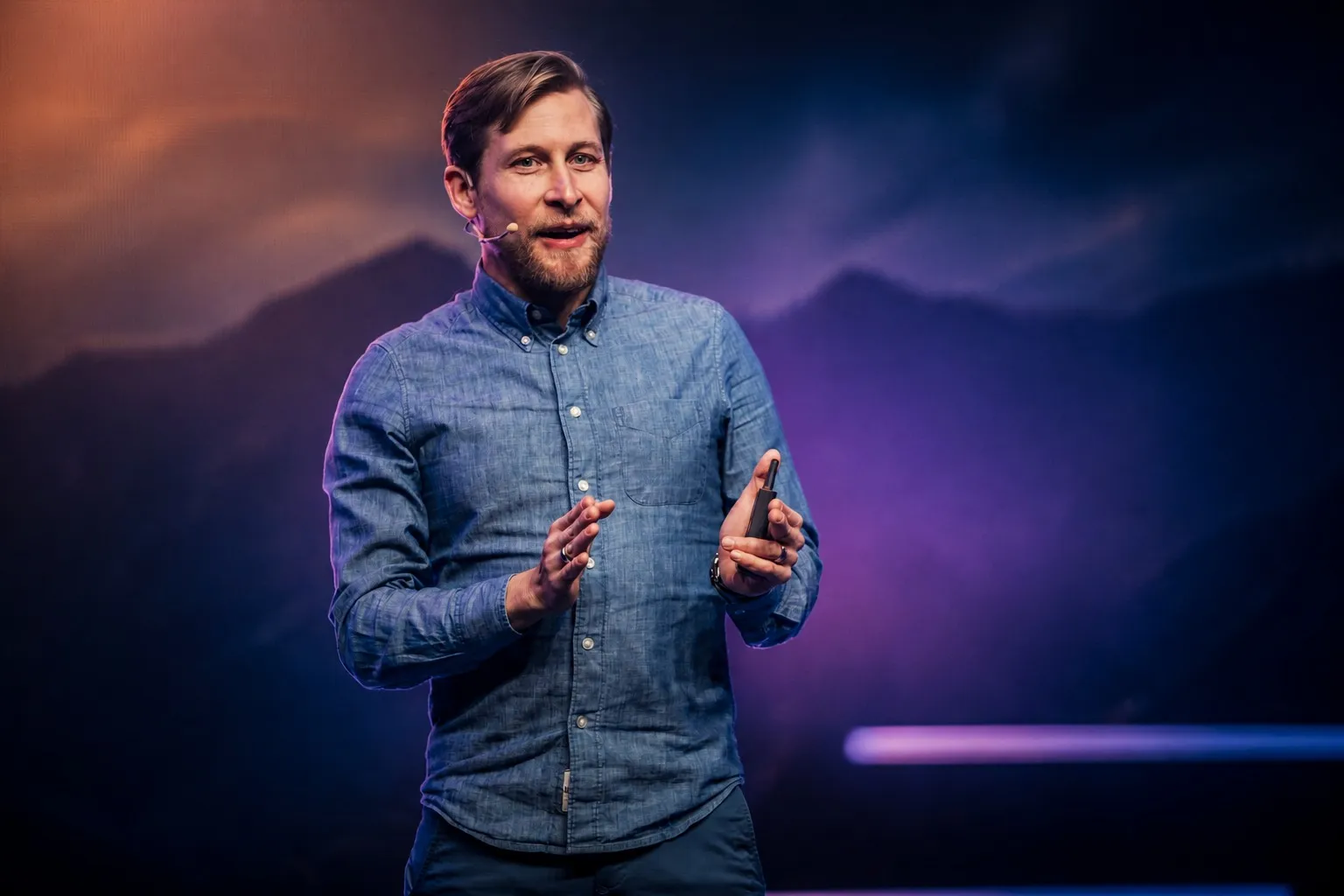
At the Biohacker Summit 2020 Helsinki, held in Helsinki, Finland, on 16 October 2020, self-leadership coach Ilkka Koppelomäki offered a quietly subversive message to a room attuned to performance, metrics and optimisation. The most important biohacking tool in life, he argued, was not a ring, a wearable, a cold plunge or a data dashboard. It was a notebook.
Koppelomäki, speaking in his presentation Creating The Life You Want, stripped away the glamour that often surrounds self-improvement culture and replaced it with something more demanding: attention, honesty and repetition. His thesis was simple enough to fit on a page. If people wanted a better life, they had to stop drifting through tasks and start designing their days with intention.
The Notebook Over The Device
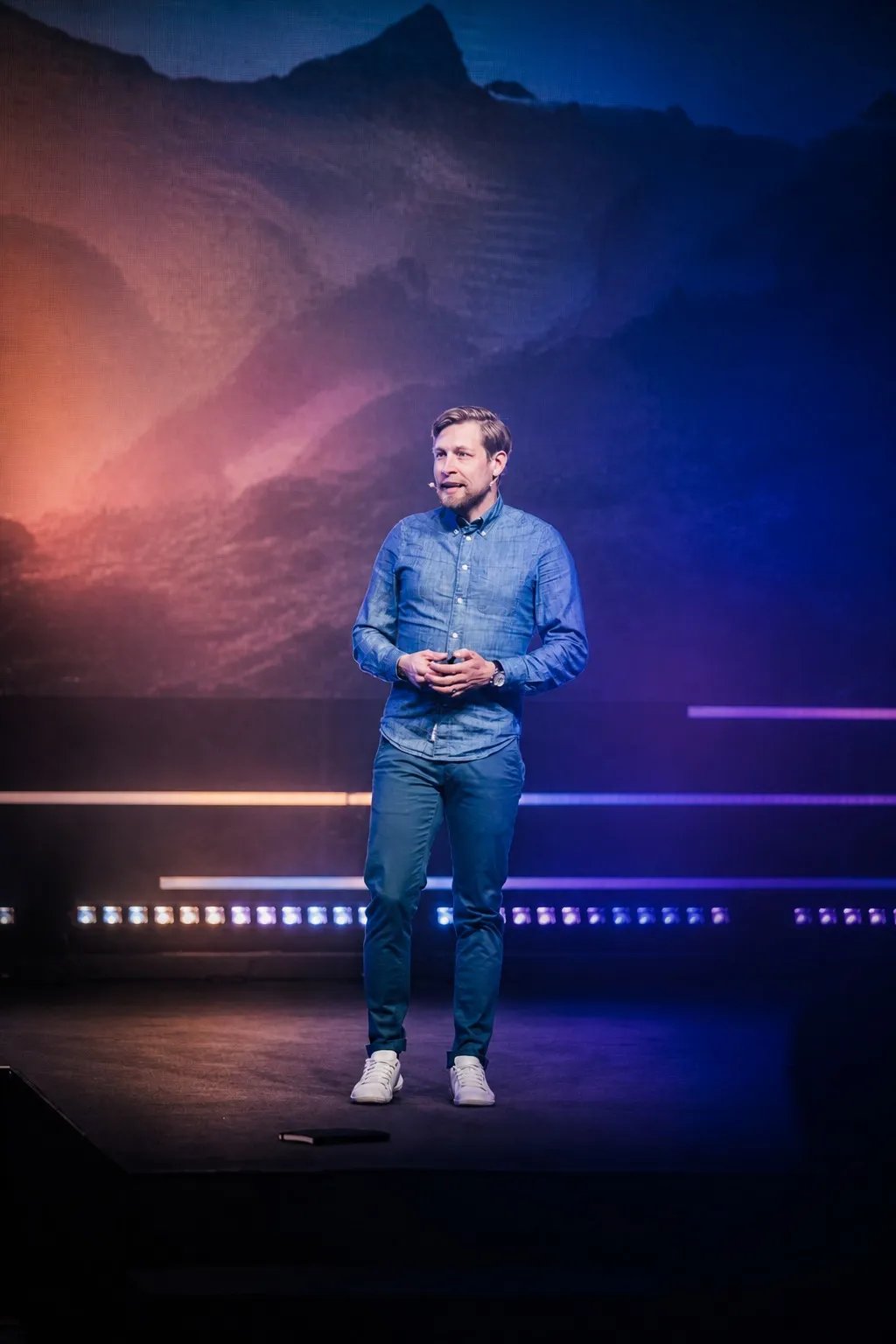
There was a deliberate provocation in the way Koppelomäki framed his talk. In a summit devoted to biohacking, he challenged the reflex to search for salvation in objects.
“Whatever you do, it is important to think about why you start doing those things,” he said. “Do not just biohack yourself without thinking about where it is leading.”
The point was not that devices were useless. He referenced tools such as the Oura ring and acknowledged their appeal. But he insisted that technology could not substitute for fundamental choices. Better sleep, for instance, might begin less with tracking and more with going to bed earlier. Fulfilment might come less from measurement than from clarity.
That distinction ran through the whole session. A gadget could reveal a pattern. It could not decide a life.
Three Jumps To Break A Mental Block
Koppelomäki’s method was strikingly physical in its simplicity. Before delving into plans and goals, he got people moving. Stand up. Smile. Jump.
It was more than crowd-warming. It was, in his account, a practical intervention.
“Small things matter. If you are blocked in your mind and cannot create something new, it only takes three jumps to get into a creative state.”
In another context, the line might have sounded glib. Here, it served as a compact philosophy. Transformation did not always require a grand breakthrough. Sometimes it began with a tiny interruption to the body, enough to shake loose a stuck mind. The body, in this framework, was not separate from thought but a gateway into it.
The Tyranny Of The To-Do List
Much of the talk was an attack on busyness masquerading as purpose. Koppelomäki described a familiar modern ritual: people waking to long lists, filling their hours with chores, emails and obligations, and ending the day exhausted yet somehow unchanged.
“Check your to-do list and think: are those tasks leading your life where you want to go?” he said. “It is easy to fill your day with all kinds of tasks and get nothing done.”
It was one of the sharpest observations of the session. The problem, as he framed it, was not effort but misalignment. Laundry got done. Dishes got done. Messages were answered. But relationships languished, health weakened, and larger ambitions remained abstract. The daily machinery of life kept turning while the deeper architecture went neglected.
His remedy was not productivity for its own sake. It was deliberate planning.
The Architecture Of A Designed Life
Koppelomäki laid out a hierarchical system of reflection: a yearly Master Plan, then monthly, weekly and daily plans. The point of the structure was not control for control’s sake. It was to ensure that immediate actions remained tethered to longer aims.
The yearly plan was the broadest act of authorship, a chance to ask what kind of life one wanted to create. The monthly review acted as a reality check, allowing for adaptation when circumstances changed, as they had for so many in 2020. Weekly and daily planning then translated vision into behaviour.
The most important moment in a life, he suggested, was not a promotion, a purchase or a breakthrough, but the moment a person stopped long enough to think seriously about direction.
That pause, in his telling, was the hinge between living by accident and living by design.
Four Areas That Could Not Be Ignored
To stop planning from becoming abstract, Koppelomäki reduced life to four practical domains: work and finances, relationships, mental well-being, and physical health. They were simple categories, but they carried moral force. Ignore one for too long, and life narrowed. Attend to all four, and balance became possible.
His advice was to review them regularly and honestly. Not aspirationally. Not theatrically. Honestly.
That monthly “reality check” was one of the most useful concepts in the presentation. It recognised that self-deception often dressed itself up as optimism. A person could have a beautiful vision and still be running on fatigue, neglecting loved ones, avoiding difficult truths or living out of sync with their values. Reflection, if it was to matter, had to include an unsparing inventory of where things stood.
Visualising A Life Before Living It
Koppelomäki also urged the audience to practise brief daily visualisation, moving mentally through home, relationships, physical vitality, emotional life and work. It was not mystical so much as directional. To picture a life clearly, he implied, was to train attention toward it.
“Your mind is so powerful. If you take just two minutes every day to visualize where you want to be and what you want to create, it will guide your life in a huge way.”
This was not presented as wishful thinking. It was a discipline of orientation. In a distracted age, to hold a coherent image of one’s desired future might itself be an act of resistance.
The Triangle Of Change
For all the talk of reflection, Koppelomäki did not let the audience hide in contemplation. Change, he said, required only three things: a goal, action and the right people.
“There are only three things you need to make every change happen in your life: a goal, action, and the right people around you.”
The elegance of the formula was part of its power. Know what you want. Do the smallest next thing. Identify who can help. It cut through the sentimental fog that often surrounds personal growth and replaced it with sequence.
The question was not whether one had dreams. It was whether those dreams had been translated into behaviour and supported by community.
Happiness As A Practice, Not A Prize
The most arresting part of the presentation came at the end, when Koppelomäki turned from planning to happiness. His claim was almost confrontational in its simplicity: happiness was not the reward at the end of achievement. It was a skill that could be practised now.
Rather than waiting for success, recognition or arrival, he asked the audience to spend a few seconds intentionally feeling happy in the present. The exercise was brief, even awkward. That was partly the point. People often imagine happiness as something earned, deferred until external conditions validate it. Koppelomäki rejected that premise.
Sustainable fulfilment, he suggested, begins when people stop outsourcing emotional permission to the future.
In a culture obsessed with optimisation, this was perhaps the boldest argument of all. If happiness could be practised independently of achievement, then ambition itself changed character. Goals remained worthwhile, but they no longer carried the impossible burden of finally making a person feel whole.
A Modest, Demanding Philosophy
There was nothing flashy about Creating The Life You Want. That was its strength. Ilkka Koppelomäki did not promise transformation through novelty. He offered a more difficult discipline: small daily interventions, repeated with sincerity. Jump. Write. Review. Visualise. Tell the truth. Ask for help. Practise happiness now.
At Biohacker Summit 2020 Helsinki, amid the language of enhancement, his talk landed as a reminder that the most consequential technologies may still be the oldest human ones: attention, intention, movement, reflection and the courage to decide what a life is for.
Frequently asked questions
What does Ilkka Koppelomäki call the most important tool?
Not a ring, a wearable, a cold plunge or a data dashboard, but a notebook. Whatever you do, he said, it is important to think about why you start doing those things: do not just biohack yourself without thinking about where it is leading.
What are the three jumps?
A physical intervention before any planning began. Stand up, smile, jump. It was more than crowd-warming in his account: a practical way of breaking a mental block before asking people to think about the shape of their lives.
What is the planning structure?
A hierarchy of reflection: a yearly Master Plan, then monthly, weekly and daily plans. The point was not control but tethering immediate action to longer aims, with the monthly review acting as a reality check when circumstances changed.
About the event
This recap is part of the Biohacker Summit 2020 Helsinki series, recorded in Helsinki on 16 and 17 October 2020. Read the summary of the whole event or join the next edition, HOLOLIFE Summit 2026 Amsterdam, on 14 and 15 November 2026.
In this story
Comments
Loading comments…