Biohacker Summit 2020 Helsinki
Improving Microcirculation And Vasomotion For Better Health, Immunity And Life
By Teemu Arina · · Updated
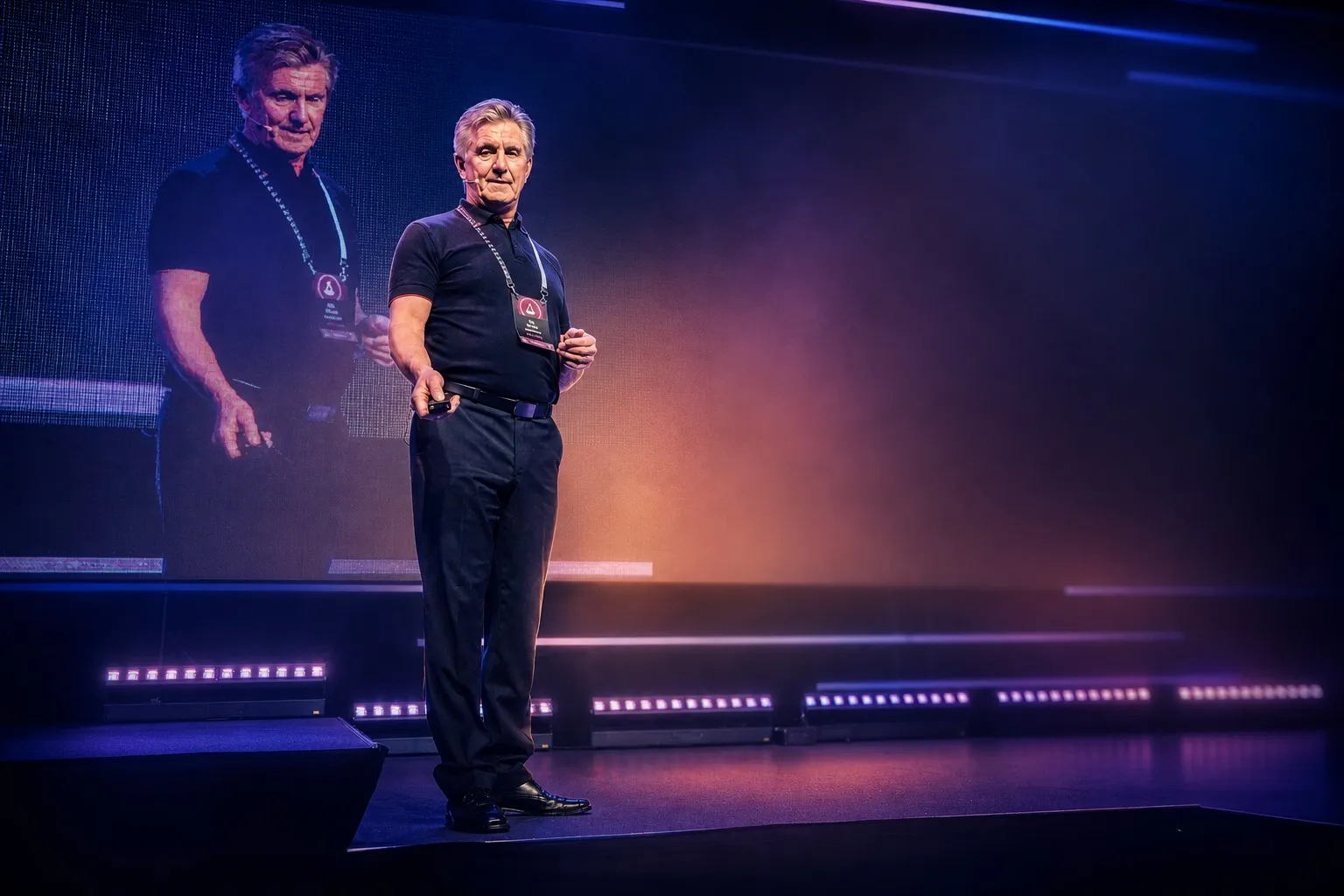
At Biohacker Summit 2020 Helsinki, Nils Kämpe Made The Case That The Smallest Vessels In The Body May Hold The Biggest Clues To Human Health
The talk began, fittingly, with a stretch.
On Friday, 16 October 2020, at Biohacker Summit 2020 Helsinki, Nils Kämpe stepped before the audience and asked a simple question: how did they feel today? Then came a brief instruction to move, loosen the shoulders, wake the body, get the blood going. It was a modest opening, almost playful. Yet it served as a prelude to a larger argument, one that ran through his presentation, Improving Circulation for Better Health, Immunity & Life: that health crises often begin in places too small to see, too quiet to feel, and too easily ignored until they become impossible to escape.
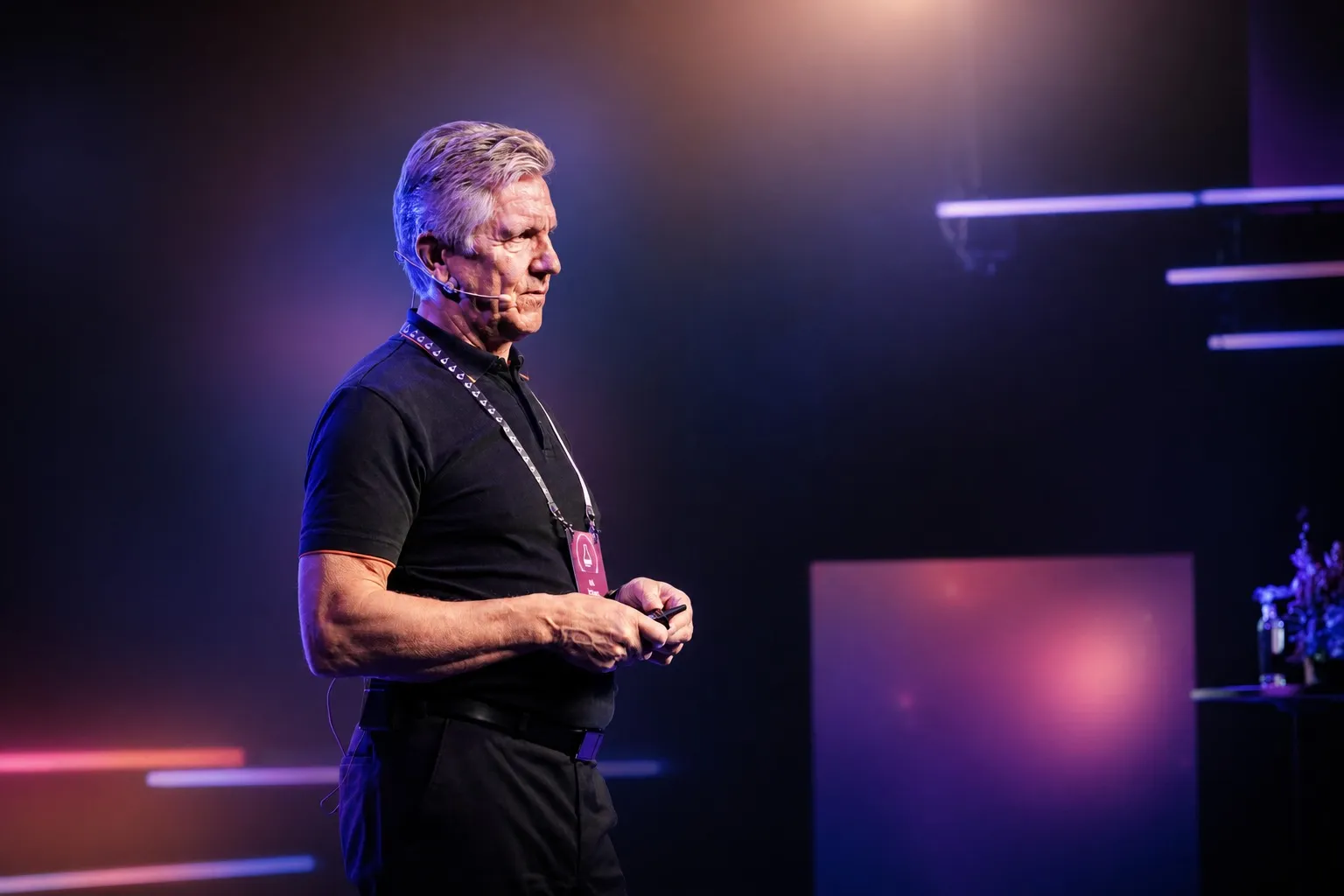
Kämpe, an entrepreneur in the high-tech health sector and a longtime promoter of BEMER’s physical vascular therapy, spoke with the practiced certainty of a man who had spent years translating a niche physiological concept into a public health proposition. His central thesis was direct. “Big problems are like fire,” his biography declared. “They start small.” In the body, he argued, they often start in microcirculation.
The Hidden Network Beneath Everyday Health
Microcirculation does not command the cultural status of the heart, nor the fear associated with blocked arteries, nor the visual drama of veins rising under skin. It is, by definition, elusive. But Kämpe asked the audience to consider its scale.
“Microcirculation is a huge network of one hundred thousand kilometers,” he said. “It is everywhere in your body, and that is why it is so important that it works well.”
That figure formed the backbone of his case. The smallest vessels, he said, make up roughly 75% of the human circulatory network. This is the vast, near-invisible system that carries oxygen and nutrients to cells and ferries waste products away. If larger blood vessels are highways, microcirculation is the intricate mesh of back roads, forest trails and alleyways where the real deliveries happen.
Kämpe described it as the “last mile” to the cells, then sharpened the metaphor further. “Microcirculation is the last mile to your cells where nutrition and oxygen go in and waste products come out. That is how fundamental it is for our health.”
This was not merely a lesson in anatomy. It was an effort to redirect attention away from spectacular disease and toward the subtler dysfunctions that precede it. In his telling, chronic problems often emerged first in these minute vessels, before progressing into the larger, more legible pathologies that medicine and patients alike are more accustomed to treating.
Why Blood Needs More Than The Heart
One of the most striking parts of Kämpe’s presentation was his insistence that the heart, despite its symbolic and physiological centrality, does not do the whole job.
The heart, he said, begins the process by creating pressure. But it does not have the power on its own to push blood all the way through the capillary beds. For that, the body relies on another mechanism: vasomotion, the rhythmic contraction and relaxation of tiny vessels that helps regulate blood flow in the microvascular network.
“Vasomotion is an independent system that automatically regulates your microcirculation,” Kämpe told the audience. “When this regulation is not working, it creates a huge problem for us, particularly in the long term.”
This was where his argument shifted from scale to function. The body contains only about five litres of blood, he noted, nowhere near enough to fill the entire 100,000-kilometre system at once. Blood flow must therefore be dynamically distributed, redirected and regulated according to need. Vasomotion is part of that regulation, an internal choreography that determines where blood goes, when, and how efficiently.
In healthy individuals, Kämpe said, this rhythmic vessel activity occurs about three times per minute. In those with chronic illness, it can slow dramatically, to as little as once every 10 minutes. The implication was stark: when this fine-tuned vascular rhythm falters, cellular exchange suffers, tissue function declines, and the groundwork for larger disease is laid.
Stress, Ageing And Sedentary Life
If microcirculation is so fundamental, why does it fail?
Kämpe’s answer was less mysterious than modern life itself. We sit too much. We move too little. We sleep poorly. We eat badly. We live under chronic stress. And, unavoidably, we age.
These are the banal afflictions of the 21st century, so commonplace they can seem almost harmless. Yet Kämpe framed them as cumulative assaults on the body’s smallest vessels. The damage may be gradual, but the consequences, he suggested, are profound: impaired oxygen delivery, poorer nutrient exchange, slower waste removal, diminished recovery and weaker resilience over time.
It was a message well suited to Biohacker Summit 2020 Helsinki, an event that has long occupied the space where wellness culture, self-quantification and technological intervention overlap. Kämpe’s talk fit neatly within that ethos, offering not only a diagnosis of modern deterioration but also a tool-driven response.
The Promise Of Pulsed Electromagnetic Therapy
The technological centrepiece of Kämpe’s presentation was BEMER’s patented pulsed electromagnetic field therapy, which he described as an electroceutical intervention designed to stimulate impaired vasomotion.
In practical terms, he argued, the therapy helped restore the rhythmic contractions of the microvessels, thereby improving capillary flow and enhancing the movement of blood plasma through tissue. To illustrate the point, he referred to visual evidence showing sluggish circulation before treatment and improved flow within minutes afterwards.
This was not presented as a vague wellness enhancement, but as a measurable physiological shift. Kämpe said the technology helped improve an adhesion-related protein, referred to in the talk as ICAM-1 or ECAM-1, which assists white blood cells in slowing down and rolling along vessel walls. That process matters, he suggested, because immune cells need to move more deliberately through the bloodstream if they are to detect tissue trouble and respond effectively.
“By using technology to improve your microcirculation, you help the white blood cells work the way they should, allowing them to find problems in the tissue and fix them,” he said.
It was a striking formulation in the autumn of 2020, when immunity had become not just a biological concept but a global preoccupation. Kämpe did not overplay the point, but he clearly understood the context in which he was speaking. In a pandemic era, a claim about improving immune cell behaviour through better circulation carried obvious resonance.
Science, Evidence And The Language Of Recovery
Kämpe anchored his argument in studies he said demonstrated meaningful gains from the therapy, particularly in diabetic patients. In one example, he described a significant increase in oxygen levels when the technology was combined with standard oxygen treatment, compared with oxygen therapy alone. In another, he cited improvements in white blood cell response and protein expression associated with vascular regulation.
Whether heard as compelling evidence or ambitious interpretation, the scientific framing was central to the presentation’s authority. Kämpe repeatedly emphasised that the product was medically certified, patented and supported by published research.
Yet perhaps the most immediate appeal of the talk lay not in chronic disease management but in performance and recovery. This, too, was tailored to the audience in Helsinki, many of whom were likely less interested in illness than in optimisation.
“The faster you can get your system cleaned out, the better your recovery,” Kämpe said. “By improving the circulation, you improve your metabolism and your rehabilitation.”
For athletes, he argued, better microcirculation meant faster clearance of metabolic waste after training, improved recovery capacity and more effective healing after injury. Trauma, by its nature, compromises local circulation. To improve blood flow in damaged tissue, he suggested, was to accelerate the body’s own repair process.
A Small-System Theory Of Health
What gave Kämpe’s talk its force was not simply the salesmanship of a device, though that commercial undercurrent was unmistakable. It was the larger vision underneath: a small-system theory of health, in which the most consequential processes are often the least visible.
In this framework, wellbeing is not merely a matter of major organs functioning or obvious disease being absent. It depends on whether blood reaches the places where life is actually exchanged, cell by cell, moment by moment. It depends on whether the body’s hidden rhythms continue to regulate that traffic with enough precision to nourish, repair and defend.
For all the futurist language of biohacking and electroceuticals, there was something almost old-fashioned in the moral of Kämpe’s appearance at Biohacker Summit 2020 Helsinki. The body, he implied, breaks down quietly before it breaks down loudly. The challenge is to listen early enough.
And so the talk that began with a stretch ended with an invitation: not just to test a device behind the stage, but to reconsider circulation as something more than pulse and pressure. In Nils Kämpe’s telling, the smallest vessels in the human body were not peripheral at all. They were where the story started.
Frequently asked questions
How large is the microcirculatory network?
Microcirculation is a huge network of one hundred thousand kilometres, Nils Kämpe told the audience, and it is everywhere in the body, which is what makes it both fundamental and easy to overlook next to the heart and the major arteries.
Why is the heart not enough?
Because it only begins the process. The heart creates pressure, Kämpe said, but does not have the power on its own to push blood all the way through the capillary beds, which is where the vessels' own rhythmic activity takes over.
Why does microcirculation fail?
His answer was less mysterious than modern life itself: we sit too much and move too little, with stress and ageing compounding the effect. The talk opened, fittingly, by asking the audience to stand and loosen their shoulders.
About the event
This recap is part of the Biohacker Summit 2020 Helsinki series, recorded in Helsinki on 16 and 17 October 2020. Read the summary of the whole event or join the next edition, HOLOLIFE Summit 2026 Amsterdam, on 14 and 15 November 2026.
In this story

Comments
Loading comments…