Biohacker Summit 2020 Helsinki
Ayurveda As Ancient Biohacking: Preventive Health Through The Body’s Oldest Signals
By Teemu Arina · · Updated
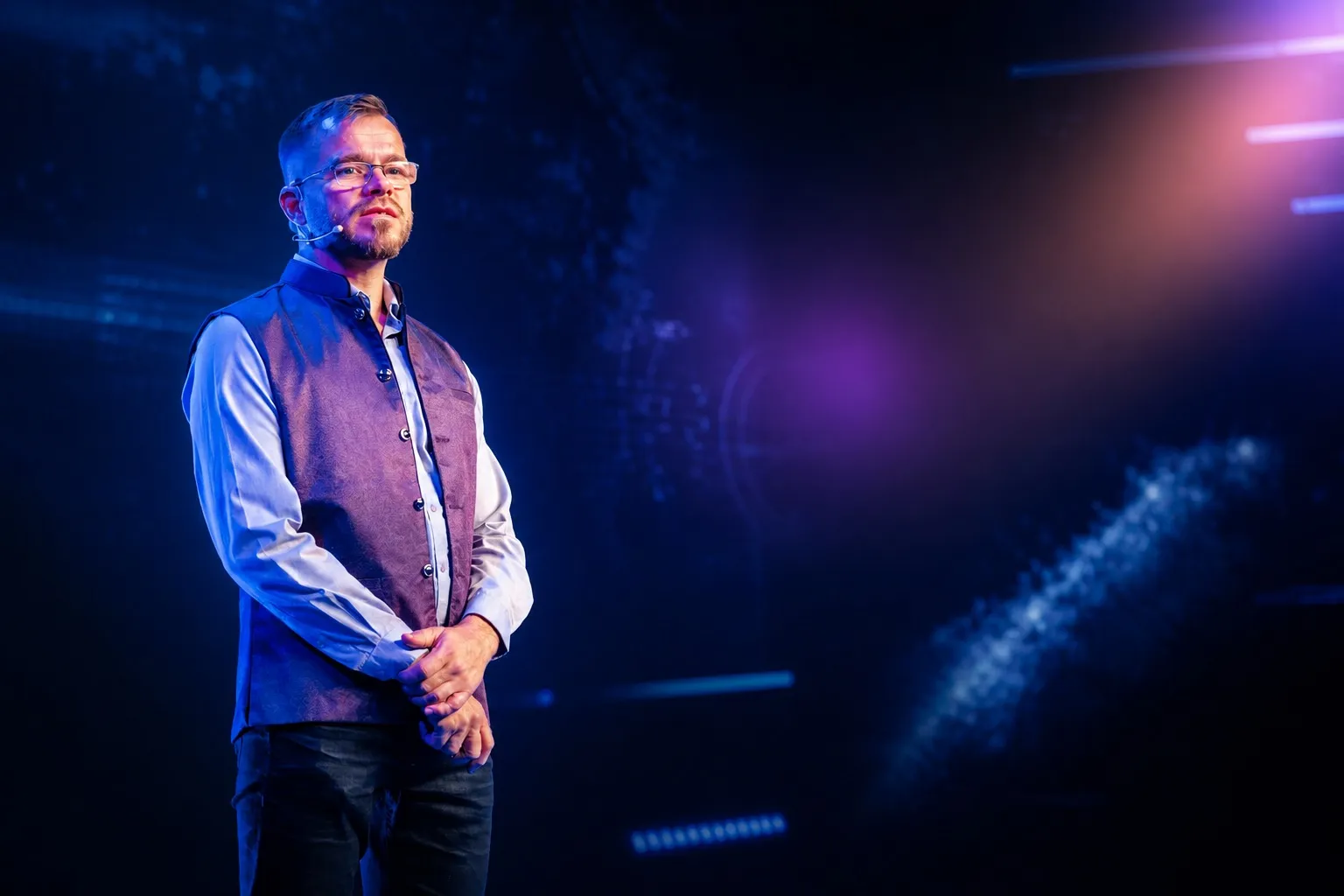
At Biohacker Summit 2020 Helsinki, Ossi Viljakainen Argued That The Future Of Preventive Medicine May Lie In One Of Its Oldest Traditions
In a conference culture often crowded with wearables, blood panels and performance metrics, Ossi Viljakainen brought something older, quieter and in some ways more radical to the stage at Biohacker Summit 2020 Helsinki. Speaking on Friday, 16 October 2020, in Helsinki, Finland, the clinical Ayurvedic practitioner and headteacher of the Finnish Ayurveda Institute made the case that Ayurveda was not an alternative to biohacking so much as its ancestral form.
His presentation, Ayurveda: Ancient Biohacking Techniques For Preventive Health, framed the ancient Indian science of life as a personalized system of observation, diagnosis and daily intervention, one built not on machines but on attention. In Viljakainen’s telling, Ayurveda emerged from centuries of disciplined inquiry into how food, herbs and habits alter the body’s balance, resilience and longevity.

A Science Of Life Built On Balance
Viljakainen described Ayurveda in its simplest terms as a medicine of equilibrium. Health, he said, depends on maintaining the body in its own natural state, and disease begins when that balance slips. The crucial point was individuality. No universal protocol, no single superfood, no one-size-fits-all cure.
“Maintaining an individual’s inner balance requires a personalized approach,” he said. “Everyone has a different body and different habits, so we all need different types of food to stay healthy.”
That insistence on personalization gave the talk its contemporary charge. In an age enthralled by customized health plans, Ayurveda appeared not outdated but eerily familiar: a vast preventive framework that had been refining individualized care for millennia.
The Ancient Seers Who Studied The Body From Within
To explain the system’s origins, Viljakainen turned to the rishis, the ancient seers and yogis of India who developed Ayurvedic knowledge through meditation, fasting and close observation of bodily response. They studied sensation with remarkable seriousness, tracing how substances acted in the body through taste, texture, temperature and effect.
“Ancient seers used deep meditation and the observation of bodily functions to analyze how various substances create sensations, taking note of their unique effects on the human body,” he said.
This was biohacking before the term existed: self-experimentation without sensors, pattern recognition without software, conclusions drawn from repeated contact between body and world.
The Six Tastes As A Biological Map
One of the most striking parts of the presentation was Ayurveda’s taxonomy of taste. Viljakainen outlined six primary tastes: sweet, salty, sour, pungent, bitter and astringent. In Ayurvedic thinking, these are not merely culinary distinctions. They are signals, clues to a substance’s physiological action.
“The six main tastes are key indicators for understanding the effects of food in our bodies,” he said. “Sweet indicates energy, salty represents minerals, and bitter generally indicates the presence of alkaloids.”
The elegance of the system lies in its compression. A taste is not just a taste. It is evidence. It hints at what a food contains, how it may behave after digestion and what kind of effect it may produce in tissues and organs.
Viljakainen extended this logic further, noting that Ayurveda also classifies substances by qualities such as heavy or light, oily or rough, as well as by energetic properties, principally heating or cooling. Even digestion itself does not end the analysis. A substance’s post-digestive effect may differ significantly from its immediate impact on the tongue or stomach.
Reading The Tongue, Nails And Pulse
Where modern medicine often privileges imaging and laboratory data, Viljakainen’s Ayurveda returned to the visible and the tactile. The body, he suggested, was constantly speaking.
A coated tongue could reveal digestive residue. Teeth marks on the sides of the tongue could suggest malabsorption. The crescent-shaped lunula at the base of the nails, when absent or reduced, might indicate weakened digestion and metabolic imbalance.
But it was the pulse that occupied the center of Viljakainen’s practice and the emotional heart of the talk.
“The pulse carries a signal of the entire body, every bodily system, and the inner organs,” he said. “It is a powerful tool for quickly gaining knowledge of the body and its current state.”
Viljakainen, a founding member of the Finnish Ayurveda Association and one of Finland’s most experienced Ayurvedic practitioners, spoke from nearly two decades of work in natural preventive medicine. In his clinical view, pulse reading offered rapid insight into the body’s condition, even while he acknowledged its subjectivity. It was not presented as a replacement for every modern test, but as a disciplined art of perceiving patterns that sophisticated traditions had long treated as legible.
Prevention Begins At The Table
If diagnosis in Ayurveda is subtle, prevention is often disarmingly practical. Viljakainen returned repeatedly to diet as the first medicine, stressing that food should match the individual’s constitution, habits, climate and workload.
He highlighted familiar ingredients not as wellness trends but as functional supports. Ghee, soaked almonds, dates and honey were cited as substances that could strengthen immunity and resilience when properly used. The point was not dietary fashion but suitability. The same food could nourish one person and burden another.
This approach made Ayurveda sound less like a static doctrine than a living calibration system, constantly adjusting intake to circumstance.
Rasayana And The Pursuit Of Longevity
The presentation culminated in Rasayana, the category of Ayurvedic herbal formulations associated with immunity, stamina, resilience and healthy aging. Here Viljakainen gestured toward a pharmacopoeia of great scale, with more than 2,000 herbs and countless compound preparations developed over centuries.
“Ayurveda has deep knowledge of herbal formulations called Rasayana, which promote immunity, resilience, and stamina with the goal of achieving optimal longevity,” he said.
These formulations, he explained, include multi-herbal pastes and tonics designed not only to ward off illness but also to support specific bodily systems and reduce the burden of age-related decline. Among the examples he mentioned was Chavan Prash, one of the best-known Ayurvedic preparations.
An Old System In A New Health Culture
There was an irony, perhaps even a quiet rebuke, in the way Viljakainen’s talk landed at Biohacker Summit 2020 Helsinki. In a space devoted to upgrading the body, Ayurveda suggested that mastery might begin with listening rather than optimizing. Its technologies were taste, pulse, observation and memory. Its ambition was not endless enhancement but durable balance.
What Viljakainen offered was not nostalgia for ancient medicine. It was a reminder that preventive health has always depended on interpretation: of symptoms, of habits, of the body’s small warnings before disease hardens into crisis. In that sense, Ayurveda did not stand outside the biohacking movement. It exposed one of its deepest roots.
And in Helsinki, on an October day shaped by modern performance culture, the oldest lesson may have been the most resonant: longevity begins in learning how to read yourself.
Frequently asked questions
How does Ossi Viljakainen define Ayurveda?
As a medicine of equilibrium. Health depends on maintaining the body in its own natural state, he said, and disease begins when that balance slips. The crucial point is individuality: no universal protocol, no single superfood, no one-size-fits-all cure.
Who developed the system?
The rishis, the ancient seers and yogis of India, who built Ayurvedic knowledge through meditation, fasting and close observation of bodily response, tracing how substances acted in the body through taste, texture, temperature and effect.
What are the six tastes?
Ayurveda's taxonomy of taste, which Viljakainen presented as a biological map rather than a culinary one: sweet, salty and sour among them, each carrying information about how a substance will act once it is inside the body.
About the event
This recap is part of the Biohacker Summit 2020 Helsinki series, recorded in Helsinki on 16 and 17 October 2020. Read the summary of the whole event or join the next edition, HOLOLIFE Summit 2026 Amsterdam, on 14 and 15 November 2026.
In this story
Comments
Loading comments…