Biohacker Summit 2020 Helsinki
Health Benefits Of Kombucha: Understanding Microbes And Organic Acids
By Teemu Arina · · Updated
A Simple Drink With A Surprisingly Complex Inner Life
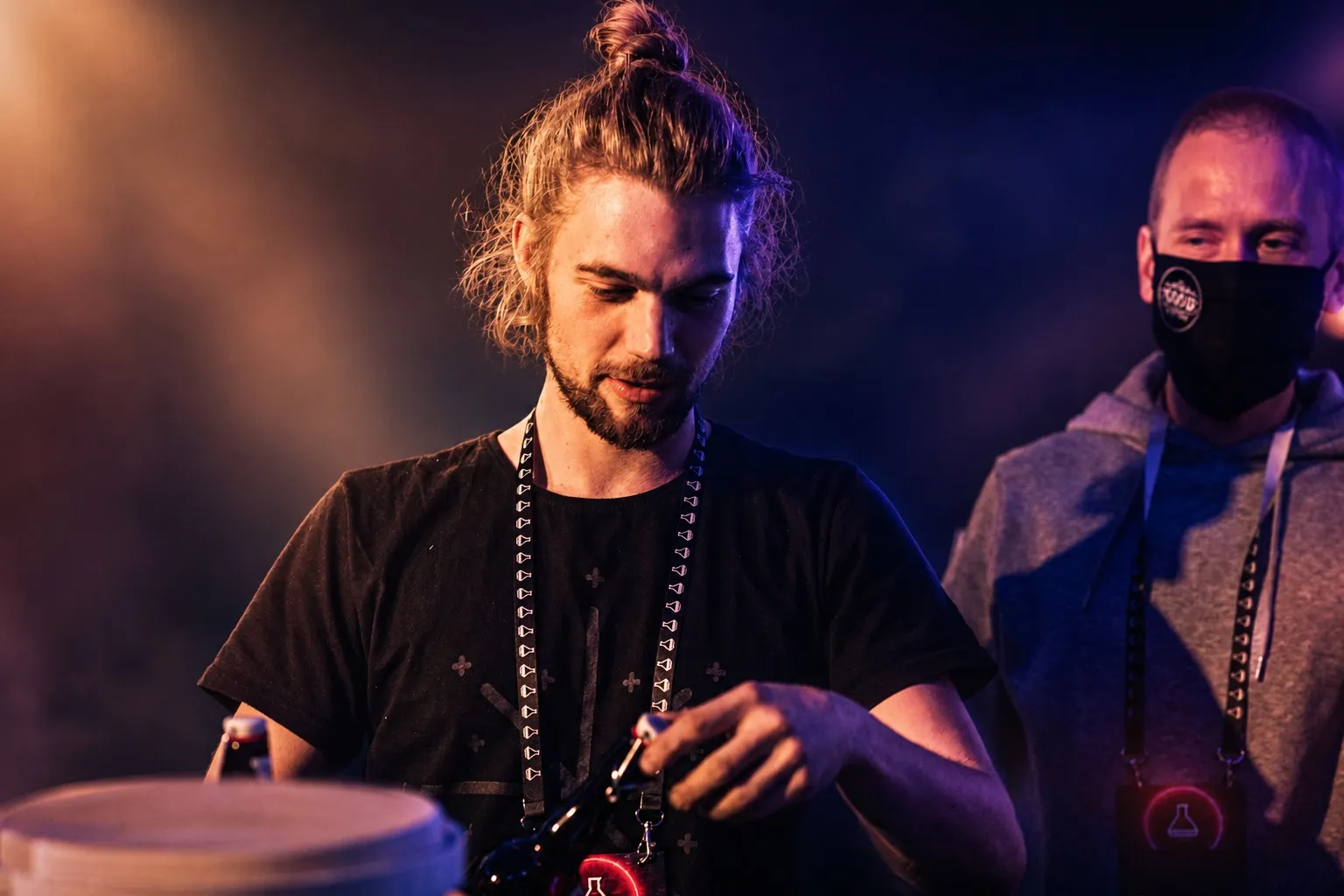
At Biohacker Summit 2020 Helsinki, held in Helsinki, Finland, on 16 October 2020, Krister Häll took the stage to argue that kombucha’s power lay not in hype, branding, or supermarket fashion, but in fermentation itself.
Häll, co-founder of The Good Guys Kombucha and Head of Europe Committee at Kombucha Brewers International, described kombucha as deceptively simple: water, tea, sugar, and a SCOBY, the symbiotic culture of bacteria and yeast that transformed those basic ingredients into something far more biologically rich.

“Even though it is very simple, we still have a lot of good, healthy beneficial chemistry going on in kombucha,” Häll said.
His presentation, titled Health Benefits Of Kombucha, was less a wellness sales pitch than a reminder that some of the most meaningful changes in nutrition happen at the microscopic level.
The Three Pillars Behind Kombucha’s Appeal
Häll challenged a common assumption that kombucha’s value should be reduced to lactic acid bacteria alone. Instead, he laid out three pillars that, in his view, defined the drink’s health potential: quality tea, organic acids, and living microbes.
The first pillar was the tea itself. Kombucha, he said, inherited much of its promise from the leaves that began the process.
“If you use organic, loose leaf, high quality tea in your kombucha, you are maximizing the health benefits you are getting out of it,” Häll said.
The second pillar came through fermentation, which generated organic acids such as acetic acid and gluconic acid. These compounds, often associated with vinegar-like fermentations, were presented as central to kombucha’s chemistry and character.
The third pillar was the most dynamic: the living microbial ecosystem that developed in the brew over time.
A Microbial Symphony In An Overprocessed Age
Häll framed kombucha as a counterpoint to the modern food system, where convenience often came at the expense of microbial life. Shelves were full of foods engineered for durability, stability, and long transport, yet stripped of the living complexity that once accompanied traditional preparation.
“Modern people buy a lot of processed food that has a long shelf life, but at the same time is quite poor on living microbes,” he said.
That loss mattered, Häll argued, because the human gut did not function through a single miracle strain. It relied on relationships, sequencing, and diversity. In that sense, kombucha mirrored the body more closely than many simplified probiotic products did.
“Kombucha is not just a flavor you buy in a supermarket; it is a real fermented beverage with a wide range of bacteria and yeast working together,” he said.
His language was strikingly musical. The gut, like kombucha, operated as a “symphony” of microbes, with different organisms appearing, acting, receding, and supporting one another in succession.
What DNA Analysis Revealed
The most intriguing part of Häll’s talk came when he turned from tradition to molecular analysis. Recent DNA work on kombucha, he said, had revealed a clear pattern of microbial succession throughout fermentation. A fresh batch contained one profile of bacteria and yeast, but as time passed, that composition shifted significantly.
That shift was not incidental. It suggested that kombucha was not one static product but a living process whose benefits might be shaped by timing, temperature, and method.
“By understanding what is going on at the microbe level, the better we can adjust and optimize kombucha for the things that we need as modern human beings,” Häll said.
Among the more arresting findings was the appearance of anaerobic bacteria during certain stages of fermentation. Häll pointed in particular to Haldemanilla species, which recent gut microbiome research had associated with the production of short-chain fatty acids, compounds increasingly studied for their possible anti-tumoral effects.
The implication was carefully framed but unmistakable: authentic fermentation might cultivate compounds and organisms of genuine biological interest, far beyond the shallow marketing language often attached to “healthy drinks”.
Real Fermentation Versus Flavored Imitation
Running through the presentation was a critique of modern kombucha’s commercial dilution. What appeared in many bottles, Häll suggested, was often the aesthetic of fermentation without its substance: sparkling, flavored, shelf-stable, and microbiologically tamed.
For him, the distinction mattered. A true kombucha was not merely tea-flavored fizz with a fashionable label. It was the result of active microbial labor, producing organic acids, altering chemical composition, and carrying a living complexity that processed imitations could not replicate.
That complexity, he argued, was precisely what made kombucha relevant in a dietary culture dominated by sterilised convenience.
The Larger Question Of What We Choose To Consume
What Häll offered at Biohacker Summit 2020 Helsinki was ultimately a broader reflection on modern nourishment. Kombucha stood as one example of a larger truth: health may depend not only on what nutrients a product lists on a label, but on whether it still contains life, transformation, and microbial diversity.
His message was clear that day in Helsinki. The future of functional food might not lie in ever more engineered formulas, but in better understanding ancient processes that science was only beginning to map in full.
In kombucha, Häll saw not a trend, but a fermentation ecology with lessons for the modern gut and the modern table alike.
Frequently asked questions
What are the three pillars of kombucha?
Quality tea, organic acids and living microbes. Krister Häll challenged the common assumption that the drink's value reduces to lactic acid bacteria alone, starting instead with the tea itself and what the leaves bring to the finished product.
Why does he frame it against modern food?
Because shelves are full of foods engineered for durability, stability and long transport, yet stripped of the living complexity that once accompanied traditional preparation. Kombucha, in his telling, is a counterpoint to that trade-off.
What did DNA analysis reveal?
A clear pattern of microbial succession through fermentation. Recent work showed the community changing in stages rather than staying fixed, which means a fresh batch and a mature one are not the same drink microbiologically.
About the event
This recap is part of the Biohacker Summit 2020 Helsinki series, recorded in Helsinki on 16 and 17 October 2020. Read the summary of the whole event or join the next edition, HOLOLIFE Summit 2026 Amsterdam, on 14 and 15 November 2026.
In this story
Comments
Loading comments…