Biohacker Summit 2020 Helsinki
Resilience On A Polluted Planet And Guide To Healthy Living
By Teemu Arina · · Updated
A Forest-Born Case For Survival In A Toxic Age
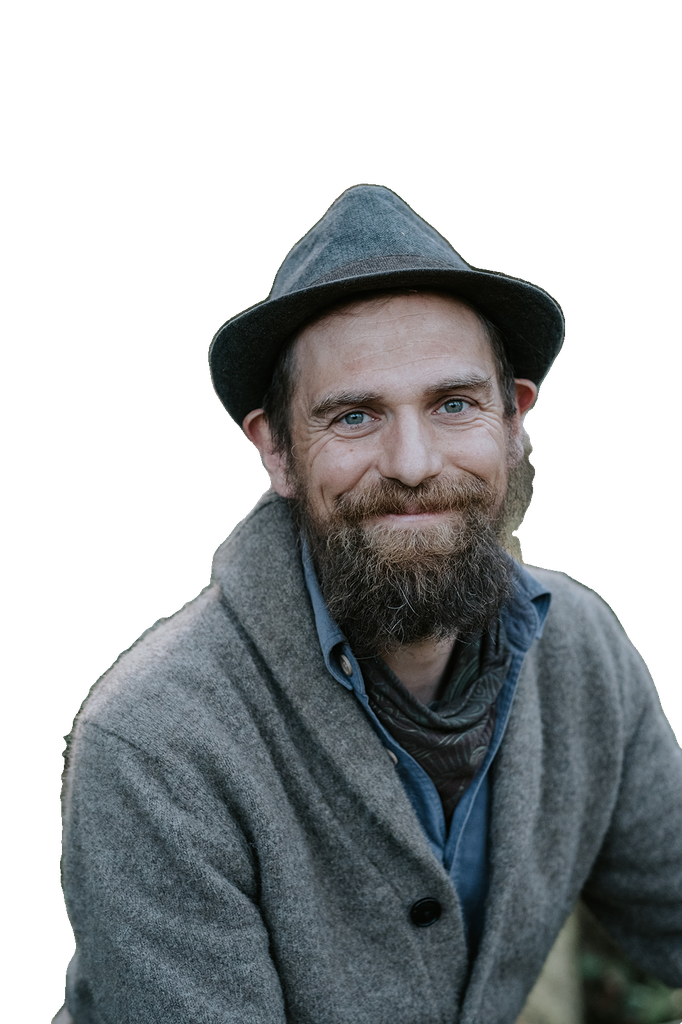
At the Biohacker Summit 2020 Helsinki, held in Helsinki, Finland, on 16 October 2020, the clinical herbalist Yarrow Willard delivered a talk that felt less like a presentation than a dispatch from another moral atmosphere. Speaking virtually from the forest on Vancouver Island, the man known to many as the Herbal Jedi offered a vision of resilience that was at once earthy, mystical, practical and sharply contemporary.
His session, titled Resilience on a Polluted Planet – Guide to Healthy Living, did not begin with statistics, charts or product claims. It began with an invitation to slow down. No slides, no spectacle. Just a speaker in the rain-rich woods, asking a digitally assembled audience to return to their senses.
In an age of ambient panic, chemical exposure and fraying social bonds, Willard’s argument was strikingly simple: human resilience depended on reconnection. To the body, to the earth, to community, and to the uncomfortable truths people preferred to avoid.
Grounding The Body In A Disembodied Era
Willard’s first move was to strip the concept of health back to something almost embarrassingly basic: sensory awareness. He guided listeners through a five-part grounding meditation, built around sight, touch, hearing, smell and taste. The exercise was framed not as spiritual ornament but as a tool for interrupting anxiety and restoring presence.
The point was larger than mindfulness as lifestyle accessory. For Willard, modern distress was inseparable from dislocation. People lived in abstraction, in anticipation, in memory, in screens. Resilience, by contrast, demanded embodiment.
“Reconnect to the earth,” he said. “It will enhance everything about your physiology, your mind, and your spirit. It is the simplest biohack you can do.”
There was something quietly radical in the insistence. At a summit devoted to performance, optimisation and the future, Willard suggested that the deepest intervention might be the oldest one of all: step outside, notice what is alive, and remember that you are not separate from it.
The Polluted Planet As The Real Emergency
From there, Willard widened the frame. The crisis of the moment, he argued, could not be reduced to politics, economics or headlines. Beneath them all sat a more fundamental predicament: the rising toxicity of the planetary environment.
This was not merely an environmentalist lament. It was a physiological and civilisational diagnosis. Bodies, in his telling, were absorbing the burden of polluted air, chemical overload, microbial imbalance and chronic stress, while minds were collapsing under parallel forms of social and emotional contamination.
What made his approach distinctive was the refusal to split these domains apart. Physical toxins, mental stagnation and cultural dysfunction were described as interlocking expressions of blocked flow.
“All stagnation starts with blockage,” Willard said. “If we want to be resilient, we need to move that out. It doesn't mean work harder or try harder; it means slowing down and acknowledging where those blockages are.”
Detox As Maintenance, Not Fantasy
The practical core of Willard’s presentation focused on elimination. He identified four major channels through which the body cleared waste: the kidneys, the colon, the lungs and the skin. Supporting them, he said, was not an occasional indulgence but a necessary discipline for life in a contaminated world.
He described a biannual cleansing practice, undertaken in spring and autumn, in which diet was pared back for two weeks to largely alkaline or neutral foods while “building” supplements such as B vitamins, essential fatty acids, minerals and medicinal mushrooms were paused. In their place came hydration, herbal teas and substances chosen to assist elimination.
Among the herbs and supports he mentioned were kidney tonics, gentle laxatives and liver aids. He also recommended binders used by many in natural health circles, including chlorella, shilajit, zeolite clay and bentonite clay, all presented as tools for drawing out toxins lodged deep in the body.
To sceptics, the language of detox can often sound vague, commercial or quasi-religious. Yet Willard framed it in plain biological terms: if the body’s exits were congested, inflammation and stagnation followed. If those pathways were supported, vitality had room to return.
Skin, Lungs And The Forgotten Front Lines Of Defense
Two of the most compelling sections of the talk concerned the skin and lungs, those organs that meet the outside world most directly and suffer accordingly.
Willard spoke of contrast hydrotherapy, especially hot-cold showers and sauna-to-cold cycles, as a way of stimulating circulation, strengthening the skin and improving elimination. He warned, too, against excessive use of hand sanitisers and harsh soaps, arguing that the skin’s microbiome formed a crucial defensive barrier.
Borrowing from Chinese medicine, he referred to this protective field as “wei qi”, the body’s outer shield. Strip it too aggressively, and the cost may not be visible immediately, but it would arrive.
The lungs, meanwhile, were described as both vulnerable and trainable. Cardio that induced sweat, conscious breathwork that interrupted shallow stress breathing, and respiratory herbs such as elecampane, astragalus, usnea and mullein were all recommended as ways of improving resilience in polluted air and viral times.
His account of elecampane, also known as elfwort, was characteristic: part folk knowledge, part herbal protocol, part mythic storytelling. Yet beneath the poetry sat a serious proposition. In a world of airborne insult, respiratory capacity mattered.
The Shadow Work Beneath The Wellness Talk
What elevated the session beyond a manual of herbal self-care was Willard’s insistence that cleansing could not stop at the body. Mental and emotional blockages, he argued, were just as corrosive as physical ones.
He spoke directly about isolation, anxiety and what he called “mind viruses”, the inherited or socially reinforced patterns that narrowed human freedom. Resilience, in this sense, was not toughness. It was honesty. It was the ability to confront what no longer served, rather than armour oneself against all discomfort.
“Real resiliency comes from slowing down and claiming our personal responsibility in each moment,” he said. “Look at the shadow of what is no longer serving you, eat that shadow, and change your experience of the world.”
This was the language of inner work, certainly, but it was tied to a broader social ethic. People were not meant to live in atomised isolation, he said. Connection to self had to be followed by connection to environment and then to community. The healthy person was not a sealed unit, but part of a living web.
Life, Death And The Possibility Of Renewal
Again and again, Willard returned to a central metaphor: resilience required a good relationship with death. Not necessarily literal death, though ecological collapse hovered at the edge of the talk, but the death of habits, identities, systems and stories that had reached their limit.
“Out of death comes creation,” he said. “We must get good at letting what no longer serves us die, clearing what is toxic so we can be an open vessel with the capacity to thrive in even the most adverse situations.”
He illustrated the point in the discussion that followed with Biohacker Summit founder Teemu Arina, holding up a lobster mushroom from the forest. The fungus, Willard explained, emerged through parasitic transformation of another mushroom, a reminder that what appeared as infection or breakdown could also produce unexpected value and new life.
It was an apt image for a talk delivered in the anxious autumn of 2020. Amid pandemic fear, social fragmentation and ecological unease, Willard offered neither denial nor technocratic salvation. He offered something older, stranger and perhaps more difficult: participate consciously in the cycles of clearing and renewal.
A Counterintuitive Hope
There was, finally, an undercurrent of hope in the presentation, though not the easy kind. Willard did not deny collapse. He spoke openly of toxicity, stagnation and the failures of modern systems. But he also spoke of human beings as creative, adaptive and bound up with a larger intelligence than the culture often acknowledged.
“Humanity is a brilliant, beautiful collective consciousness evolving in a way that could hold a deep level of transcendence,” he said, “provided we come to a deeper level of authenticity and creative energy to fuel this world.”
That conditional mattered. The future, in his telling, would not be secured by cleverness alone. It would depend on whether people could become honest enough to clear what was poisoning them, humble enough to relearn their relationship with nature, and brave enough to live as participants in a shared ecology rather than masters of a deadened world.
At Biohacker Summit 2020 Helsinki, Yarrow Willard’s message cut against the grain of high-performance culture even as it spoke directly to it. Resilience, he suggested, was not the art of outrunning collapse. It was the work of becoming porous to what heals, ruthless with what stagnates, and rooted enough to remain alive on a polluted planet.
Frequently asked questions
How did Yarrow Willard open?
By stripping health back to sensory awareness. Speaking virtually from the forest on Vancouver Island, he guided listeners through a five-part grounding meditation built around sight, touch, hearing, smell and taste, framed as a tool for interrupting anxiety rather than spiritual ornament.
What does he consider the real emergency?
The rising toxicity of the planetary environment, which he argued sits beneath the political and economic crises that dominate headlines. It was offered as a physiological and civilisational diagnosis rather than an environmentalist lament.
What are the four elimination channels?
The kidneys, the colon, the lungs and the skin. Willard identified these as the routes through which the body clears waste, and argued that supporting them is ongoing maintenance rather than an occasional indulgence in a detox programme.
About the event
This recap is part of the Biohacker Summit 2020 Helsinki series, recorded in Helsinki on 16 and 17 October 2020. Read the summary of the whole event or join the next edition, HOLOLIFE Summit 2026 Amsterdam, on 14 and 15 November 2026.
In this story
Comments
Loading comments…