Biohacker Summit 2020 Helsinki
Quality Lifestyle Design And The Radical Case For Personal Freedom
By Teemu Arina · · Updated
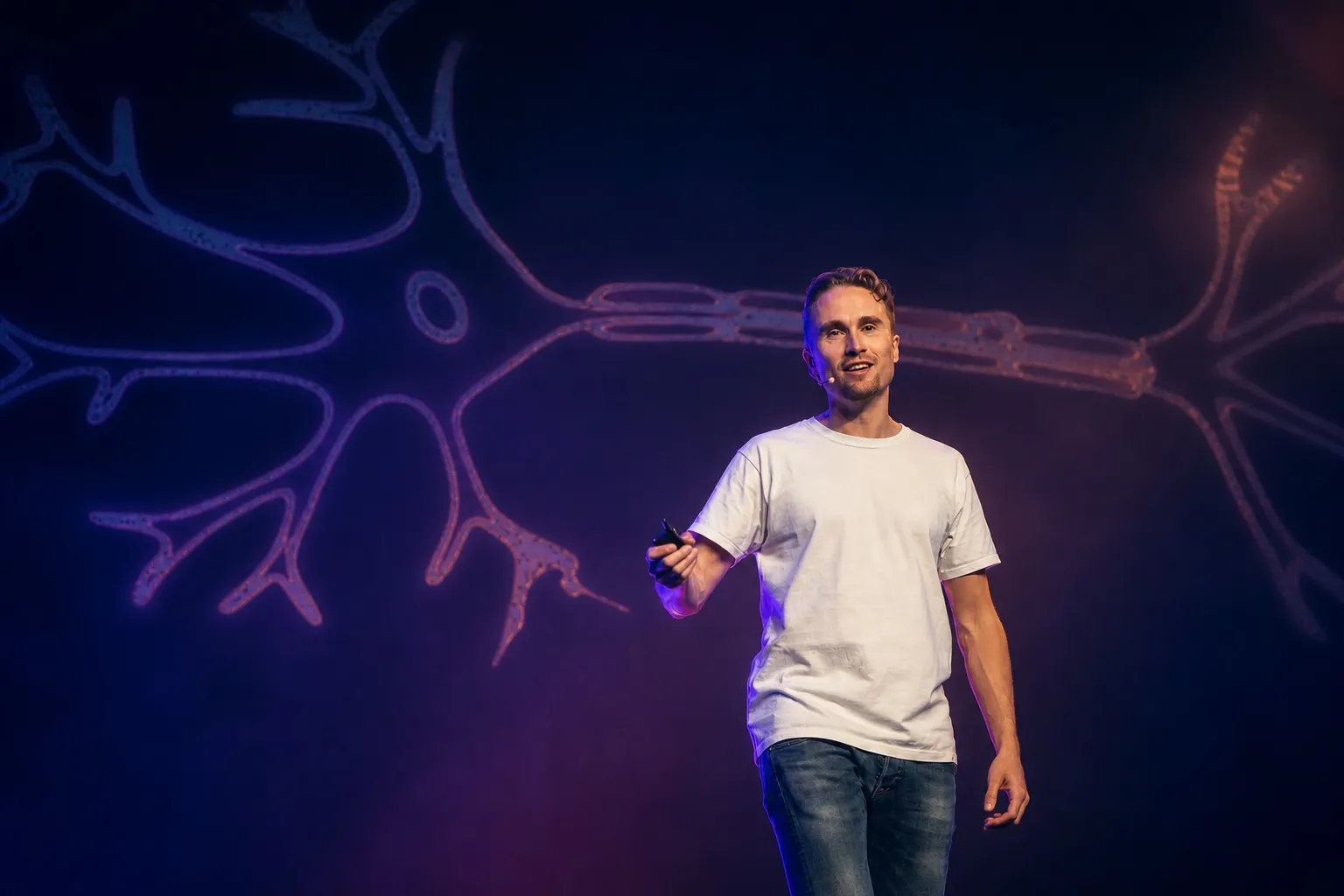
At Biohacker Summit 2020 Helsinki, Olli Posti Reframed Health Not As Rule-Following But As An Act Of Self-Authorship
In a year when the world felt narrowed by fear, restriction and uncertainty, Olli Posti arrived at Biohacker Summit 2020 Helsinki with a provocation that cut against the grain of conventional wellness culture. He did not offer a protocol, a numbered list, or a polished doctrine. He offered something more unruly and, perhaps, more liberating: the idea that staying young begins not with obedience, but with quality lifestyle design.
Speaking on Friday, 16 October 2020 in Helsinki, Finland, Posti used his presentation, Stay Young With Quality Lifestyle Design, to argue that health recovery, vitality and resilience are often born at a higher level than tactics. The real work, he suggested, lies in meta-thinking: thinking about how we think, and designing a life around subjective standards, trust, flow, freedom and anti-fragility rather than around rigid external rules.

Posti, a Finnish health influencer, author of Supermarket Survival, product designer at Puhdistamo and Taimi, and Communications Manager at Ketokamu, has spent years urging people to “learn to recognize what is good for you”. At Biohacker Summit 2020 Helsinki, that philosophy became the spine of a talk that was as much manifesto as method.
The Case For Becoming The CEO Of Your Own Life
Posti made clear from the outset that he was not interested in handing down instructions. If the audience had come looking for a simple prescription, this was not that kind of lecture. His proposition was more demanding.
He called for a meta-level approach to life, one in which individuals become, in his words, “the map maker” and “the CEO” of their own existence. For Posti, the challenge of solving difficult health problems had taught him that no single school of thought could fully answer the complexity of human life. What mattered was not blind adherence, but the capacity to step back and examine the architecture of one’s own beliefs, patterns and decisions.
This was not self-help as consumer product. It was self-governance.
At the centre of Posti’s worldview was a refusal to outsource judgment to authority, appearances or convention. Health, he implied, cannot be sustainably built on borrowed certainty. It must be discovered through active discernment.
Trust As A Life Skill, Not A Naive Gamble
One of the talk’s most memorable ideas came in the form of a deceptively simple principle: “Learn to recognize trust.”
Posti traced the phrase back to his early travels, when he was warned, as many young travellers are, to trust no one and simply return home safely. But he rejected the notion that a good life is defined merely by the avoidance of risk. Safety, in this formulation, became too small an ambition.
“Learn to recognize trust,” he said. “That is a meta-level principle you can develop in yourself to help you navigate the world and discover transformative experiences.”
It was a striking inversion of modern caution. Posti was not advocating recklessness. He was arguing for discernment. Trust, in his account, is not blind faith but a cultivated sensitivity to signals of integrity: generosity, consistency, a track record of helping others, a willingness to offer genuine value rather than simply perform credibility.
In a culture saturated with advertising, status cues and loud authority, this mattered. Too many decisions, he suggested, are based on surface impressions or official titles. The result is not safety, but misdirection, including in matters of health. The better question is not who looks convincing, but who has demonstrated, over time, that they are good for themselves and good for others.
Kairos Time Versus The Tyranny Of Being Busy
If trust was one axis of Posti’s philosophy, time was another.
He drew on the ancient Greek distinction between chronos and kairos. Chronos is clock time, measured, scheduled, segmented. Kairos is different. It is the state in which time dissolves, where one is absorbed so fully in an experience that the hours disappear.
“Kairos time is where you lose your sense of time and live in the flow,” Posti said. “That is the healing and natural kind of time that helps us escape the busy, boring lives culture often programs us to live.”
The line landed because it named a contemporary pathology with unusual precision. Busyness has become a social performance, a marker of importance, even virtue. Yet Posti described a life in which people are both busy and bored, overfilled and undernourished at once.
Against this, he proposed flow as a form of medicine. Kairos time, in his telling, was not indulgence but restoration, a return to a more natural rhythm of human experience. To live only by the clock is to remain trapped in a mechanised version of life. To enter flow is to recover something deeper, more vivid and perhaps more human.
Subjective Standards In A World Obsessed With Objectivity
Perhaps the sharpest challenge Posti posed was to the supremacy of objective standards.
Modern societies, he argued, are structured around measurable rules, official recommendations, and externally imposed benchmarks. These have their uses. But they can become tyrannical when treated as the only valid guide to living well. Posti proposed that many of the standards that actually matter most are subjective: honesty, passion, felt resonance, integrity, a sense that a person, food or environment is genuinely life-giving.
These things are difficult to quantify. That does not make them trivial. In Posti’s framework, they are often the very conditions of healing.
He urged the audience to define their own standards for what feels good, what sustains them, and what kind of world they want to inhabit. That meant shifting from passive adaptation to active design. If a person’s inner standards are strong enough, he suggested, they may not simply conform to the world as it is. They may begin to reshape it.
It was an argument for personal freedom, but not the shallow freedom of impulse. Rather, it was the freedom to live in accordance with deeply examined values.
Constructive Rebellion And The Ethics Of Rule Breaking
Posti also addressed a moral confusion familiar to many adults who were praised as compliant children: the idea that goodness means following the rules, while pleasure lies in breaking them.
His answer was not nihilism, but constructive rebellion.
“I do not break things just for fun; I create and construct good things for fun,” he said. “We should all learn to design a good life for ourselves and break the rules for the right reasons to create massive value in the world.”
This was one of the talk’s most forceful themes. Mere obedience, Posti argued, does not create meaning, innovation or value. A life spent flawlessly following every external standard may still amount to a kind of disappearance. To design a good life requires the courage to diverge, to challenge inherited assumptions, and to refuse the deadening comfort of conformity.
Yet his rebellion was ethical rather than destructive. It was rooted in win-win thinking, in making choices that are better not only for oneself but also for others. The true measure of rule breaking, in this view, is whether it enlarges life.
Marginal Costs, Hidden Burdens And The Price Of Modern Living
One of the more unexpectedly practical sections of Posti’s talk turned to economics, specifically the idea of marginal cost and marginal benefit.
He described life as a series of tests. Possessions, commitments and habits may promise excitement at first, only to reveal diminishing returns over time. At the same moment, their hidden costs may rise. Bureaucratic hassles, maintenance, obligations and low-grade stress accumulate quietly until they begin to drain more than they give.
Posti used the example of buying, then deciding to sell, a Tesla. The initial benefit had been high, he said, but over time the joy declined while the burdens became clearer. The lesson was broader than car ownership. It was a method for evaluating life itself.
People should seek what offers stable or rising benefit, he argued, while eliminating what produces recurring headaches. Freedom, meaningful relationships and the ability to speak openly ranked among the investments with the highest long-term return. Bureaucracy, toxic obligations and draining social entanglements belonged on the other side of the ledger.
This was not minimalism as aesthetic trend. It was minimalism as strategic liberation.
Anti-Fragility As A Way Of Living
Posti’s embrace of experimentation fed directly into another key concept: anti-fragility.
“We want to be antifragile,” he said. “Antifragile is the opposite of fragile; it is like your muscle, where when you use it and break it a little bit, it actually grows back stronger.”
The phrase, borrowed from systems thinking and popularised in recent years beyond finance and philosophy, became in Posti’s hands a personal ethic. To be anti-fragile is not merely to withstand shocks. It is to grow because of them. That demands flexibility, humility and a willingness to revise one’s beliefs in real time.
For Posti, changing one’s mind was not weakness. It was intelligence. If life is an ongoing experiment, then clinging rigidly to yesterday’s certainty can become self-sabotage. The individual, like the start-up, must stay responsive to feedback, open to correction, alert to subjective value rather than enslaved by abstract consistency.
In a health culture often seduced by absolutism, this was a refreshing insistence on adaptation.
The Hidden Damage Of Bad Company
There was also a social edge to Posti’s argument, one that widened the definition of health beyond food or supplements.
He warned that bad company carries costs far beyond the visible hours spent enduring it. A draining conversation can bleed into the next day. Drama can create physiological stress, emotional clutter and cognitive fatigue. Time, once entangled in the wrong relationships, is not neatly recoverable.
His point was severe, but clear: not every relationship deserves preservation simply because it exists. The language was intentionally unsentimental. Just as one would replace a bad tool, one may need to leave corrosive dynamics behind.
This was not cruelty. It was a defence of psychic and biological resources. Quality of life, Posti suggested, depends partly on being uncompromising about what one allows into one’s environment.
Beyond Willpower And Towards Better Design
If the talk had a practical conclusion, it came here.
Posti challenged one of the most enduring myths in modern self-improvement: that people transform primarily through willpower. His argument was that trying to force lasting change through discipline alone is often a losing battle against human nature.
“It is easier to go with our nature than against it,” he said. “Instead of trying to change our lives through pure willpower, we should find ways to make the things we want to do work naturally in our lives.”
The answer, then, was design. Better choices should be made more available, more delicious, more convenient and more normal. Instead of fighting cravings through denial, one can upgrade the quality of what is within reach. Add in better foods, and lower-quality options begin to lose their grip. Build an environment that supports health, and the friction of daily virtue lessens.
Here, Posti’s wider body of work came into focus. His long involvement in Finland’s wellness and superfood space, his bestselling book Supermarket Survival, and his work with Ketokamu all reflect the same premise: healthier options should not be rarefied or punitive. They should be attractive, accessible and woven into ordinary life.
A Philosophy Of Staying Young
What Olli Posti offered at Biohacker Summit 2020 Helsinki was not anti-ageing in the superficial sense. It was a philosophy of staying young through responsiveness, curiosity and self-directed living.
Youth, in this frame, is not the denial of age but the refusal of stagnation. It is neuroplasticity over rigidity, flow over performative busyness, trust over fear, design over drift. It is the courage to shape a life around what is deeply nourishing rather than merely officially sanctioned.
In Helsinki, on an October day overshadowed by global instability, Posti’s message felt both personal and political. A quality lifestyle, he argued, is not something handed down by institutions, trends or experts. It is built, tested, edited and defended by the individual.
That may be the hardest kind of freedom. It may also be the most vital.
Frequently asked questions
What does Olli Posti mean by lifestyle design?
Self-authorship rather than rule-following. He called for a meta-level approach in which individuals become, in his words, the map maker and the CEO of their own lives, and made clear he was not interested in handing down a protocol.
Why does he emphasise trust?
Learn to recognize trust, he said, tracing the phrase to his early travels when he was warned to trust no one and simply get home safely. He rejected the idea that a good life is defined by the avoidance of risk.
What is kairos time?
The ancient Greek counterpart to chronos. Where chronos is clock time, kairos is the right or opportune moment, and Posti used the distinction to argue against the tyranny of being busy as a measure of a life well spent.
About the event
This recap is part of the Biohacker Summit 2020 Helsinki series, recorded in Helsinki on 16 and 17 October 2020. Read the summary of the whole event or join the next edition, HOLOLIFE Summit 2026 Amsterdam, on 14 and 15 November 2026.
In this story
Comments
Loading comments…