Biohacker Summit 2020 Helsinki
WHAT IS RESILIENCE AND CAN IT BE CULTIVATED?
By Teemu Arina · · Updated
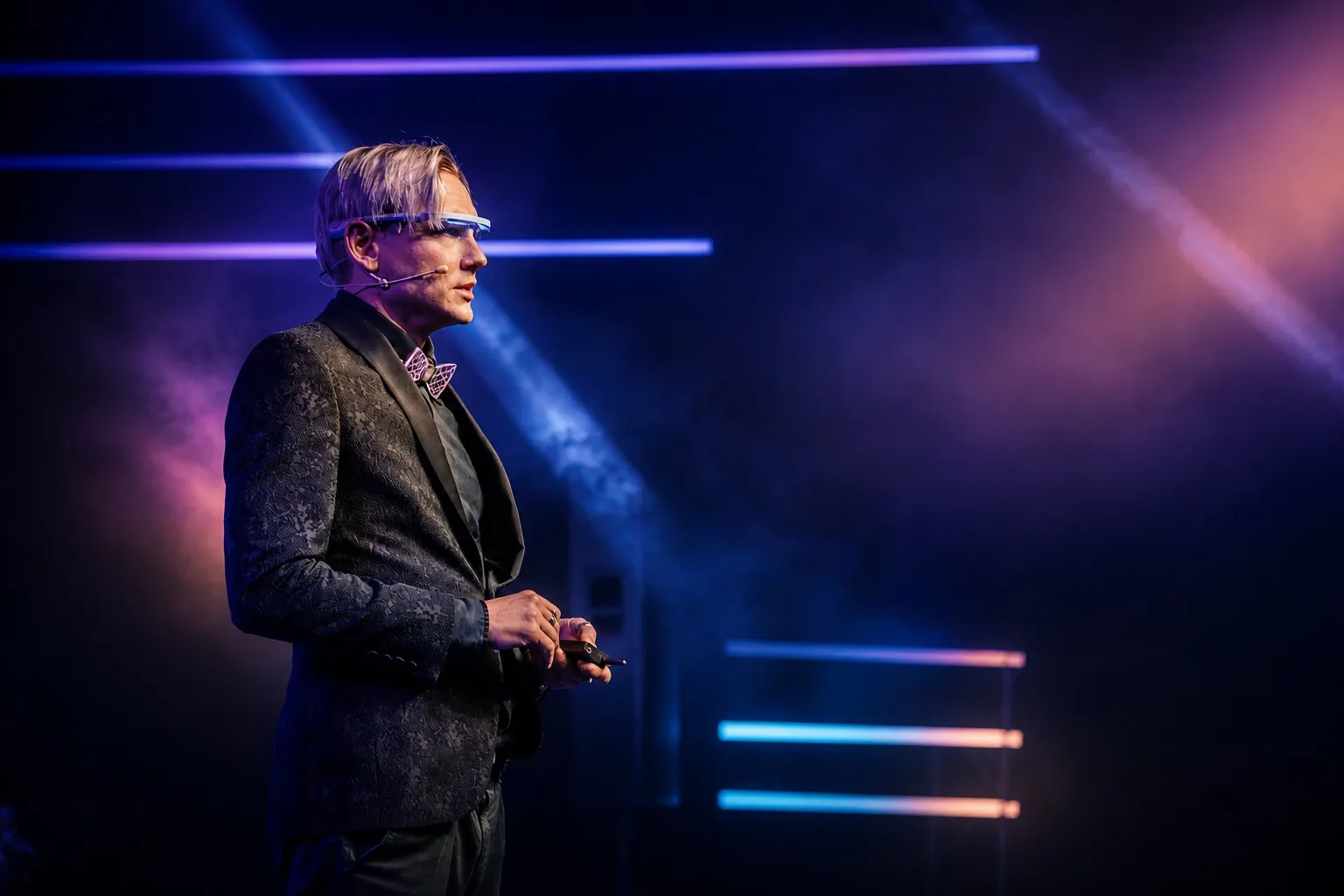
At Biohacker Summit 2020 Helsinki, Dr. Molly Maloof Argued That Resilience Was Not A Fixed Gift But A Trainable Human Capacity
On 16 October 2020, at Biohacker Summit 2020 Helsinki in Finland, Dr. Molly Maloof took up a question that had acquired unusual urgency in a wounded year: what, exactly, is resilience, and could it be cultivated before adversity hardened into collapse.
Her answer was both scientific and deeply humane. Resilience, she suggested, was not a slogan for stoic endurance, nor a crude demand to simply toughen up. It was a layered phenomenon, part biology, part psychology, part social inheritance, shaped by stress, relationships, belief, recovery, and the stories people tell themselves when life fractures around them.
In a period marked by pandemic anxiety, political rupture and pervasive isolation, Maloof’s talk placed self-care not in the realm of indulgence, but survival. “It is time for you to put your mask on first and to be kind to yourself, to care for yourself, and to love as much as you can right now because life is short,” she said.
Resilience Beyond Survival
Maloof described resilience as something broader than merely returning to normal. Drawing on research, she framed it as a coping outcome, a developmental trajectory and a personality trait. That distinction mattered, because it widened the conversation beyond simple recovery.
Some people, she noted, absorb stress and appear almost untouched. Others are knocked down and slowly regain their footing. But the most compelling form was post-traumatic growth, in which an individual does not just recover a former baseline, but emerges stronger, clearer or more capable because of what has been endured.
That was the moral center of her argument. Trauma, in this view, was not something to romanticise, but neither was it necessarily the end point. “We should all be aiming to experience massive trauma and to grow from it and to actually thrive beyond it when it is over,” Maloof said, speaking to a world then still in the grip of Covid-19.
The Body Keeps The Score, And The Breath Can Answer Back
Where the talk grew especially striking was in its insistence that resilience was physiological as much as philosophical. Maloof, whose work in personalised medicine sits at the intersection of clinical practice and health technology, returned repeatedly to heart rate variability, or HRV, as a measurable sign of the body’s adaptability.
Low HRV, she said, often accompanied stress, poor fitness, ageing and emotional strain. Higher HRV signalled a nervous system better able to respond to challenge without becoming trapped in panic or depletion. The route toward that state was not mysterious. It could begin with something as basic as diaphragmatic breathing.
Slow, deep breaths, she explained, helped regulate the autonomic nervous system through the body’s baroreceptor response, shifting people away from fight-or-flight overactivation and toward parasympathetic calm. In practical terms, that meant learning to breathe not with the chest, but with the belly, extending the exhale, and returning again and again to the body’s own stabilising rhythms.
She also pointed to methods common in biohacking circles but increasingly supported by broader wellness research: cold exposure, infrared saunas, yoga, mindfulness, gratitude practices, singing, massage, tai chi, even gargling and chewing gum. The point was not gimmickry. It was that resilience had somatic levers, and they could be pulled.
The Necessary Dose Of Stress
Maloof’s vision of resilience avoided one of modern wellness culture’s most seductive errors, the fantasy that stress itself could be abolished. On the contrary, she argued that human beings need challenge in order to strengthen.
“Too little stress makes us fragile, but too much stress can make us break,” she said. “We need enough stimulation to grow and be strengthened by life's challenges.”
That principle, often described as hormesis, ran through her presentation. Small, manageable stressors can train the organism. Unrelenting pressure, by contrast, can destroy it. This was as true in the workplace as in the nervous system. High demands required deliberate recovery, she argued, not as an afterthought but as a condition of sustained excellence.
Internal recovery could mean breaks during the day, stepping away, resetting the body. External recovery required true disengagement from work, not carrying the office into every spare hour through rumination and digital tethering. Without that balance, ambition curdled into burnout.
Meaning As A Form Of Armor
Yet Maloof did not reduce resilience to biomarkers and breathwork. The deeper layer of her argument was existential. People endure hardship, she suggested, not simply because they are biologically regulated, but because they know why they are continuing.
A sense of purpose, connection and control formed what she presented as modifiable sources of resilience. Purpose gave suffering a horizon. Meaning made effort bearable. To live resiliently was, in part, to align one’s actions with one’s values and to create goals rooted in something more substantial than social expectation.
Here she invoked a kind of philosophical medicine, drawing from Stoicism and from what she called Dharma Inquiry. Stoic practice, with its emphasis on distinguishing what lies within one’s control from what does not, offered a counterweight to spiralling helplessness. Maloof cited the tradition’s four cardinal virtues: wisdom, justice, courage and moderation.
At the core of this framework was responsibility, not in the punitive sense, but in the radical recognition that agency begins within. “Taking responsibility for life means being willing to see that the real barriers are not external ones, but something that can be found within you,” she said.
Letting Go As Strength
If this sounds, at moments, stern, Maloof repeatedly softened it with a crucial caveat: resilience is not always a matter of forcing. Sometimes it is the opposite.
“Sometimes being resilient is not about forcing things,” she said. “Sometimes it is just letting go, bringing futile worries to an end and being relaxed, present, and natural.”
That insistence gave the presentation its emotional intelligence. In a culture that often mistakes compulsive striving for strength, Maloof made room for surrender, reframing and paced coping. She even spoke of “repressive coping” in grief as a short-term survival tool, not as denial, but as temporary compartmentalisation when immediate responsibilities make full emotional collapse impossible.
The idea was not to bury pain forever. It was to create enough order to survive the first wave, and then return to the wound when there was space to feel it.
The Social Nervous System
Resilience, in Maloof’s telling, was never purely individual. Human beings are social animals, and the brain is exquisitely responsive to signals of safety or threat from others. Social capital, she argued, is not a luxury but a health resource.
Touch, affection and supportive relationships help counter the brain’s negativity bias, that ancient tendency to cling to danger more readily than delight. Isolation worsens that bias, trapping people in vigilance. Connection interrupts it.
Even amid distancing and uncertainty, she suggested, the cultivation of positive social bonds remained central to adaptive recovery. To be resilient was not merely to master oneself, but to remain embedded in a web of care, purpose and mutual regulation.
A Practical Blueprint For The Long Crisis
What made Maloof’s talk memorable at Biohacker Summit 2020 Helsinki was its refusal to choose between metrics and meaning. She spoke as a physician grounded in data, but also as a witness to a moment when many people were simply exhausted.
Her blueprint was practical: train heart rate variability, breathe more slowly, recover intentionally, cultivate gratitude, practise mindfulness, seek purpose, build relationships, align goals with values, and treat self-kindness as a discipline rather than a weakness.
But beneath that list was a more unsettling proposition. Resilience was not a return to who one had been before crisis. It was the difficult art of becoming someone else through it.
In that sense, her lecture was less a wellness sermon than a map for a battered era, one in which survival alone no longer seemed sufficient. The challenge, as Maloof framed it, was not only to withstand adversity, but to metabolise it into a deeper capacity for life.
Frequently asked questions
How does Molly Maloof define resilience?
As something broader than returning to normal. Drawing on research, she framed it simultaneously as a coping outcome, a developmental trajectory and a personality trait, which widens the conversation past simple recovery.
Why does she focus on heart rate variability?
Because resilience is physiological as much as philosophical. Maloof returned repeatedly to HRV as a measurable sign of the body's adaptability, which gives an otherwise abstract quality something a person can actually track.
Should stress be eliminated?
No, and she was explicit about it. Maloof avoided one of modern wellness culture's most seductive errors, the fantasy that stress itself could be abolished, arguing instead for the necessary dose that produces adaptation.
About the event
This recap is part of the Biohacker Summit 2020 Helsinki series, recorded in Helsinki on 16 and 17 October 2020. Read the summary of the whole event or join the next edition, HOLOLIFE Summit 2026 Amsterdam, on 14 and 15 November 2026.
In this story
Comments
Loading comments…