Biohacker Summit 2020 Helsinki
Gong Yoga Turned A Summit Hall Into A Chamber Of Presence
By Teemu Arina · · Updated

At Biohacker Summit 2020 Helsinki, Jani Toivonen Asked A Restless Audience To Stop Optimising For A Moment And Simply Breathe
In a gathering devoted to human enhancement, data, and the relentless pursuit of better performance, one of the most striking interventions at Biohacker Summit 2020 Helsinki came not through a graph, a device, or a protocol, but through breath.
On Friday, 16 October 2020, in Helsinki, Finland, Jani Toivonen led a session titled Gong Yoga, inviting participants into an older, quieter technology of attention. The premise was deceptively simple. If people wanted to get the most from the summit, he said, they first had to arrive fully inside themselves.
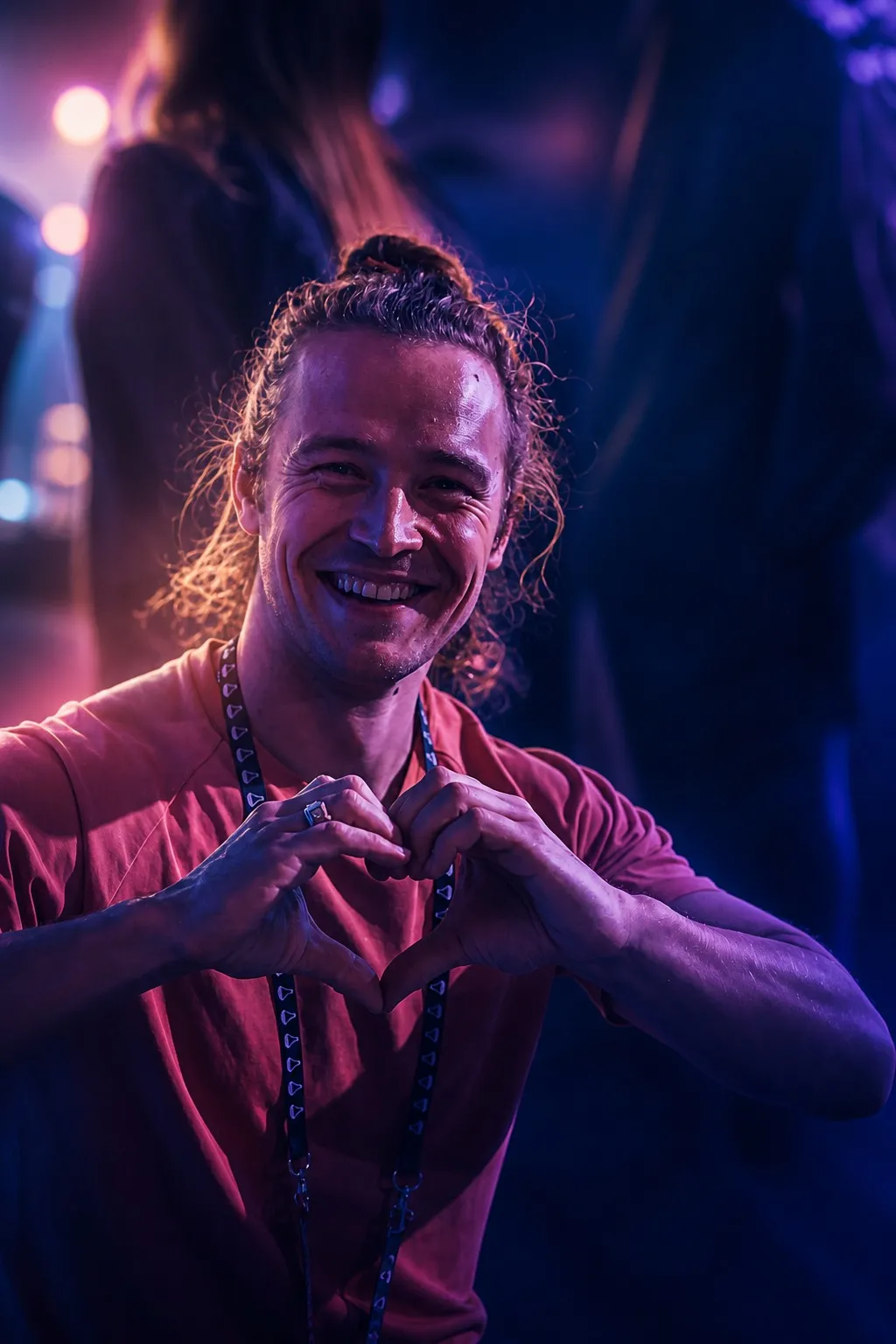
“To get the most out of this experience, be present with yourself and be present with your breath,” Toivonen told the room.
It was a gentle instruction, but also a challenge. In a culture that often rewards speed of thought and constant stimulation, Toivonen’s session suggested that understanding begins not in acceleration, but in stillness.
A Case Against The Tyranny Of Thought
Toivonen, a martial arts enthusiast and coach with deep experience in wellness training and the healing potential of vibration and sound, framed the problem with unusual clarity. What holds many people back, he argued, is not lack of information but over-identification with the ceaseless voice of the mind.
“Usually what is holding us back is our mind because our mind is speaking all the time and there is this huge addiction of thinking,” he said.
That phrase, “addiction of thinking,” landed with force. In a conference environment, where attendees move rapidly from talk to talk in search of insight, the mind can become both instrument and obstacle. Toivonen’s proposition was that presence is not merely calming. It is cognitively useful. It opens the possibility of hearing “the words beyond the words,” of receiving information more deeply rather than merely collecting it.
Coordination As A Doorway To Focus
The session did not remain in abstraction. Toivonen led the audience through a series of finger-and-thumb coordination drills, alternating hand positions in ways that forced concentration and disrupted automatic mental chatter.
The exercise was playful, almost childlike in its simplicity, yet it had a distinct purpose. By requiring participants to switch finger positions while maintaining steady breathing, he asked the brain to do something difficult enough that there was little room left for rumination.
“Challenging the mind makes us more present and focused, opening our mind to receive new information and staying in the present,” he said.
He described the movement as a way of connecting the brain’s polarities, a method of tuning attention through embodied coordination. In another setting, such an exercise might have seemed incidental. Here, it became a small act of resistance against distraction, a reminder that focus can be trained physically as well as mentally.
Breathing Into The Belly, Rooting Into The Body
From there, Toivonen turned to diaphragmatic breathing. He instructed participants to expand the belly on the inhale, then draw the navel inward on the exhale, pairing the breath with activation of the pelvic floor. The result was a form of internal anchoring, a shift from abstraction to embodiment.
The practice was practical, even anatomical. The abdomen widened, the pelvic floor engaged, the core contracted. Yet beneath the mechanics was a broader philosophy: that the path back to presence runs through the body.
Toivonen also introduced what he described as root locks and diaphragm locks, asking participants to exhale fully and create a vacuum by drawing the belly inward and upward. These techniques, he explained, were part of his own morning practice, tools he used to come into the present before meditation.
In his hands, these were not esoteric flourishes. They were methods for stabilising attention, grounding energy, and cultivating a felt sense of internal awareness.
The Gong As An Instrument Of Inner Listening
Then came the sound.
As the gong entered the session, the room shifted from instruction to experience. Toivonen asked participants to hold an intention for the summit, to visualise what they hoped to receive, and to let the vibrations work not as entertainment but as a medium for inner transformation.
The soundscape created a shared field of listening, but the work remained intimate. This was less about spectacle than about permission: permission to pause, to feel, to notice what emerged when language receded and sensation took over.
Toivonen’s biography describes him as someone who seeks to bring people together in their own strength and love, and that sensibility was visible in the architecture of the session. The gong did not dominate the room. It held the room. It created the conditions in which participants might encounter deep relaxation, presence, and what he has called the magic of natural rhythm.
Gratitude, Playfulness, And The Knowledge Beneath Words
In the closing moments, Toivonen brought the audience back gently. Hands moved to the heart. Breath softened. Attention turned inward.
“Whisper thank you to yourself inside your mind and feel it in your heart,” he said.
It was an arresting line, both tender and disciplined. Self-optimisation often borrows the language of mastery, but rarely the language of self-gratitude. Toivonen’s intervention suggested that presence is sustained not only by technique, but by attitude: by kindness toward oneself and by an openness that is often absent from high-performance spaces.
He ended with another reminder that felt central to the session’s spirit. “Remember that playfulness is one key to learn more and to lift your energy up.”
That idea, too, lingered. In a summit built around complexity, Gong Yoga made a case for something radically uncluttered. Breathe deeply. Challenge the mind through the body. Set an intention. Listen. Be grateful. Stay playful.
A Quiet Rebuttal To Constant Externality
What Jani Toivonen offered at Biohacker Summit 2020 Helsinki was not a rejection of biohacking, but a reorientation of it. The most important system to tune, he implied, may be attention itself. The deepest upgrade may be the ability to return, again and again, to the breath.
In the end, his message was almost disarmingly direct. Modern life trains people to live from the outside in, chasing stimuli, information, and validation. Gong Yoga proposed the reverse: an inside-to-outside way of being, where clarity begins within.
For fifteen minutes, in a summit hall in Helsinki, that proposition felt not only plausible, but necessary.
Frequently asked questions
What did Jani Toivonen identify as the obstacle?
Not a lack of information but over-identification with the ceaseless voice of the mind. Usually what is holding us back is our mind, he argued, which reframes the problem for an audience accustomed to solving things by acquiring more data.
Why the coordination drills?
Toivonen led the audience through finger-and-thumb coordination exercises, alternating hand positions in ways that forced concentration and disrupted automatic mental chatter. Playful, almost childlike, but with a distinct purpose behind the simplicity.
What was the breathing practice?
Diaphragmatic work, with participants instructed to expand the belly on the inhale and draw the navel inward on the exhale, using breath to root attention in the body rather than leaving it circling in thought.
About the event
This recap is part of the Biohacker Summit 2020 Helsinki series, recorded in Helsinki on 16 and 17 October 2020. Read the summary of the whole event or join the next edition, HOLOLIFE Summit 2026 Amsterdam, on 14 and 15 November 2026.
In this story
Comments
Loading comments…