Biohacker Summit 2020 Helsinki
Improving Immunity With Optimized Sitting
By Teemu Arina · · Updated
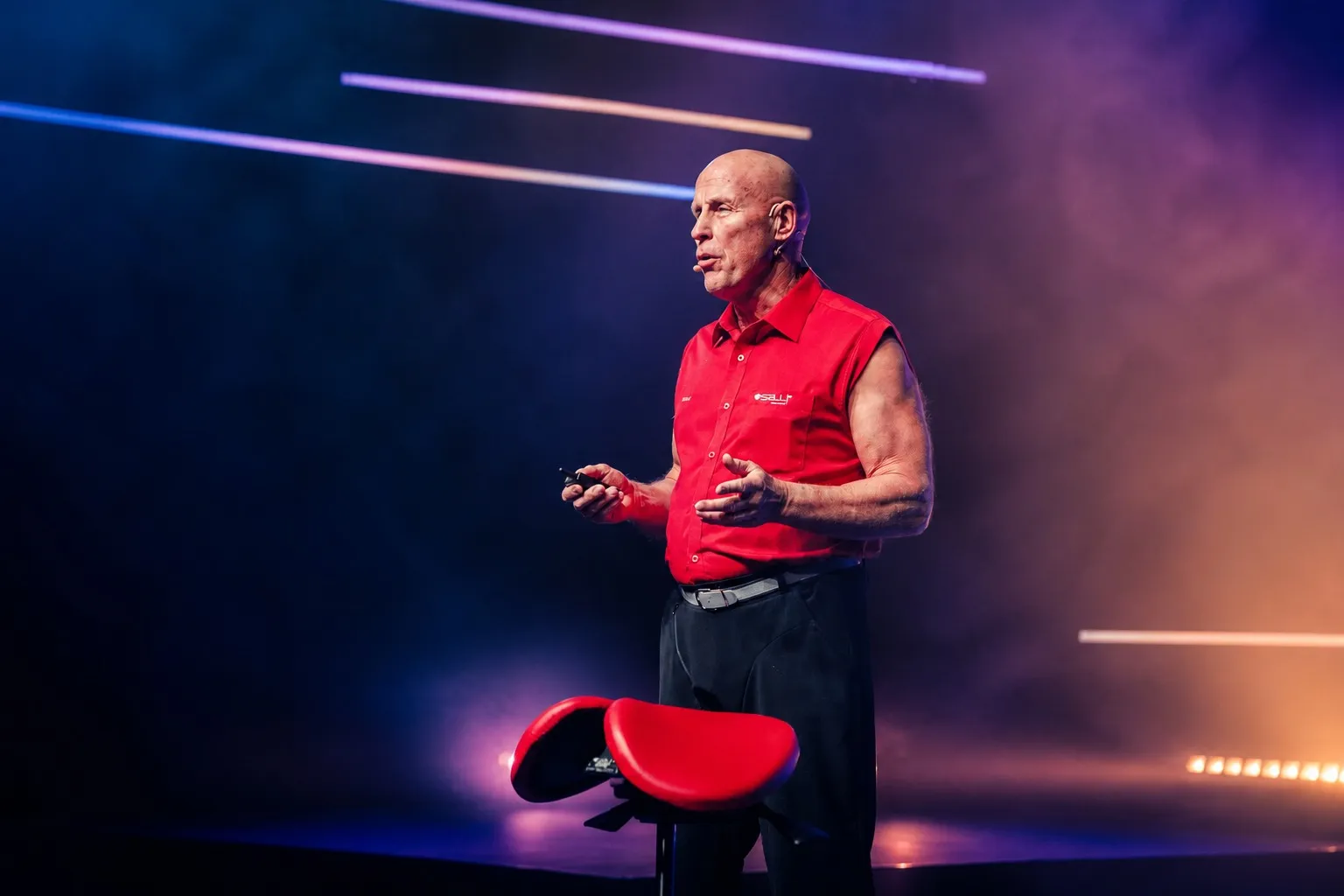
At Biohacker Summit 2020 Helsinki, Veli-Jussi Jalkanen Argued That The Way We Sit May Shape Circulation, Inflammation, And Immune Resilience
In a year when immunity became the world’s most anxious preoccupation, Veli-Jussi Jalkanen arrived at Biohacker Summit 2020 Helsinki with a deceptively ordinary subject and a radical claim. Sitting, he suggested, was not a neutral act of modern life but a daily physiological force, one capable of slowing circulation, feeding inflammation, and weakening the body’s natural defenses.
Speaking on Friday, 16 October 2020, in Helsinki, Finland, Jalkanen presented Improving Immunity With Optimized Sitting as both a critique of sedentary culture and a practical manifesto. Nutrition, he acknowledged, had rightly taken center stage in many conversations about resistance to illness. But his focus was elsewhere: on posture, micro-movement, clothing, pressure, and the hidden mechanics of blood and lymph.
“The slower our circulation is, the more the body has problems removing waste and bringing in vital oxygen and nutrients,” Jalkanen said, framing the body less as a machine powered by stillness than as a living system dependent on flow.
A Pandemic-Era Lecture That Shifted Attention From Food To Flow
Jalkanen’s argument unfolded against the background of the Covid pandemic, when public discourse often revolved around infection curves, masks, vaccines, and diet, but less often around the bodily consequences of immobility. He proposed two guiding principles for stronger everyday immunity: boost circulation and reduce inflammation.
That proposition gave his talk an unusual moral urgency. Modern workstations, long commutes, compressed waistbands, and fixed 90-degree sitting angles were presented not merely as ergonomic missteps, but as contributors to systemic stagnation. The body, in his telling, was under quiet siege from chairs, belts, rigid postures, and hours of muscular stillness.
The Immune System, According To Jalkanen, Needed Movement To Do Its Work
At the center of the presentation was the lymphatic system, which Jalkanen described as a vast transport network responsible for moving waste, pathogens, and immune cells through the body. Unlike arterial blood, which is driven by the heart, much of this circulation depends on movement, pressure shifts, and muscular activity.
“We should move, stand, and exercise so that lymph liquid flows into the nodes where our immune system has stored the cells that kill viruses and bacteria,” he said.
The point was simple and potent. Immunity, in this view, was not only a matter of what entered the body through food or supplements, but also of whether the body’s internal cleaning and defense routes remained open. Lymph nodes, where immune cells including T-cells help destroy harmful invaders, could not perform efficiently if flow was impeded.
The Groin As A Hidden Bottleneck
One of the lecture’s most striking moments came when Jalkanen asked the audience to consider the groin, where the thigh meets the trunk. This area, he said, is rich in lymph nodes and acutely sensitive to pressure. That tenderness, he argued, is not incidental but protective.
Static seated positions, especially the standard right-angle posture of office life, can compress this region. Tight trousers, belts, underwear, and crossed legs may worsen the effect. For Jalkanen, such pressure was not merely uncomfortable. It was biologically consequential, potentially interfering with lymph flow and the immune system’s capacity to clear waste and pathogens.
His warning was aimed at a culture that treats constriction as normal and prolonged immobility as unavoidable. The body, he insisted, does not share that assumption.
Why The Chair Became The Villain
Jalkanen’s criticism of conventional sitting was sweeping. The familiar office posture, knees bent at 90 degrees, pelvis loaded, back rounded, shoulders tensed, was described as a blueprint for blockages. It compressed tissues in the thighs and buttocks, narrowed circulation pathways, strained joints, and encouraged inflammation in the spine.
“We should not be immobile for long periods because anytime a muscle moves, the valves open and close to pump liquid through the body,” he said.
That line captured the essence of his case. Tiny movements matter. A body does not need dramatic exercise every minute, but it does need constant variation. A chair that permits rocking or subtle motion, he argued, can help produce unconscious muscle pumping throughout the day. Saddle chairs, in particular, were championed for reducing pelvic compression and encouraging circulation through a more open seated structure.
“The maximum amount of movement in the body, even if it is not big movement, is very good for keeping the liquid going,” he said.
Posture As Breathing, Oxygen, And Internal Massage
If circulation was one pillar of Jalkanen’s talk, breathing was the other. Slouching, he said, can reduce oxygen intake by as much as 30%, a figure he used to underscore how posture reshapes metabolism from the inside out.
“A good posture keeps the chest open, which helps breathing and oxygen intake while providing an internal massage for the body,” he said.
This was not posture as aesthetic correction. It was posture as biochemical access. An open chest supports the lungs, which in turn support oxygen delivery, organ motion, and digestive movement. A collapsed torso, by contrast, was portrayed as a slow suffocation of tissue and process: less oxygen, less mobility, more tension, more inflammation.
Jalkanen linked upright sitting to digestive ease as well, arguing that a more open trunk allows the abdominal cavity to function with less compression. Good sitting, in his account, was a full-body event, affecting not just the spine but the lungs, gut, and metabolic rhythm.
Tight Clothing, Loose Assumptions
The lecture also challenged another unexamined norm of modern dress: compression. Jalkanen repeatedly returned to the effects of tight clothing, belts, underwear, socks, and fitted garments that leave marks on the skin or press into the groin and pelvic area.
Such pressure, he argued, restricts circulation and burdens tissues already compromised by sedentary life. His recommendation was blunt: wear looser clothing, remove unnecessary constriction, and choose garments that remain non-compressive when seated, not just when standing.
It was an argument that extended ergonomics beyond furniture into fashion and habit. Health, in this formulation, depended on what the body was allowed to do all day long, not simply on what happened during a workout.
Inflammation As The Silent Companion Of Sedentary Life
Throughout the talk, Jalkanen described inflammation as the common thread linking poor posture, joint stress, spinal pain, restricted circulation, and weakened immunity. The back, the pelvic region, the groin, the neck, and even the brain were discussed as areas vulnerable to chronic tension and impaired fluid movement.
His comments on the neck were especially striking. Tense neck muscles, he said, can compromise circulation to and from the head and interfere with waste removal, a concern he connected to long-term cognitive risk. In a culture defined by screens, stress, and fixed forward-facing postures, the warning carried particular resonance.
Practical Rituals For A Less Static Life
For all its anatomical detail, Jalkanen’s lecture was practical at heart. He urged listeners to stand up several times an hour, walk briefly, use active standing tools, and incorporate light movement into the day. A short walk in the evening, he suggested, could help refresh bodily fluids before sleep. Another upon waking could restart a system slowed by the pressure of mattress and pillow.
He also advocated small, opportunistic bursts of exercise in workspaces, from walking stairs to performing brief strength movements, and recommended portable support cushions for travel to reduce pressure during long periods in cars, trains, or planes.
These were not grand transformations. They were micro-interventions aimed at restoring motion to a body civilization had taught to freeze.
A Lecture That Made Sitting Feel Political, Intimate, And Urgent
What made Jalkanen’s appearance at Biohacker Summit 2020 Helsinki memorable was not merely the novelty of the subject, but the scale of the claim beneath it. He treated sitting as an immune issue, a circulatory issue, a metabolic issue, and ultimately a cultural issue. The habits most people regarded as harmless, ordinary, or inevitable were recast as forms of friction against the body’s deepest maintenance systems.
His thesis was clear: health is not only built in gyms, clinics, or kitchens. It is shaped at desks, in cars, in waistbands, in the angle of the hips, and in the forgotten stillness between one task and the next.
In the end, Improving Immunity With Optimized Sitting was less a lecture about chairs than about what modern life has normalized. Jalkanen’s challenge was to reconsider that normalization from the level of the lymph node to the level of daily routine. If immunity depends on flow, then perhaps the first intervention is not dramatic at all. Perhaps it begins with refusing to stay still for too long.
Frequently asked questions
What are Veli-Jussi Jalkanen's two principles?
Boost circulation and reduce inflammation. He proposed them as the guiding rules for stronger everyday immunity, in a year when public discourse revolved around infection curves, masks, vaccines and diet but rarely around the consequences of immobility.
Why does the lymphatic system matter here?
Because it has no pump. Jalkanen described it as a vast transport network moving waste, pathogens and immune cells, and pointed out that unlike arterial blood driven by the heart, much of that circulation depends on movement and muscular activity.
What is the hidden bottleneck?
The groin, which produced one of the lecture's most striking moments. Jalkanen asked the audience to consider what conventional seated posture does to circulation at that point, and what a day of it costs the immune system.
About the event
This recap is part of the Biohacker Summit 2020 Helsinki series, recorded in Helsinki on 16 and 17 October 2020. Read the summary of the whole event or join the next edition, HOLOLIFE Summit 2026 Amsterdam, on 14 and 15 November 2026.
In this story
Comments
Loading comments…