Biohacker Summit 2020 Helsinki
FUTURE COSMETICS FOR THE HUMAN MICROBIOME
By Teemu Arina · · Updated
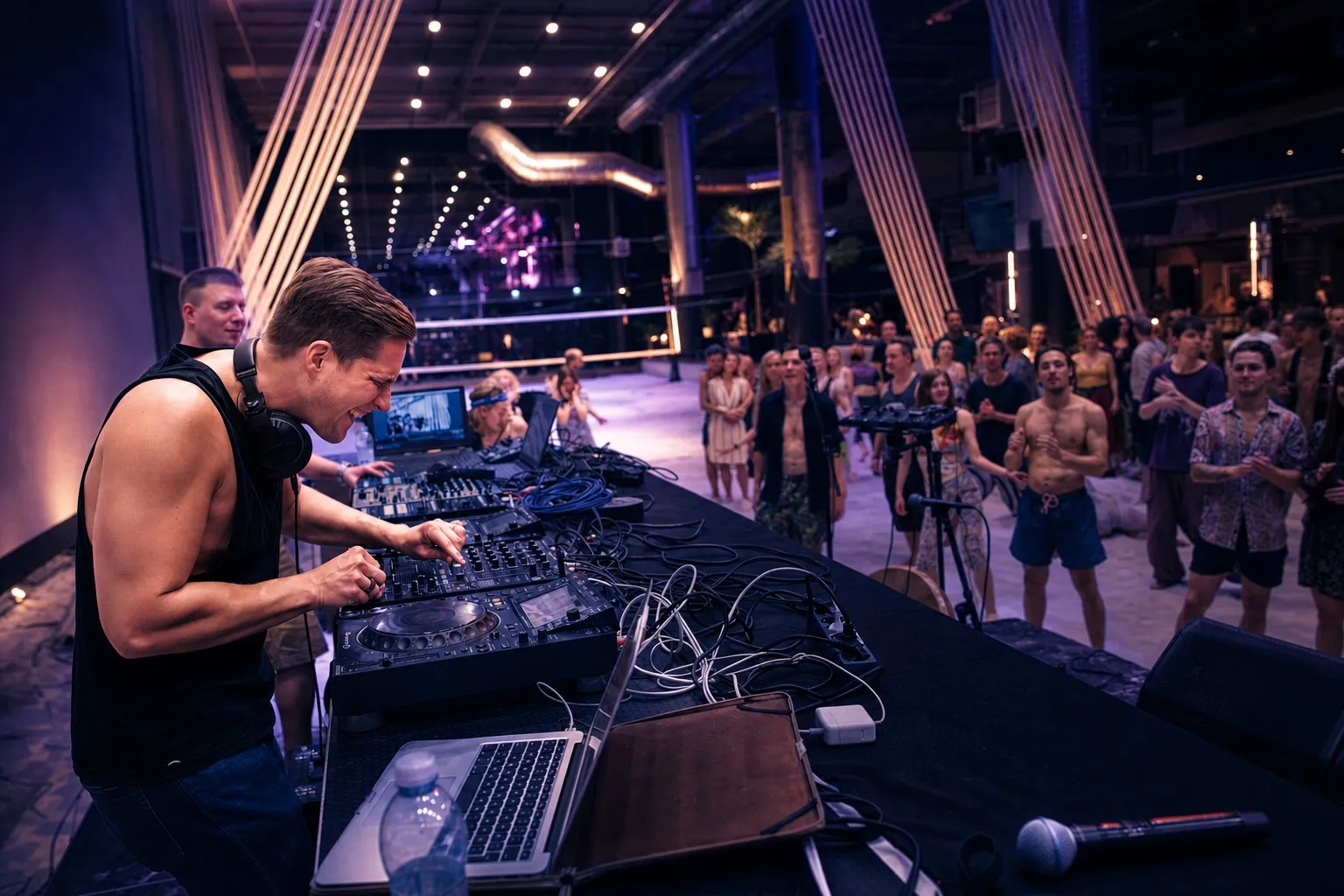
At Biohacker Summit 2020 Helsinki, Piritta Fors Argued That The Future Of Skincare May Lie In A Return To The Forest
On Friday, 16 October 2020, at Biohacker Summit 2020 Helsinki, Piritta Fors stepped onto the stage with a proposition that sounded at once ancient and futuristic: the answer to modern skin health, immune resilience and sustainable beauty might be found in microbes from the forest floor.
Fors, CEO and co-founder of Luonkos, spoke not only as a natural cosmetics entrepreneur but as a futures researcher concerned with the wider patterns shaping human health. Her presentation, Future Cosmetics For The Human Microbiome, drew a direct line between biodiversity loss and the rise of autoimmune and inflammatory disease, then asked a practical question that cut through the science with unusual clarity: “How do we get the rich benefit of forest microbes into our everyday life? The answer is in the cosmetics.”
The Biodiversity Crisis Was Presented As A Human Health Crisis
Fors framed the discussion through what she called the biodiversity hypothesis: that as natural environments shrink and daily human contact with diverse microbial life declines, the body pays the price. The loss is not merely ecological. It is biological, intimate and increasingly visible in rising rates of inflammatory and autoimmune conditions.
In her telling, the modern urban lifestyle had left many people estranged from the microbial richness that once shaped immune development. Even in Finland, where forest access remained more common than in many parts of the world, daily immersion in nature could no longer be assumed.
That gap between the body and the biosphere became the central problem her talk sought to solve.
The ADELE Project Offered Evidence That Nature Exposure Could Shift The Body
Fors anchored much of her argument in research from the ADELE project, which examined the effects of exposure to forest-derived microbial material. She described findings in which participants dipped their hands into forest microbe powder three times a day for two weeks, rinsing with water and avoiding soap. After the trial, tests indicated a positive change in microbiome-related immune markers.
She also pointed to daycare research in which forest materials were brought into children’s environments. After a month, she said, the children showed strengthened immune responses. Teachers, she added, reported something less easily quantified but no less striking: the children appeared calmer, more balanced.
“Research shows that exposing ourselves to forest microbes can strengthen our immune systems and help us become more calm and balanced,” Fors said.
The implication was difficult to miss. Contact with nature was not simply restorative in a poetic sense. It had measurable physiological and behavioural effects.
Cosmetics Became A Vehicle For Reconnection
If the evidence suggested that forest microbes could enrich the human microbiome, Fors’s next move was to ask how those benefits might be folded into ordinary life. Not everyone could spend long hours in the woods. But nearly everyone touched their skin, washed their face or applied lotion.
That was where Luonkos, the Finnish natural cosmetics company she co-founded, entered the picture. Its products were presented as a bridge between scientific research and domestic ritual, carrying forest-derived microbial extracts into the bathroom cabinet.
“Reconnecting with nature is the trademark of these scientific microbe extracts, offering a safe and researched way to enrich the microbiome through your skin,” she said.
Water-Free Beauty Was Cast As Both Ecological And Functional
Fors described Luonkos’s approach in language shaped as much by values as by formulation. The company’s mission, she said, was to create water-free and preservative-free cosmetics that would help people remove plastic bottles from their bathrooms and reduce unnecessary chemical exposure.
“Our mission is to create water-free and preservative-free products that allow people to get rid of all the plastic bottles in their bathrooms,” she said.
The company’s solid bars, or “cakes,” were presented as minimalist tools for a crowded and wasteful category. Rather than relying on diluted formulas, preservatives and layers of packaging, these products concentrated oils, vitamins, plant-based ingredients and forest microbe extracts into compact, multi-use forms.
Fors described Infinity as a four-in-one facial cleanser designed to clean, remove makeup, balance the skin and support healing. Users, she said, had reported relief from impurities and atopic skin. Vitality, a balancing body oil cake, was introduced as a gentle option suitable for babies, children and pregnant women, while still serving adults seeking microbiome-friendly skincare.
The Brand Story Was Also A Philosophy Of Consumption
What emerged during the presentation was not just a pitch for a skincare line but a broader worldview about consumption. Luonkos, Fors said, was “a values-based business where we do good by creating functional cosmetics that truly make your life better.”
The phrase mattered because it revealed the dual ambition at the heart of the company’s message. These products were meant to function, certainly, but they were also meant to signal a different relationship with the body, the home and the environment. Less water. Less plastic. Fewer products. More contact, however mediated, with the microbial intelligence of living ecosystems.
In a beauty industry often driven by novelty, excess and surface promises, Fors’s argument reached for something deeper: that skincare might become a site of ecological reconnection.
Packaging Was Treated As Part Of The Ethical Equation
Fors also underscored that the environmental claims did not stop at ingredients. Luonkos packaging, she said, was plastic-free and biodegradable, with intelligent app-linked features that allowed users to access research materials, videos and product information digitally.
That detail reflected a wider shift in consumer expectations. Sustainability was no longer confined to what was inside the product. It extended to the wrapper, the waste stream and the traceability of scientific claims.
The result was a picture of future cosmetics as hybrid objects: part biological interface, part environmental statement, part digital knowledge portal.
A Beauty Product Was Reimagined As A Daily Dose Of Biodiversity
The power of Fors’s presentation lay in the scale of its ambition. She took a small, familiar act, applying skincare, and reframed it as a possible intervention in one of the defining crises of modern life: the severing of humans from the natural systems that formed them.
In Helsinki, at Biohacker Summit 2020, she argued that the bathroom shelf could become a place where immune science, ecological grief and product design converged. The forest, in this formulation, was not somewhere distant or sentimental. It was a reservoir of microbial relationships that modern life had forgotten and that future cosmetics might help restore.
If that vision carried a note of idealism, it was grounded in a hard contemporary reality. People wanted efficacy, but they also wanted ethics. They wanted products that did less harm, used fewer resources and answered a growing suspicion that industrial convenience had stripped too much from daily life.
Fors’s answer was deceptively simple: bring nature back through the skin.
Frequently asked questions
What is the biodiversity hypothesis?
Piritta Fors's framing that as natural environments shrink and daily contact with diverse microbial life declines, the body pays the price. The loss is not merely ecological but biological, and increasingly visible in rising rates of inflammatory and autoimmune conditions.
What was the ADELE project?
It is research Fors anchored much of her argument in, examining the effects of exposure to forest-derived microbial material. Participants dipped their hands into forest microbe powder three times a day for two weeks, rinsing with water and avoiding soap.
Where do cosmetics come in?
As a vehicle for reconnection. If forest microbes can enrich the human microbiome, Fors argued, then skincare becomes a plausible route for delivering that exposure daily, which is the premise behind Luonkos, the company she co-founded.
About the event
This recap is part of the Biohacker Summit 2020 Helsinki series, recorded in Helsinki on 16 and 17 October 2020. Read the summary of the whole event or join the next edition, HOLOLIFE Summit 2026 Amsterdam, on 14 and 15 November 2026.
In this story
Comments
Loading comments…