Biohacker Summit 2020 Helsinki
The Power Of Community & Connection: Building The Global Biohacker Hub
By Teemu Arina · · Updated
A Movement That Argued For Belonging, Not Just Better Metrics
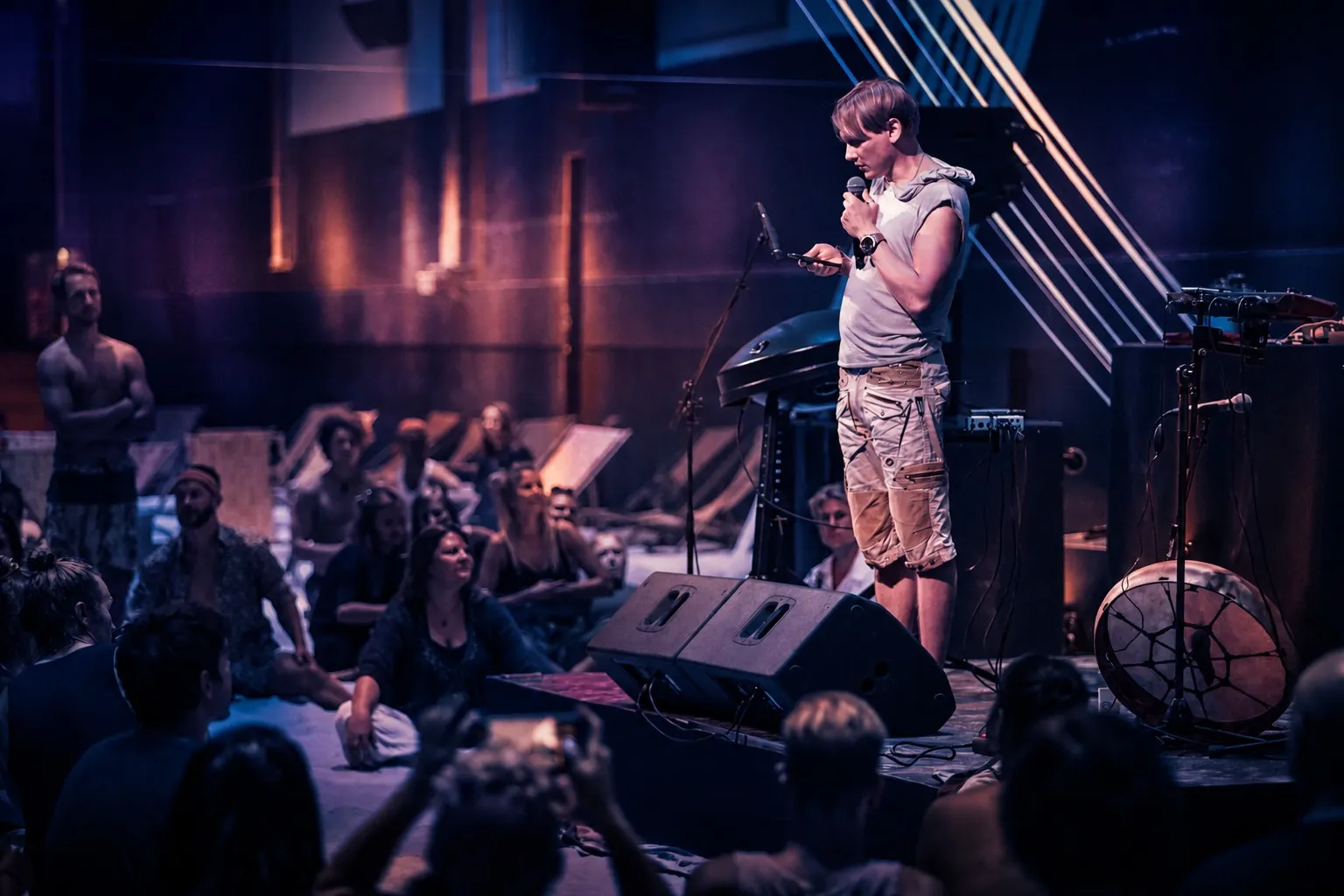
At the Biohacker Summit 2020 Helsinki, held in Helsinki, Finland, on 16 October 2020, Alex Azzi took the stage with a proposition that cut through the noise of performance hacks, supplements, and self-optimization. The true reason people gathered, he suggested, was not merely to learn. It was to connect.
Azzi, a biohacker, entrepreneur, investor, and founder of the Biohacker Community, framed his presentation, Power Of Community With Alex Azzi (UAE), as a workshop rather than a lecture. The shift in tone mattered. He was not simply unveiling another digital product. He was making a case for belonging as a form of infrastructure.
“Accountability is one of the main benefits and powers of community,” Azzi said, distilling the talk into a principle that felt especially resonant in a world increasingly mediated by screens, feeds, and fragmented attention.
Beyond Information, Toward Human Connection
The most arresting part of Azzi’s argument was its simplicity. Information, he noted, had become abundant to the point of saturation. Nearly any topic, from longevity protocols to sleep optimization, could be summoned instantly through a phone screen.
“You can pick up your phone and have access to the entire sum of human knowledge in your pocket,” he said.
In that context, the premium was no longer on access alone. It was on meaning, trust, continuity, and the subtle but transformative force of being seen by others pursuing the same difficult work of change. The value of a summit, in this telling, was not just what appeared on stage. It was what happened between people.
Azzi’s thesis rested on a deeper social truth: self-improvement often faltered in isolation. Knowledge could inform. Community could sustain.
Building A Digital Home For Biohackers
The practical answer to that problem was the Biohacker Community platform, hosted on Mighty Networks, which Azzi demonstrated live to attendees. He invited the audience to pull out their phones and join on the spot, turning the presentation into an act of participation.
The platform was designed as a central hub for the global biohacking world, while preserving a decentralized culture of contribution. In effect, it sought to do two things at once: create one shared home for biohackers and allow smaller tribes within it to flourish.
The architecture reflected that ambition. The platform organized itself around topics, events, groups, classes, and member interaction. It was part discussion forum, part learning environment, part event network, and part organizing tool for local leaders.
Azzi described it as a place where biohackers could finally gather on their own terms.
“We need a place where biohackers can exchange ideas without being locked into existing platforms,” he said.
That line landed as both critique and aspiration. It spoke to a familiar unease with mainstream social media, where communities often grew on rented ground and surrendered ownership of conversation, content, and identity to larger systems with different priorities.
The Biohacker Handbook In Your Pocket
One of the platform’s most tangible offerings was the integration of the Biohacker Handbook into mobile-accessible courses. Azzi highlighted this as a “killer app” of the ecosystem: a portable, structured library of knowledge that members could consult freely and instantly.
Sleep, longevity, nutrition, exercise, and mind-related topics were not merely listed as categories. They were turned into practical educational pathways. Diagrams, frameworks, and chapter-based learning could travel with the user, narrowing the distance between theory and daily habit.
This mattered because biohacking culture often lived at the intersection of technical detail and personal experiment. The easier it became to access structured material, the more likely it was that curiosity might mature into disciplined practice.
From Niche Curiosity To Serious Technical Exchange
If the classes section gave the platform coherence, the topics section gave it life. Azzi showed how members used dedicated forums to ask highly specific questions, including on emerging supplements and longevity interventions such as NMN and NAD-related protocols.
This was not casual lifestyle chatter. It was technical, curious, and often deeply peer-driven. Members entered not just to consume expertise, but to test it collectively.
That collective exchange was central to the platform’s logic. The future of biohacking, Azzi implied, would not be built solely by celebrity experts or conference headliners. It would also be built by participants asking better questions, sharing field notes, and creating a running conversation that no keynote alone could contain.
A Global Calendar For A Fragmented World
Azzi also pointed to an events section intended to become a living repository for biohacking gatherings worldwide. The ambition was straightforward but significant: create one place where workshops, summits, and local meetups could be discovered, tracked, and amplified.
In a field that often operated through scattered local scenes and loosely connected online circles, this was a bid for continuity. A summit in one city would no longer stand alone. A meetup in another could become part of a visible, global pattern.
That model of organization mattered because communities do not become movements simply by existing. They become movements when they can find each other.
The Call For Local Leaders
The emotional center of Azzi’s presentation came when he moved from platform design to leadership. He urged attendees not to remain passive members, but to become initiators in their own cities and niches.
“Take the initiative and decide to become a leader or a servant leader for your tribe,” he said.
He described how he had helped lead the Biohacker community in Dubai and later built virtual reality meetups for a more specialized subculture. The lesson was not that community required elaborate infrastructure from the start. It was that momentum often began with one person choosing a date, inviting friends, and creating a reason to gather.
“It is really that easy to make an impact; you just have to take the initiative and decide to lead,” Azzi said.
It was an unusually democratic vision of influence. Leadership here was not charisma alone. It was logistics, consistency, hospitality, and accountability. Even a small meetup, he suggested, could become culturally significant if repeated with care.
Small Groups, Stronger Identities
The platform’s specialized groups pointed toward another crucial insight: community does not become stronger by forcing sameness. It becomes stronger by making room for difference.
Azzi referenced groups such as VR Biohackers and Biohacking Women, each serving members whose interests or needs might otherwise be diluted in a broader forum. These sub-communities allowed for sharper conversation, more relevant guidance, and a stronger sense of ownership.
This was where the digital hub became more than a message board. It became an ecosystem. A person might arrive for general discussion on longevity, remain for the courses, then find their deepest accountability in a niche group that reflected their experience more precisely.
Owning The Space, Owning The Story
There was also a subtle politics to Azzi’s presentation. By encouraging attendees to upload summit photos and event material into the community’s own platform rather than defaulting to external social media, he was making a point about stewardship.
The idea was not merely to archive memories. It was to keep the culture in the hands of the people creating it.
For communities that often begin on commercial platforms, this distinction can seem technical. In practice, it can define whether a network becomes durable, searchable, and self-directed, or remains dependent on algorithms that flatten serious exchange into disposable content.
A Collaborative Future For Biohacking
What Alex Azzi offered at the Biohacker Summit 2020 Helsinki was more than a demonstration of software. It was a vision of biohacking transformed from an individual pursuit into a collaborative, peer-driven movement.
The promise of the Biohacker Community platform lay not only in its forums, courses, event listings, or local chapters. It lay in its attempt to answer a deeper question: what kind of structure allows people seeking better lives to do so together?
In a culture often associated with individual optimization, Azzi’s message landed as a corrective. The future, he suggested, would belong not to the lone experimenter, but to the networked one. Not to those who merely consumed knowledge, but to those who turned knowledge into relationship, relationship into accountability, and accountability into action.
At its best, the talk argued that the most powerful upgrade was not technological at all.
It was community.
Frequently asked questions
What is Alex Azzi's central claim?
That people gather to connect rather than to learn. Information had become abundant to the point of saturation, he noted: you can pick up your phone and have access to the entire sum of human knowledge in your pocket, which makes the room itself the scarce thing.
What was the platform he demonstrated?
A platform called Biohacker Community, hosted on Mighty Networks, which Azzi demonstrated live by inviting the audience to pull out their phones and join on the spot, turning a presentation into an act of participation.
What did it offer members?
Azzi highlighted the integration of the Biohacker Handbook into mobile-accessible courses as the ecosystem's killer app: a portable, structured library rather than another feed of unsorted content.
About the event
This recap is part of the Biohacker Summit 2020 Helsinki series, recorded in Helsinki on 16 and 17 October 2020. Read the summary of the whole event or join the next edition, HOLOLIFE Summit 2026 Amsterdam, on 14 and 15 November 2026.
In this story
Comments
Loading comments…