Biohacker Summit 2020 Helsinki
Functional Cacao And Medicinal Mushrooms: Synergistic Strategies For Boosting Immunity
By Teemu Arina · · Updated
At Biohacker Summit 2020 Helsinki, Jaakko Halmetoja Made Ancient Remedies Feel Urgently Modern
In a year when immunity became a global obsession, the Finnish nutrition and wellness expert Jaakko Halmetoja stepped onto the stage at Biohacker Summit 2020 Helsinki with a message that cut through the noise of maximalist health culture. His presentation, “Immunity Boosters,” delivered on Friday, 16 October 2020 in Helsinki, Finland, was not a sermon on miracle cures or a breathless inventory of superfoods. It was, instead, a persuasive case for simplicity, consistency and intelligent combinations.
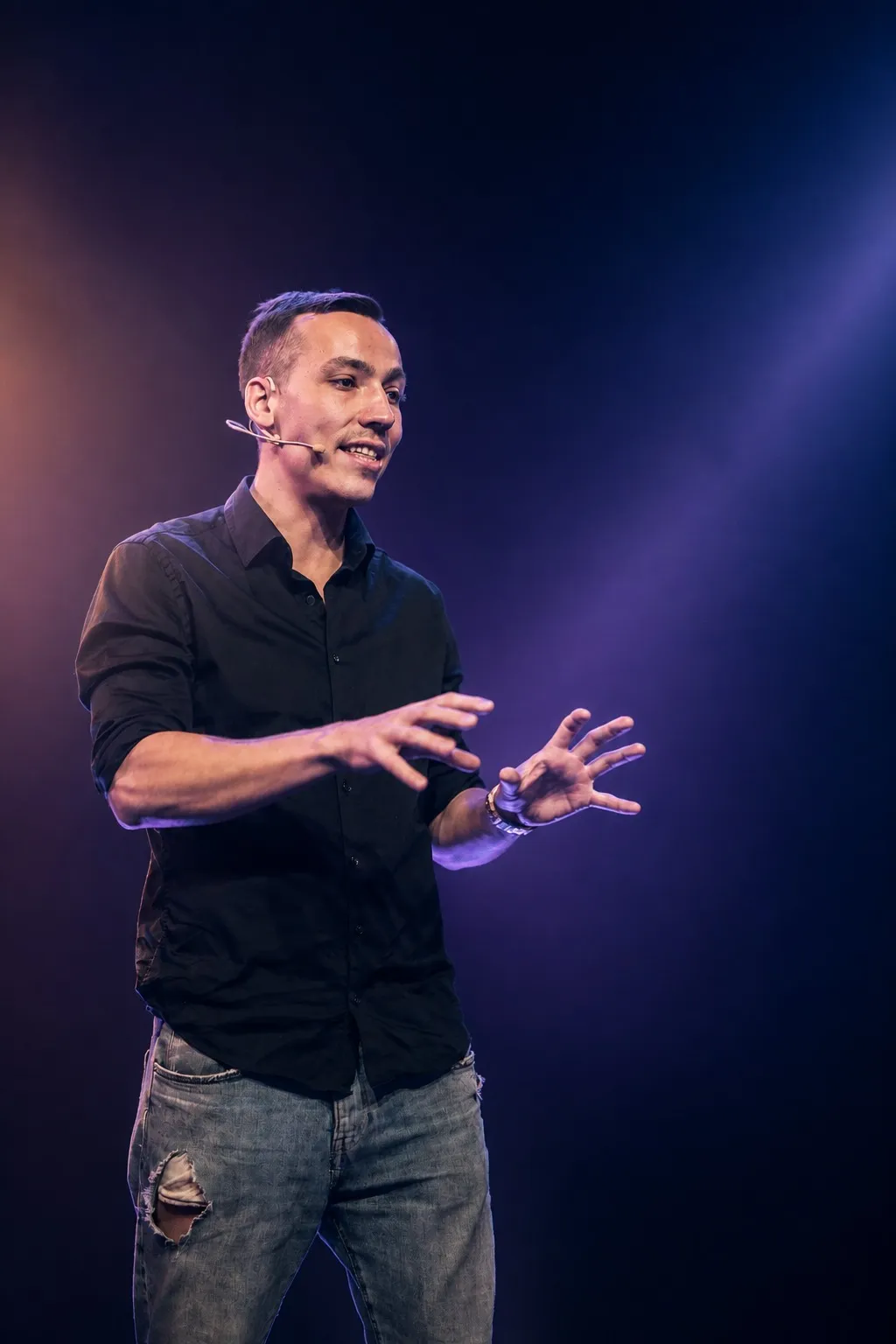
“More is not better,” Halmetoja told the audience. “Sometimes it is just easier to keep it simple and focus on certain aspects.”
That line framed the talk. In a wellness world often seduced by excess, Halmetoja argued for a smaller, more functional repertoire: cacao as a carrier, medicinal mushrooms as immune educators, fat as a delivery mechanism, spices as both medicine and disguise. The goal was not to impress with complexity. It was to build a ritual people might actually keep.
Cacao As The Ancient Engine Of Absorption
Halmetoja began by rescuing cacao from its modern fate as confectionery. Long before it became a sweetened indulgence, he reminded the room, it was consumed as a bitter drink, prized not merely for taste but for function. The deeper history mattered because it revealed a logic modern biohackers often present as innovation: pairing stimulants with fats and medicinal compounds to enhance their effects.
“Cacao works as a vasodilator,” he said. “That is why it was always used as a carrier to amplify other things and enhance the absorption of everything else we put in.”
In Halmetoja’s telling, cacao was not a backdrop but a biochemical tool. Its primary alkaloid, theobromine, offered a gentler and, in his view, more creative form of stimulation than caffeine. Unlike caffeine’s sharper central nervous system jolt, cacao supported the cardiovascular system while opening a more expansive mental state.
“Caffeine gives a certain state of mind,” he said, “but cacao might be even more creative and less industrially representative of our inner mind.”
This was vintage Halmetoja: part nutritional lecture, part cultural critique. He cast cacao not only as physiologically useful, but as a way back to something less mechanised, less synthetic in spirit.
The Case For A Functional Elixir
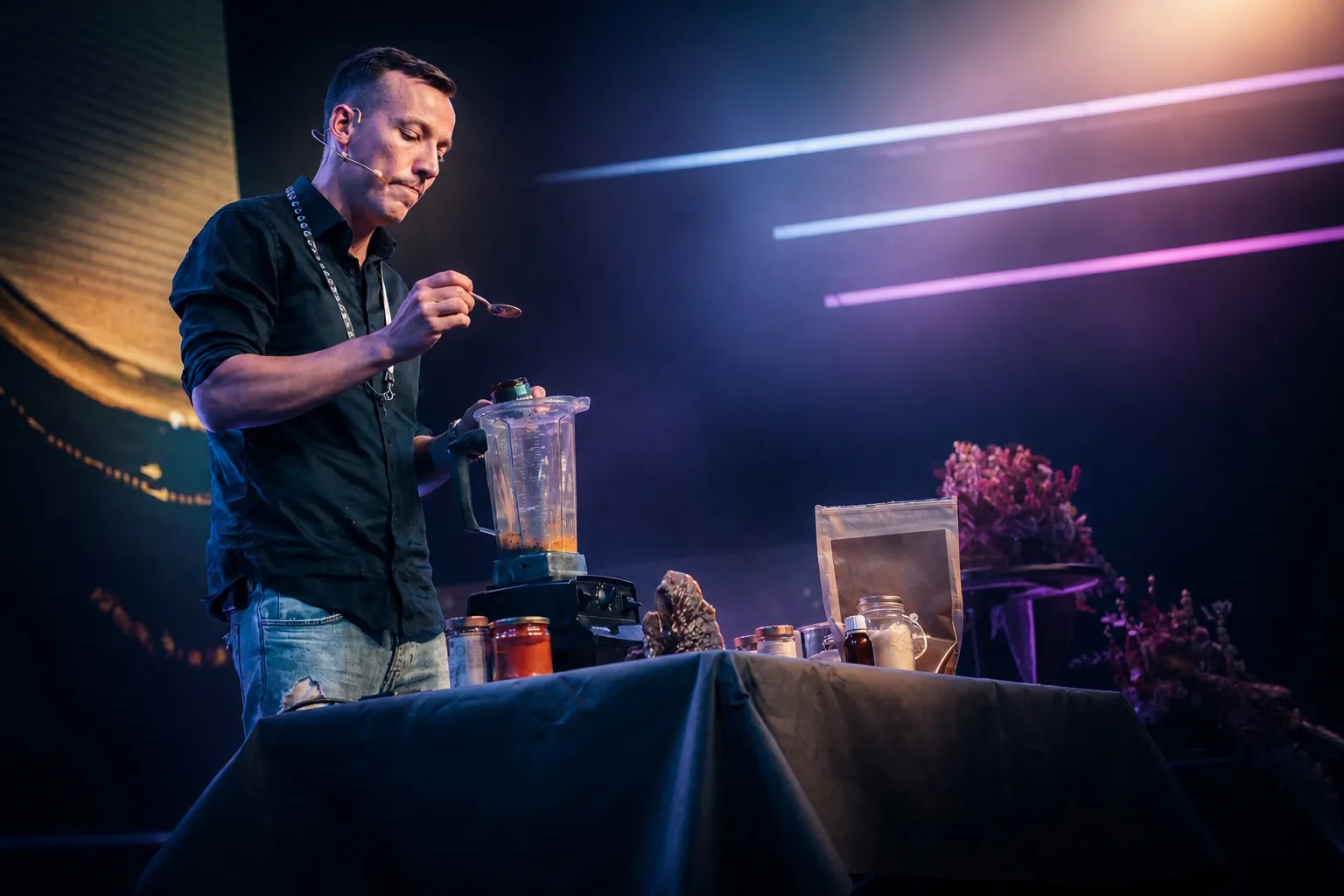
From there, the presentation turned practical. Halmetoja built a drink onstage, a rich, dark blend that he described as both accessible and potent. It drew on cacao paste for texture and fat, cacao powder for concentrated polyphenols, coconut milk for body, and MCT oil infused with astaxanthin for antioxidant and fat-soluble delivery.
The recipe he shared, dubbed “Invincible Immunity Chocolove,” was characteristically layered but not extravagant: cacao paste, cacao powder, coconut milk, MCT oil with astaxanthin, curcumin, a six-mushroom extract blend, Ceylon cinnamon, cardamom, vanilla, sea salt, and a base of chaga with fresh ginger and spring water.
The drink, as he presented it, was more than a recipe. It was a delivery system. Healthy fats helped transport compounds that otherwise struggled with absorption. Cacao, with its natural bitterness and depth, softened the more punishing taste of medicinal ingredients. Sea salt balanced both flavour and electrolytes, especially important, Halmetoja noted, given cacao’s high potassium content.
The underlying principle was simple: nutrition had to survive contact with real life. A protocol that tasted unbearable, or demanded heroic discipline, was not a protocol most people would maintain.
Mushrooms As Teachers Of The Immune System
The emotional and scientific centre of the talk came with medicinal mushrooms. Reishi and chaga, in Halmetoja’s framing, were not exotic add-ons but central actors in immune resilience. Their value lay in their polysaccharides, especially highly branched beta-glucans, which he described as compounds that helped the immune system become “more smart against different pathogens.”
This language of intelligence was telling. Halmetoja did not present immunity as brute strength, but as discernment, adaptation and training. In that formulation, mushrooms did not simply stimulate. They instructed.
Yet he was equally clear about the practical problem. Most medicinal herbs and extracts fail not because they lack promise, but because people do not take them. They are too bitter, too fussy, too easy to postpone.
“The herbs only work if you do them,” he said. “You need to find a practical way to actually get the herbs inside the body so they can feed our immune system.”
That sentence landed with uncommon force because it cut through the performance of wellness. Knowledge, Halmetoja suggested, was worthless without habit. A beautiful theory of health meant little if it never entered the body.
Spice, Mood And The Quiet Politics Of Daily Ritual
The talk widened from immunity to mood, and from pathogen defence to the chemistry of daily life. Curcumin, Halmetoja noted, was often spoken of as a general anti-inflammatory, but some of the strongest evidence around it concerned mental health, especially depression. Lowering inflammation in the brain, he argued, could influence mood in meaningful ways.
“If you lower the inflammation in your brain, that affects your mood,” he said. “All spices have medicinal properties; they are not just for the flavor.”
This was one of the presentation’s subtler strengths. Halmetoja refused the modern habit of separating pleasure from function. Vanilla, cinnamon, cardamom and ginger were not decorative flourishes. They improved digestion, broadened compliance, and transformed bitterness into something liveable. The old distinction between medicine and food began to dissolve.
His point was not romantic. It was strategic. If health practices are to last, they must fit into the rhythms of ordinary desire: warmth, sweetness, aroma, comfort.
Chaga As A Daily Base, Not A Rare Intervention
One of the more grounded ideas Halmetoja offered was also one of the most useful. For more than a decade, he said, he had used chaga and fresh ginger infusion as a base liquid in daily life, not only for drinks but for cooking. Coffee could be brewed with it. Rice could be cooked in it. Broths and soups could begin there rather than with plain water.
The suggestion was almost modest, but it held the philosophy of the whole session. Health need not always arrive as a dramatic intervention. It could be cumulative, folded into ordinary acts until nourishment became infrastructure rather than event.
Halmetoja also drew attention to chaga’s dark outer layer, rich in melanins, as a source of antioxidant pigments. Again, the visual became biochemical. Colour was not incidental. It was evidence of what the ingredient carried.
A Minimalist Biohacking Ethic
What lingered after the demonstration was not simply the memory of an immunity drink, but of a larger ethic. Halmetoja, a speaker known for his prolific lecture schedule and for making health culture feel contemporary rather than austere, offered a version of biohacking that was less about accumulation than curation.
He gently mocked the tendency to throw dozens of trendy ingredients into a smoothie because each had once been praised by some distant authority. That approach, he implied, produced confusion, terrible taste and short-lived enthusiasm. Better to identify a few compounds that worked well together, then build a ritual around them that was pleasurable enough to repeat.
At Biohacker Summit 2020 Helsinki, this argument felt especially resonant. In a moment saturated with health anxiety, Halmetoja’s presentation did not promise invincibility in the literal sense. What it offered was something quieter and perhaps more durable: a framework for turning old plant knowledge into modern practice, without fetishising either.
The drink he made onstage was dark, dense and deeply symbolic, a bitter ancient tradition translated into the language of contemporary wellness. Its power was not only in cacao, mushrooms, curcumin or chaga. It was in the insistence that immunity begins, often, with what a person can actually do tomorrow morning.
And that may have been the most useful booster of all.
Frequently asked questions
Why start with cacao?
To rescue it from confectionery. Long before it was sweetened, Jaakko Halmetoja reminded the room, cacao was consumed as a bitter drink prized for function, and that history reveals a logic modern biohackers often present as innovation: pairing stimulants with fats.
What went into the elixir?
Halmetoja built the drink on stage from cacao paste for texture and fat, cacao powder for concentrated polyphenols, coconut milk for body, and MCT oil infused with astaxanthin for antioxidant and fat-soluble delivery.
What role do mushrooms play?
They were the scientific centre of the talk. Reishi and chaga, in Halmetoja's framing, are not exotic add-ons but central actors in immune resilience, which is what connects the elixir to the year's global preoccupation.
About the event
This recap is part of the Biohacker Summit 2020 Helsinki series, recorded in Helsinki on 16 and 17 October 2020. Read the summary of the whole event or join the next edition, HOLOLIFE Summit 2026 Amsterdam, on 14 and 15 November 2026.
In this story

Comments
Loading comments…