
Inside Biohacker Summit 2022 Helsinki: cell biology met the forest floor
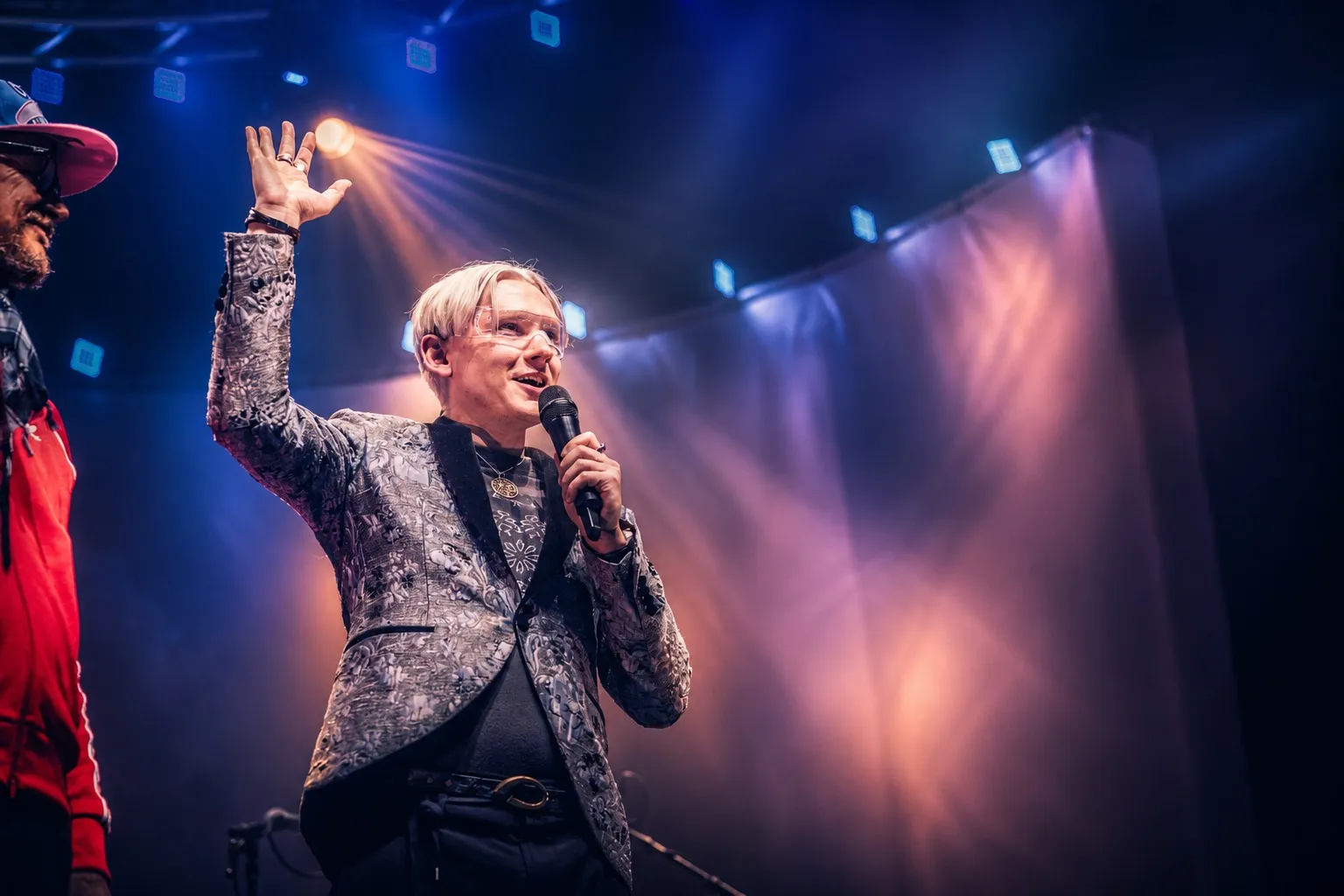
Biohacker Summit 2022 Helsinki ran on 3 and 4 June 2022, and it was noticeably less interested in gadgets than the field's reputation suggests. Across two days the strongest arguments came from cell biology and from the forest floor, often in the same session. Clinicians walked through the hallmarks of ageing while foragers argued that the weeds outside the venue were doing similar work, and a Zen monk suggested the whole premise deserved re-examination.
Ageing was mapped, then made actionable
Dr. Olli Sovijärvi gave the most systematic account, working through the hallmarks of ageing from genomic instability and telomere attrition to mitochondrial dysfunction, and arriving at a prescription that was strikingly ordinary. His framing of the problem was cultural as much as biological: longevity statistics can flatter a society while concealing something harsher, that people are living longer but not better.
Leslie Kenny approached the same map from the opposite direction, treating autophagy as the counterforce to accumulated damage. Her reversal was the memorable part: it is not because you get old that autophagy stops, she argued, but the other way round.
Siim Land took NAD, one of the most heavily marketed molecules in the field, and steered attention away from the bottle. The body recycles far more NAD than it makes from food, he said, and that recycling is circadian rather than merely biochemical, which makes timing part of the intervention. Eduard de Wilde built a top ten supplement list on triage rather than novelty, choosing compounds that were well studied, accessible, legal in Europe and low in side effects.
The forest made its case alongside the laboratory
Prof. Mauri Åhlberg reintroduced a basket of plants most people step over, spruce shoots, dandelion, wild strawberry, cow parsley, rowan and raspberry leaves, and argued that the vitamins-and-minerals framework that explained their value through the twentieth century is incomplete. The real shift, he said, came with research into secondary metabolites, the phytochemicals plants produce for their own defence.
Johanna Räikkönen framed foraging as preventive healthcare rather than nostalgia. "Wild plants are tools that contain everything," she said, and much of what she valued happened before anything reached a plate. Jaakko Halmetoja built his talk as a ritual rather than a list, organising a protocol for resilience around the four classical stages of Western alchemy and opening, in the blackness phase, with chaga.
Jouko Kivimetsä supplied the bluntest version of the same instinct. Reversing ageing is about reducing stress, he said, including the stress of trying to become someone else: if you have a model which is causing stress, you are not going to reverse ageing.
Breath was treated as measurable, not mystical
Leigh Ewin inverted the usual advice by arguing for not breathing, at least briefly, and for turning a two-part rhythm into four: inhale, pause, exhale, pause. He also spent time on an organ that rarely gets attention in this context, describing the spleen as a small blood bank.
Kasper van der Meulen went to the epidemiology, citing long-running work including the Framingham Study to argue that lung capacity is among the strongest biomarkers for lifespan, and that it is one of the few a person can consciously change. Simo Kekäläinen made the behavioural case, asking why respiratory training had not yet earned a place beside brushing teeth.
Measurement, and the end of one-size-fits-all
Chris Moore argued for a different social contract in health, attacking a system that waits for a symptom, a lump or a diagnosis before it begins work, and traced his own conviction back to the mid-1990s. Joe Cohen pushed the same logic down to the individual: what works brilliantly for one person can work poorly for another, and meaningful prediction rarely comes from a single genetic variant, which is why he favours polygenic risk scoring over isolated SNPs.
Nils Kämpe made the case that decline often begins in the smallest vessels. Microcirculation accounts for 74 per cent of human blood vessels, he said, stretching roughly 100,000 kilometres through the body, with vasomotion as a regulatory pulse separate from the heartbeat. Sakari Nikinmaa found a comparable blind spot in the mouth, tracing three pathways by which oral disease reaches the rest of the body.
Heat, cold and vibration, argued in the country that invented the sauna
Johannes Kettelhodt made the case for infrared in the most sauna-literate nation on earth, describing traditional roots reaching back to around 4000 BC and a modern variant working at 40 to 60°C by heating the body rather than the air, with artificially raised core temperature mimicking fever.
Andrus Vare went further and called the traditional sauna itself badly engineered, measuring 150°C at the ceiling against about 25°C at floor level in a room advertised at 80°C: a scorching head and cold feet, dressed up as tradition. Dr. Marco Kärkkäinen located his own work in clinical frustration rather than engineering, distinguishing the incoherent vibration that saturates modern life from the coherent kind he argues can settle a nervous system.
Consciousness, art and the states in between
Garnet Dupuis argued that modern life had starved the mind of a fourth state, the hypnagogic and hypnopompic threshold between waking and sleep, and asked the room for a different mode of attention: instead of looking, simply see.
Dr. Luis Eduardo Luna dismantled the colonial fantasy of an empty Amazon, describing a region that was one of the great zones of cultural and linguistic diversity as well as biological richness, and was careful about vocabulary, refusing the flattening word intoxicant for what he called plant teachers. Tomas Zapletal Cermak traced a hidden lineage through twentieth-century abstraction, with Hilma af Klint as its clearest case, and David Flusberg called art the ultimate biohack, describing visions that first arrived underwater.
The counterargument to the whole enterprise
Yogetsu Akasaka, a Japanese Zen monk and beatboxer, offered the summit's most direct challenge to its own premise. In a gathering devoted to enhancement he spoke about release, identifying the problem not as stress or diet but as the restless habit of interpretation, the ceaseless layering of judgment on experience. His practical contribution was shojin ryori, the Buddhist culinary tradition, where shojin means making an effort.
Teemu Arina closed the event by asking the room to breathe together rather than summarising it. "The state of your breath determines the state of your nervous system," he said, before landing on the phrase that carried the edition: we are not human beings, we are human becomings.
Session recaps
Every session from Helsinki has its own written recap:
- Afro Elektro Band Feat. Alvar Gullichsen Turned The Biohacker Summit Into A Ritual For A Different Future
- Aging Myth Busters: How To Actually Live Long And Die Boots On
- Luminous Manifestations: Digital Art, Sacred Geometry And Biohacking With VESA
- Real-Time Geometric Visuals And Performance With Yogetsu, Vaskilintu And Omnigeometry
- Meditative Chants And Sacred Mantras
- Benefits Of Breath-Holding: Reshaping The Breath And Enhancing Physiological Health
- Reconnecting With Self And Pleasure: The Ultimate Biohack For Sexual Wellbeing
- Bio-reboot Yourself with Edible Wild Plants
- Boosting Microcirculation For Improved Health And Longevity
- Botanicals For Longevity: Ancient Alchemical Wisdom And Crafting The Philosopher's Stone
- Breathe, Measure, Repeat
- Circadian NAD: Principles for Turning on the Body's Longevity Pathways
- Closing Ceremony: Reflections On Healthspan, Connection, And The Art Of Human Becoming
- Do You Have the Guts to Change Your Life?
- Amazonian Shamanism, Sacred Plants And The Wisdom Of Plant Teachers
- Extending Healthspan, Not Just Life, Became The Real Longevity Challenge
- Hack Your Oral Health
- Hacking the Hallmarks of Aging with Autophagy
- How to Harness the Power of Fungi
- Hyperbaric Oxygen And The Science Of Regeneration
- Infrared Saunas: Just Another Wellness Trend Or Here To Stay?
- Is Ketosis the Ultimate Biohack?
- Kangoo Jumps Demo: The Science And Benefits Of Rebound Exercise
- Ketogenic Diets For Longevity: Clean Keto And The Pursuit Of Metabolic Health
- Neurolipids And Lion’s Mane Offered A Biohacker Vision Of Brain Repair
- How A Quiet Tremor Promised Rest: Low-Frequency Vibration For Physical & Mental Recovery
- Lucid Visions And The Case For Reclaiming Darkness
- Mediumistic Art And The Long Reach Of The Unseen
- Movement Stick Demonstration And Overview
- Biohacking The Soul: Art, Poetry, And The Subconscious Flow
- Opening Gong Activation Tuned The Human Instrument Through Sound And Breath
- Optimizing Longevity With Biomarkers: Chris Moore’s Case For A New Social Contract In Health
- SAUNUM Sauna Revolutionized Heat Distribution And Air Quality
- The Golden Ratio Of Health And Longevity
- Time To Evolve: How MAD Metaverse Turned NFTs Into A Biohacking Fantasy
- Top 10 Anti-Aging Supplements And The Future Of Longevity Maintenance
- Top Breakthrough Supplements
- Using Your Breath for a Longer Life
- Precision Health: Personalizing Longevity Through Genetics And Lab Biomarkers
- Why I Fight: Bushido And The Japanese Way Of Biohacking For Wellbeing
- Wild Edible Plants For Health And Longevity
- Zen Buddhist Monk’s Perspectives On Biohacking: Shojin Cooking, Meditation And Music
Frequently asked questions
When and where was Biohacker Summit 2022 Helsinki?
It ran on 3 and 4 June 2022 in Helsinki, Finland, and was noticeably less interested in gadgets than the field's reputation suggests: the strongest arguments came from cell biology and from the forest floor, often in the same session.
What was the recurring argument of the edition?
That frontier biology and ordinary advice keep pointing the same way. Olli Sovijärvi walked through the hallmarks of ageing and arrived at a strikingly familiar prescription, while foragers argued the plants outside the venue were doing comparable work.
Who spoke at the 2022 Helsinki summit?
Speakers included Olli Sovijärvi and Leslie Kenny on ageing, Siim Land on circadian NAD, Mauri Åhlberg and Johanna Räikkönen on wild plants, Leigh Ewin and Kasper van der Meulen on breath, Luis Eduardo Luna on Amazonian shamanism, and the Zen monk Yogetsu Akasaka.
About the event
Biohacker Summit 2022 Helsinki took place in Helsinki on 3 and 4 June 2022. The series continues at HOLOLIFE Summit 2026 Amsterdam on 14 and 15 November 2026.