Biohacker Summit 2022 Helsinki
Mediumistic Art And The Long Reach Of The Unseen
By Teemu Arina · · Updated
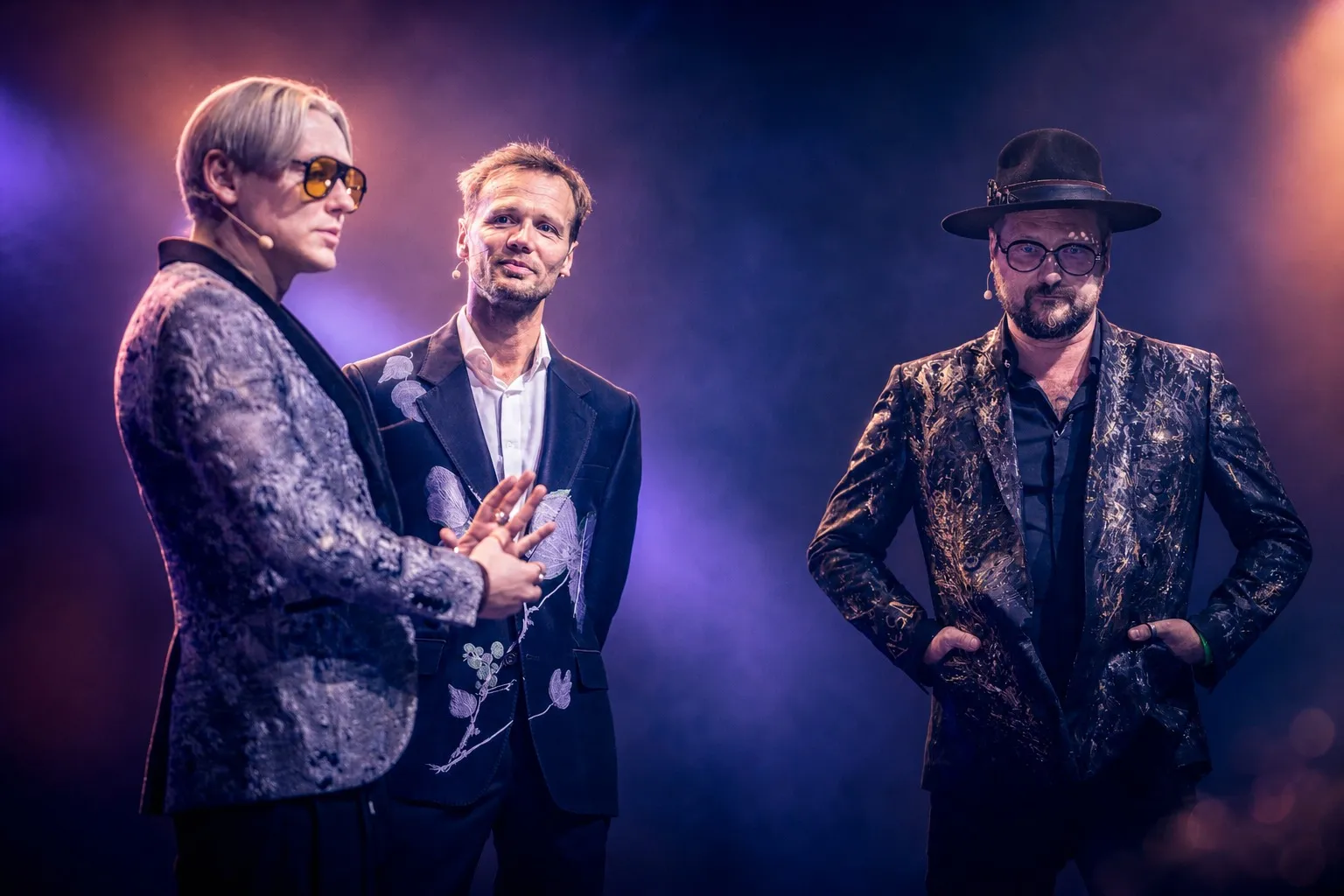
At Biohacker Summit 2022 Helsinki, Tomas Zapletal Cermak Mapped A Strange Borderland Between Spirit, Symbol And Modern Abstraction
Late on Friday, 3 June 2022, at Biohacker Summit 2022 Helsinki in Finland, the speaker Tomas Zapletal Cermak stood before an audience and made a case that would have sounded outlandish in almost any other setting and yet felt strangely at home here. His presentation, Mediumistic Art as a Channel from Spiritual to Material World, asked listeners to consider art not simply as expression, craft or commerce, but as evidence: a record of contact between the visible world and another one lying just beyond it.
Cermak, a Czech gallerist, curator and entrepreneur with deep ties to contemporary art, did not present mediumistic art as a fringe curiosity. He placed it near the heart of modern visual culture. The great pioneers of abstraction, he argued, were not merely formal innovators breaking with representation. They were seekers, experimenting with ritual, geometry and altered states in an attempt to render what he called the “fourth dimension”, a realm beyond the body, where spirit might reside.

A Theory Of Art As Conduit
The central proposition was stark. “Pure mediumistic art happens when a non-professional starts drawing something that appears to be signed by a name they have never heard,” Cermak said. “They become a medium, allowing another spirit to work through their body to create.”
In his telling, mediumistic art emerged when ordinary consciousness receded and something else took hold. The hand moved, but the will behind it was uncertain. Precision appeared where training did not exist. Symbolic systems surfaced fully formed. The resulting images, often geometric, ritualistic or eerily exact, seemed to exceed the known abilities of the person who made them.
Many artists, he noted, had long described creation in terms that echoed possession or transmission. “Many artists speak of themselves as mediums,” he said. “They say, it came to me or it just happened.” Such moments, he suggested, were not confined to studios. They belonged to the wider human experience of intuition, coincidence and the uncanny feeling that thought and event sometimes meet in ways reason cannot fully map.
The Hidden Spiritual History Of Abstraction
Cermak’s most provocative claim was that mediumistic practice sat behind some of the foundational movements of twentieth-century art. He invoked figures such as Frantisek Kupka, Kazimir Malevich, Piet Mondrian and Wassily Kandinsky, artists usually framed through the language of modernism, theory and formal experimentation. Here, however, they appeared as explorers of invisible orders.
In abstract painting, Cermak argued, one often saw attempts “to show the fourth dimension, the dimension where we are free from our bodies and where the spirits live”.
This reading shifted abstraction away from the standard narrative of modern progress and toward a spiritual archaeology. Geometry was not only design. It was code. Repetition was not only method. It was invocation. The move away from representation was not only aesthetic rebellion. It was an attempt to picture realities that could not be seen directly.
He traced the roots of these symbols far beyond the European avant garde. “The symbols and principles of mediumistic art can be tracked back to ancient Egypt and Mesopotamia,” he said. “It is fascinating how common these messages are across borders and throughout all civilizations around the world.”
Hilma Af Klint And The Art The World Was Not Ready To See
No figure embodied his argument more powerfully than Hilma af Klint, the Swedish artist who, in recent decades, has come to be seen as a central but long obscured pioneer of abstraction. According to Cermak, her works from the early 1900s were among the first documented abstract paintings of the modern era, created through an avowed engagement with spiritual forces.
What made her story so arresting was not only the work itself but her decision to withhold it. During her lifetime, she did not exhibit these paintings publicly, and before her death she instructed that they remain unseen for decades. Cermak interpreted that choice as a judgment on her own age: the audience, she believed, was not yet prepared.
That delay now feels almost prophetic. Af Klint’s posthumous rise has forced museums and historians to confront how thoroughly the spiritual dimensions of modernism were edited out of the official account. In Cermak’s retelling, her paintings were not marginal to the story of abstraction. They were the story, or at least a version of it that had been hidden in plain sight.
Ritual, Darkness And The Mirror
If Cermak’s account of mediumistic art carried the romance of mystery, it also came with procedure. The practice, he said, was governed by techniques repeated across communities and generations. These often involved darkness, a mirror, a light source such as a candle or red lamp, and spoken rituals intended as protection.
The person entering such a state had to be calm, focused and unafraid. Boundary-setting mattered. So did preparation. This was not, in his framing, improvisation but disciplined surrender.
Traditional mediumistic art techniques, he said, often required the practitioner to work in complete darkness before a mirror while performing protective rituals designed to manage spirit contact.
Whether one accepted the metaphysics or not, the ritual structure itself was revealing. It suggested that the production of these images was less about spontaneous inspiration than about constructing a threshold, a condition in which ordinary authorship might give way to another kind of agency.
A Language Of Symbols
From there, Cermak turned to symbolism, reading mediumistic images not as decorative abstractions but as visual texts. Spirals, cruciforms, steps, flowers, snakes and concentric forms carried meanings that, he argued, recurred across cultures and epochs.
The spiral could signify voice and manifestation. Three steps could indicate ascent toward higher wisdom. Contrasting colours might suggest dualities such as night and day, inner and outer, conscious and unconscious. A lily could stand for purity; a white rose for love linked to feminine principle. Even the so-called Jungian onion, with its layered conception of self, appeared in these symbolic worlds as a map of consciousness and its hidden depths.
To decode such imagery, in Cermak’s view, was not merely to become a better art viewer. It was to become more literate in reality itself. Symbol was not ornament laid over the world. It was part of the world’s deeper operating system.
Truth, Prediction And The Reach Of The Subconscious
Some of the most arresting moments in the talk came when Cermak described mediumistic art as a source of knowledge about events yet to come. These drawings, he suggested, could contain intimations of the future, surfacing before historical events made sense in ordinary time. He referred to works said to foreshadow the war in Ukraine, though he noted the sensitivity and suffering surrounding them.
Such claims are difficult to verify and easy to dismiss. Yet they were not presented as spectacle. Cermak folded them into a larger idea: that non-conscious creation might reveal both the deepest layers of the self and signals from beyond it. The dividing line between subconscious excavation and spiritual contact remained unresolved, perhaps necessarily so.
Still, the motivation of those who made these works, he insisted, was remarkably consistent. “Artists experimenting with mediumistic art are searching for the truth,” he said. “This search brings us to very humble questions, reminding us that there are far more things surrounding us than we can see.”
That line gave the presentation its emotional core. Beneath the occult architecture, the historical references and the symbolic diagrams was a simpler human impulse: to know whether the world exceeds what the senses can register, and whether art might be one of the few instruments capable of testing that proposition.
Biohacking Beyond The Body
At a summit devoted largely to performance, optimisation and the technologies of self-improvement, Cermak’s talk offered an unusual complement. He suggested that the next frontier of hacking the human system might not lie in supplements, metrics or longevity protocols alone, but in attention to symbols, intuition and the invisible patterns that shape perception.
That was where his lecture landed with a kind of quiet force. Mediumistic art, in this framing, became a spiritual analogue to biohacking: a method, however contested, for exploring hidden layers of human experience and perhaps expanding what one counts as knowledge.
The material world, Cermak implied, was not self-sufficient. Images leaked into it from somewhere else. The task was to learn how to read them.
In Helsinki, on that June evening, he did not ask the audience for belief so much as openness. Art, he suggested, had always known more than the histories written around it. And if the modern world had taught itself to distrust the unseen, mediumistic art stood as a strange, enduring reply: that the hand may draw what the eye cannot yet understand.
Frequently asked questions
What is mediumistic art?
Pure mediumistic art happens when a non-professional starts drawing something that appears to be signed by a name they have never heard, Tomas Zapletal Cermak said. They become a medium, allowing another spirit to work through their body to create.
What is his claim about modern art?
That mediumistic practice sat behind some of the foundational movements of twentieth-century abstraction. He invoked Frantisek Kupka, Kazimir Malevich, Piet Mondrian and Wassily Kandinsky, artists usually framed through modernism and formal experimentation.
Why does Hilma af Klint matter to the argument?
Because no figure embodies it more clearly. Hilma af Klint has come in recent decades to be seen as central, having produced abstract work the art world was not ready to receive at the time she made it.
About the event
This recap is part of the Biohacker Summit 2022 Helsinki series, recorded in Helsinki on 3 and 4 June 2022. Read the summary of the whole event or join the next edition, HOLOLIFE Summit 2026 Amsterdam, on 14 and 15 November 2026.
In this story
Comments
Loading comments…