Biohacker Summit 2022 Helsinki
Reconnecting With Self And Pleasure: The Ultimate Biohack For Sexual Wellbeing
By Teemu Arina · · Updated
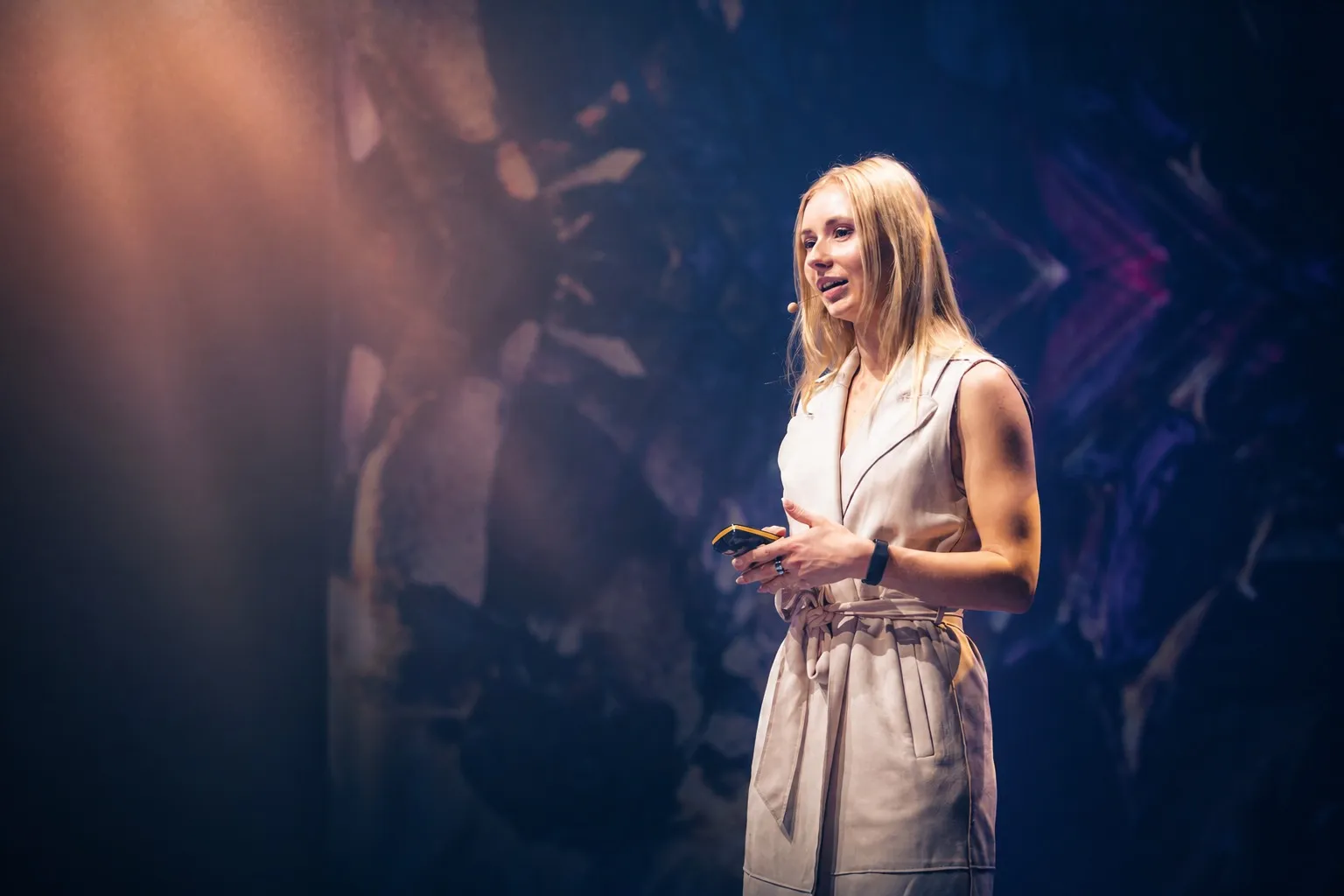
At Biohacker Summit 2022 Helsinki, Anna Lindfors Asked A Radical Question
In a culture obsessed with optimization, Anna Lindfors arrived at Biohacker Summit 2022 Helsinki with a message that cut against the grain. Speaking in Helsinki, Finland, on Friday, 3 June 2022, the biohacking sexologist did not offer a miracle supplement, a wearable, or a sleek new protocol for better sex. Instead, she proposed something far more intimate and, in many ways, more difficult: the most powerful biohack for sexual wellbeing was to reconnect with oneself.
Lindfors, who specializes in sexological therapy and co-founded iXES to promote women’s sexual wellbeing, framed sexuality not as a niche concern but as a central dimension of human life. “Sexuality is our core, it’s our primal force,” she told the audience. “It is time to stop performing life and start enjoying it.”

It was a striking intervention at an event known for pushing the frontiers of health, longevity and performance. While many summit talks explored how to sharpen the body and extend the lifespan, Lindfors turned attention to an area often shrouded in silence, shame and private suffering.
The Numbers Told A Story Of Quiet Distress
Lindfors grounded her talk, titled Best Biohacks for Sexual Wellbeing, in sobering statistics. Sexual dysfunction, she said, affected 40% of women and around 60% of men, suggesting that struggles with libido, arousal, orgasm and pain were not marginal problems but widespread features of modern life.
For women, the figures were particularly stark. Around 45% experienced low libido, 36% had low arousal, and 54% had difficulty reaching orgasm. Only 20% of women, she noted, orgasmed through penetration alone. It was a number that helped explain another: roughly 70% of women had faked an orgasm. Up to 75% had experienced pain during or after sex at some point in their lives.
Men, too, were hardly untouched by these difficulties. Lindfors said around 40% experienced erection challenges, with prevalence rising with age. Between 10% and 50% faced low libido, while 30% dealt with sensitive ejaculation.
These were not just data points. They were evidence of a deeper malaise, one hidden beneath the glossy language of performance, self-improvement and sexual confidence.
Beyond Performance, Toward Pleasure
The central critique of Lindfors’ talk was aimed at the way sexuality had been absorbed into the logic of achievement. In biohacking circles especially, she suggested, sex could become another arena for metrics, goals and optimization. More orgasms. Better stamina. More control. Better output.
But in the pursuit of measurable success, something vital risked being lost.
“We are performing life,” she said, warning against reducing sex to a checklist of outcomes. The problem was not ambition itself, but the way performance could displace presence, intimacy and genuine pleasure. If sexuality became another stage on which to prove oneself, then shame was never far behind.
Authentic sexual wellbeing, in Lindfors’ account, required a shift away from external validation and toward internal truth. “True, authentic sexual pleasure is the most empowering and most liberating feeling there is,” she said.
The Darkness Could Not Be Skipped
There was no easy shortcut in Lindfors’ framework. No capsule, no gadget, no simple stack to erase years of insecurity, trauma or emotional disconnection.
“I wish there was a supplement that we could take to get there, or a device or a simple biohack,” she said. But what was needed, she argued, was harder and more human: “We need to go through the darkness, face our challenges, and reconnect with ourselves to get to our pleasure.”
It was perhaps the most arresting idea in the talk. Sexual wellbeing was not merely about physical function. It was bound up with childhood wounds, attachment patterns, body image, heartbreak, trauma and the quiet adaptations people made simply to survive. To heal sexuality, one had to acknowledge the emotional terrain beneath it.
That insistence moved the conversation beyond dysfunction as a technical issue and into the realm of selfhood. The body was not malfunctioning in isolation. Often, it was carrying history.
A Simple Exercise Became The Heart Of The Message
At one point, Lindfors asked the audience to stand, close their eyes and reconnect with their bodies. It was a small, almost disarmingly simple exercise, but it embodied the core of her argument: before pleasure could be shared, measured or improved, it had to be felt.
She invited listeners to sense themselves honestly, without performance. To consider their wounds, their insecurities, their coping mechanisms. To recognize how often life had been lived in survival mode rather than in enjoyment.
Then came the challenge that anchored the talk’s emotional force: “Every single day, ask yourself: what do I enjoy? What brings me pleasure? Choose that and go towards that.”
In a summit devoted to hacking biology, the instruction sounded almost subversive. It asked not how to do more, but how to feel more. Not how to outperform others, but how to come home to oneself.
Shame Thrived In Silence, Connection Broke It
Lindfors also made clear that sexual suffering was intensified by isolation. Many people, she suggested, believed themselves uniquely deficient because so few honest conversations took place about sex, pain, desire and disappointment.
“You are not alone; we are all together in this journey and it is time to reconnect,” she said.
That line carried the broader significance of the talk. Its power lay not only in naming distress but in normalizing it, drawing sexual wellbeing out of secrecy and placing it back within the domain of collective human experience. In doing so, Lindfors challenged one of the enduring cruelties of sexual shame: the belief that everyone else is fine.
The Most Important Biohack Was Not A Technology
By the end of her presentation at Biohacker Summit 2022 Helsinki, Lindfors had reframed the very idea of a biohack. The ultimate intervention, she argued, was neither futuristic nor external. It was the ongoing work of self-reconnection, of identifying pleasure, trusting it and allowing it to guide life.
Her closing message was both tender and defiant. The route to better sex, and perhaps to a fuller life, did not begin with performance. It began with presence.
In an age that often treated the body as a system to be mastered, Anna Lindfors offered another possibility: that liberation might start not in control, but in honesty. Not in doing more, but in feeling what had long been buried. And not in chasing an ideal of sexuality, but in reclaiming pleasure as something deeply personal, deeply human, and long overdue.
Frequently asked questions
How common is sexual dysfunction?
Anna Lindfors grounded the talk in sobering figures, saying it affected 40% of women and around 60% of men, which reframes struggles with libido, arousal, orgasm and pain as widespread features of modern life rather than marginal problems.
What is her critique of biohacking here?
That sexuality gets absorbed into the logic of achievement. In biohacking circles especially, she suggested, sex becomes another arena for metrics and optimization: more orgasms, better stamina, more control, better output, and something vital is lost in the pursuit.
Is there a shortcut?
No, and she said so plainly. There is no capsule, gadget or stack that erases years of insecurity, trauma or emotional disconnection. I wish there was a supplement that we could take to get there, she said, before making the case for the slower route.
About the event
This recap is part of the Biohacker Summit 2022 Helsinki series, recorded in Helsinki on 3 and 4 June 2022. Read the summary of the whole event or join the next edition, HOLOLIFE Summit 2026 Amsterdam, on 14 and 15 November 2026.
In this story
Comments
Loading comments…