Biohacker Summit 2022 Helsinki
Boosting Microcirculation For Improved Health And Longevity
By Teemu Arina · · Updated
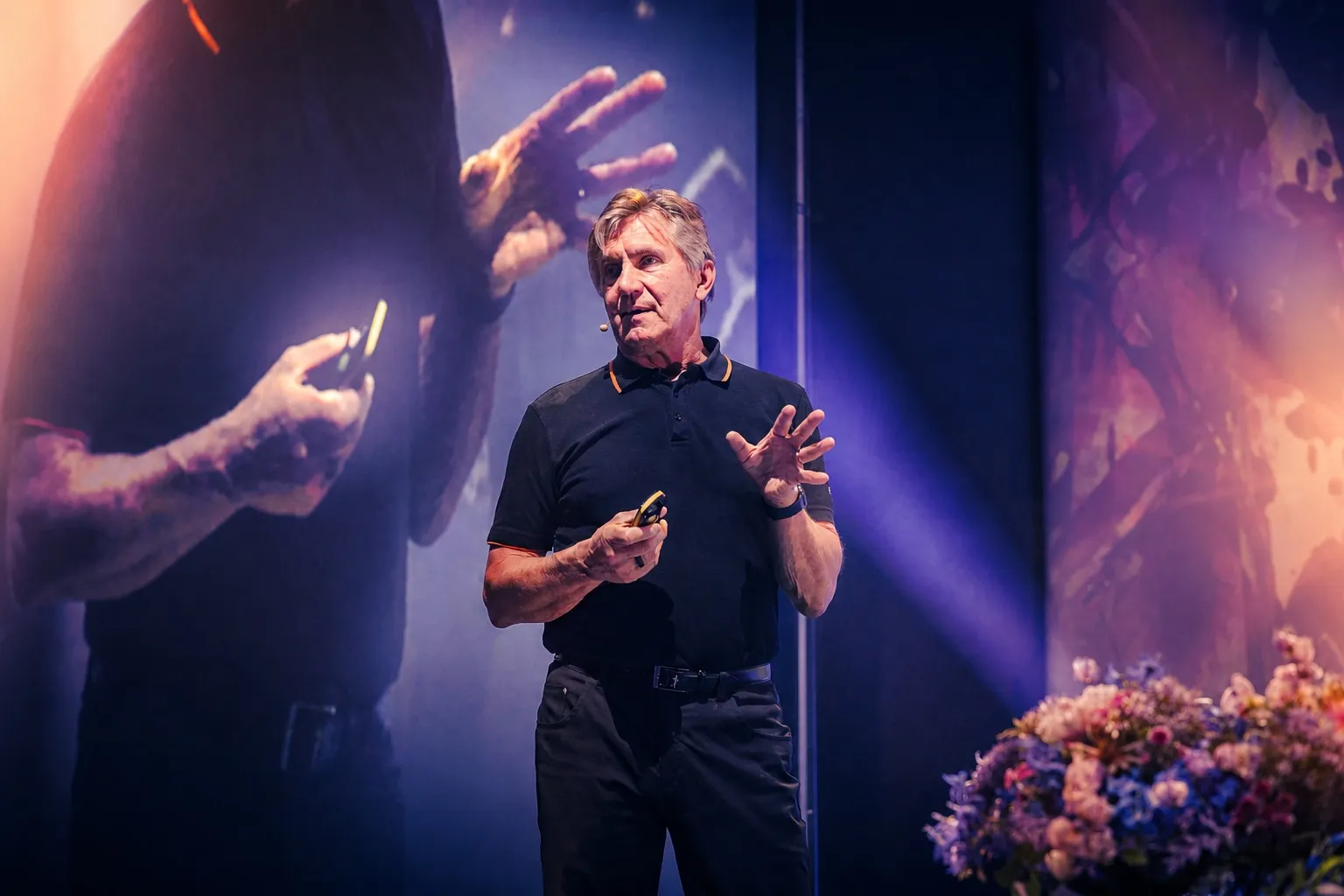
At Biohacker Summit 2022 Helsinki, Nils Kämpe Made The Case That Aging Often Begins In The Smallest Vessels
In Helsinki on 3 June 2022, at Biohacker Summit 2022 Helsinki, speaker Nils Kämpe stepped onto the stage with a claim both simple and sweeping: “All big things, severe things, start small.” By small, he meant the body’s microcirculation, the vast hidden network of tiny vessels that he argued sat at the root of aging, chronic illness, immune function and recovery.
Kämpe, whose background spanned IBM, Nokia and later the high tech health sector, framed the talk, titled Boosting Microcirculation for Improved Health, as both a scientific primer and a practical appeal. His message was direct. “Aging starts in the microcirculation,” he said. “When the microcirculation becomes impaired, you will see the aging process manifest in many aspects of your health.”
The Invisible System With An Outsized Role
The force of Kämpe’s presentation lay in scale. Microcirculation, he said, accounted for 74 per cent of human blood vessels, stretching across roughly 100,000 kilometres of the body in fine capillaries and small vessels too tiny to be seen without magnification. Their function was indispensable: delivering oxygen and nutrients, removing waste products, exchanging hormones and regulating immune cell movement through tissues.
“Microcirculation is a huge system of one hundred thousand kilometers of small vessels,” Kämpe told the audience. “It has the vital job of delivering oxygen and nutrition while removing waste products from your tissues.”
He described this hidden architecture not as passive plumbing, but as a dynamic regulatory system central to health itself. The body’s white blood cells, he said, depended on it to patrol and repair tissue. “Microcirculation is essential for your immune system, allowing white blood cells to move through your tissues like police in traffic to identify and repair what is wrong in your body.”
Why Aging, Disease And Blood Flow Were Linked
The core argument of the session was that deteriorating microcirculation helped explain why aging and chronic disease often advanced hand in hand. Kämpe pointed to emerging research suggesting that impaired perfusion, reduced vasomotion and capillary loss were not merely side effects of illness or age, but part of the mechanism driving decline.
He cited discussion in cardiovascular research that urged scientists to pay closer attention to the smallest vessels, where, he suggested, the earliest damage began. As capillaries were lost and blood flow to tissues worsened, oxygen delivery fell, waste removal slowed and the visible signs of aging followed.
This, in Kämpe’s telling, was not abstract theory. It was a change in the body’s most intimate terrain, where resilience either held or frayed.
The Rhythm Beyond The Heartbeat
One of the most striking parts of the talk concerned vasomotion, the rhythmic contraction and expansion of small vessels. Kämpe described it as a regulatory pulse that operated independently of the heartbeat.
“The contraction and expansion of your vessels, called vasomotion, is a system completely independent of your heartbeat,” he said. “It is a vital regulation process that determines where blood goes in your body.”
In healthy people, he said, this vessel movement occurred roughly three times a minute. In people with chronic illness, including diabetes, it could slow dramatically, even to once every ten minutes. The consequence was not merely sluggish circulation, but poorer distribution of blood to tissues that needed it most.
By showing magnified footage of small vessels contracting and relaxing, Kämpe sought to make visible what usually remained unseen: health as a matter of motion, rhythm and microscopic flow.
The Longevity Marker That Drew Attention
Kämpe also referred to work around Bio-ADM, a biomarker associated with circulatory health. According to the findings he cited, lower Bio-ADM levels correlated with better microcirculation, while higher levels suggested poorer vessel function. He noted that centenarians tended to show lower levels, positioning microcirculatory health as a possible thread in the biology of longevity.
The implication was powerful, if still emerging. A longer life might depend not only on major organs or obvious disease markers, but on preserving the integrity of the smallest blood vessels over time.
A Technology-Driven Answer
Where the talk shifted from diagnosis to intervention was in Kämpe’s advocacy for BEMER physical vascular therapy, which he presented as an FDA-cleared and EU-certified medical technology designed to improve vasomotion through biophysical stimulation.
He described the therapy as a way of physically prompting vessel contractions in the microcirculation, thereby improving perfusion, oxygen use and immune cell mobility. In his account, an eight-minute session could stimulate the system for about 12 hours, making twice-daily use the recommended routine.
The before-and-after imagery he described to the audience was intended to show a microvascular system becoming less congested and more active over minutes of treatment, with red blood cells moving more effectively into capillaries and white blood cells behaving more as they should along vessel walls.
For Kämpe, this was where science met habit. “If I can see a technology that can improve my health without any side effects, I should definitely be using it,” he said. “Prevention is the most important thing I do for my health and longevity.”
Prevention As Daily Practice
That emphasis on prevention gave the talk its broader emotional shape. Kämpe did not present microcirculation as a niche concern for specialists, but as a daily frontier of health maintenance. He compared regular use of vascular stimulation technology to brushing one’s teeth: small, repeated acts carried out not in crisis, but to avoid crisis.
There was a wider philosophy beneath that comparison, one familiar to the Biohacker Summit audience in Helsinki. The body, in this view, was not only something to treat when broken, but something to tune, support and preserve before symptoms became disease.
The Quiet Radicalism Of The Smallest Vessels
What made Kämpe’s presentation resonate was not just the promise of a device or the language of performance and recovery. It was the inversion at its heart. Modern medicine and public attention often fix on the dramatic: heart attacks, tumours, organ failure, visible decline. Kämpe asked the audience to look instead to the nearly invisible.
In the smallest vessels, he suggested, lay the beginnings of both deterioration and repair. If that was true, then health was being negotiated constantly in places far beneath perception, in the slow opening and narrowing of vessels, in the movement of oxygen, in the silent traffic of immune cells.
At Biohacker Summit 2022 Helsinki, Nils Kämpe offered a theory of aging that was at once microscopic and expansive. The future of longevity, he argued, might depend less on grand interventions than on whether the body could keep its tiniest roads open.
Frequently asked questions
How much of the circulatory system is microcirculation?
Nils Kämpe put it at 74 per cent of human blood vessels, stretching roughly 100,000 kilometres through the body in capillaries and small vessels too tiny to see without magnification, delivering oxygen and nutrients and removing waste.
Why link blood flow to ageing?
Because the decline may be mechanism rather than symptom. Kämpe pointed to research suggesting impaired perfusion, reduced vasomotion and capillary loss are not merely side effects of illness or age but part of what drives them. All big things, severe things, start small, he said.
What is vasomotion?
The rhythmic contraction and expansion of small vessels, which Kämpe described as a regulatory pulse operating separately from the heartbeat. It is the part of circulation that the usual cardiovascular metrics do not capture at all.
About the event
This recap is part of the Biohacker Summit 2022 Helsinki series, recorded in Helsinki on 3 and 4 June 2022. Read the summary of the whole event or join the next edition, HOLOLIFE Summit 2026 Amsterdam, on 14 and 15 November 2026.
In this story


Comments
Loading comments…