Biohacker Summit 2022 Helsinki
Top 10 Anti-Aging Supplements And The Future Of Longevity Maintenance
By Teemu Arina · · Updated
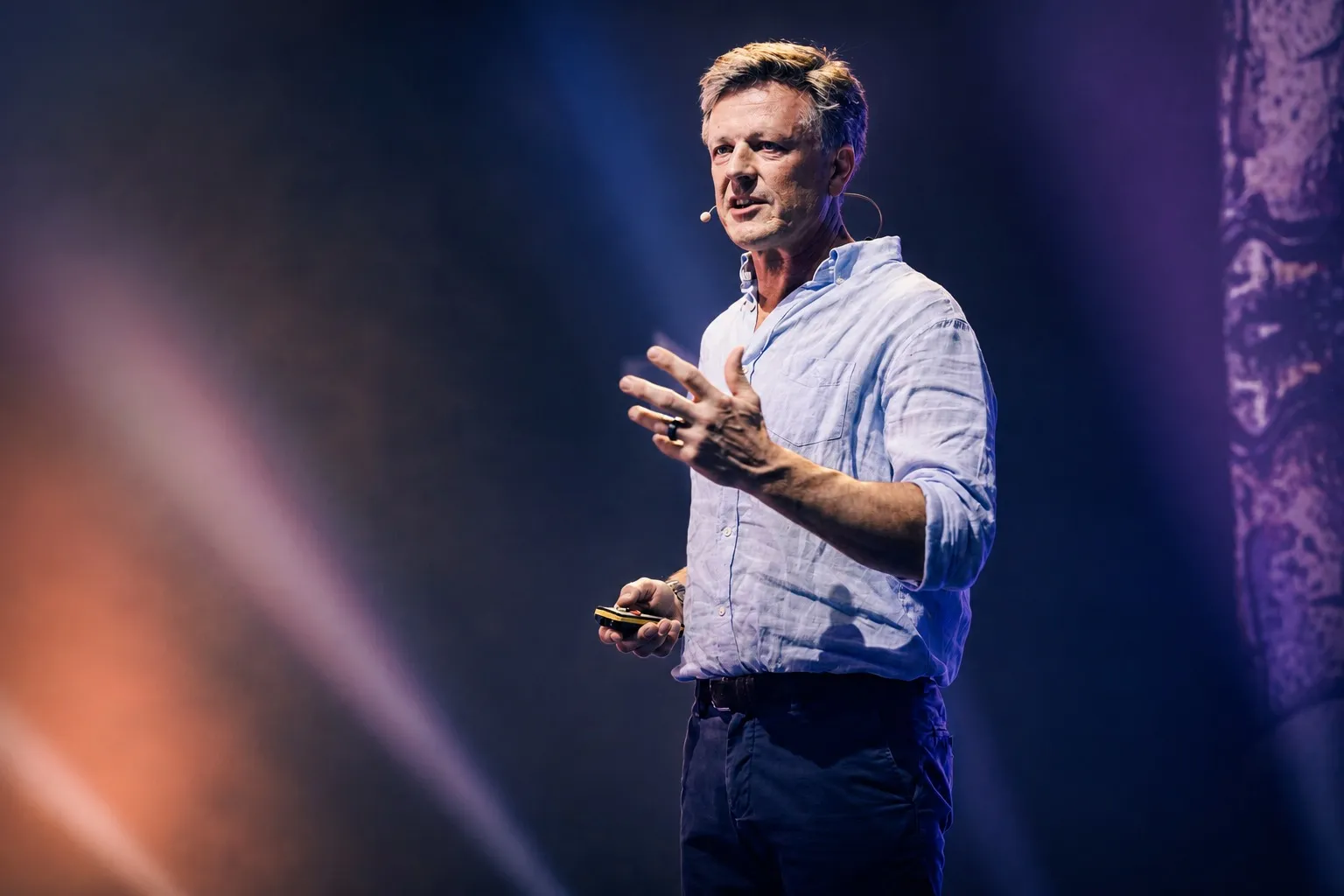
At Biohacker Summit 2022 Helsinki, Eduard de Wilde Recast The Supplement Conversation
At the Biohacker Summit 2022 Helsinki, held in Helsinki, Finland, on 3 and 4 June 2022, speaker Eduard de Wilde stepped onto the stage with a proposition that was at once pragmatic and provocative. His presentation, Top 10 Anti-Aging Supplements, did not promise immortality in a bottle. Instead, it offered something more sober, and perhaps more radical: a maintenance plan for the human body in an age increasingly tempted to believe that aging itself may one day be repaired.
De Wilde, founder and CEO of the European biohacking platform LiveHelfi.com and a long-time advocate of performance-driven health, argued that the language of anti-aging had already begun to shift. “Aging has become a disease instead of just a destiny,” he said, framing the condition not as an inevitable decline but as a process of cumulative damage that modern science was beginning to understand in increasingly granular detail.
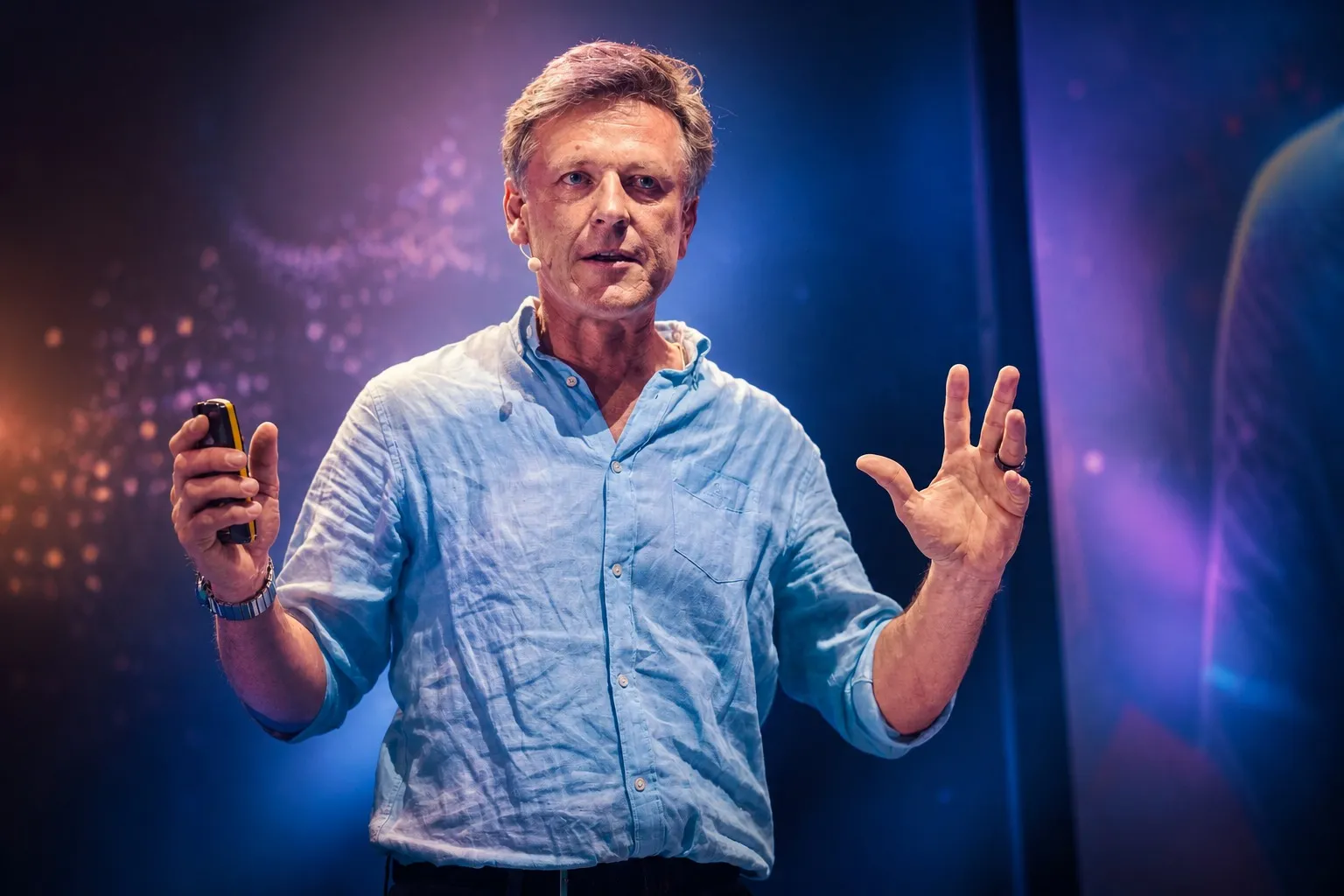
If that sounded like science fiction, de Wilde’s larger message was that it no longer belonged there.
Aging As Damage, Not Fate
The backbone of de Wilde’s case rested on a now familiar but still unsettling idea in longevity science: aging is not one thing. It is a layered accumulation of failures, metabolic, cellular and structural, expressed through multiple hallmarks that gradually erode the body’s resilience.
He referred to an expanded framework of thirteen hallmarks of aging, drawing on several schools of thought in the field. The implication was clear. If aging is damage, then the task is not to fantasize about total reversal tomorrow, but to manage deterioration today.
That realism shaped the entire talk. De Wilde did not claim supplements could solve the whole problem. In fact, he suggested the opposite. Against the vastness of biological decay, supplementation looked less like a cure than a holding strategy.
“We should not call these anti-aging supplements,” he said, “but maintenance supplements that we need to survive until we reach a time where we see other means to extend our lifespan.”
The Maintenance Bridge To A Different Future
What made the presentation resonate was its tension between humility and ambition. De Wilde insisted that today’s interventions remain primitive by the standards of what may come. Yet he also placed them inside a sweeping technological narrative.
Borrowing from the parable of the chessboard and doubling grains of rice, he argued that medicine, like computing, was entering an exponential era. The metaphor served as a warning against linear thinking. What seems incremental in the early moves becomes transformative in the later ones.
By his reading, humanity was still in what he called “the stone age of life extension,” using nutrition, exercise and basic supplementation to reduce immediate risks while waiting for more consequential advances in gene therapy, stem cells, organ replacement and precision diagnostics.
“By our current lifestyle and supplementation, we are at this very moment in the stone age of life extension, preparing for a future that will significantly extend our healthspan,” he said.
The supplements, then, were not the future. They were the bridge to it.
A Top 10 Built On Science, Cost And Coverage
De Wilde’s list was shaped less by novelty than by triage. He selected substances that were relatively well studied, broadly accessible, legal in Europe, low in side effects and capable of addressing different zones of biological damage. Cost mattered too. His advice was to start with the “low-hanging fruit” before chasing glamorous compounds with thinner evidence.
“Start with the low-hanging fruit of well-researched supplements before experimenting with the sexy, innovative, and highbrow options that others are talking about,” he said.
That philosophy produced a stack notable for its restraint.
Magnesium, GlyNAC And Creatine Formed The Foundation
At the base of the list sat magnesium, described by de Wilde as a master mineral involved in hundreds of biochemical processes and essential to DNA repair and replication. In a culture often obsessed with exotic interventions, magnesium represented something almost old-fashioned: basic, cheap and deeply necessary.
Then came glycine, particularly in combination with N-acetyl cysteine as GlyNAC, a pairing intended to support glutathione synthesis. Since glutathione is one of the body’s major antioxidants, the appeal here was straightforward. If aging involves oxidative stress and repair failure, preserving antioxidant capacity becomes a form of infrastructural maintenance.
Creatine followed, not as a bodybuilding accessory but as a longevity tool. De Wilde framed muscle preservation as one of the central defensive lines against aging, especially after the age of 30, when muscle loss begins its slow but consequential advance. Strength, in this framing, was not aesthetic. It was anti-fragility. It meant fewer falls, fewer fractures and a greater reserve against decline.
Senolytics, Polyphenols And Mitochondrial Defences
Further up the list, de Wilde moved into the compounds that speak more directly to contemporary longevity discourse.
Fisetin, a senolytic, was included for its potential role in clearing senescent cells, the damaged cells that linger, inflame and degrade tissue function. He stressed that such compounds should not necessarily be taken continuously, but rather cycled.
Curcumin was presented as another promising candidate, though with caution. Its low natural bioavailability has long complicated its use, and de Wilde acknowledged that newer formulations attempt to solve that problem. But he also underscored a broader principle: compounds that work through hormetic or xenohormetic pathways can help in the right dose and harm in the wrong one.
This was one of the presentation’s quiet strengths. For all its enthusiasm, it remained alert to excess. In de Wilde’s view, more was not automatically better.
Astaxanthin earned its place for what he described as its potent mitochondrial antioxidant role. While often marketed for eye health, he suggested its deeper significance may lie in helping protect the energy systems of the cell itself. In longevity circles, mitochondria remain a recurring obsession for good reason. To preserve them is to preserve function at the source.
Fish Oil And Functional Mushrooms Rounded Out The Core Stack
Fish oil, familiar to almost anyone who has wandered through a supplement aisle, stayed on the list because some of the most durable anti-aging strategies remain the least dramatic. De Wilde pointed to its broad research base and possible telomere-protective effects, while warning that quality matters enormously because polyunsaturated fats are vulnerable to oxidation.
Then came the functional mushrooms, especially chaga and reishi. De Wilde highlighted chaga’s unusually high antioxidant capacity and described the category as one where traditional natural substances and emerging evidence had begun to overlap in intriguing ways. In a talk otherwise focused on scientific utility, this was perhaps the most visibly holistic segment, a reminder that biohacking culture often stitches together laboratory reasoning with older medicinal traditions.
Spermidine And NAD Precursors Pointed Toward Cellular Renewal
The list’s final stretch entered the terrain of autophagy and cellular energy.
Spermidine, already a major subject of discussion in longevity research, was included for its links to healthy aging pathways. De Wilde did not dwell long on it, noting that other speakers at the event were better placed to delve into specifics, but he clearly considered it important enough for the top tier.
The same was true of NAD precursors, specifically NR and NMN. These compounds have become near-mythic in parts of the longevity world, though evidence and interpretation remain contested. De Wilde took a measured position. He suggested they may be especially relevant for older adults, particularly those in their 50s and 60s, when NAD levels decline and cellular repair and energy production become more compromised. His preference leaned toward NR on the basis of human clinical research, though he acknowledged the debate remained open.
The Real Revolution May Be Personalization
For all the attention paid to the ten supplements, the most consequential part of de Wilde’s presentation may have been what came after them. He argued that generic advice itself was becoming obsolete.
“The democratization of healthcare is enabling people to use measurement tools to see exactly what effect supplements have on their own bodies,” he said.
In that vision, blood testing, biomarker tracking, DNA analysis and digital diagnostics would soon allow individuals to build supplement protocols tailored not to trends but to data. The age of guesswork, or at least the age of one-size-fits-all stacks, would give way to precision-guided maintenance plans.
It was a powerful idea because it recast supplementation from consumer ritual into feedback-driven medicine. No more expensive hope. No more “investing in expensive urine,” as he put it with a flash of disdain. The question would increasingly be measurable effect.
A Final Note Of Irony, And A Reminder Of Perspective
And yet de Wilde did not end with charts, biomarkers or futuristic certainty. He closed on a story about a centenarian woman who credited her long life to a habit adopted after hearing that a 110-year-old Russian man drank vodka every day. She began drinking two vodkas daily, she said, and “it worked.”
The room, one imagines, laughed. But the joke carried a subtle warning. Longevity science may be growing sharper, more ambitious and more mechanistic. Even so, the human desire to decode long life remains tangled in anecdote, culture, luck and myth.
That may have been the deepest truth of the talk at Biohacker Summit 2022 Helsinki. The future of longevity maintenance, as Eduard de Wilde described it, lay in careful supplementation, exponential technological change and personalized diagnostics. But for now, the body still asked for modesty: preserve what you can, measure what matters, and buy time for the breakthroughs that have not yet arrived.
Frequently asked questions
How does Eduard de Wilde frame ageing?
As damage rather than fate: a layered accumulation of metabolic, cellular and structural failures expressed through multiple hallmarks that gradually erode resilience. He worked from an expanded framework of thirteen hallmarks rather than the original nine.
How did he choose the list?
By triage rather than novelty. De Wilde selected substances that were relatively well studied, broadly accessible, legal in Europe, low in side effects and capable of addressing more than one mechanism at a time.
What is the maintenance bridge?
His framing for interventions that are primitive by the standards of what may come but still worth taking now. Borrowing the parable of the chessboard and doubling grains of rice, he placed today's supplements inside a longer technological curve.
About the event
This recap is part of the Biohacker Summit 2022 Helsinki series, recorded in Helsinki on 3 and 4 June 2022. Read the summary of the whole event or join the next edition, HOLOLIFE Summit 2026 Amsterdam, on 14 and 15 November 2026.
In this story

Comments
Loading comments…