Biohacker Summit 2022 Helsinki
Aging Myth Busters: How To Actually Live Long And Die Boots On
By Teemu Arina · · Updated
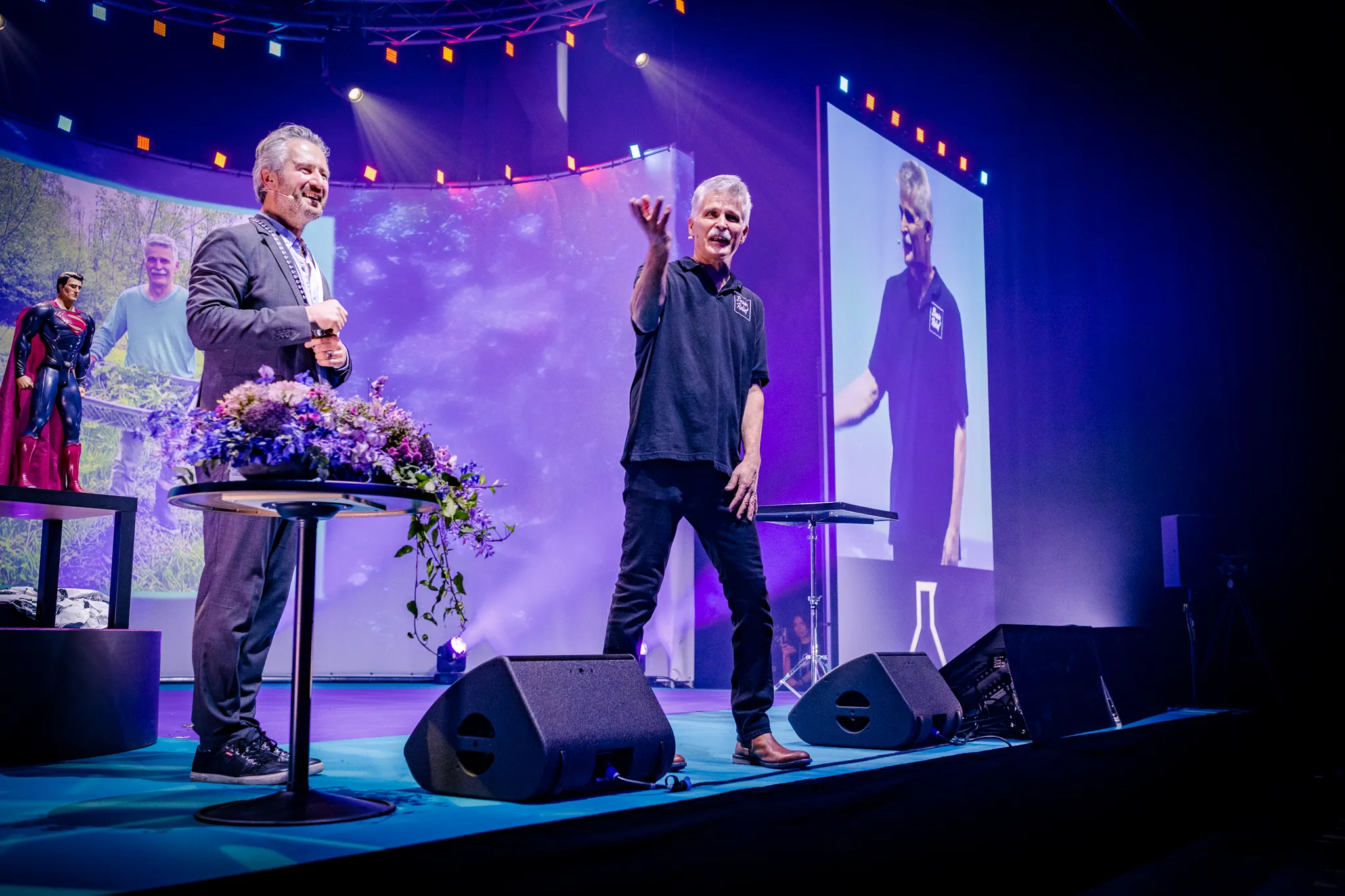
At Biohacker Summit 2022 Helsinki, Jouko Kivimetsä Offered A Defiant, Earthbound Manifesto Against The Managed Decline Of Old Age
On Friday, 3 June 2022, at Biohacker Summit 2022 Helsinki in Helsinki, Finland, Jouko Kivimetsä took the stage with the kind of authority that cannot be borrowed from slides, credentials or polished wellness jargon. It came instead from embodiment. Kivimetsä, a longtime Finnish innovator, wild food advocate and organizer of international events around edible plants, stood before the audience as what he called, with a grin, “the model of an old man” and proceeded to dismantle many of the assumptions that modern people carry about aging.
His presentation, Aging Myth Busters: How To Actually Live Long & Die Boots On, was not a lecture in the sterile sense. It was a provocation, a folk philosophy, a field guide to staying alive in the deepest sense of the word. He argued not for immortality, nor for cosmetic youthfulness, but for functional vitality: the ability to keep moving, desiring, dancing, foraging, loving and choosing one’s own life until the end.
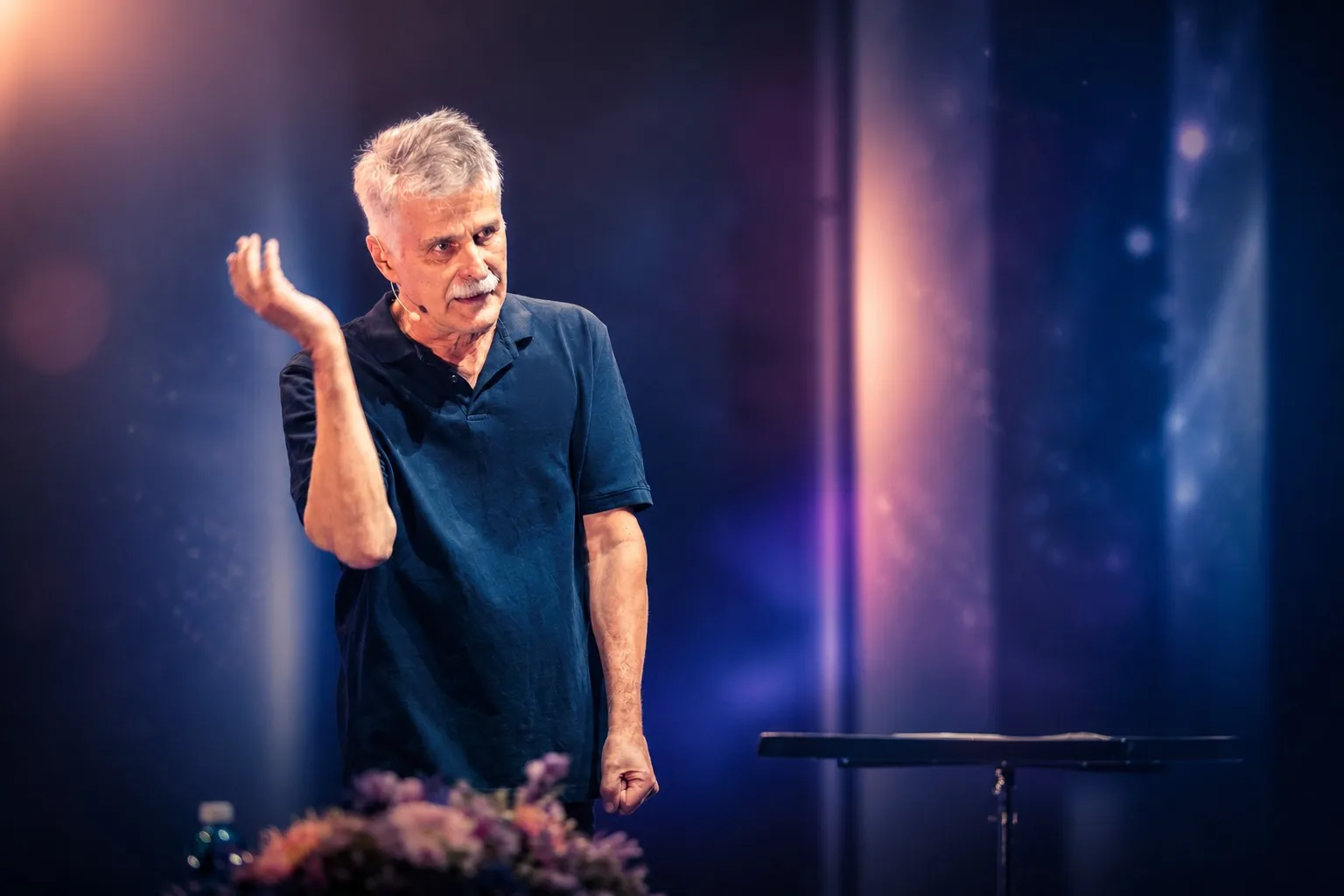
Rejecting Stressful Ideals
Kivimetsä’s central argument was strikingly simple. Reversing aging, he said, begins not with elite performance metrics but with stress reduction, especially the stress created by trying to become someone else.
“Reversing aging is about reducing stress,” he told the room. “If you have a model which is causing stress, you are not going to reverse aging. We can be ourselves; our people close to us will love us more if we are just what we are.”
That line cut against the grain of an industry often built on optimization, comparison and aspirational archetypes. Kivimetsä did not dismiss the desire to improve. He challenged the premise that improvement must come through punishment, conformity or anxiety. Optimal performance, in his telling, was personal. It belonged to the individual body, the individual temperament, the individual life.
There was something almost subversive in the way he framed authenticity as a longevity tool. If modern aging is often shaped by fear, concealment and endless correction, Kivimetsä proposed another route: stop rehearsing an alien script and the body may stop absorbing that tension as destiny.
Functional Strength Over Fitness Theatre
His critique of conventional exercise culture was just as unsparing. He described the spectacle of aging men trying to reclaim youth through punishing gym routines, marathon running and obsessive iron-pumping, then dismissed much of it as misdirected effort.
He spoke from experience. Decades earlier, he had run half marathons in under two hours and wrecked both knees in the process. Running was gone. But movement was not. He adapted. He walked instead, sometimes 20 kilometers a day, and emphasized trekking, mobility and usable strength over aesthetic or competitive fitness.
The point was not to surrender to limitation but to work intelligently with reality. If one door closes, find another path through the forest. In Kivimetsä’s world, longevity depended less on domination than on continuity.
A Quiet Revolt Against Pharmaceutical “Normal”
One of the sharpest moments in the talk came when Kivimetsä turned to the medical language of “normal.”
He recounted being told during checkups that his blood values were normal, only to discover that such normality had become unusual for someone his age. This, to him, exposed a deeper absurdity. How had normal health become rare enough to provoke surprise?
“Normal blood values should not be a rare minority,” he said. “The trick is to avoid being hooked on medicines and start reversing your aging. To be in nature and to eat from the nature is the way to live a healthy life.”
This was not an argument against medicine in all circumstances. It was a challenge to the creeping social accommodation of chronic dysfunction. Kivimetsä suggested that many people had been taught to accept a medicated baseline as inevitable, when they might instead pursue a more vigorous, less dependent form of health.
His own case, as he presented it, was part testimony and part rebuke: late sixties, no regular medicines, no illnesses, no reading glasses, still flexible, still curious, still in motion.
Sexual Vitality As A Signal, Not A Taboo
Kivimetsä also refused the polite evasions that often surround aging and sexuality. In one of the talk’s most memorable passages, he spoke bluntly about sex at 68 and described it as “better than ever.”
What might have landed as provocation instead served a larger argument: sexual vitality, for him, was not merely about pleasure but about biological feedback. He treated libido, morning erections and sexual stamina as signals, a personal “biohacking meter” that could reveal whether something in the system had gone off balance.
The candor mattered. It challenged the assumption that decline in this realm should be accepted silently as natural, inevitable and beyond inquiry. For Kivimetsä, the body was always communicating. The task was to listen before one drifted into resignation.
The Daily Rituals Of Staying Capable
If his philosophy sounded expansive, his practices were often practical to the point of austerity. He described a set of small, repeatable daily habits that he credited with preserving his function over decades.
Gratitude came first. He spoke of beginning each morning with a clear sense of thankfulness for being healthy, framing the body as a temple that should be respected rather than exploited.
Then came mobility. In Finland, he noted, winter itself can become a test of survival. Slippery roads punish stiffness. A broken hip in older age can become the event from which a person never fully returns. To resist that fate, he practiced simple, three-dimensional hip-opening movements in bed each morning before standing up.
He also advocated the Five Tibetan Rites, which he said he had practiced since the late 1980s, usually in a short daily sequence. For him, these rites were not mystical decoration but maintenance. A few minutes a day, repeated for years, amounted to a lifelong defense against collapse.
He added impact to the equation too: jumping stairs, running steps, dancing whenever possible. The purpose was bone density, resilience and joy. Not display, but preservation.
The Hand, The Herb And The Human Animal
Kivimetsä’s deepest convictions returned again and again to nature. His expertise in wild edible plants shaped the emotional core of the talk. Human beings, he insisted, were “created to be pickers.”
“We were created to be pickers. If you do not do anything with your hands, there is a signal to your brain that you are no good and you start to degenerate. The best thing you can do is to pick herbs and eat natural food.”
This was more than nutritional advice. It was an anthropology of health. The hand reaching for herbs, the body moving through a landscape, the act of gathering one’s own food: all of it signaled usefulness, connection and belonging. In this vision, degeneration was not just physical wear but estrangement from the conditions that make a human being feel needed by life.
He paired this with a simple twelve-hour daily fast, leaving a clear interval between dinner and breakfast. Again, the emphasis was not extremity but rhythm.
Intuition In The Age Of Over-Research
At an event devoted to biohacking, Kivimetsä made room for an idea that can sound unfashionable in data-saturated spaces: intuition.
“Look for your intuition. Trust yourself. Put yourself on a balanced form and you will understand what is good for you and what is bad for you when you listen to yourself.”
It was a subtle but important intervention. In a culture of tracking devices, blood panels and quantified selves, Kivimetsä argued that self-knowledge cannot be outsourced entirely to studies or sensors. Research has its place. So does embodied judgment. A person who cannot feel what nourishes or depletes them is not, in any meaningful sense, well optimized.
Childishness As A Survival Strategy
Perhaps the most radical part of the presentation was his rehabilitation of childishness. Not childishness as selfishness or immaturity, but as liveliness, daring, play and emotional openness.
“Reversing age is childishness,” he said. “I get younger every year and I love playing. Be a teenager again; do something which is forbidden, trespass, and fall in love again.”
In another mouth, such advice might have sounded whimsical. In Kivimetsä’s, it formed a coherent philosophy. To age well, he suggested, is not merely to protect tissue or suppress inflammation. It is to resist the deadening of spirit. Adventure matters. Play matters. Dancing matters. Falling in love matters. Gratitude matters. Even harmless rule-breaking, he implied, can remind the psyche that life remains unfinished.
A Longevity Creed Rooted In Usefulness And Joy
By the end of the session, Kivimetsä had given the audience something rarer than a protocol. He had offered a creed.
Live in a way that reduces stress rather than magnifies it. Reject impossible templates. Keep the hips mobile and the bones loaded. Walk if you cannot run. Dance even if nobody is watching. Fast simply. Hug long enough to feel it. Trust your intuition. Use your hands. Pick herbs. Eat from nature. Stay useful. Stay playful. Do not surrender your erotic life to embarrassment or your future to a laboratory definition of decline.
At Biohacker Summit 2022 Helsinki, Jouko Kivimetsä did not promise eternal youth. He proposed something more credible and more human: that old age need not mean shrinking into managed fragility. It could, with discipline and delight, become a season of sharpened vitality.
And in that hall in Helsinki, his message landed with the force of a challenge. Do not merely live longer, he seemed to say. Stay in your boots.
Frequently asked questions
What is Jouko Kivimetsä's central claim?
That reversing ageing begins with stress reduction rather than elite performance metrics, and especially the stress created by trying to become someone else. If you have a model which is causing stress, he told the room, you are not going to reverse ageing.
What is his view of gym culture?
Unsparing. He described the spectacle of ageing men trying to reclaim youth through punishing routines, marathon running and obsessive iron-pumping, and dismissed much of it as misdirected effort, speaking from experience after years of running half marathons himself.
Why does he question medical normal?
One of the sharpest moments came when Kivimetsä turned to the language of normal used in checkups, recounting what he had been told about his own results and treating the category as a statistical convention rather than a description of health.
About the event
This recap is part of the Biohacker Summit 2022 Helsinki series, recorded in Helsinki on 3 and 4 June 2022. Read the summary of the whole event or join the next edition, HOLOLIFE Summit 2026 Amsterdam, on 14 and 15 November 2026.
In this story
Comments
Loading comments…