Biohacker Summit 2022 Helsinki
Circadian NAD: Principles for Turning on the Body's Longevity Pathways
By Teemu Arina · · Updated
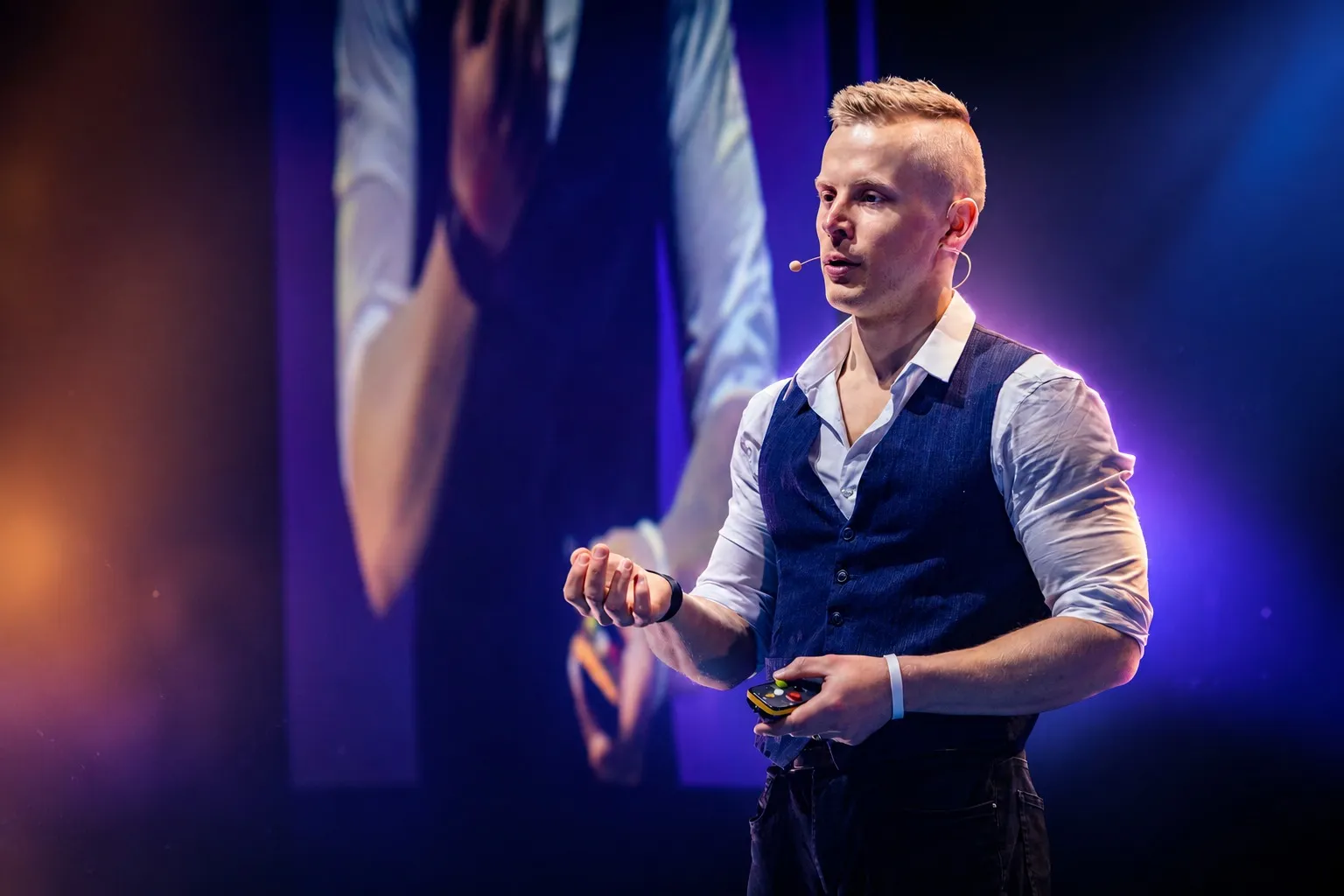
At Biohacker Summit 2022 Helsinki, Siim Land Framed Longevity As A Matter Of Timing As Much As Chemistry
In Helsinki on 3 June 2022, at Biohacker Summit 2022 Helsinki, the Estonian author and biohacker Siim Land took up one of the most fashionable molecules in health science and stripped it of some of its marketing gloss. Nicotinamide adenine dinucleotide, or NAD, has often been sold as the next miracle of anti-ageing. Land’s argument was both more sober and more compelling: NAD mattered profoundly, but not as a magic pill. It mattered as part of a daily biological rhythm, a recycling system, and a fragile internal clock that modern life too often knocked off balance.
“Without energy you would die, and without NAD, you would also die,” Land told the audience. It was a line delivered with a biohacker’s flair, but beneath it sat a serious thesis. NAD, he said, was woven into virtually every vital process in the body, from DNA repair and mitochondrial function to sleep, brain performance and genomic stability.

His presentation, titled Circadian NAD: Principles for Turning on the Body's Longevity Pathways, placed a familiar longevity obsession inside an older and deeper truth: the body was built not merely to produce energy, but to recycle it efficiently, in sync with light, darkness, feeding and rest.
Why NAD Has Become A Central Molecule In The Ageing Debate
Land described NAD as a coenzyme essential to life itself, one whose decline appeared again and again across the biology of ageing. Low NAD levels, he said, were associated with many of the hallmarks of ageing, including mitochondrial dysfunction, cellular senescence, impaired autophagy, stem cell exhaustion and accumulated DNA damage.
He was careful not to overstate the case. “NAD is not a magic pill that is going to make you live forever,” he said, pushing back against the more breathless corners of the wellness industry. But he insisted that it remained “essential for regulating the epigenetic processes of biological aging and slowing down the accumulation of cellular damage.”
That distinction mattered. In Land’s telling, NAD was not immortality in a capsule. It was infrastructure. And when that infrastructure weakened, age-related disease became more likely.
By middle age, he noted, NAD levels could fall by more than half. That drop, he suggested, helped explain why older adults became more vulnerable to metabolic disease and chronic dysfunction. The molecule’s decline was not the sole cause of ageing, but it was one of its most important accomplices.
The Real Story Was Not Supplementation But Recycling
Much of the popular conversation around NAD has centred on supplements such as NMN and NR. Land acknowledged that these precursors could raise NAD levels and support metabolic health. Yet he repeatedly steered attention away from the bottle and back toward physiology.
The body, he explained, could make some NAD from food. But the vast majority came not from fresh production, but from a salvage pathway, a system that recycled existing material with extraordinary efficiency. By his account, roughly 80 to 90 per cent of daily NAD production came from this internal reuse.
That fact changed the conversation entirely.
“Your body is very efficient and good at having processes work continuously without wasting anything,” Land said. “The key to slowing down aging and living longer is ensuring your internal recycling pathways are always online.”
The great bottleneck in this process, he argued, was an enzyme called NAMPT, the rate-limiting step in the salvage pathway. If NAMPT was not functioning well, then even an abundance of precursors would do only part of the job. Supplements might boost NAD temporarily, but without efficient recycling the gains would be limited and short-lived.
In a field often crowded with consumer solutions, Land’s message was almost austere. The body did not need endless external input so much as it needed its own ancient machinery to be left intact and properly timed.
The Clock Inside The Cell
The central insight of the talk was that NAD recycling was not simply biochemical. It was circadian.
Land linked the activity of NAMPT to SIRT1, one of the body’s key circadian proteins. When circadian rhythms were aligned, SIRT1 activity supported NAMPT, allowing NAD recycling to proceed. When circadian rhythms were disrupted, the system faltered.
This was where the molecule met modernity. Shift work, jet lag, inconsistent sleep, artificial light late at night, erratic meals, sedentary living: all of it, Land suggested, fed into the same slow sabotage. Circadian disruption did not just leave a person tired. It impaired repair.
He described the body’s master clock in the brain, the suprachiasmatic nucleus, and the many peripheral clocks spread through organs and cells. These clocks, regulated by light, food, movement and temperature, coordinated digestion, insulin sensitivity, hormone release, cognition and sleep. Disturb them chronically, and the consequences spread widely: more inflammation, worse metabolic health, more oxidative stress, poorer DNA repair, diminished autophagy.
That was the hidden cost of modern life in his framework. It was not merely that people were sleeping badly or eating too late. It was that the body’s longevity programme was being interrupted at the level of timing itself.
Morning Light And Night Darkness As Biological Instructions
If Land’s diagnosis was molecular, his remedies were notably elemental. The first was morning light.
Bright light exposure soon after waking, he said, acted as a biological signal that the day had begun. It raised cortisol appropriately, improved alertness and, crucially, helped set up melatonin production for the coming night. Even on a cloudy day in Finland, he noted, outdoor light was vastly brighter than indoor light and still carried circadian benefit.
The second principle was to block blue light at night. Blue and green wavelengths, Land warned, powerfully suppressed melatonin, sending the brain a false message that daytime was still in progress. In evolutionary terms, this was a profound mismatch. Human beings had long experienced cool, blue-rich light in the day and warmer amber and red tones toward dusk and darkness. Screens, LED lighting and late-night indoor brightness had overturned that pattern in barely a few generations.
For Land, this was not a cosmetic tweak but a fundamental repair strategy. If morning light began the clock, then night darkness protected it.
Melatonin As The Night Shift Of Longevity
Land elevated melatonin far beyond its common branding as a sleep hormone. “Melatonin is the most important longevity hormone,” he said, because it regulated antioxidant defences, autophagy and brain detoxification during sleep.
In his formulation, sleep was less a passive shutdown than an active reconstruction. Through melatonin, the body coordinated cleanup and repair: apoptosis, growth hormone signalling, immune regulation, fat metabolism and neuronal maintenance. The day spent energy and accumulated damage. The night sorted, repaired and restored.
This mattered especially because melatonin, like NAD, declined with age. Land described ageing not simply as wear and tear, but as a flattening of biological amplitude. The robust rise of cortisol in the morning and strong melatonin peak at night that marked youth gradually dulled over time.
High-amplitude rhythms, he suggested, were a signature of resilience. The goal was not merely to survive longer, but to preserve those rhythms as long as possible.
Exercise, Fasting And Inflammation
Other tools in Land’s framework were familiar, though he placed them in a new hierarchy.
Exercise, particularly cardiovascular exercise, was one of the strongest ways to increase NAMPT and support NAD recycling. “Exercise is one of the most underrated tools for longevity,” he said. “It is not a drug, but it is more powerful than any drug we know for boosting energy levels and maintaining the robustness of your biological clocks.”
Time-restricted eating also featured prominently. Land argued that food timing mattered because humans were more insulin-sensitive during the day and more insulin-resistant at night. Eating after dark, in this view, ran against circadian design and compromised metabolic health. Restricting meals to a daytime window helped reinforce the same rhythmic architecture that sustained NAD production.
Then there was inflammation, the steady thief in the background. Chronic inflammation raised CD38, an enzyme that consumed NAD at a greater rate, further depleting reserves already under pressure from age and stress. Oxidative stress and DNA damage intensified the drain. The result was a vicious cycle in which inflammation depleted NAD, and lower NAD weakened the very systems needed for repair.
Land cited compounds such as apigenin, quercetin and fisetin as potential CD38 inhibitors, but the broader point was once again behavioural before supplemental: poor sleep, inactivity, metabolic dysfunction and chronic lifestyle stress all fed the inflammatory state that sped the loss.
A Longevity Thesis More Ancient Than Futuristic
What made Land’s presentation striking was not that it celebrated cutting-edge science, though it did. It was that the conclusions felt almost premodern. Go outside in the morning. Dim the lights at night. Sleep enough. Exercise regularly. Stop eating late. Avoid chronic inflammation. Protect the body’s internal cycles.
The glamour of longevity science often lies in the futuristic: molecules, infusions, precision compounds, expensive protocols. Yet at Biohacker Summit 2022 Helsinki, Siim Land made a quieter and perhaps more radical case. The body already possessed the machinery for repair and renewal. The task was not simply to stimulate it, but to stop interfering with it.
NAD, in that sense, emerged less as a supplement trend than as a measure of whether modern life had drifted too far from biological time.
Frequently asked questions
Why has NAD become central to the ageing debate?
Siim Land described it as a coenzyme essential to life whose decline appears repeatedly across the biology of ageing, with low levels associated with mitochondrial dysfunction, cellular senescence, impaired autophagy, stem cell exhaustion and accumulated DNA damage.
Are NMN and NR the main story?
Not in his account. Land acknowledged the precursors can raise NAD and support metabolic health, but steered attention away from the bottle and back toward physiology: the body makes some NAD from food, and the vast majority comes from recycling.
Why does timing matter?
Because the recycling is circadian rather than simply biochemical. Land linked the activity of NAMPT to SIRT1, which puts NAD levels on a daily clock and makes when you eat and sleep part of the intervention rather than background.
About the event
This recap is part of the Biohacker Summit 2022 Helsinki series, recorded in Helsinki on 3 and 4 June 2022. Read the summary of the whole event or join the next edition, HOLOLIFE Summit 2026 Amsterdam, on 14 and 15 November 2026.
In this story
Comments
Loading comments…