Biohacker Summit 2022 Amsterdam
Inside Biohacker Summit 2022 Amsterdam: the edition that turned on the ego
By Teemu Arina · · Updated
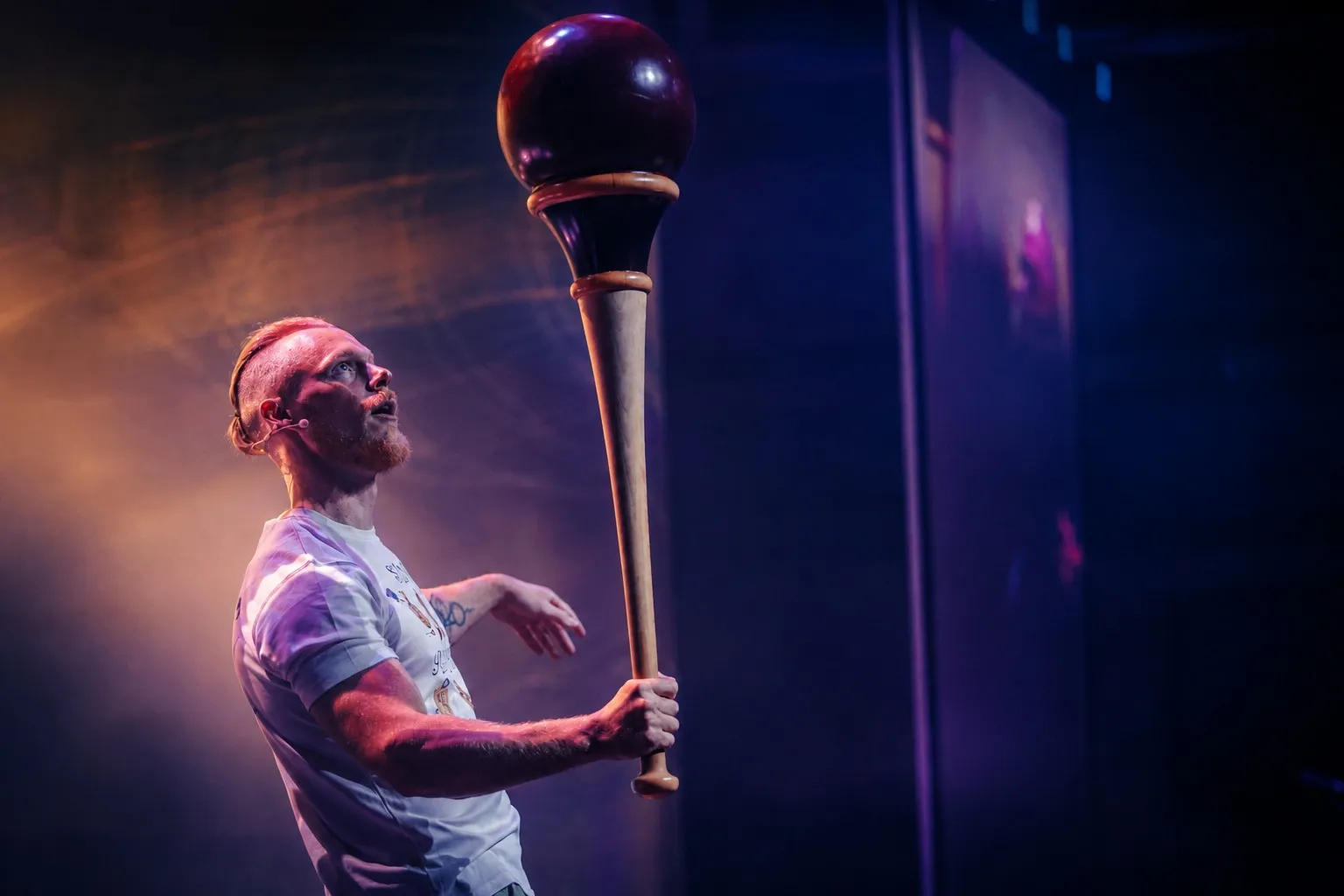
Biohacker Summit 2022 Amsterdam ran on 15 and 16 October 2022 under a theme that sat awkwardly with the industry that hosted it: hack the ego. A field built on measurement, protocols and self-improvement spent two days asking whether the self doing the optimising was the thing most in need of attention. The answers came from monks and mixed martial artists as readily as from clinicians and molecular biologists.
The ego was the theme, and nobody agreed what to do with it
Teemu Arina put the sharpest version of the question. In The Dark Side Of Biohacking And Personal Development he asked what happens when the pursuit of perfect health is not a path to freedom but a sophisticated response to fear, and placed the movement's own leaders inside the archetype of the wounded healer: people who begin with illness or collapse, recover, then teach, drawing authority from having suffered.
Yogetsu Akasaka, a Japanese Zen monk who is also a beatboxer and handpan player, declined the language of conquest entirely. "My answer is: be a good friend to the ego," he said. His practice was almost defiantly unglamorous: cleaning, alongside chanting and cooking, as the triad through which a person meets their own mind in motion.
Tateki Matsuda, a former UFC fighter, arrived at the same place from the cage. He described dissecting his own motives for fighting and finding fame, attention, superiority and the wish to be seen as cool sitting underneath them. Matthew K. Cross argued the ego was neither invader nor villain but mediator, and Max Gotzler asked the room to replace the word with a plainer one, a sense of self-importance, which without it leaves a person boundaryless and easy to exploit.
The fundamentals kept interrupting the frontier
Tim Gray opened with twenty biohacks in twenty minutes and began with the least technological one available. "Grounding is nature's finest antioxidant," he said, before turning to the domestic environment: blue light after sunset, Wi-Fi at night, beds against electrified walls, phones in the bedroom.
Dr. Rob Konrad delivered the sharper corrective. In an industry intoxicated by longevity molecules and ever more sophisticated wearables, he described people fixated on a magic pill while ignoring the obvious drivers of illness, and returned to four unglamorous pillars: eat well, move, sleep properly, protect mental health.
Siim Land made the same argument metabolically, dismantling the belief that metabolism simply collapses with age. The decline arrives later and more gradually than most assume, he said, which shifts responsibility back toward daily choice, with resistance training as the most underrated lever on insulin sensitivity. Veli-Jussi Jalkanen took the least fashionable subject of all and opened with an accusation: sitting shortens your lifespan, and the culture keeps doing it anyway.
Metabolism was argued from first principles
Dorian Greenow made the evolutionary case for ketosis and started at the beginning of life: "Babies are born in ketosis." Anders Murman supplied the instrumentation, describing the cell as a power plant and ketones as the fuel that needs no insulin, then turned to breath acetone as a near real-time read on whether the body had actually switched fuels, since acetone clears the bloodstream in roughly thirty minutes.
Alex Tarnava brought hydrogen water back down to earth, describing it plainly as water with dissolved H2 gas, much as sparkling water carries dissolved carbon dioxide, with no altered molecule and no mystical restructuring.
Breath was treated as infrastructure, not a technique
Kasper van der Meulen turned the room into a single physiological experiment, moving through rhythmic breathing, holds and vocalised exhalations, then argued that the vagus nerve story usually told in biohacking is too small: the deepest significance of a synchronised breath is social. Leigh Ewin reached for evolution and etymology, tracing the Latin spirare through spirit and inspiration, and framing breathing as an infinity loop that is autonomous until attention changes its quality.
Christian Tullberg Poulsen came at it from an unlikely direction, as a trained classical singer turned founder of a respiratory training company, and was careful to replace the clean upward curve of the startup myth with something considerably uglier.
Measurement matured, and so did its humility
Julija Juric presented glycans as an early warning system rather than another panel, arguing that most markers are too noisy, too insensitive to lifestyle change, or simply too late, and noting that glycobiology had stepped into public view when Carolyn Bertozzi took the Nobel Prize in 2022.
Joe Cohen treated mood as a biological problem before a psychological one, describing years of self-experimentation and insisting that any attempt to hack the mind starts with measurement. Chris Moore and Dr. Rex Gloria refused to cast stress as a villain at all: "Stress doesn't have to be bad; we live in stress constantly in different forms, and it is how we manipulate and use it that matters."
Psychedelics, art and the deliberate loss of self
Shawn Wells opened with scale, calling mental ill health the real pandemic, and challenged the serotonin-deficiency story as too reductive to carry the weight placed on it. Boomer Anderson located the ego in circuitry rather than mysticism, naming the default mode network as its biological analogue, and aimed his talk at a target the field rarely names: enjoyment.
The art was not decoration. David Flusberg described painting his way out of fear-induced stagnation. Dmitry Gelfand and Evelina Domnitch built a physical analogue of a black hole from a water vortex, with Domnitch admitting she distrusts talks because "words and symbolic language are not the language of the universe." Tom Middleton, once known for keeping crowds awake, spoke with missionary conviction about helping them sleep.
The body as relationship rather than project
Ronan Diego de Oliveira dismantled the celebrity physique as a health standard, rooting the argument in a childhood in Brazil marked by bullying and shame rather than in theory. Anna Lindfors moved from performance to pleasure and answered one of the most Googled questions in heterosexual intimacy with disarming simplicity: ask her. Dr. Amy Killen made sexual function a longevity barometer, dependent on neurological signalling, vascular integrity, hormones and stress load all cooperating at once.
Yarrow Willard widened the frame furthest. "You are not a human by cell count," he told the audience, casting the body as habitat rather than machine and naming the condition he saw in the room: "The greatest disease of all time is nature deficit disorder."
What the edition was actually arguing
Across two days the summit kept circling one idea. Sakari Nikinmaa found it in the mouth, where brushing removes only about sixty-five percent of plaque and the rest quietly becomes a systemic problem. Inka Land found it in the brain's hundred billion neurons and the revision they permit. Jessica Alana and Govert Viergever found it in grief and pain. The instruments differed, but the argument did not: the tool is only as good as the person holding it, and that person is the harder project.
Session recaps
Every session from Amsterdam has its own written recap:
- Twenty Biohacks, Twenty Minutes, One Provocation
- Artistic Performance By Evil Raiders Turned Touch Into A Study Of Energy
- Becoming A Conscious And Resilient Being
- Body Meta-Transformation Reframed Health As An Act Of Listening, Not Conquest
- Brain Optimization with Psychedelics
- Breathing Beyond The Ego
- Building Resilience And Reducing Stress Using The Secrets Encoded In DNA
- Crystallize Consciousness: A Meditation On Light, Geometry, And Planetary Healing
- Dating Your Ego: A Molecular Love Affair And Psychoplastogens For Presence
- Deep Dive into Ego-hacked Art
- Energetic Activation And The New Gospel Of Self-Transformation
- From Sexual Performance To Sexual Pleasure
- Flow, Ego, And The Price Of Happiness
- Fluid Bodies, Black Holes, And The Art Of Hacking The Ego
- Glycans As The Early Whisper Of Disease
- Hack Your Ego And Heal Trauma With Alpha Neurofeedback Training
- Hack Your Oral Health: Why The Mouth May Be The Body’s Most Overlooked Battleground
- Holobionts In The Forest Pharmacy: Symbiosis And The Wood Wide Web
- Biohacking For Longevity: How To Age Regress And Optimize Body, Mind And Spirit
- How To Be Generally Awesome: Pavel Stuchlik’s Journey Through Self-Transformation
- Hydrogen Water And The Truth Of Supplements
- Is Ketosis the Ultimate Biohack?
- Longer And Better Life Through Better Breathing
- Mental Resilience by Changing Gene Expression
- Five Metabolic Cheat Codes For Effortless Fat Loss And Robust Health
- Leigh Ewin’s Breathwork Session Turned A Biohacking Crowd Into A Tribe
- Myriad of Benefits from Optimized Sitting
- On Purpose And Re-Engineering Your Mental World
- Picking Up The Baton After Loss
- Overcoming The Impossible: How Purpose And Persona Became A Map To Peak Performance
- PHIΦhacking Your Ego: Nature’s Intelligence And The Golden Ratio For Performance
- Physics Of Monitoring And Managing Metabolism
- Sexponential Medicine Cast Sexual Health As A Mirror Of How We Age
- The State Of Personalized Wellness: Hacking The Ego And Optimizing Health With Data
- The Art And Science Of Forgiveness: How To Become Unfuckwithable
- The Dark Side Of Biohacking And Personal Development
- The Future Of Light: Activating Stem Cells And Natural Healing Through Phototherapy
- The Neuropsychology Of Mental & Personal Development: Rewiring The Brain
- Decoding And Recoding Nature At Biohacker Summit 2022 Amsterdam
- Voxel Cube Turned Inner States Into Public Art At Biohacker Summit 2022 Amsterdam
- Who is the Biggest Enemy?
- Zen Practice for Hacking the Ego
Frequently asked questions
When and where was Biohacker Summit 2022 Amsterdam?
It ran on 15 and 16 October 2022 in Amsterdam, under a theme that sat awkwardly with the industry hosting it: hack the ego. A field built on measurement and protocols spent two days asking whether the self doing the optimising was the thing most in need of attention.
What was the recurring argument of the edition?
That the tool is only as good as the person holding it. Sakari Nikinmaa found the idea in the mouth, Inka Land in the brain's capacity for revision, and Jessica Alana and Govert Viergever in grief and pain. The instruments differed but the conclusion did not.
Who spoke at the 2022 Amsterdam summit?
Speakers included Teemu Arina on the dark side of biohacking, the Zen monk Yogetsu Akasaka, former UFC fighter Tateki Matsuda, Tim Gray and Rob Konrad on fundamentals, Siim Land and Dorian Greenow on metabolism, Julija Juric on glycans, and Yarrow Willard on the body as habitat.
About the event
Biohacker Summit 2022 Amsterdam took place in Amsterdam on 15 and 16 October 2022. The series continues at HOLOLIFE Summit 2026 Amsterdam on 14 and 15 November 2026.
Comments
Loading comments…