Biohacker Summit 2022 Amsterdam
The Dark Side Of Biohacking And Personal Development
By Teemu Arina · · Updated
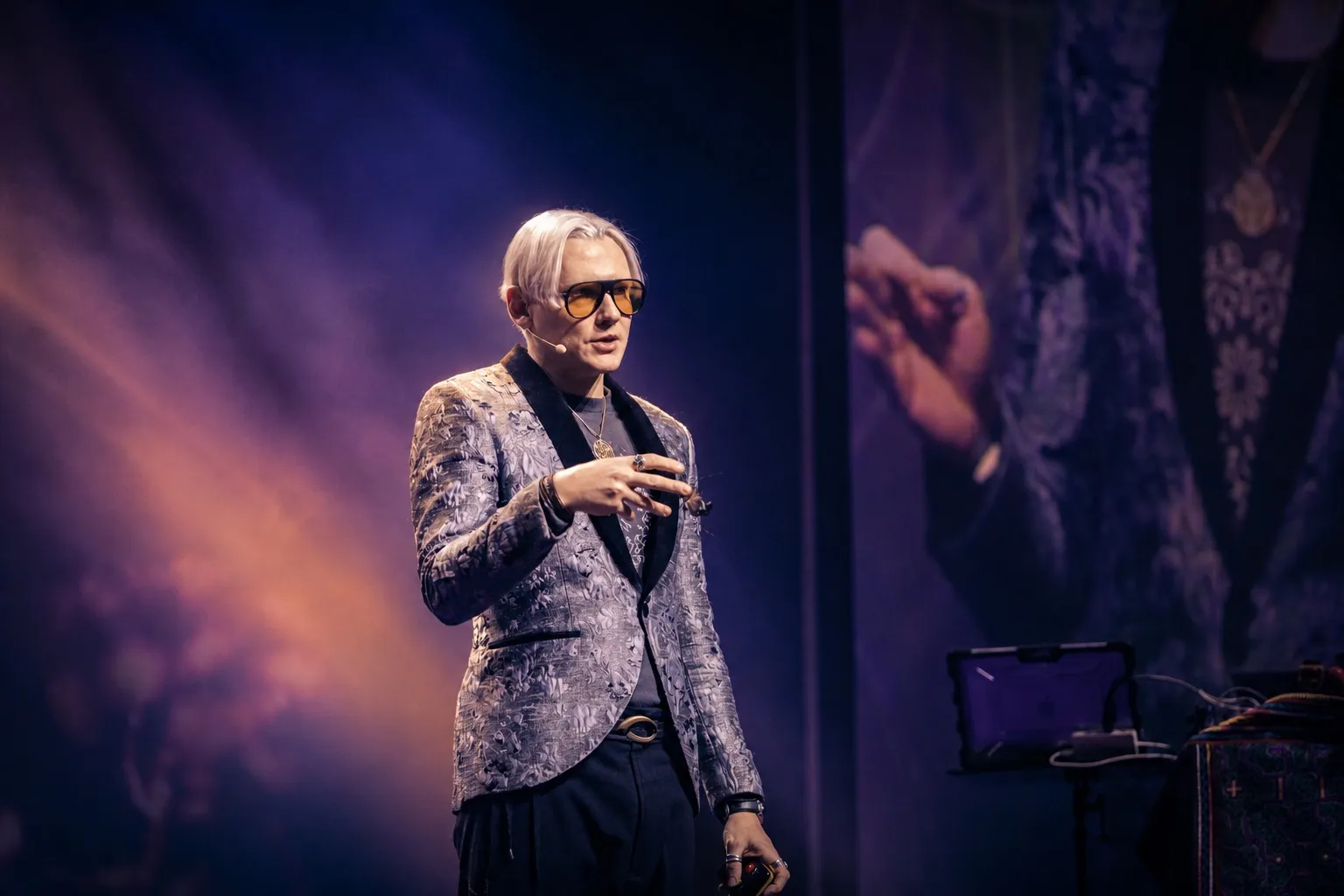
Trauma, Narcissism, And The Wounded Healer At Biohacker Summit 2022 Amsterdam
On Saturday, 15 October 2022, at Biohacker Summit 2022 Amsterdam in the Netherlands, Teemu Arina stood before a crowd fluent in the language of optimization and asked a disquieting question: what if the pursuit of perfect health is not always a path to freedom, but sometimes a sophisticated response to fear?
In his presentation, The Dark Side Of Biohacking & Personal Development, Arina did not reject biohacking itself. Rather, he turned its tools inward, examining the psychology that often sits beneath the spreadsheets, supplements, sleep trackers and strict routines. His argument was not that discipline is dangerous, nor that self-improvement is hollow. It was that the culture surrounding them can become a refuge for unresolved pain.
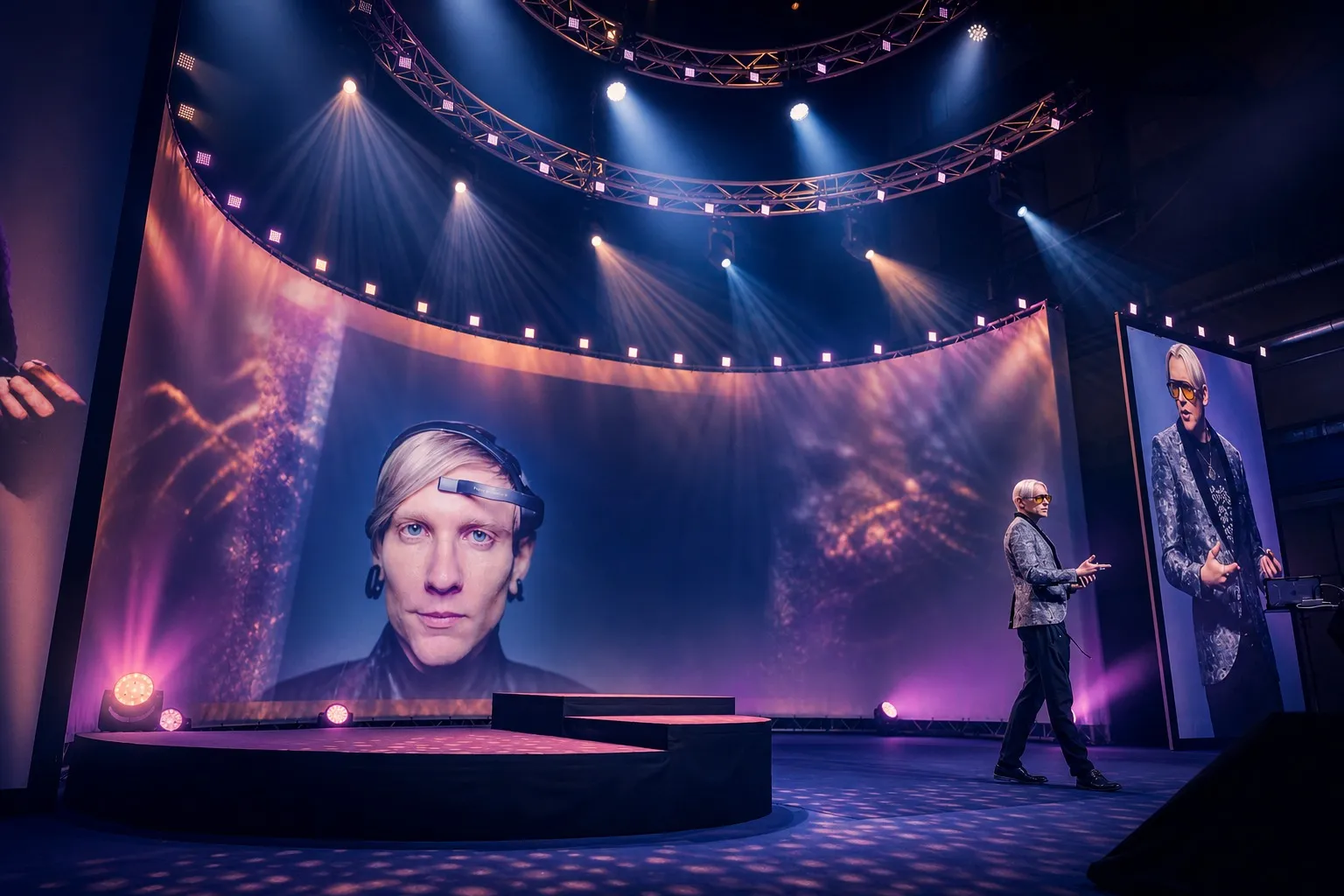
“Often the reason people are so focused on controlling their diets, exercise, and environment comes from fear,” Arina said. “It is a response and a coping mechanism to something that happened in your life much earlier.”
When Optimization Becomes A Shield
Biohacking, in its most appealing form, promises agency in a chaotic world. It offers the possibility that with enough data, enough vigilance and enough refinement, the body can be made legible and life can be bent toward vitality. But Arina suggested that, for many, the drive to control food, sleep, light, stress and environment was not purely rational. It was emotional, biographical and often rooted in trauma.
That insight cut against the polished confidence of the wellness economy. The person who appears most disciplined may, in fact, be the person most frightened. The obsession with purity can hide orthorexia. The fixation on symptoms can mask hypochondria. The hunger for longevity can become a coded refusal to face mortality.
Arina described these behaviors as coping mechanisms, strategies developed to manage pain too old or too deep to be easily named. In that reading, extreme self-optimization was not simply a lifestyle. It was sometimes a defense.
The Wounded Healer At The Heart Of Wellness
Arina placed this phenomenon within the archetype of the wounded healer, a figure familiar in mythology and psychology. Many leaders in health and wellness, he noted, begin with a personal crisis: illness, burnout, obesity, inflammation, collapse. They recover, rebuild and then teach. Their authority comes not from abstraction but from having suffered.
“The fact that you have been broken and wounded is the reason why you are so motivated,” he said. “It is your own hurt that gives a measure of your power to heal and connect deeply with others.”
There was generosity in that observation, but also warning. The same wound that creates empathy can also create compulsion. A healer may still be acting from injury. The teacher may be trying, in public, to repair something unresolved in private.
Arina cited the idea, associated with Carl Jung, that deep healing requires self-examination from the healer as much as from the healed. It was a reminder that charisma and insight do not cancel vulnerability. In some cases, they are produced by it.
Teemu Arina’s Own Story
The speech gained force when Arina turned to himself. Internationally known as a digitalisation expert, author and speaker, and co-author of Biohacker’s Handbook, he described a younger life built around achievement, expertise and relentless output. He founded his company at 16, taught while still a teenager and became, in his telling, a kind of early “guru” to older audiences fascinated by the future of work and learning.
Then the body intervened.
At 30, after years of overwork, poor recovery and constant performance, he developed a stress-related ulcer. He recalled consultations in the Netherlands during which pain and fatigue had narrowed his world to survival. The standard medical route brought diagnosis and medication, but not resolution. The symptoms returned. So he did what many in the biohacking world do: he went searching.
Arina immersed himself in PubMed and primary medical research, determined, as he put it, not to rely on gurus, partly because he understood too well how gurus are made. He designed a protocol focused on sleep, stress management, hydration, anti-inflammatory nutrition, supplements and tracking. What began as a temporary intervention became a lifestyle, one that improved not just his ulcer symptoms but his energy and, unexpectedly, his chronic pollen allergies.
The story explained the origin of his public role. It also laid bare its emotional architecture. Biohacking, for Arina, was born from real suffering and real recovery. But that did not exempt it from distortion.
How Audiences Create Caricatures
One of the sharpest parts of the talk concerned the way online culture manufactures identity. Arina described how media appearances gradually turned him into a caricature: the man who measured everything, the quantified self made flesh, the “metrics man” expected to monitor every bodily signal at every moment.
It was, he implied, only partly true. Yet repetition hardened it into a persona.
“When you create an avatar online, you create yourself in your own image, but that image is not you,” he said. “People use the judgments they receive from others to measure their own worth, values, and behavior.”
Here Arina drew on the “looking glass” effect and the Proteus effect, the idea that people are shaped by the digital representations they build and inhabit. The audience does not merely observe the speaker. It helps produce him. Likes, applause, shares, praise, even the expectation of consistency, all push a person toward a more legible, more exaggerated version of themselves.
The result can be subtle at first, then total. A person starts by telling a story about who they are. Eventually the story swallows the self.
The Narcissism Hidden Inside Self-Improvement
The lecture’s most uncomfortable claim was that personal development culture can cultivate narcissistic behavior while appearing virtuous. The body, the brand, the mission and the message all become mirrors. Health can become performance. Morality can become display. Expertise can become emotional armor.
Arina was careful not to describe narcissism as mere vanity. In his framing, the narcissistic personality is not powered by abundant self-worth but by a lack of secure selfhood. The grandiose exterior protects a more fragile interior. The idealized persona exists to conceal insecurity, shame and unresolved wounds.
“The stronger the light, the deeper the shadow,” he said. “The deeper the trauma, the deeper the need to control people or lead things with the idea that the sky is the limit.”
In that formulation, the wellness leader who appears magnetic, certain and endlessly expanding may also be compensating for inner fracture. Social media, with its endless cycles of reflection and reinforcement, intensifies the pattern. The healthier, wiser or more elevated the persona becomes, the harder it may be to admit fear, contradiction or ordinary human limitation.
The Fear Beneath Longevity
Perhaps nowhere was this more striking than in Arina’s treatment of longevity culture. The desire to live longer, stronger and better has obvious appeal, and much legitimate science behind it. But Arina urged the audience to ask what emotional currents animate that desire when it turns obsessive.
If every metric is tracked with dread, if every meal carries moral weight, if every symptom suggests catastrophe, then the pursuit of health may no longer be about life. It may be about terror.
He pointed to evidence that measurement itself can alter experience, citing sleep studies in which people who were told they had slept poorly performed worse, while those given positive feedback performed better, even when the underlying sleep quality suggested otherwise. Data, in other words, was not neutral. It could become a nocebo as easily as a guide.
For some biohackers, the body becomes less a home than a surveillance project.
Childhood, Attachment, And The Adult Self
The speech ranged beyond wellness into developmental psychology, where Arina traced the roots of adult striving to childhood attachment, individuation and family dynamics. The need for external validation, he suggested, often begins long before career, branding or public success. It can emerge from insecure attachment, emotional inconsistency, over-identification with parents or the inability to form a stable self separate from others’ expectations.
High achievers, in this view, are not always driven by abundance. Many are driven by basic insecurity, by fear of failure, by the conviction that no accomplishment is enough.
The argument broadened from the individual to the cultural. If families transmit coping mechanisms across generations, then so do institutions, media systems and economic incentives. A society that rewards image, intensity and self-display may not merely reveal narcissism. It may industrialise it.
Shadow Work In A Quantified Age
For all its severity, Arina’s talk was not nihilistic. Its central demand was not renunciation but honesty. If biohacking is to mature, he argued, it must include the dimensions it often sidelines: mental resilience, social maturity, relational depth and spiritual awareness. Physical mastery without psychological insight can become another form of fragmentation.
True transformation, in his account, required shadow work, the difficult process of facing the hidden, disowned or performative parts of the self. It meant asking whether one’s habits served health or defended fear. Whether one’s public identity reflected truth or dependency. Whether the pursuit of excellence had become a disguise for unhealed pain.
In a room built around enhancement, Arina made a case for something less glamorous and more demanding: integration.
Beyond The Self
The talk closed by shifting scale, from the anxious self to the collective whole. Human life, Arina suggested, was both insignificant and profoundly significant: tiny in cosmic terms, yet essential in the web of coordinated consciousness that allows a species to survive and mean something.
“Your life is insignificant, but at the same time, it is extremely significant because it requires orchestrated coordination with other individuals to ensure that this species survives and thrives with consciousness,” he said.
It was an ending that resisted the narcissistic script. The goal was not to become an optimized island, immortal and untouchable. It was to move beyond relative status, beyond the compulsions of image and control, toward a form of resilience spacious enough to include others.
That was the challenge Teemu Arina posed at Biohacker Summit 2022 Amsterdam. Not simply to hack the body, but to confront the self that is doing the hacking.
Frequently asked questions
What uncomfortable question did Teemu Arina ask?
What if the pursuit of perfect health is not always a path to freedom, but sometimes a sophisticated response to fear. He put it to a crowd fluent in the language of optimization, about the movement they were all part of.
When does optimization become a shield?
When the drive to control food, sleep, light, stress and environment stops being purely rational. Biohacking promises agency in a chaotic world, Arina acknowledged, but that same promise can serve as armour against anxiety rather than a route through it.
What is the wounded healer?
An archetype from mythology and psychology that Arina applied to wellness leadership. Many figures in health begin with a personal crisis, illness, burnout or collapse, then recover, rebuild and teach, drawing authority from having suffered rather than from abstraction.
About the event
This recap is part of the Biohacker Summit 2022 Amsterdam series, recorded in Amsterdam on 15 and 16 October 2022. Read the summary of the whole event or join the next edition, HOLOLIFE Summit 2026 Amsterdam, on 14 and 15 November 2026.
In this story
Comments
Loading comments…