Biohacker Summit 2022 Amsterdam
Breathing Beyond The Ego
By Teemu Arina · · Updated
Resilience, Meaning, And Transcendence Through Breathwork
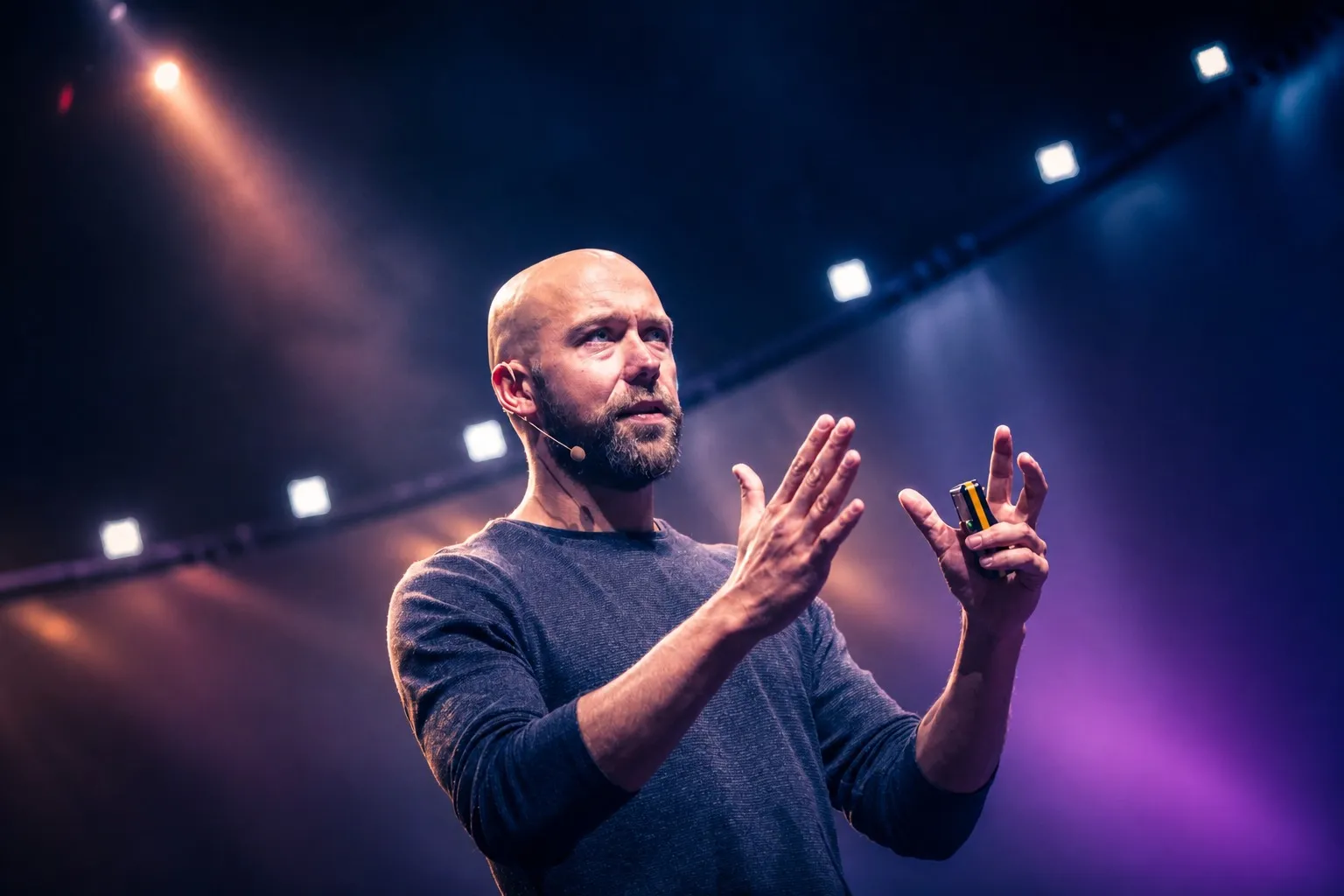
At Biohacker Summit 2022 Amsterdam, held in Amsterdam, Netherlands, on 15 and 16 October 2022, Kasper van der Meulen offered more than a talk. He staged a collective physiological experiment, a meditation on mortality, and a challenge to the biohacking world’s deepest assumptions.
Van der Meulen, introduced as a breathwork specialist, science teacher and musician, is widely known as one of the Netherlands’ leading breathwork facilitators and a prominent voice in biohacking. In his presentation, Breathing Beyond The Ego, delivered on Saturday, 15 October 2022, he asked a room of roughly fifteen hundred people to do something disarmingly simple: breathe together.
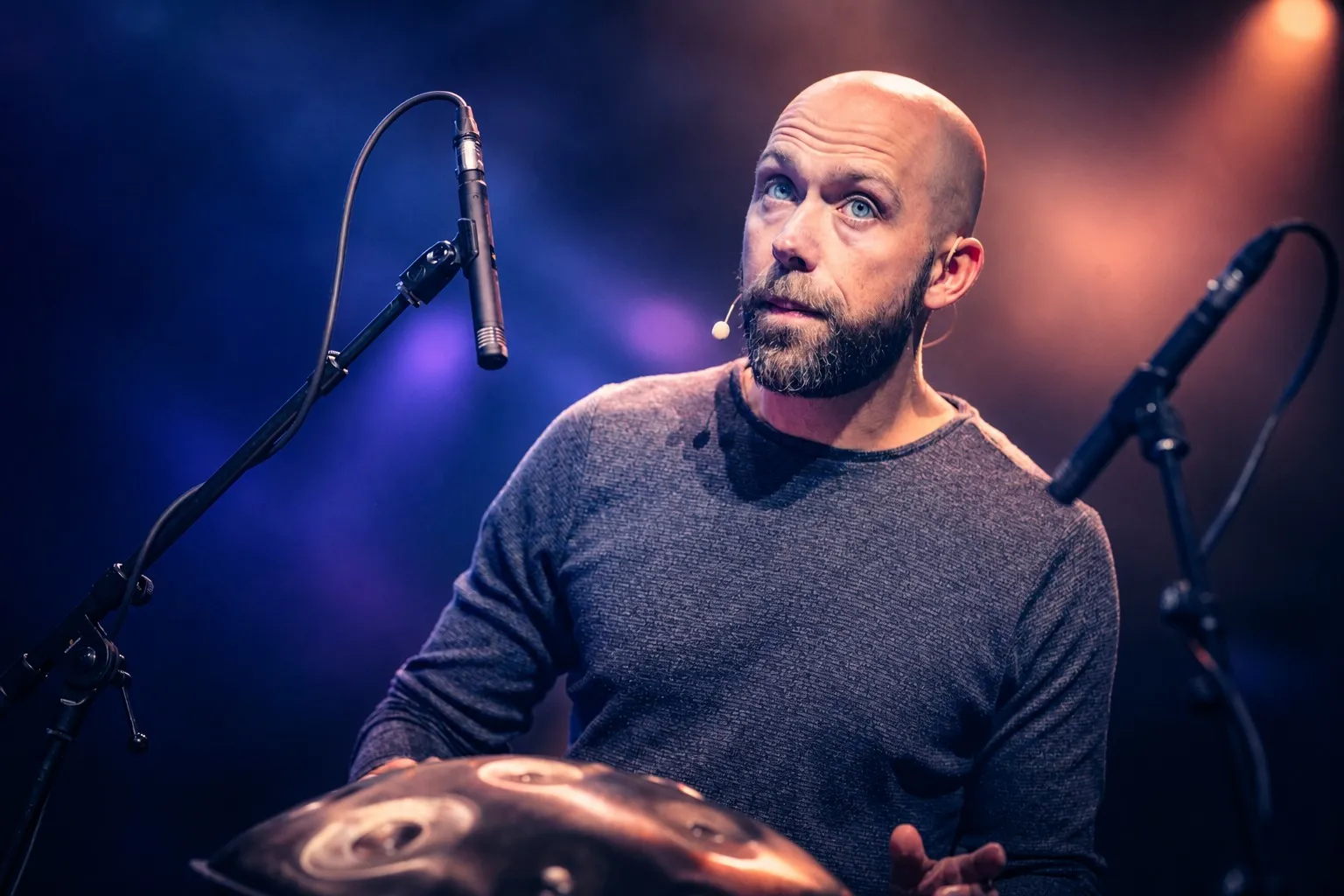
What followed was an argument that cut against the grain of modern optimization culture. Breath, he suggested, was not merely a wellness tool or a performance enhancer. It was a way to modulate physiology, sharpen awareness, dissolve the illusion of separateness, and reframe health itself. For van der Meulen, the question was never simply how to become better. It was why.
A Room Breathing As One
He began not with theory but with embodiment. Audience members stood, stretched toward the ceiling in a movement he referred to as “milking the giraffe,” then sat and closed their eyes. He guided them through rhythmic breathing, measured inhalations and exhalations, breath holds, prolonged releases, and finally vocalized exhalations that turned the body into a chamber of resonance.
The point was immediate and experiential. Breath changed state.
“And as you breathe, just notice, just become aware of how your state changes,” he told the audience, building toward a broader claim that breathing patterns could function as a kind of internal control panel.
For van der Meulen, this was where breathwork’s practical power lay. It was one of the few processes that sat at the threshold between conscious control and automatic function. Adjust the rhythm, the hold, the depth, the exhale, and the body responded. Nervous system, heart rate, attention, emotion, and social openness all began to shift.
“Once you recognize that you are a biological being and you start to look at the buttons that you can push in order to tune this biological being, you can be very accurate with the way that you change your state.”
The Vagus Nerve And The Social Body
Much of contemporary biohacking language has turned the vagus nerve into a shorthand for calm, regulation, and recovery. Van der Meulen did not reject that framing, but he expanded it. Breathwork, he argued, did stimulate the vagus nerve. It could support regeneration, relaxation, and immune function. But its deepest significance was social.
A synchronized room, breathing in unison, was not just calmer. It was more connected.
He drew the audience’s attention beyond the borders of the self, asking them to hear the “magnificent symphony” of fifteen hundred people inhaling and exhaling together. In that moment, the talk became a corrective to the hyper-individualism that often defines performance culture.
“As you breathe, you are not an individual that is breathing your own body. We are literally sharing each other’s air, not just here, but all over the world. We are all breathing the same breath.”
This was more than poetic rhetoric. It was the moral center of the presentation. Breath, in van der Meulen’s telling, was both biology and belonging.
The Fractal World Inside And Around Us
To make that case, he reached for imagery as much as physiology. He described the bronchial tree of the lungs, branching through the chest like an inverted oak. He compared it to actual trees, whose leaves also exchange gases with the atmosphere. He moved then to capillary tissue, branching networks carrying blood to the body’s periphery. And finally he invoked the aerial geometry of river deltas.
Different substances, different scales, different contexts, yet eerily similar forms.
The implication was that life did not merely exist in isolation. It emerged through patterns, recurrences, and lawful structures that linked the human body to the wider world. The architecture of breath, blood, plant life, and flowing water seemed to rhyme.
In that sense, his talk belonged as much to philosophy as to physiology. Biohacking, he suggested, should not stop at self-improvement. It should awaken recognition of our embeddedness in something larger and older than the ego.
Health As Resilience, Not Perfection
The most forceful part of van der Meulen’s address came when he challenged a cherished biohacker fantasy: the idea that health is a stable state to be attained, secured, and kept.
Health, he said, was not a trophy. It was resilience.
That distinction mattered. A healthy life was not one free from stress, exhaustion, loss, challenge, or sacrifice. It was a life in which the organism retained the flexibility to meet changing demands. To be active when life required action. To soften when tenderness was needed. To endure strain without collapsing into it.
“Health is primarily a measure of resilience,” he said. “It is a matter of how well can you respond to the needs that life is asking from you.”
In a culture obsessed with metrics, this was a subtle act of rebellion. Better sleep scores, improved recovery stats, lower inflammation markers, more energy, more output, more longevity. Van der Meulen did not deny the usefulness of these goals, but he insisted they were secondary. Optimization without orientation could become its own trap.
What Are You Optimizing For?
That trap, in his view, was the ego dressed as discipline.
He mocked the endless hunger for marginal gains in elite performers, the desire for every variable to improve by another few percentage points, while deeper dissatisfaction remained untouched. The critique landed because it was familiar. Biohacking can easily become an elaborate defense against discomfort, uncertainty, and mortality. More data, more rituals, more control. Yet none of it answers the central question.
“What am I optimizing for?” he asked.
“Could you optimize for joy, or for passion, or for meaning, and really devote your health and resilience in honor of this higher purpose?”
Here the presentation shifted from technique to conscience. A resilient body, he argued, was not the destination. It was the vehicle. It existed to be spent on something worth loving.
A Baby, A Sleepless Night, And A Better Definition Of Health
Van der Meulen grounded that argument in a personal story. Earlier that year, he and his wife had welcomed a baby. Suddenly, all the polished routines of biohacking collided with the blunt reality of care. Sleep deprivation arrived not as a theoretical stressor but as a nightly fact.
If health were merely the preservation of perfect metrics, then this phase of life would read as decline. Recovery down. Sleep compromised. Energy impaired. Biomarkers likely worse. But by his own standard, it was not failure. It was meaning.
He spoke of stepping up for his family, of discovering that resilience had value precisely because it could be used in service of something beyond the self. In that context, the biological “budget” he had built through health practices was not there to be admired. It was there to be spent.
It was one of the sharpest insights of the talk: vitality becomes most valuable when life asks us to give it away.
Microdosing Death
If the baby story illustrated meaning, van der Meulen’s most memorable phrase addressed the force that often distorts it: fear of death.
He described a practice he called “microdosing death,” using brief breath holds as a reminder of mortality. The point was not morbidity. It was clarity. To remember that life ends is to become more honest about how one is living now.
“Purpose and awareness are about understanding and reminding yourself that life is going to end. This is why resilience and vitality are so valuable; if you were to have them forever, they wouldn’t be valuable at all.”
The provocation was aimed squarely at longevity culture. If one seeks a longer life only because one cannot bear the fact of death, then optimization becomes avoidance. Better, he implied, to let mortality sharpen the day than to spend the day trying not to think about mortality.
His test was simple and devastating: if today were your last day, which rituals would still matter? Which habits would remain? Which pursuits would reveal themselves as ego maintenance rather than true devotion?
Beyond Normal Into Wonder
The final movement of the presentation took aim at another sacred concept: normality.
For van der Meulen, the ego’s job is to create safety through the familiar. What we call normal is often just what has kept us intact so far. But if normal is also the boundary of comfort, then it can quietly become the enemy of transcendence.
Breathwork, in this framework, was one pathway into non-ordinary states, a means of loosening the grip of habitual identity. He linked this to broader summit themes around altered states, experimentation, and unconventional practices. The point was not novelty for its own sake. It was to break allegiance to patterns that no longer served life.
“If we transcend our feeling of normality and change our relationship with normal, we build a resilient being in honor of something greater than ourselves. This is when we can move beyond normal into wonder, inspiration, and connection.”
It was a fitting conclusion for a summit built around enhancement. Van der Meulen’s argument was that enhancement, if pursued only for the self, remained thin and anxious. But when resilience was tied to purpose, when physiology was linked to belonging, when mortality was faced rather than denied, biohacking could become something more humane.
The Breath After The Metrics
What Kasper van der Meulen offered at Biohacker Summit 2022 Amsterdam was, in essence, a reordering of priorities. Breathwork was presented as a practical tool for nervous system regulation and vagal stimulation, yes. But it was also framed as a portal into relationship: with the body, with others, with nature, with death, and with meaning.
The audience arrived, as so many biohacking audiences do, in search of better function. Van der Meulen gave them a more difficult invitation. Not just to tune the machine, but to ask what the machine was for.
In a world saturated with self-tracking, self-improvement, and self-concern, that may have been the most radical intervention of all.
Frequently asked questions
How did Kasper van der Meulen open the session?
With embodiment rather than theory. The audience stood, stretched toward the ceiling in a movement he called milking the giraffe, then sat and closed their eyes for rhythmic breathing, breath holds, prolonged releases and finally vocalised exhalations.
What is his view of the vagus nerve?
He did not reject the usual framing, that breathwork stimulates the vagus nerve and supports regeneration, relaxation and immune function, but argued its deepest significance is social: a synchronised room is doing something together, not merely each calming separately.
What was the fractal argument?
Van der Meulen described the bronchial tree branching through the chest like an inverted oak, then compared it to actual trees whose leaves also exchange gases with the atmosphere, using the resemblance to place human breathing inside a much larger exchange.
About the event
This recap is part of the Biohacker Summit 2022 Amsterdam series, recorded in Amsterdam on 15 and 16 October 2022. Read the summary of the whole event or join the next edition, HOLOLIFE Summit 2026 Amsterdam, on 14 and 15 November 2026.
In this story
Comments
Loading comments…