Biohacker Summit 2022 Amsterdam
Who is the Biggest Enemy?
By Teemu Arina · · Updated
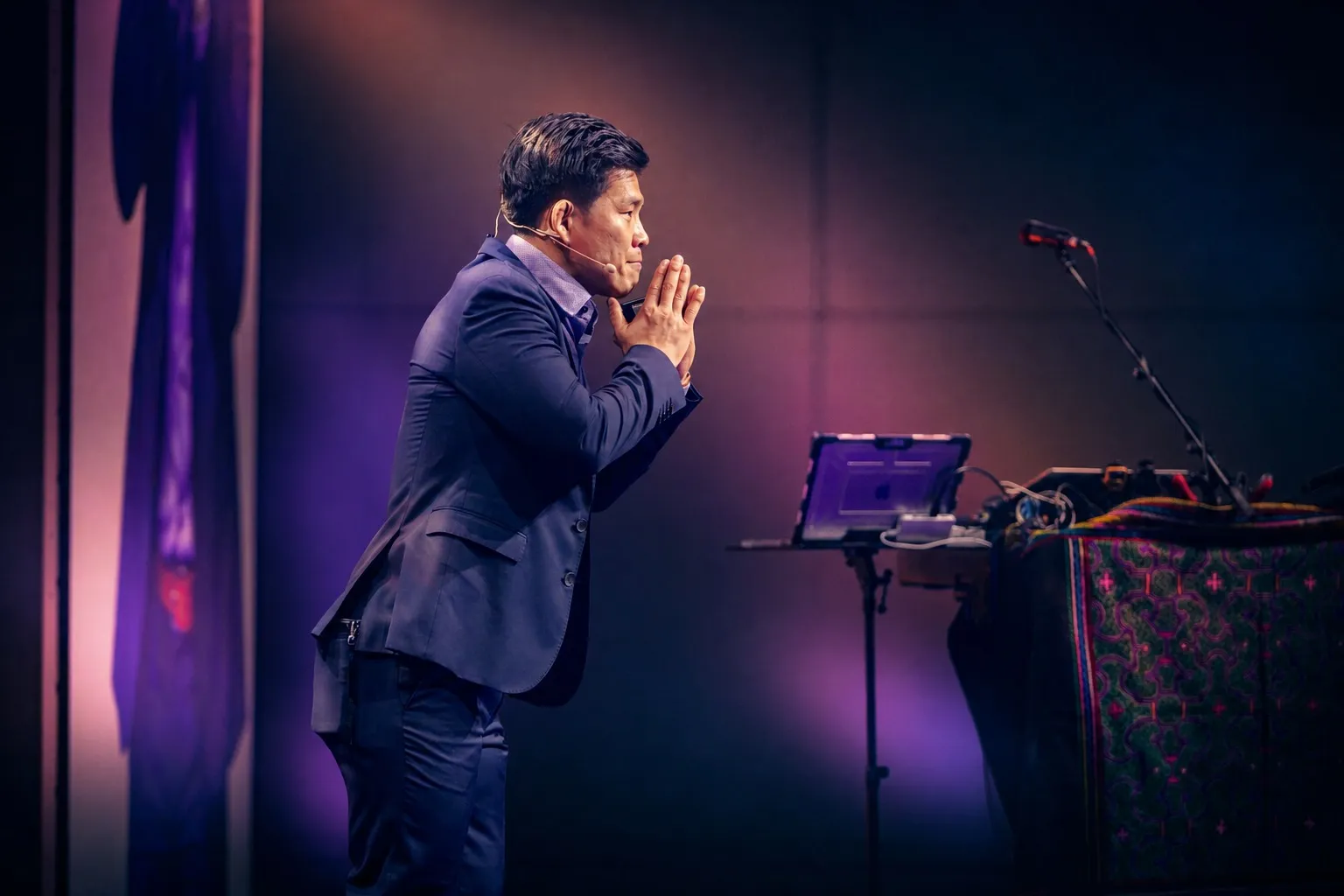
Hacking The Ego And Lessons From A Mixed Martial Artist
At Biohacker Summit 2022 Amsterdam, Tateki Matsuda arrived with the physical credibility of a former UFC fighter and the analytical restlessness of a longevity nutritionist, then asked a question that cut through the polished promises of optimization culture. What if the greatest obstacle to performance, peace and wisdom was not inflammation, poor sleep, low energy or bad data, but the self we most fiercely protect?
His talk, delivered on Saturday 15 October 2022 in Amsterdam, Netherlands, was titled Who Is the Biggest Enemy? It began as a personal inquiry and unfolded into something more unsettling: a challenge to the audience’s faith that better tools alone could make better humans.
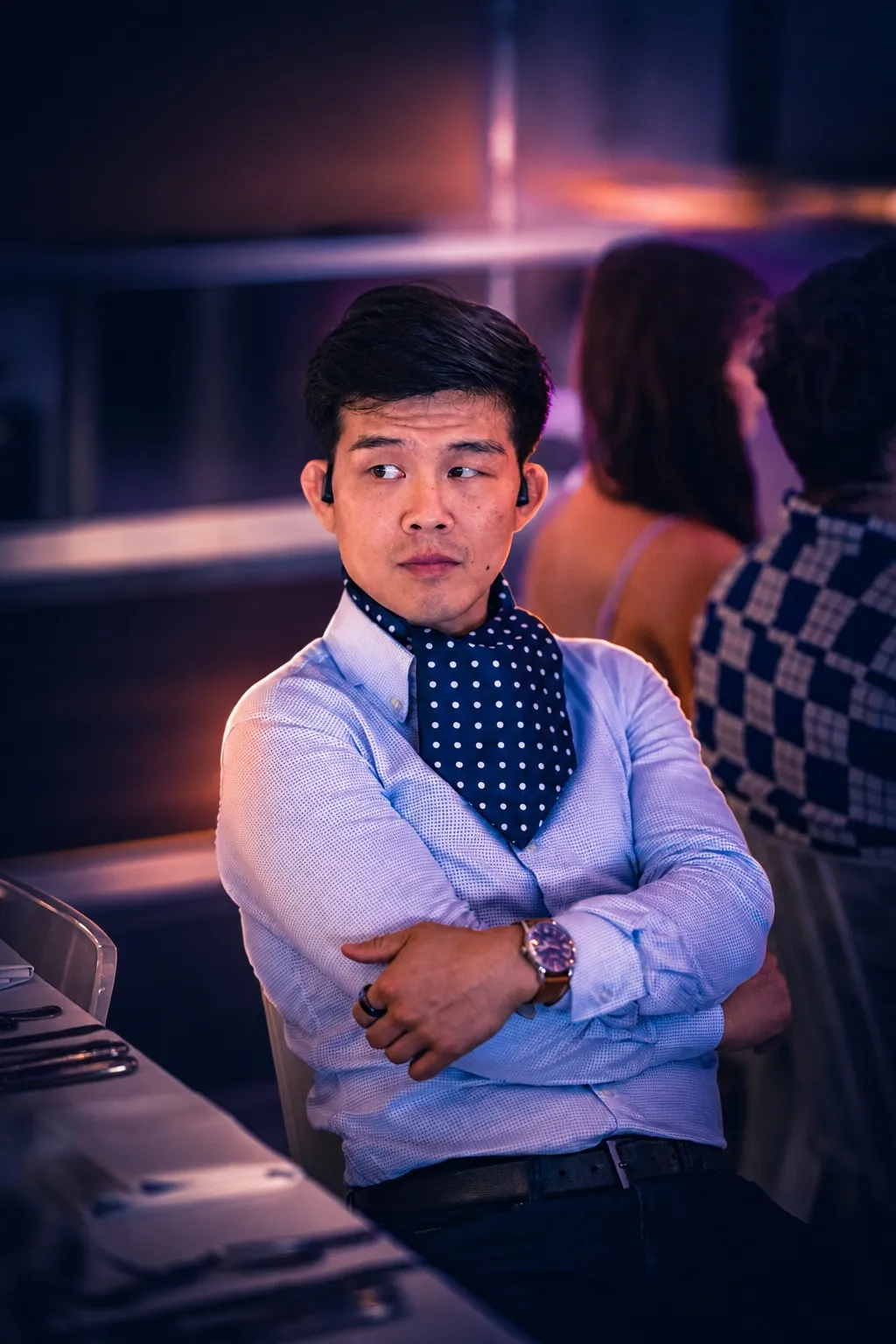
Beyond Biohacking The Body
Matsuda did not dismiss biohacking. He acknowledged its appeal plainly. Technology and methods, he said, could reduce stress, increase happiness and make people more productive. But he was interested in the harder frontier, one less marketable and less easily quantified.
“Biohacking technology and methods help us reduce stress and increase happiness,” he said, “but we must also learn how to hack our ego to become truly wise biohackers.”
It was a pointed intervention in a field often preoccupied with metrics. If biology could be tuned, he suggested, vanity could still sabotage the instrument.
A Fighter’s Most Honest Motive
Matsuda’s authority came not from abstraction but from exposure. He spoke as someone who had lived inside one of the most unforgiving arenas of comparison: professional combat sports. Before coming to Amsterdam, he said, he had tried to dissect the motives that made him fight. Fame, attention, superiority, admiration, the desire to be seen as “cool” all surfaced in the process.
Yet beneath them, he found one answer that felt true.
“Self-expression is my biggest reason to compete,” Matsuda said. “As a fighter, you have to trust yourself and be confident; otherwise, you cannot express who you truly are against tough opponents.”
There was no false modesty in the admission. Fighting, as he described it, demanded ego and threatened to consume the person who carried it. Confidence was necessary. Identification with confidence was dangerous. That paradox became the spine of the talk.
The Attention Economy And The Sick Logic Of Comparison
From the cage, Matsuda moved to the smartphone. He described his young daughter’s jealousy after the birth of his son, not as a family anecdote alone but as a reminder that the need for attention begins early and never really leaves. Adults, he implied, simply build more sophisticated theaters in which to perform it.
Social media, in his reading, had industrialized comparison. Platforms rewarded the curation of ideal moments, creating endless opportunities to measure one life against another.
“In reality, we all want to show only the good screenshots of our lives,” he said. “Then we compare ourselves to others and we get sick from those comparisons.”
That line landed because it captured a distinctly modern pathology. The wound was not merely envy. It was the erosion of any stable sense of enough. Matsuda pointed to studies linking social media feedback with dopamine responses and to evidence that salary satisfaction itself often depends less on absolute earnings than on relative status. The human mind, he argued, was primed to rank before it was ready to reflect.
The Monkey In The Mirror
To show that comparison is older than Instagram and deeper than culture, Matsuda invoked the celebrated work of primatologist Frans de Waal. In the experiment, monkeys accepted cucumber rewards until they saw another monkey receive grapes for the same task. Then came the revolt. Unequal pay, even among primates, triggered outrage.
The lesson was not comic relief, though Matsuda delivered it with humor. It was a reminder that fairness, resentment and comparison were not social media inventions. They were biological habits, perhaps ancestral ones. If monkeys reject unequal treatment, humans with phones, mirrors and public profiles hardly stood a chance of drifting effortlessly into contentment.
And yet Matsuda’s larger point was not fatalistic. Instinct explained the problem. It did not excuse surrender to it.
Is The Self Even Real?
The most provocative turn in the presentation came when Matsuda moved from psychology to neuroscience. Drawing on the Libet experiment and related theories of the fragmented self, he questioned the ordinary assumption that a single, unified “I” sits at the center of decision-making.
If brain activity precedes conscious intention, then agency may be less sovereign than people like to imagine. If memory, personality, bodily ownership, self-reflection and continuity are distributed across multiple systems, the self may be less a commander than a coalition.
For a fighter, this was not merely theory. In combat, he suggested, conscious thought often arrives too late. The body acts before narrative catches up. Performance emerges from training, pattern recognition and embodied response, not from the tidy fiction that the conscious mind authors every move.
Matsuda did not claim that free will had been disproved. He did something more interesting. He used neuroscience to humble the ego. The “unitary self” so often defended in daily life may be, at least in part, an illusion assembled after the fact.
The Vanishing Of The Ego In The Zone
If the ego was unstable, Matsuda argued, there were moments when it disappeared altogether. He described being in the zone during a fight as a kind of selfless awareness, almost as though he were watching himself from another angle.
“When I am in the zone during a fight, I see myself from a different angle,” he said. “When I am extremely focused, my ego does not show up.”
He described similar ego-dissolving states in moments of deep relaxation: in the sauna, in cold exposure, in nature. In such states, he suggested, the mind shifted out of its fog and into a mode of precise presence. The language alternated between anecdote and neuroscience, but the emotional claim was clear. The purest forms of performance and peace may arise not when the self is amplified, but when it recedes.
For a conference built around enhancement, this was a subtle rebuke. More control was not always the answer. Sometimes the breakthrough came when control loosened and self-consciousness fell away.
Training The Ego Rather Than Obeying It
Matsuda was careful not to romanticize ego death. A fighter, he said, still had to train the ego. Not destroy it, not deny it, but make sure it did not become the master.
“You have to train your ego so that you do not get controlled by your own ego,” he said. “Inner peace comes when I am selfless and here for others.”
That distinction mattered. The ego, in his account, was not simply evil. It was necessary for assertion, discipline and survival. But it became dangerous when it demanded constant validation, outsourced worth to comparison and turned every success into private entitlement.
His answer was responsibility. On that front, Matsuda spoke with the stark moral clarity of an athlete accustomed to consequences.
If he won, the victory belonged not only to him but to coaches, friends, family and supporters. If he lost, the fault was his. No excuses. No blame shifting. No mythology of deserving.
The Person In The Mirror
The strongest image of the talk came near the end, when Matsuda invited the audience to imagine opening the front-facing camera or standing before a mirror. There, he said, was the true opponent.
The biggest enemy was not a rival, not a critic, not even a hostile world. It was the person one met every morning, carrying the same appetites, insecurities and evasions into the day.
That enemy, he warned, was formidable because it knew every weakness and could disguise itself as ambition, self-care or righteousness. It wanted applause without discipline, wisdom without humility and recognition without sacrifice.
His ethic, shaped by combat and sharpened by introspection, rejected all three.
Nothing was deserved. Everything was earned.
A Harder Definition Of Human Optimization
What Matsuda offered at Biohacker Summit 2022 Amsterdam was not a rejection of modern performance culture but a demand that it grow up. Sensors, supplements and protocols could improve the machinery. They could not, on their own, settle the ancient struggle between self-expression and self-importance.
His presentation, Who Is the Biggest Enemy?, lingered because it named the contradiction many optimization movements prefer to avoid. Human beings want to become better, but they also want to feel superior. They seek health, but also admiration. They chase truth, but often only insofar as it flatters identity.
Matsuda’s message was that wisdom begins where that flattering story breaks down.
The final opponent, he suggested, was not the body’s limitation but the ego’s hunger. And the only meaningful victory was not domination of others, but a disciplined, ongoing refusal to be ruled by the self in the mirror.
Frequently asked questions
What question did Tateki Matsuda put to the room?
What if the greatest obstacle to performance, peace and wisdom was not inflammation, poor sleep or low testosterone. The former UFC fighter and longevity nutritionist aimed at a target less marketable and harder to quantify than any biomarker.
Does he reject biohacking?
No. Matsuda acknowledged its appeal plainly, saying technology and methods help us reduce stress and increase happiness, and was interested in the harder frontier that sits beyond them rather than in dismissing the field.
What did he find when he examined his own motives?
Before coming to Amsterdam he tried to dissect why he fought, and found fame, attention, superiority, admiration and the wish to be seen as cool all surfacing. He then moved from the cage to the smartphone and the same logic of comparison.
About the event
This recap is part of the Biohacker Summit 2022 Amsterdam series, recorded in Amsterdam on 15 and 16 October 2022. Read the summary of the whole event or join the next edition, HOLOLIFE Summit 2026 Amsterdam, on 14 and 15 November 2026.
In this story
Comments
Loading comments…