Biohacker Summit 2022 Amsterdam
Flow, Ego, And The Price Of Happiness
By Teemu Arina · · Updated
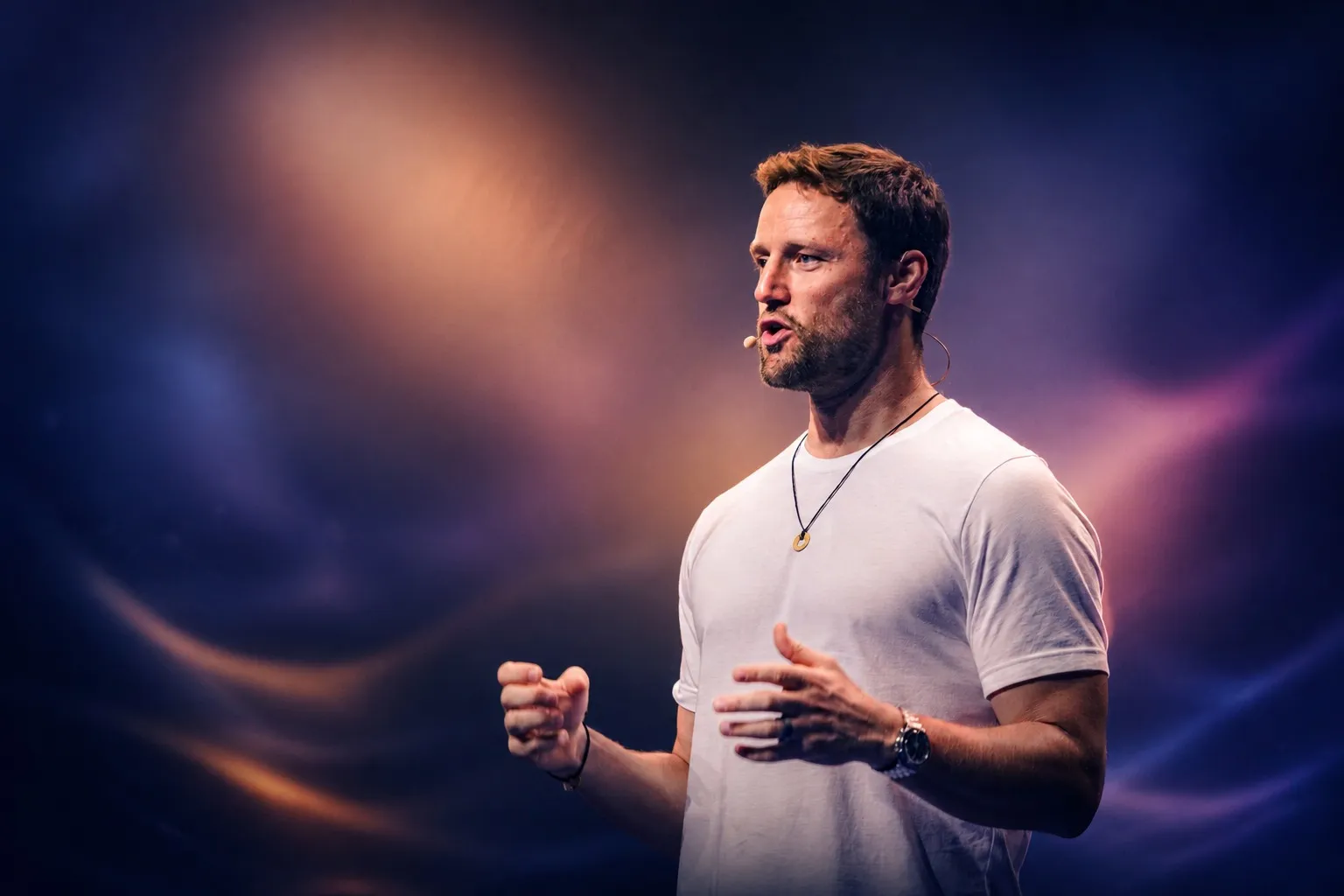
At Biohacker Summit 2022 Amsterdam, Max Gotzler Argued That Peak Performance Is Not The Same Thing As A Good Life
Late in the afternoon at Biohacker Summit 2022 Amsterdam, when conference fatigue had begun to settle like dust across the room, Max Gotzler did not begin with theory. He began with breath.
He asked the audience to rise. The air, he suggested, had gone stale. There was too little oxygen, too much carbon dioxide, too much of the dull heaviness that gathers at the end of a long day of talks about optimisation. Then came a strange and faintly theatrical ritual: a sequence of deep inhalations, a second shorter inhale, a full release, and a wash of sound engineered, he said, to coax the brain towards flow.
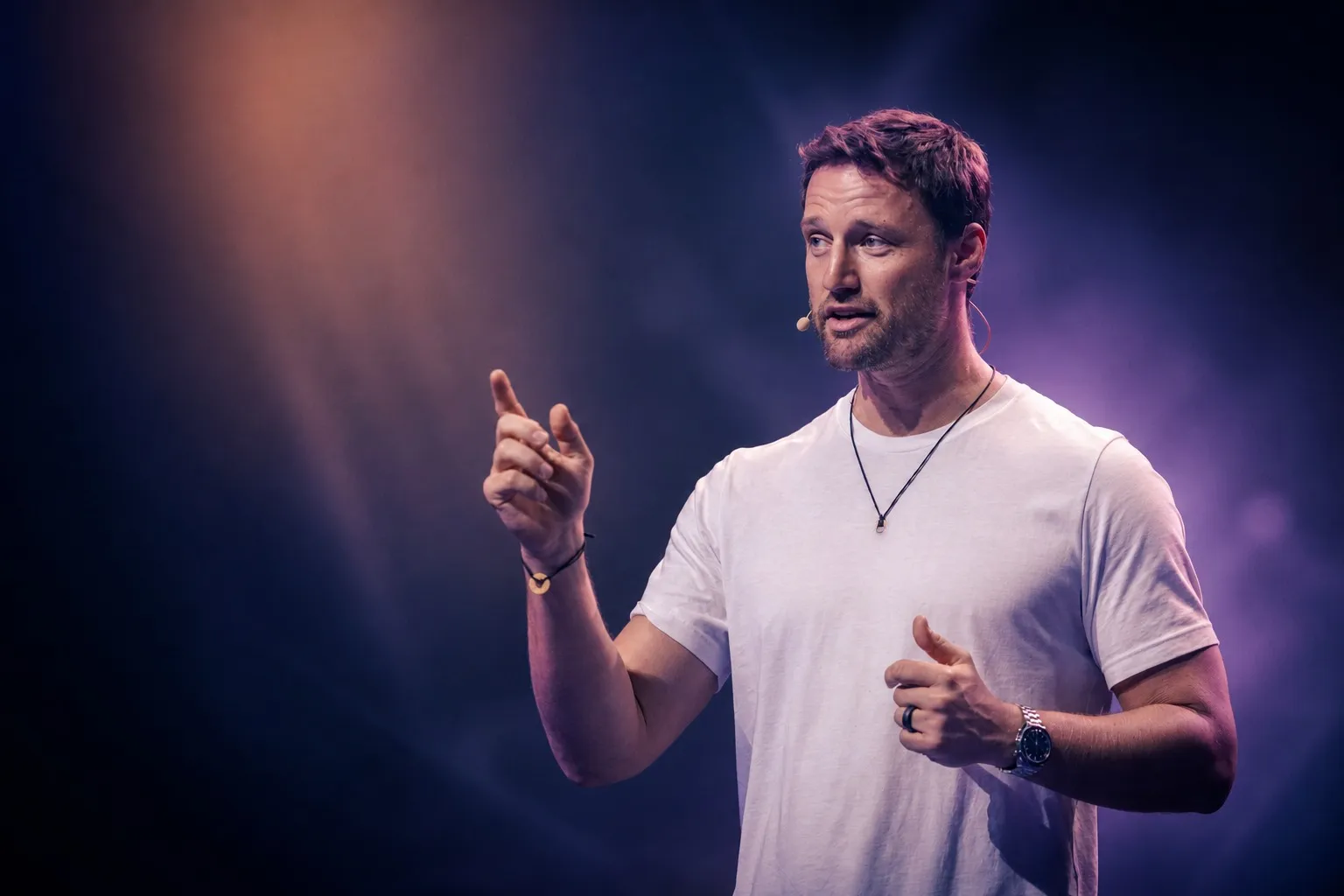
The presentation was titled “Flow & Ego: The Neuroscience Of Happiness”, and in those opening minutes Gotzler laid out the shape of his argument without quite naming it. Happiness, he implied, was not simply a matter of doing more, focusing harder, or biohacking the body into compliance. It was about learning the difference between the states that animate us and the selves that exploit us.
The State Where The Self Falls Silent
Flow has become one of the defining aspirations of modern performance culture: coveted by athletes, founders, artists and knowledge workers alike. But Gotzler, speaking in Amsterdam on Saturday, 15 October 2022, tried to recover its original meaning from the glossy language of productivity.
Flow, he said, is an “optimal state of consciousness”, a condition in which a person becomes fully immersed in an activity. Time loses its grip. Reflection drops away. The usual commentary of the self quiets down. What remains is concentration so complete that action begins to feel almost effortless.
“Flow is mental energy,” Gotzler told the room. “When you focus on a task and create enough energy directed at one point, it forces you into the moment. High concentration shuts off the external system of reflection and pulls you into your intrinsic skills.”
It was a useful corrective to the way flow is often marketed now: as a tool to squeeze more output from already overextended lives. In Gotzler’s framing, flow was less a productivity weapon than a temporary liberation from self-consciousness. The ego did not triumph there. It receded.
The Ego As A Necessary Guardrail
And yet ego, in Gotzler’s account, was not the villain either.
He asked listeners to replace the word with something more precise: a sense of self-importance. Put that way, ego sounded less like a moral failing than a psychological function. Without it, he suggested, a person risks becoming boundaryless, too willing to please, too easy to exploit.
This was one of the more subtle ideas in the talk. In wellness culture, the self is often treated as an obstacle to be dissolved. Gotzler resisted that simplification. The ego, he argued, keeps a necessary check on the world. It asks whether one is being undervalued, used, ignored or cheated. It can be noisy, even oppressive, but it is not meaningless.
The problem begins when that voice becomes tyrannical.
Gotzler described what he called the “after drop”, the melancholy comedown that can follow a successful event or peak experience. After the applause fades, ego returns with its old interrogations: Was it worth it? Was it good enough? Did it make enough money? Am I enough?
It was a surprisingly vulnerable confession from a speaker at a conference dedicated to high performance. Beneath the polished language of optimisation lies a familiar human unease: comparison, insecurity, the fear that achievement will still leave some inner deficit unpaid.
Happiness In The Tunnel Between Competition And Belonging
To explain where flow lives, Gotzler turned to the psychologist Mihaly Csikszentmihalyi, whose work gave the concept its modern force. He spoke of two forces: differentiation and integration.
Differentiation is the push to stand apart. It drives ambition, competition, innovation, the desire to become singular. Integration is the pull towards belonging, towards being part of a group, a collective, a shared whole.
Too much differentiation, Gotzler suggested, and people become brittle with stress, forever competing, forever proving. Too much integration, and they become passive, relaxed to the point of stagnation, less likely to take risks or create anything new.
“Use your ego to differentiate and find opportunities to innovate, then focus so deeply that you become integrated. Flow happens in the tunnel between being too competitive and being too relaxed.”
That line landed because it named a tension that extends far beyond neuroscience. Modern life trains people relentlessly in differentiation: build the personal brand, beat the market, outwork the rivals, optimise the morning routine. But it offers far less help with integration, with reflection, with belonging, with the quieter labour of understanding what one actually wants.
The Four Per Cent Rule
The mechanics of flow, as Gotzler presented them, were straightforward enough to appeal to the room’s biohacking instincts. To enter flow, the challenge must exceed current ability, but only slightly.
“To achieve flow, you need a challenge that is roughly four percent more difficult than what you have achieved before. This ensures the task is difficult enough to keep you engaged without overwhelming your system.”
It is a neat formula, and one that captures something essential about human motivation. Too little challenge breeds boredom. Too much triggers anxiety. Somewhere in that narrow corridor, the mind sharpens. Attention gathers. Energy rises to meet resistance.
Gotzler paired this with a more practical principle: flow follows focus.
“Flow follows focus. Once you find something you want to get in flow for, the easiest thing you can do is focus visually on a salient object. What you look at is where you direct eighty percent of your mental energy.”
The advice was almost austere in its simplicity. Clear the desk. Choose the object that matters. Look at it. Direct the nervous system towards one thing instead of scattering it across ten.
Breath, Cold, Sound, And The Chemistry Of Attention
There was, of course, a more experimental edge to the talk as well, fitting for the setting in Amsterdam.
Gotzler described a set of physical triggers designed to prime the body for flow: cold exposure to raise adrenaline and dopamine; sound frequencies, including binaural beats and what he called genosonic infoceuticals; and nootropics such as Alpha GPC, which may support attention through acetylcholine pathways.
He also demonstrated a breathing method, the “double breath”, intended to energise the body by helping expel excess carbon dioxide. Even the playful jumping and shaking at the start of the session had a purpose: to cut through lethargy and bring the room back into physiological readiness.
Some of these methods sit closer to the speculative edges of biohacking than to settled consensus. But in the architecture of Gotzler’s talk, they were secondary anyway. The chemistry mattered, but it was not the heart of the message.
The heart of it was motivational honesty.
The Danger Of Forcing Desire
What distinguished this presentation from the usual gospel of performance enhancement was its warning against using flow as a way to coerce oneself into an unlived life.
Gotzler argued that flow is autotelic: rewarding in itself. The activity is not merely a means to an external reward. It carries its own internal satisfaction. Strip that away, and the pursuit becomes hollow.
This was his sharpest critique of the modern self-improvement industry. Too often, he suggested, people reach for stimulants, supplements and hacks not because the goal truly matters to them, but because they are trying to override a deeper reluctance. They want to want something. Career success, money, status, output. The body resists. The chemicals are summoned to silence the resistance.
That, he warned, is a recipe not for happiness but for estrangement.
He urged the audience to pause before reaching for another cup of coffee, another stimulant, another cognitive enhancer, and ask a more unsettling question: Is this task genuinely mine? Or am I drugging myself into someone else’s idea of a meaningful life?
The Smile As A Compass
For all the neuroscience, the conference jargon, the references to dopamine and adrenaline, the talk returned repeatedly to a simpler truth: the body often knows before the ego does.
“Whatever raises the ends of your mouth and makes you smile, do more of that. This internal feedback is a powerful motivator that tells you which direction to go in life.”
It was, perhaps, the most memorable line of the session because it cut through the machinery. In a culture obsessed with metrics, Gotzler offered something closer to a moral instrument. Not a dashboard, but a signal. Not optimisation, but orientation.
The smile, in this formulation, is not trivial. It is feedback. A clue. A small register of alignment between action and desire.
A More Honest Vision Of Performance
What Max Gotzler offered at Biohacker Summit 2022 Amsterdam was not a rejection of performance culture, but a plea to humanise it. Flow can sharpen work, deepen sport, elevate art. Ego can protect ambition, establish boundaries, and spur innovation. But neither should be worshipped.
Flow without self-knowledge becomes exploitation. Ego without integration becomes torment. And happiness, if the talk was right, lies not in eliminating either force, but in learning how to let them meet without allowing one to consume the other.
In the end, the most radical thing said in that room may have been the least technological idea of all: that true flow does not come from forcing the self past its limits in pursuit of an externally approved life. It comes when attention, challenge and desire finally point in the same direction.
Frequently asked questions
How did Max Gotzler start the session?
Not with theory but with breath. Late in the afternoon, with conference fatigue settling over the room, he asked the audience to stand, suggesting the air had gone stale, with too little oxygen and too much carbon dioxide to think clearly in.
What is flow, properly understood?
Gotzler tried to recover the term from the glossy language of productivity, describing it as an optimal state of consciousness rather than a performance hack, and drawing on Mihaly Csikszentmihalyi, whose work gave the concept its modern force.
Is the ego the villain?
Not in his account. He asked listeners to replace the word with a sense of self-importance, which makes it sound less like a moral failing than a psychological function. Without it, he suggested, a person risks becoming boundaryless, too willing to please and too easy to exploit.
About the event
This recap is part of the Biohacker Summit 2022 Amsterdam series, recorded in Amsterdam on 15 and 16 October 2022. Read the summary of the whole event or join the next edition, HOLOLIFE Summit 2026 Amsterdam, on 14 and 15 November 2026.
In this story
Comments
Loading comments…