Biohacker Summit 2022 Amsterdam
Hack Your Ego And Heal Trauma With Alpha Neurofeedback Training
By Teemu Arina · · Updated
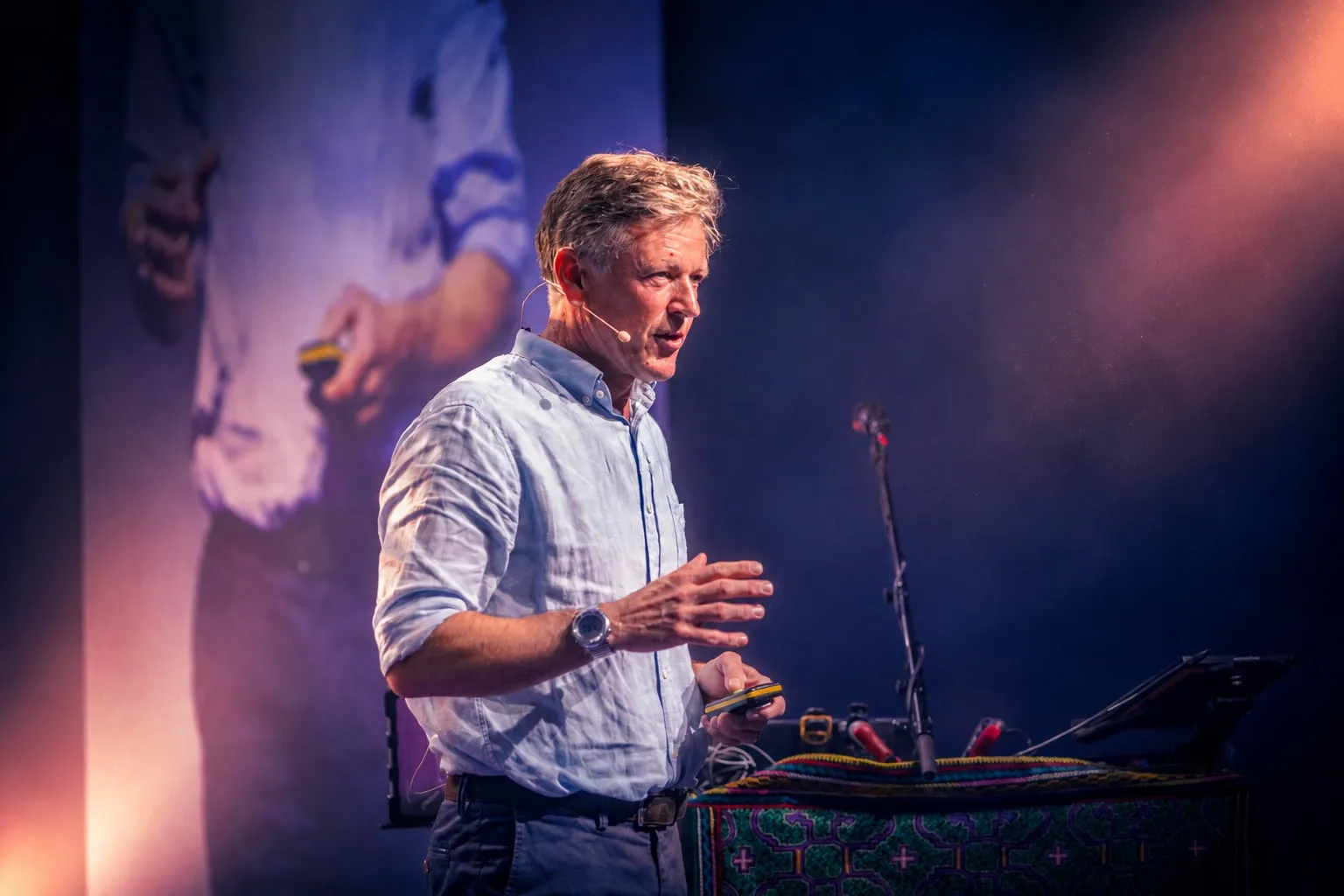
At Biohacker Summit 2022 Amsterdam, Eduard de Wilde Turned A Personal Breakdown Into A Radical Theory Of Recovery
On 15 October 2022, at Biohacker Summit 2022 Amsterdam in the Netherlands, biohacker and entrepreneur Eduard de Wilde delivered a presentation that was at once confessional, evangelical and deeply unsettling in its implications. Titled Hack Your Ego with Neurofeedback Training, the talk traced a 22-year journey that began with a medical catastrophe and ended, at least in de Wilde’s telling, in a form of inner disarmament.
His argument was stark. Trauma, he said, did not merely wound the psyche. It built the ego itself. And if the ego was constructed as a defense mechanism against pain, then healing required more than performance optimization, diet tweaks or cold plunges. It required dismantling the architecture of judgment, fear and reactivity at the level of the brain.
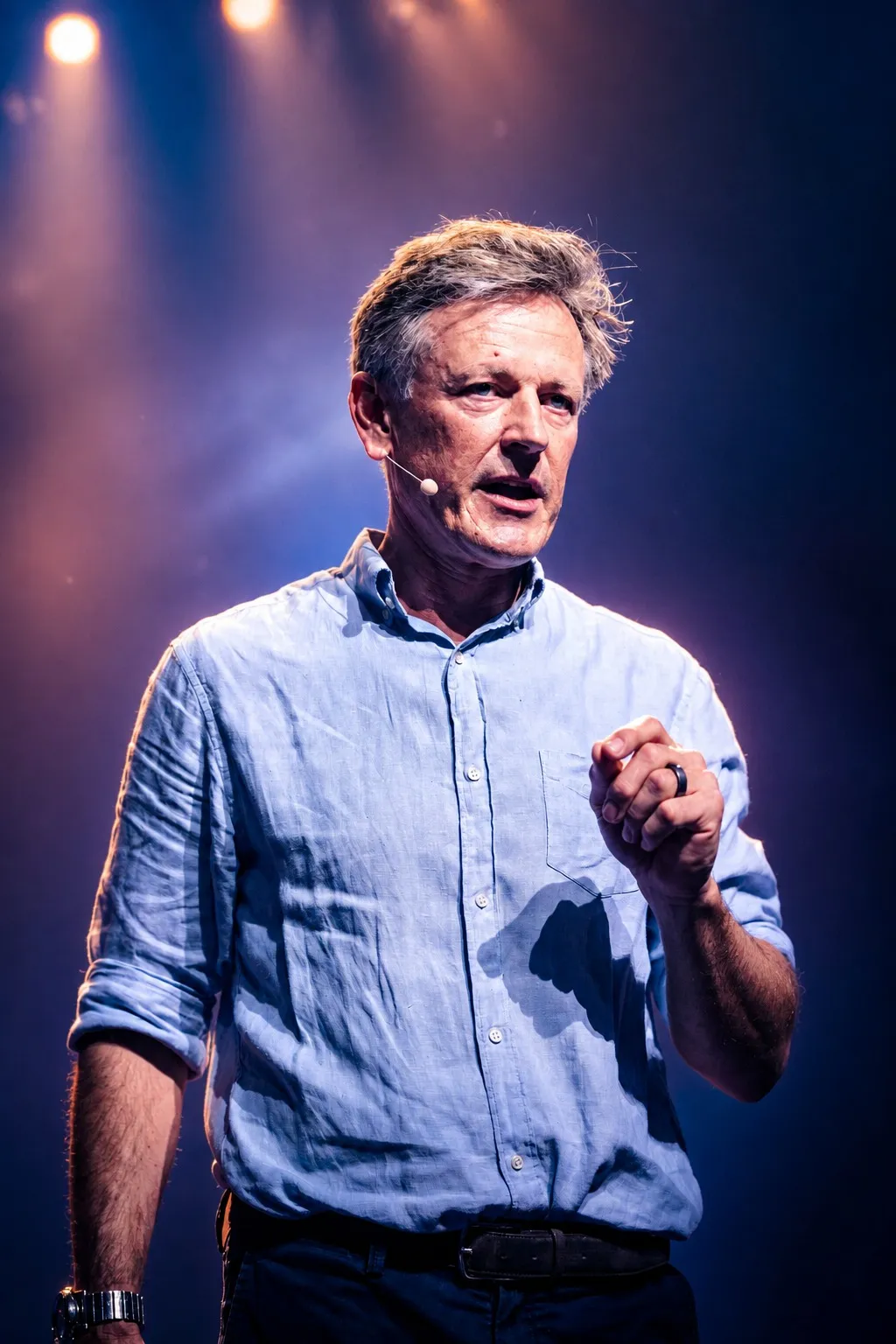
For de Wilde, that dismantling came through alpha neurofeedback training, a seven-day protocol he described as capable of producing profound restoration, emotional release and what he called a loosening of ego-driven survival patterns.
A Biohacking Journey Born From Panic
De Wilde did not arrive at biohacking through fashionable self-improvement. He arrived through desperation.
He recounted how, more than two decades earlier, a trip to Cameroon triggered a severe reaction to anti-malarial medication. What followed was a debilitating panic and anxiety disorder that reshaped his life. He described years in which work, fatherhood and marriage were all overshadowed by a condition that conventional and alternative treatments only partially relieved.
“I spent one hundred thousand euros on treatments,” he said, describing a long procession of medical therapies and fringe experiments that helped “a little” but failed to resolve the core problem.
The darkness of those years gave the rest of the talk its moral force. De Wilde was not presenting biohacking as a luxury hobby for the already well. He framed it instead as a survival strategy, a form of disciplined self-experimentation pursued after the formal medical system had little left to offer.
“The idea of biohacking is to experiment with yourself and create a personalized, optimal lifestyle to upgrade your performance and well-being,” he said.
The Body First, The Mind Second
One of the most resonant ideas in de Wilde’s talk was also one of its simplest. Before trying to fix the mind, he argued, a person had to create energy in the body.
He described the biohacking “toolbox” he had assembled over the years: personalized nutrition, breathwork, light therapy, infrared sauna, cold exposure and supplements. These interventions, he said, helped him stimulate what he viewed as the body’s innate self-healing potential.
“By applying the right biohacking principles, you can stimulate the self-healing power of your body and take control of your own health journey,” he said.
That physiological groundwork, in his account, was not optional. It was foundational.
“First, you have to create energy in your body. If you lack energy, it doesn’t make sense to focus on the mind, because the mind needs that energy to function.”
It was a familiar biohacker inversion of mainstream thinking: cognition as downstream from metabolism, emotional resilience as impossible without biological capacity. Whether one accepted the framing in full or not, it gave his later claims about neurofeedback a kind of internal logic. The brain could not be retrained, he suggested, until the organism had enough strength to endure the process.
The Promise Of Alpha Waves
The turning point came when de Wilde encountered the world of high-end neurofeedback, particularly the promise that a concentrated protocol could generate the kinds of alpha brainwave states associated with long-term meditation.
He spoke admiringly of the method that informed Dave Asprey’s widely known 40 Years of Zen program, and of the moment he met James Hart, whom he identified as the originator of the methodology, at Flow Fest. Hart, de Wilde said, later invited him to take part in a seven-day double alpha neurofeedback training at an institute in Munich.
The procedure he described was intense, even monastic. Participants sat for hours in dark, cold rooms, wired with electrodes, while acoustic feedback responded to the brain’s production of alpha waves. Saxophone and clarinet sounds emerged when the brain entered the desired state, turning neural output into an improvised and deeply personal soundscape.
This was not presented as relaxation in the spa sense. It was presented as neurological confrontation.
Alpha waves, de Wilde said, were restorative. In that state, the brain became more capable of revisiting painful material without simply reenacting its stress response. The method’s promise was not just calm but repair.
The Ego As A Trauma Machine
The philosophical center of the talk was de Wilde’s definition of the ego. He described it not as vanity or self-importance but as an accumulated defense system, built from traumas large and small.
“Your ego is a defense mechanism built from life traumas,” he said. “The moment your ego starts to be offensive, defensive, or create anxiety, it has become your enemy.”
This was the conceptual leap that gave the presentation its title. To “hack” the ego, in de Wilde’s framework, was not to become grander or more efficient. It was to expose the ways in which old injuries had become present-day reflexes: judgment of others, fear, hostility, overreaction, withdrawal.
His claim was that many people moved through life believing they were acting freely, when in fact they were being piloted by protective structures formed years earlier.
Neurofeedback, he argued, created the conditions in which those structures could finally be examined and weakened.
Inside The Seven-Day Protocol
De Wilde’s description of the training bordered at times on the surreal. Days lost their normal shape. Watches were put away. Morning and evening sessions stretched to three hours each, with debriefs and psychological excavation in between. Nights could run until three or four in the morning. The schedule was governed not by habit but by process.
Participants also completed extensive mood assessments, answering hundreds of questions while their brainwave patterns were measured. De Wilde said this exposed discrepancies between what people claimed to feel and what their nervous systems still carried. Fear, anger, anxiety and grief, once denied or minimized, returned with startling force.
He entered the experience expecting cognitive enhancement. Instead, he found himself facing a mountain of unresolved pain.
“I thought I was going to increase my IQ, but I discovered that I was going to heal traumas,” he said.
The shock was not that trauma existed, but that there was so much of it. Not five major wounds, but hundreds of moments layered across a life.
The Forgiveness Process At The Heart Of The Method
If alpha waves created the neurological opening, forgiveness was the tool de Wilde believed did the deepest work.
He described a highly structured internal exercise in which participants mentally reconstructed specific painful events. They visualized judges, figures meant to represent honesty and moral clarity. De Wilde chose animals: a giraffe, an elephant and a lion. In this internal courtroom, the charges were read. The trauma was named. The emotional reaction was monitored through the collapse or return of alpha states.
Then came the central question: why had the other person behaved that way?
This was not, he stressed, about excusing cruelty. It was about understanding it well enough to loosen its grip.
“The magic of the forgiveness process is the ability to understand why someone behaves the way they do, which allows you to finally let go of the judgment,” he said.
That line captured the emotional thesis of the presentation. Judgment, in de Wilde’s account, was often pain in disguise. To release judgment was not merely to become kinder. It was to stop carrying the psychological residue of old injuries into every new interaction.
From Judgment To Authenticity
The changes de Wilde described after the training were less theatrical than the language of enlightenment that occasionally hovered around the talk. He did not claim perfection. He claimed lightness.
He said he became more aware of when ego had taken over his reactions and more able to recognize ego-driven behaviour in others without immediately escalating in return. The habit of judging people, he said, diminished. Stressful situations no longer triggered the same degree of anxiety or internal violence. Something had, in his words, fallen from his shoulders.
This was perhaps the most persuasive part of the presentation: not the lofty promise of becoming optimized, but the quieter possibility of becoming less burdened.
He suggested that the real outcome of the process was a movement toward the “authentic self”, a self less scripted by old fear, less trapped in defense and less compelled to interpret the world through injury.
The Expensive Frontier And The Democratic Workaround
There was, inevitably, a tension at the heart of the talk. The neurofeedback experience de Wilde praised was intensive, rare and expensive, the sort of intervention available mainly to those with means, time and access to a niche wellness ecosystem.
To his credit, he acknowledged this by pointing listeners toward a more accessible practice: the Six Phase Meditation by Vishen Lakhiani. De Wilde said he recognized in it a similar forgiveness process combined with a meditative state that could help cultivate restorative brainwave patterns, even without clinical neurofeedback.
Whether that comparison would satisfy neuroscientists is another matter. But as a practical gesture, it was revealing. De Wilde seemed aware that the deepest value of what he had learned might not lie in the machinery but in the discipline of confronting trauma honestly and relinquishing the judgments built around it.
A Talk That Refused Easy Categories
At Biohacker Summit 2022 Amsterdam, Eduard de Wilde offered more than a wellness testimonial. He delivered a story about suffering, self-experimentation and the uneasy merger of neuroscience, spirituality and personal reinvention.
Parts of the presentation invited skepticism. Claims of seven-day transformations that rival decades of meditation naturally demand scrutiny. So do frameworks that compress complex psychological and neurological realities into elegant self-help narratives.
And yet the power of the talk lay elsewhere. It lay in de Wilde’s insistence that optimization without healing was hollow, that performance culture often mistook armor for strength, and that the fiercest thing a person could do might not be to upgrade the self, but to soften it.
In a summit built around enhancement, his message cut in a different direction. The body could be trained, the brain could be measured, the lifestyle could be engineered. But if trauma remained untouched, the ego would keep running the show.
His wager was that alpha neurofeedback, paired with rigorous forgiveness, offered a way out. Not into perfection, but into a life less ruled by fear.
Frequently asked questions
How did Eduard de Wilde come to biohacking?
Through desperation rather than fashion. More than two decades earlier a trip to Cameroon triggered a severe reaction to anti-malarial medication, followed by a debilitating panic and anxiety disorder that reshaped his work and family life.
What is his order of operations?
Body first, mind second. Before trying to fix the mind, he argued, a person has to create energy in the body, and he described the toolbox he assembled over the years: personalized nutrition, breathwork, light therapy, infrared sauna, cold exposure and supplements.
Why alpha waves?
The turning point came when he encountered high-end neurofeedback and the claim that a concentrated protocol could generate the kinds of alpha brainwave states associated with long-term meditators, compressing years of practice into a much shorter intervention.
About the event
This recap is part of the Biohacker Summit 2022 Amsterdam series, recorded in Amsterdam on 15 and 16 October 2022. Read the summary of the whole event or join the next edition, HOLOLIFE Summit 2026 Amsterdam, on 14 and 15 November 2026.
In this story

Comments
Loading comments…