Biohacker Summit 2022 Amsterdam
Dating Your Ego: A Molecular Love Affair And Psychoplastogens For Presence
By Teemu Arina · · Updated
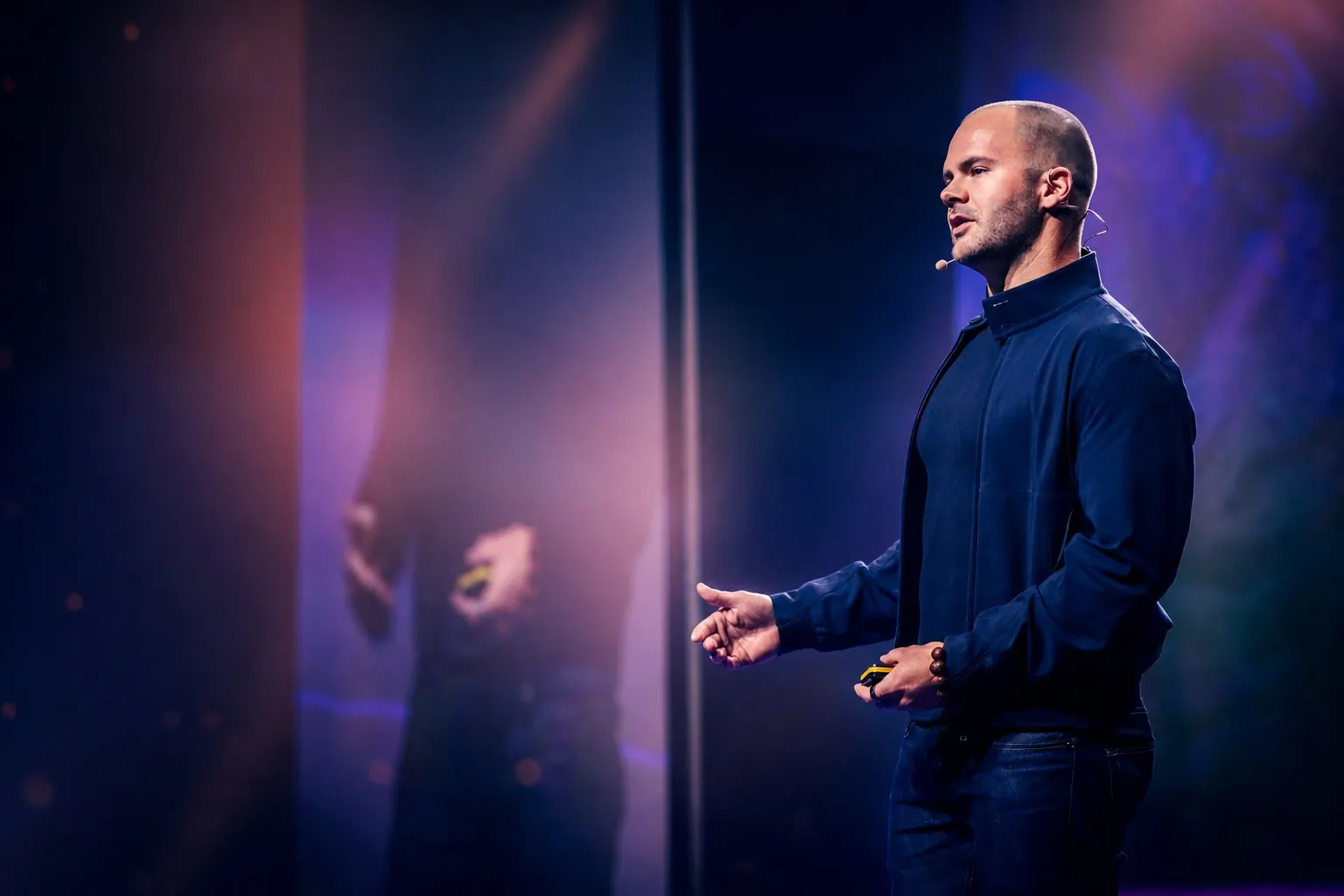
At Biohacker Summit 2022 Amsterdam, Boomer Anderson Turned The Language Of Optimization Toward A More Elusive Goal: Enjoyment
Biohacking conferences often trade in the grammar of control. Better sleep. Sharper focus. Longer life. Hard metrics for a culture that rarely stops measuring itself. But at Biohacker Summit 2022 Amsterdam, held in Amsterdam, Netherlands, on 15 and 16 October 2022, speaker Boomer Anderson offered something more intimate and, in its way, more radical. His presentation, “Dating Your Ego: a Molecular Love Affair,” asked not how to do more, but how to be here for it.
Anderson’s talk unfolded as a personal experiment in presence, told through the idiom of neuroscience, metabolomics, meditation and psychoplastogens. Yet beneath the technical language lay a recognisable modern ache: the life built on perpetual striving, where one achievement is eclipsed by the next before joy has time to register.
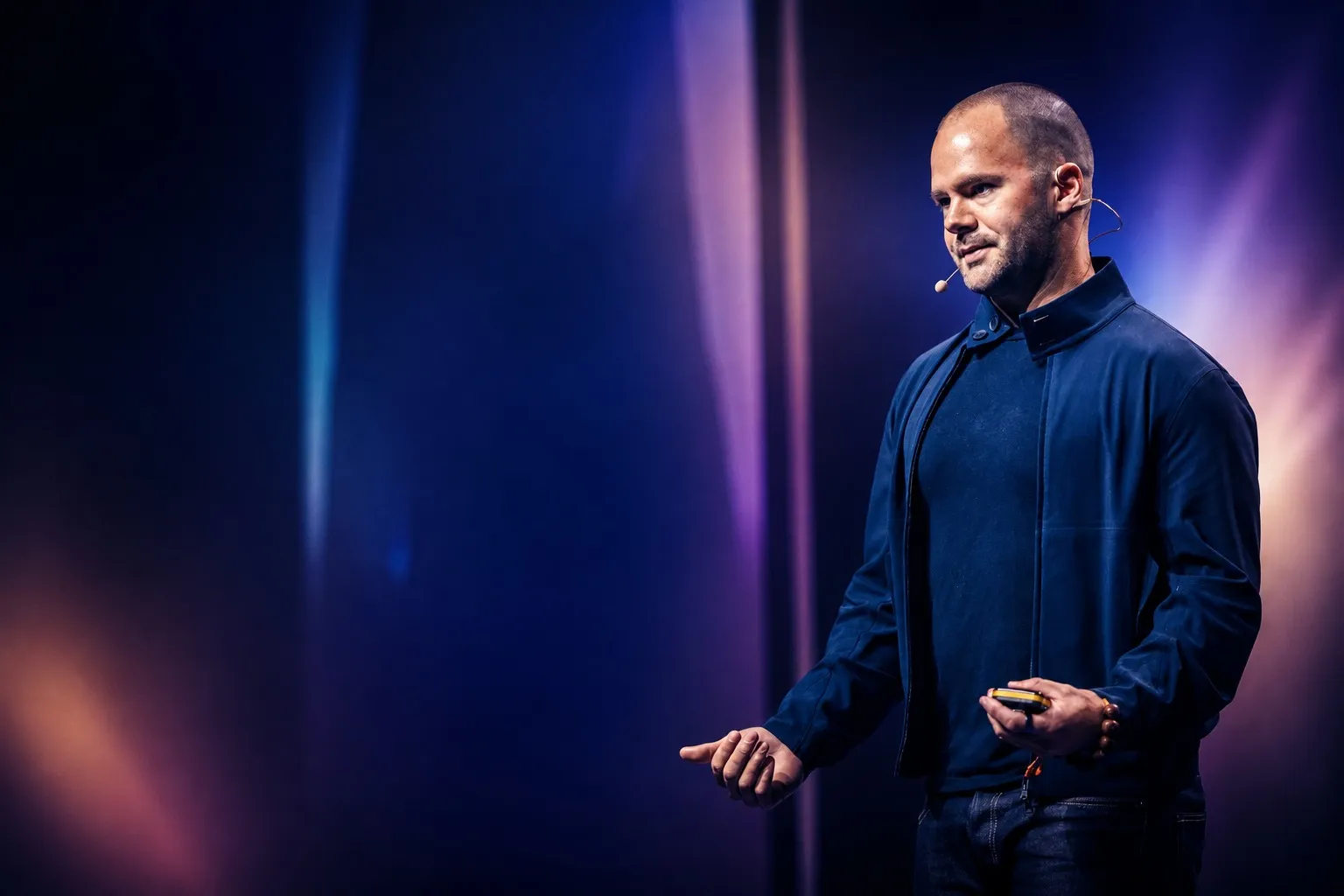
“I was so focused on achieving the next goal that I would forget to celebrate entirely,” Anderson said. “I set out to run a different type of experiment: how to find a one cent solution for enjoyment and presence.”
The Tyranny Of The Next Thing
The phrase “one cent solution” became the talk’s governing metaphor. Anderson opened with a parable about the Buddha and a guru, one that contrasted decades of effort with the simple practicality of paying a penny for the ferry. The point was not anti-ambition. It was anti-waste, anti-vanity, anti-spiritual overengineering.
In the early stages of his biohacking life, Anderson said, he had sought such “one cent solutions” for productivity, appearance and endurance. Then, as often happens in the optimization world, the list expanded. Better sleep led to mitochondrial health. Stress resilience led to focus. Metrics multiplied. Routines thickened. The self became a project under constant renovation.
What emerged was a familiar loop: set goal, achieve goal, set another. Presence, in this schema, became collateral damage.
The Ego As A Biological Mechanism
Anderson located the interruption not in some mystical failing but in brain circuitry, specifically the default mode network. He described it as the biological analogue of Freud’s ego, a self-referential system associated with future planning and narrative identity.
“The default mode network is what Freud referred to as the ego,” Anderson said. “It is useful from an evolutionary perspective, but it often gets in the way. I want to build a more manageable relationship with my ego because I want to enjoy this thing called living.”
That line landed because it translated a technical concept into human stakes. The problem was not that the ego existed. The problem was that it was overactive, forever leaning into tomorrow, forever narrating, forecasting, protecting, comparing. In a culture built on self-optimization, the ego does not merely survive. It receives venture funding.
Meditation, Breathwork And The Power Of Pause
Before moving to molecules, Anderson described the lower-tech foundations of his experiment. He read for three hours a day, he said, to alter the informational environment from which thoughts arise. He adopted meditation in stages, beginning with mantra-based practice and later moving through Vipassana to non-dual approaches. He also worked on breathwork and frequent movement, especially walking, as ways to regulate the nervous system and cultivate bodily presence.
These practices, he said, began to produce what he called “the power of pause”.
“I began to see glimpses of success in the power of pause, that pause between thought and reaction,” he said.
It was a modest phrase for a profound shift. In the space between impulse and action lies much of what people mean when they speak of freedom, maturity or grace. Biohacking often sells acceleration. Anderson was speaking instead about interruption.
Psychoplastogens And The Search For Neuroplastic Change
The presentation’s most provocative terrain lay in Anderson’s use of psychoplastogens, a term he said he preferred to psychedelics because it emphasised structural and functional brain change rather than spectacle.
“What I am actually after when I am using these substances is a therapy that rapidly changes my brain structure towards a given result and promotes neuroplasticity,” he told the audience.
He framed the work carefully as personal, risky and conducted with medical and psychotherapeutic supervision. The disclaimer mattered. So did the fact that his argument was not hedonistic. The substances were not described as escape, but as instruments within a deliberate system aimed at recalibrating the relationship between ego and awareness.
Anderson spoke of alternating between experiences of ego dissolution and ego expansion. Tryptamines, he said, could dissolve the default mode network, allowing a temporary experience less dominated by selfhood. Phenethylamine-type compounds, by contrast, could accentuate aspects of ego and emotion in a way that made them easier to observe. Together, he suggested, these cycles created a detached intimacy with one’s own patterns.
The phrase “dating your ego” was apt. He was not trying to destroy it, nor surrender to it, but to know it well enough that it stopped governing every room it entered.
Measuring Chemistry, Chasing Presence
If the emotional arc of the talk was confessional, its methodology was insistently quantified. Anderson described using metabolomics to monitor neurotransmitter-related metabolites, including markers associated with serotonin and dopamine, and adjusting his protocol accordingly. He referred to neurotransmitter pairs and balances between excitatory and inhibitory systems as a way of personalising intervention.
This was biohacking in its most characteristic form: inner life translated into dashboards, chemistry rendered as strategy. Yet what distinguished Anderson’s approach was that the numbers were not presented as ends in themselves. They were subordinate to a larger question. Did the interventions make him more alive to his own life?
Ketamine As Reset And Learning Window
Of the compounds he discussed, ketamine emerged as the central tool in his framework. Anderson described using it as a monthly reset, usually at night, followed by a twenty-four-hour period in which he deliberately studied complex material.
His rationale was based on ketamine’s psychoplastogenic effects and the possibility of heightened neuroplasticity after use. In his account, the substance functioned both as a dissociative break from habitual identity and as a catalyst for what he called “super learning”.
The language was strikingly contemporary: part neuroscience, part self-experiment, part productivity architecture. But even here, the deepest appeal was existential. A reset, in Anderson’s telling, was not simply a performance intervention. It was a way to step outside one’s roles long enough to remember that they were roles.
The Discipline Of Rhythm
What ultimately emerged from the experiments was not a single miracle compound but a rhythm. Anderson described a framework organised across daily, weekly, monthly and yearly cycles: meditation twice a day, regular walking and movement, microdosing twice weekly, a monthly ketamine reset, and retreat-style experiences several times a year.
This layered structure reflected one of the talk’s strongest undercurrents: that transformation is less often a breakthrough than a cadence. Presence, like fitness, may depend less on intensity than on repetition.
He also reported measurable changes. According to Anderson, data from his Oura ring showed a 33 per cent increase in heart rate variability and an increase of 27 minutes in sleep duration. He said he had also largely given up alcohol, reserving only minimal social tasting on rare occasions.
For a movement that often celebrates novelty, the irony was clear. The path to presence had required experimentation, yes, but it had settled into ritual.
When Optimization Gives Way To Intimacy
The most affecting moment in the presentation did not involve receptors, metabolites or neuroplastic windows. It came at the end, when Anderson explained how he now judged success.
“The most rewarding thing is when I go to dinner with my wife and she looks at me and says, I want to thank you for how present you are with me,” he said. “There I found my one cent solution for presence.”
It was a quietly devastating line because it collapsed the grand machinery of self-improvement into a single domestic exchange. Not peak cognition. Not elite output. Not the polished narcissism of becoming one’s own favourite project. Just the capacity to sit across from someone you love and actually be there.
In the end, Anderson’s presentation at Biohacker Summit 2022 Amsterdam was less a manifesto for molecular enhancement than a critique of the culture that makes enhancement feel necessary in the first place. He borrowed the tools of biohacking, but he pointed them toward a much older human problem: how to loosen the grip of the self long enough to inhabit a moment fully.
For all its risk, complexity and controversy, that was the heart of his argument. The finest upgrade may not be becoming more impressive. It may be becoming more present.
Frequently asked questions
What was Boomer Anderson's unusual target?
Enjoyment. Biohacking conferences trade in the grammar of control, better sleep, sharper focus, longer life, and Anderson aimed instead at something more intimate and rarely measured, using the language of optimization to get at pleasure rather than performance.
What is the one cent solution?
The talk's governing metaphor, drawn from a parable about the Buddha and a guru that contrasts decades of effort with the practicality of paying a penny for the ferry. The point was not anti-ambition but anti-waste and anti-spiritual overengineering.
Where does he locate the ego?
In circuitry rather than mysticism. The default mode network is what Freud referred to as the ego, Anderson said, describing a self-referential system associated with future planning and narrative identity, useful but intrusive when it will not stop.
About the event
This recap is part of the Biohacker Summit 2022 Amsterdam series, recorded in Amsterdam on 15 and 16 October 2022. Read the summary of the whole event or join the next edition, HOLOLIFE Summit 2026 Amsterdam, on 14 and 15 November 2026.
In this story
Comments
Loading comments…