Biohacker Summit 2022 Amsterdam
Myriad of Benefits from Optimized Sitting
By Teemu Arina · · Updated

A Quiet Revolution Began With A Simple Accusation
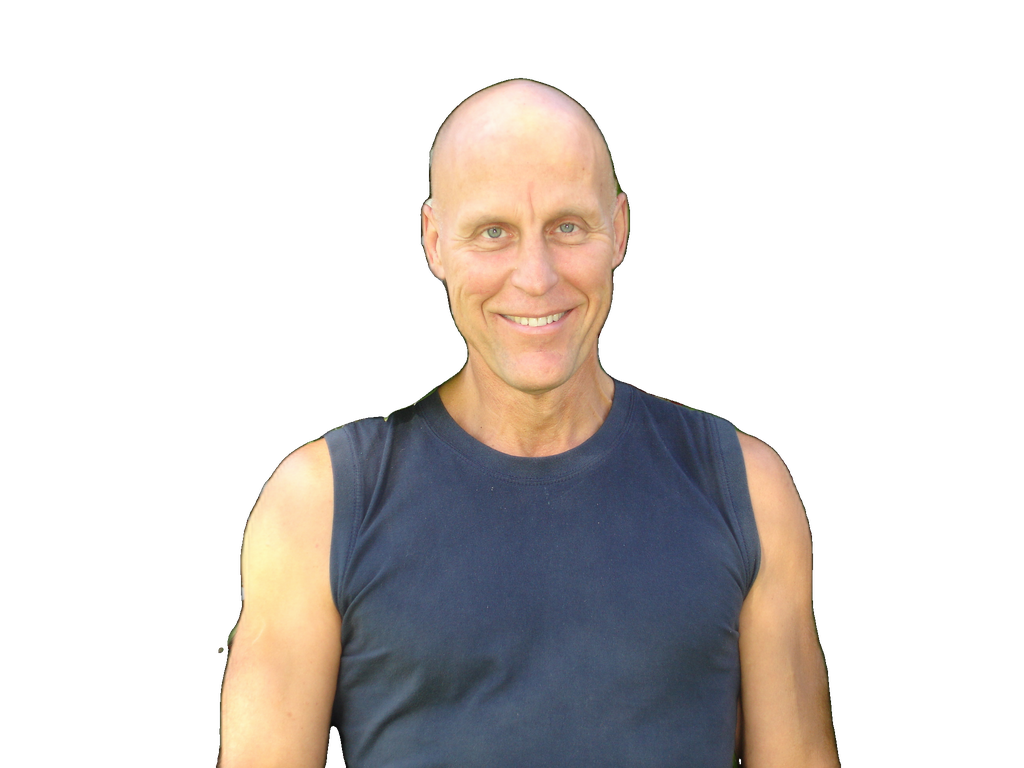
At Biohacker Summit 2022 Amsterdam, held in the Netherlands on 15 October 2022, Veli-Jussi Jalkanen opened his presentation, Myriad of Benefits from Optimized Sitting, with a provocation that landed like a challenge to modern life itself: “Sitting kills, or at least shortens your lifespan and gives you multiple unnecessary problems. Still our culture is doing this, and it is time for us to change.”
It was a familiar claim in headline form, but Jalkanen, the Finnish inventor and preventive health expert behind the Salli sitting health concept, gave it anatomical force. His argument was not merely that people sat too much. It was that they sat badly, in a posture so normalized that its damage had become almost invisible.

According to Jalkanen, conventional sitting forces the pelvis into a backward tilt, collapses the spine, compresses the organs, restricts circulation and leaves the body trapped in rigid 90-degree angles that nature never intended to sustain for hours at a time.
The Body, He Suggested, Already Knew Better
One of the lecture’s most striking images came not from the office but from water. Jalkanen described the relaxed human body floating as a model of natural alignment: a long spine, open hips, softened shoulders, and balanced joint angles.
“In the water we see how nature wants our body to be, with a perfect spine posture and healthy angles in the knees and hips,” he said. “This is the model for how we want people to sit.”
That comparison was central to his case. The ideal seated position, in his view, should resemble upright standing more than the folded geometry of the standard chair. Instead of hips and knees locked at right angles, he advocated an open angle closer to 135 degrees, a posture meant to preserve the spine’s natural curve and reduce stress on the discs and joints.
Circulation Was The Real Story
Jalkanen’s talk returned again and again to one underlying principle: circulation. He spoke of the body as a vast terrain of vessels and nodes whose health depended on movement, openness and the absence of compression.
He pointed to the lymphatic system in particular, describing lymph nodes as one of the body’s most astonishing filtering stations. “We want our lymph nodes to work actively and collect all the dirt brought to them by the lymph vessels,” he said. “This is a vital part of good circulation health and sitting health.”
The larger thesis was simple but sweeping. Good sitting was not just about easing back pain or improving comfort at a desk. It was about keeping blood and lymph moving through the body’s microvessels, protecting immune function, sustaining energy and supporting long-term health.
The Spine Paid The First Price For Slouching
If circulation was the lecture’s unifying theme, the lower back was its most immediate battleground.
Jalkanen described conventional slouched sitting as a position in which the facet joints in the low back open, increasing disc pressure and diminishing circulation. In better posture, he said, those joints close and part of the body’s weight shifts onto bony structures better suited to carry it.
“When we sit correctly, our facet joints are closed and the bone surface carries thirty percent of the weight,” he said. “Everything is fine, especially if we introduce motion into the sitting process.”
That final point mattered. Even the best posture, he suggested, should not become static. Micro-movements, especially in the lower back and pelvis, were presented as essential to maintaining tissue health, particularly around the vulnerable L4-L5 region where circulation is naturally more limited.
The Cost Of Compression Extended Far Beyond The Back
Jalkanen argued that bad sitting posture did not stop at the spine. It pressed inward on the body’s organs and downward on its soft tissues.
In the lungs, he said, slouching could reduce oxygen intake by 20 to 30 per cent. In the digestive tract, it could slow gut motility by physically compressing the abdominal space. The result was not merely discomfort, but a quieter erosion of metabolic efficiency.
The body, folded for too long, began to function as though partially deprived of room, air and flow.
That same logic applied to the pelvis and buttocks. Standard chairs, he argued, placed pressure across soft tissues rich in nerves and blood vessels rather than directing weight onto the sit bones. The consequences, in his account, included restricted pelvic circulation and unnecessary strain on sensitive structures.
The Neck, The Eyes And The Brain Were All Connected
The modern workstation also came under scrutiny. Jalkanen warned that poor monitor placement, especially the downward gaze demanded by laptops, contributed to tension in the neck muscles that could impede blood flow to and from the brain.
His prescription was practical and precise: screens should sit directly in front of the user, at the correct height and roughly 50 to 70 centimetres from the eyes, depending on the individual.
This was ergonomics framed not as office etiquette but as vascular protection. A lowered head, rounded shoulders and craned neck were, in his telling, more than signs of fatigue. They were mechanical obstructions to one of the body’s most vital routes.
Joint Health Required Openness, Not Angles Of Confinement
Hip and knee replacements, Jalkanen suggested, had become grimly common in part because of how society asked people to sit. The problem was not sitting alone, but sitting for hours with the joints bent at 90 degrees and held there without movement.
Joints, he said, tolerated motion or rest. What they did not tolerate well was pressure in a fixed, compressed position. The 135-degree sitting angle he promoted was intended to relieve that strain and mimic a more natural load-bearing relationship between torso and legs.
The point was a recurring one throughout the presentation: the body was designed for dynamic balance, not for prolonged confinement in a shape imposed by furniture.
Pelvic Health Was Treated As A Missing Piece Of Ergonomics
One of the most distinctive parts of Jalkanen’s presentation concerned genital and pelvic health, a subject often excluded from mainstream conversations about office design.
He argued that solid seats created harmful perineal pressure, particularly for men, by compressing the structures around the prostate and restricting circulation to the genitals. A divided saddle chair with a central gap, he said, allowed the body’s weight to rest on the sit bones while relieving pressure from vulnerable soft tissue.
He extended that logic to women as well, noting the importance of protecting pelvic floor circulation across both sexes.
His language was blunt, at times almost combative, but his broader point was clear: ergonomic design had too often ignored the most intimate consequences of how people sat.
Optimized Sitting Was Presented As Preventive Medicine
By the end of the lecture, Jalkanen had expanded a simple design question into something much larger. A chair was no longer just a chair. It was an everyday health intervention, one that could either undermine circulation, breathing, digestion, spinal integrity and pelvic health, or support them.
“Optimized sitting leads to higher productivity, a longer lifespan, more energy, a more beautiful body, and a much more enjoyable life,” he said.
That promise may have sounded expansive, even utopian. Yet the force of the presentation at Biohacker Summit 2022 Amsterdam lay in its refusal to treat sitting as trivial. Jalkanen asked his audience to see modern furniture not as neutral background, but as a public health issue hidden in plain sight.
For a culture that spent much of its waking life seated, his message was unsettling precisely because it was so ordinary. The danger, he suggested, was not dramatic. It was daily. And the remedy began with the angle of a hip, the lift of a spine and the decision to stop accepting discomfort as normal.
Frequently asked questions
How did Veli-Jussi Jalkanen open?
With an accusation. Sitting kills, or at least shortens your lifespan and gives you multiple unnecessary problems, he said, adding that our culture keeps doing it anyway. The provocation framed sitting as a daily health intervention rather than a neutral background condition.
What does the body in water demonstrate?
Natural alignment. Jalkanen described the relaxed body floating as a model: a long spine, open hips, softened shoulders and balanced joint angles. In the water we see how nature wants our body to be, he said, with healthy angles in the knees and hips.
Why does circulation dominate the argument?
Jalkanen treats the body as a terrain of vessels and nodes whose health depends on movement, openness and the absence of compression. He gave particular attention to the lymphatic system, describing lymph nodes as among the body's most remarkable filtering stations.
About the event
This recap is part of the Biohacker Summit 2022 Amsterdam series, recorded in Amsterdam on 15 and 16 October 2022. Read the summary of the whole event or join the next edition, HOLOLIFE Summit 2026 Amsterdam, on 14 and 15 November 2026.
In this story
Comments
Loading comments…