News
Practical Stress Management: Biology, Nutrition and Focus
By Teemu Arina ·
FOCUS KEYWORD: stress management
This edited article was rejected for the problems below. Fix only these and change nothing else:
- “Monitor blood sugar” adds specific self-monitoring advice not present in the talks or cited papers.
The original quote lines, to keep character for character: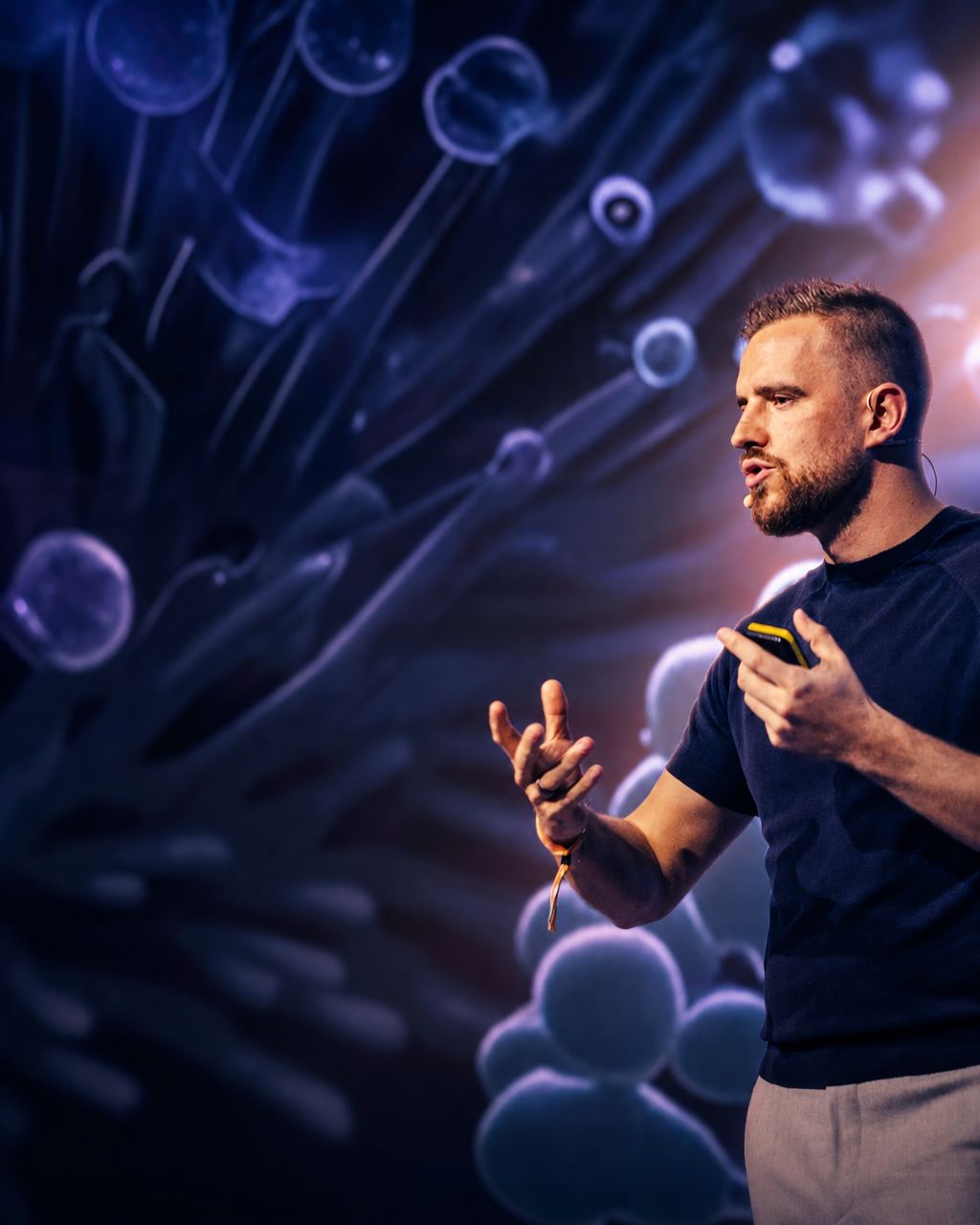
Xander Denys at Biohacker Summit 2024 Helsinki
Life is not about time management. It's about energy management.
— Xander Denys, Biohacker Summit 2024
L-theanine helps you achieve a relaxed, calm state and even a meditative state by increasing alpha brain waves.
— Olli Sovijärvi, Biohacker Summit 2018
You are not trying to block thoughts from coming, but you remain aware of the object of focus and come back to it. This helps you resist distractions because they are just thoughts imposed on you by the outside world.
— Sam Engström, Biohacker Summit 2017
ARTICLE:
Stress management includes calming down in the moment, supporting recovery, managing energy, and practising how attention returns after distraction. At Biohacker Summit events, speakers have discussed these foundations through nutrition, oxygen-related therapies, breathwork, and mental training.
The biological foundation of stress management and stress resilience
Stress responses involve multiple processes rather than a single switch. In his 2018 talk at Biohacker Summit Stockholm, Olli Sovijärvi distinguished between the sympathoadrenal system, associated with the immediate "fight or flight" response, and the hypothalamic-pituitary-adrenal (HPA) axis, which regulates longer-term cortisol production. This distinction explains why a short pause might help with an immediate surge of pressure, while ongoing strain may require broader changes to workload or routine.
The aim is to meet demands and then allow time for recovery. In a 2024 talk at Biohacker Summit Helsinki, Xander Denys framed health in terms of energy availability:
Life is not about time management. It's about energy management.
— Xander Denys, Biohacker Summit 2024
Denys noted that a well-organised calendar does not guarantee sufficient mental or physical energy. He discussed balancing the sympathetic and parasympathetic nervous systems, naming breathwork as a way to influence the body's response. A deliberate pause between tasks gives the body time to shift toward recovery. For accessible breathing practices, see deep breathing for stress.
Stress regulation extends beyond subjective feelings of calm. A 2024 meta-analysis of 58 studies involving 3,508 people found that psychological stress-management interventions had a moderate positive effect on cortisol compared with pooled control conditions. Mindfulness, meditation, and relaxation were associated with larger effects (systematic review and meta-analysis of stress interventions and cortisol).
Nutritional support for managing stress
Sovijärvi discussed food and supplements in relation to demanding periods. In his 2018 Stockholm talk, he identified magnesium, vitamin C, and B vitamins as relevant nutrients, and discussed phosphatidylserine, L-theanine, taurine, and L-tyrosine in relation to relaxation or cognitive function. He also presented adaptogens, including Rhodiola, Ashwagandha, Reishi, and Schisandra, as options for different stress experiences.
He specifically linked Rhodiola with fatigue, Ashwagandha with high-energy stress, and Reishi with anxiety and relaxation. These are suggestions from a summit presentation, not a universal plan; individuals should seek qualified advice considering personal health and medication.
Sovijärvi singled out magnesium for its role in many enzymes and L-theanine for supporting a calm, focused state:
L-theanine helps you achieve a relaxed, calm state and even a meditative state by increasing alpha brain waves.
— Olli Sovijärvi, Biohacker Summit 2018
For phosphatidylserine, he noted a possible role after exercise; for taurine, he discussed neuroprotection and mitochondria. These claims represent the speaker's account, not evidence that supplements reliably improve outcomes. The cited papers do not assess these specific supplements.
Before adding products, consider overall patterns of energy, sleep, and workload. Denys also emphasized stable blood sugar as part of energy management, noting that fluctuations can cause energy crashes.
Oxygen therapy and physiological energy management
Oxygen therapy differs from ordinary breathwork. In his 2024 Helsinki talk, Denys discussed intermittent hypoxia-hyperoxia therapy, which alternates periods of lower and higher oxygen availability, as a possible tool for energy management. He also discussed cold plunging and whole-body cryotherapy as hormetic stimuli, or brief challenges intended to prompt a beneficial response.
Denys argued that short-term stimuli and sustained strain are not interchangeable. He suggested parasympathetic stimuli, such as low-frequency vibration, for those not drawn to mindfulness. Breathwork remains a more accessible way to work with breathing and attention. A guide to mindfulness-based stress reduction offers another evidence-based approach.
For everyday energy management, build pauses into a demanding day to check whether effort is being met with genuine opportunities to recover.
Training attention to protect mental capacity

A central object draws focus while a curved line wanders among distractions and returns.
Stress often brings competing thoughts and digital distractions. In his 2017 talk "HACKING ATTENTION" at Biohacker Summit Helsinki, Sam Engström suggested practising noticing when attention has wandered and returning it, rather than trying to control every external distraction.
You are not trying to block thoughts from coming, but you remain aware of the object of focus and come back to it. This helps you resist distractions because they are just thoughts imposed on you by the outside world.
— Sam Engström, Biohacker Summit 2017
This makes attention training a repeatable practice. A meta-analysis of mindfulness-based stress reduction in healthy adults found moderate improvements in stress, with effects maintained at an average follow-up of 19 weeks (meta-analysis of mindfulness-based stress reduction in healthy individuals). A separate review found reductions in physiological markers like cortisol and blood pressure (review of mindfulness and physiological stress markers).
Engström warned that wearable devices can increase digital distractions. Tracking physiological measures might reveal how activities relate to stress, but it can also become a source of interruption. The article on mindfulness meditation and self-hacking considers how attention practice extends beyond basic relief.
Practical steps for building personal resilience
Building resilience involves identifying the source of strain and choosing one relevant practice.
- Identify the pattern. Determine if the difficulty is an immediate surge, ongoing pressure, depleted energy, or distraction.
- Create a transition into recovery. Use breathwork or brief, deliberate pauses between tasks to influence the stress response.
- Practise returning focus. When attention wanders during a task, notice it and return to the focus; the return is the practice.
- Review energy as well as time. Notice which activities feel draining or steady.
- Keep supplements in perspective. A longer list of nutrients is not automatically better; consult professionals regarding individual needs.
Regular practice can help people process thoughts and emotions as they arise (overview of stress management).
HOLOLIFE Summit 2027 takes place in Amsterdam on 13–14 November 2027; details are available on the event page.
FAQ
How can nutrition help with stress management?
Olli Sovijärvi discussed magnesium, vitamin C, B vitamins, and adaptogens as possible supports. Consult qualified advice before use, as cited papers do not establish these supplements' effectiveness.
What is the difference between coping and resilience?
Coping responds to specific stressful moments, whereas resilience is the broader capacity to recover and adapt over time through routines like energy and attention management.
How does oxygen levels affect stress?
Denys discussed intermittent hypoxia-hyperoxia therapy as a possible energy-management tool. The cited papers do not assess it as a stress treatment.
Can I train my brain to handle more stress?
Attention can be practised by noticing distraction and returning focus to a task. Meta-analyses also show benefits from mindfulness-based approaches.
Sources
Papers
- Effectiveness of stress management interventions to change cortisol levels: a systematic review and meta-analysis
- Mindfulness-based stress reduction for healthy individuals: A meta-analysis
- Mindfulness mediates the physiological markers of stress: Systematic review and meta-analysis
- Stress Management
Talks
- Talk: "Nutrients for Stress Management", Olli Sovijärvi, Biohacker Summit 2018 Stockholm
- Talk: "The Power of Intermittent Oxygen Therapy", Xander Denys, Biohacker Summit 2024 Helsinki
- Talk: "HACKING ATTENTION", Sam Engström, Biohacker Summit 2017 Helsinki
This article is for general information and is not medical advice.
In this story
Comments
Loading comments…