News
Mindful Based Stress Reduction: Practices, Benefits and Limits
By Teemu Arina ·

FOCUS KEYWORD: mindful based stress reduction
This edited article was rejected for the problems below:
- An explicit statement that a speaker said or believes something their talk material does not support: "When mindfulness is treated as a task with a quick reward, an ordinary wandering mind can feel like failure."
The original quote lines, to keep character for character: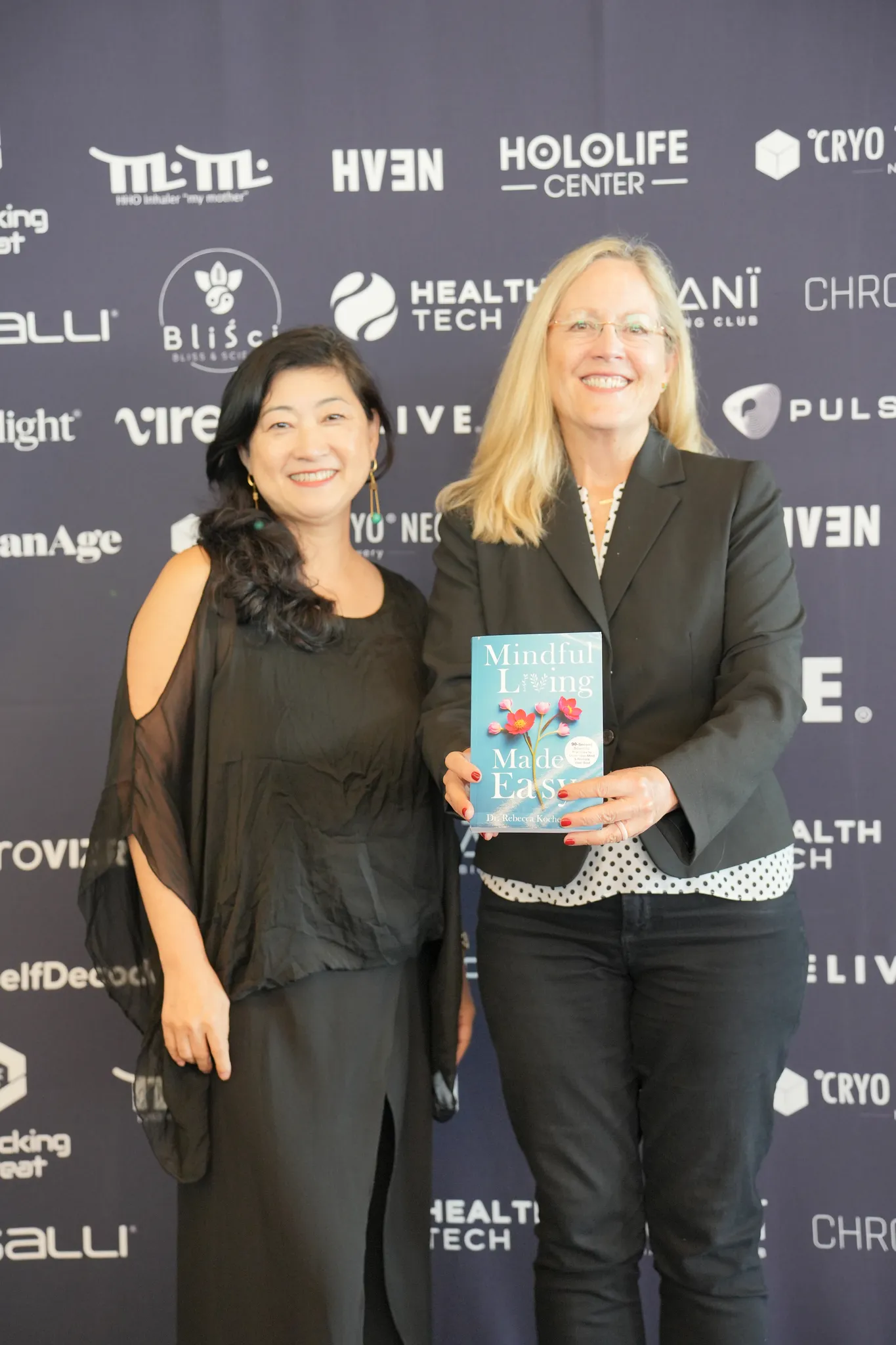
Rebecca Kochenderfer at HOLOLIFE Summit 2025 Tokyo
“The current narrative around mindfulness is married to achievement-oriented culture, like it is just another task to check off from a long to-do list”
— Hong Park, Biohacker Summit 2019 Helsinki
“You are not your thoughts about yourself”
— Hong Park, Biohacker Summit 2019 Helsinki
“You are not your emotions. We are having an emotion, which is why from the observer part, you say 'I am feeling afraid' instead of 'I am afraid.'”
— Rebecca Kochenderfer, HOLOLIFE Summit 2025 Tokyo
ARTICLE:
FOCUS KEYWORD: mindful based stress reduction
This edited article was rejected for the problems below:
- “He suggested that when mindfulness is treated as a task with a quick reward, an ordinary wandering mind can feel like failure.” The edit explicitly attributes the wandering-mind claim to Park; his talk material does not support that attribution.
The original quote lines, to keep character for character:
“The current narrative around mindfulness is married to achievement-oriented culture, like it is just another task to check off from a long to-do list”
— Hong Park, Biohacker Summit 2019 Helsinki
“You are not your thoughts about yourself”
— Hong Park, Biohacker Summit 2019 Helsinki
“You are not your emotions. We are having an emotion, which is why from the observer part, you say 'I am feeling afraid' instead of 'I am afraid.'”
— Rebecca Kochenderfer, HOLOLIFE Summit 2025 Tokyo
ARTICLE:
Mindful based stress reduction can mean everyday mindfulness practices used to respond to stress with greater awareness, rather than reacting automatically. It is not necessarily the same as Mindfulness-Based Stress Reduction (MBSR), a structured eight-week programme combining mindfulness meditation and yoga.
What mindful based stress reduction means, and how it differs from MBSR
"Mindful based stress reduction" often refers broadly to applying mindfulness to stress, such as pausing to notice a feeling or paying attention to the breath. MBSR, by contrast, is a specific eight-week training programme combining mindfulness meditation and yoga, as described in a systematic review of MBSR for healthy people.
At Biohacker Summit 2019 Helsinki, Hong Park discussed how Jon Kabat-Zinn's MBSR framework made mindfulness accessible to a wider public, but cautioned against treating it as a productivity target:
“The current narrative around mindfulness is married to achievement-oriented culture, like it is just another task to check off from a long to-do list”
— Hong Park, Biohacker Summit 2019 Helsinki
A formal MBSR course offers structure, whereas a short pause is simply a mindfulness exercise. For more on the relationship between meditation and self-perception, see this article on mindfulness meditation and self-hacking.
How stress can shape attention and the sense of self
Park linked mindfulness's popularity to modern distractions, such as frequent screen switching. One can notice when attention wanders and gently bring it back.
Park also argued that a thought about the self is not the whole self:
“You are not your thoughts about yourself”
— Hong Park, Biohacker Summit 2019 Helsinki
Practically, saying "I am having the thought that I can't cope" provides room to examine the thought, unlike the absolute "I can't cope." Mindfulness involves noticing the mind before deciding how to act. Readers may also find mindful self-compassion practices useful.
Mindfulness, emotional release and sound: ideas from the talks
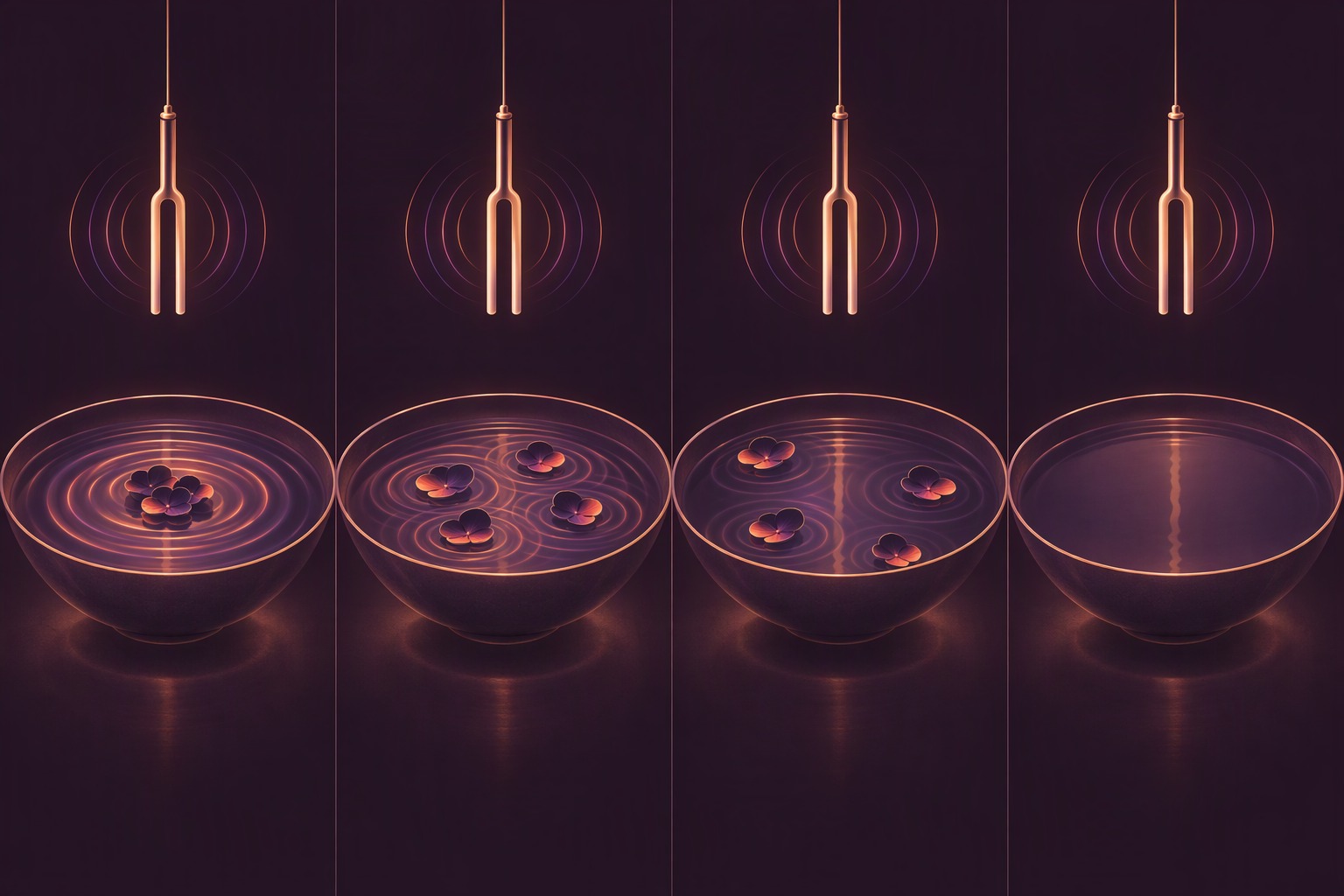
Sound ripples cross floating petals, which drift apart as the water settles.
At HOLOLIFE Summit 2025 Tokyo, researcher Rebecca Kochenderfer presented the "Notice, Name, Relax, Release" sequence. It involves noticing an emotion, naming it, relaxing, and allowing it to pass without building a larger story. Kochenderfer emphasized observing emotions rather than adopting them as an identity:
“You are not your emotions. We are having an emotion, which is why from the observer part, you say 'I am feeling afraid' instead of 'I am afraid.'”
— Rebecca Kochenderfer, HOLOLIFE Summit 2025 Tokyo
Using a feeling wheel can help find precise names for emotions. Kochenderfer described emotions as lasting "ninety seconds" if allowed to move naturally, though this is her framing, not a universal rule.
The session also featured sound healer Noriko Whitfield. The session's aim to rejuvenate the audience does not establish that sound produces specific medical effects. Sound can be included in mindfulness as something to observe, such as its pitch or rhythm.
A simple way to practise mindful stress management
Mindfulness can fit into ordinary transitions, like waiting for a meeting. Try Kochenderfer's sequence:
- Notice: Identify a feeling, thought, or bodily sensation.
- Name: Use plain language, such as "I'm feeling frustrated."
- Relax: Soften the shoulders or jaw if comfortable.
- Release: Allow the feeling to exist without self-criticism, then choose a practical next action.
The goal is to create choice rather than suppress emotion. Park suggested reducing digital distractions with tools like website blockers or grayscale phone settings. For a more structured approach, this guide to deep breathing for stress offers practical options.
What research says about MBSR and stress
Evidence concerns MBSR programmes rather than all forms of mindfulness. A 2024 systematic review and meta-analysis of university students of 29 trials suggested reductions in anxiety, depression, and perceived stress, along with improvements in mindfulness and self-kindness.
A 2014 systematic review of MBSR in healthy individuals found positive psychological or physiological changes in 16 of 17 studies, though it noted limitations, including small samples. A 2009 review and meta-analysis found that MBSR was as effective as standard relaxation training at reducing stress. A study of MBSR and stress management reported increased mindfulness in undergraduates, though outcomes may vary with initial trait mindfulness.
Who may find mindfulness useful, and when to seek support
Mindfulness may help those who want to notice stress reactions earlier or practise pausing. It is not a universal fit. If a practice feels unsettling, stop or seek guidance. Mindfulness is not a substitute for professional care for persistent distress or mental health concerns.
The HOLOLIFE Summit 2026 Amsterdam takes place on 14–15 November 2026.
FAQ
What is mindful based stress reduction?
It refers to applying mindful attention to stressful experiences, such as noticing a feeling before reacting. It can be informal or part of a formal course.
Is mindful based stress reduction the same as MBSR?
No. MBSR is a specific eight-week programme of meditation and yoga, whereas the broader phrase describes various informal practices.
How long does it take to notice a difference from mindfulness practice?
There is no set timeline. Studies report group-level outcomes, but individual experiences vary and immediate calm is not required for the practice to be useful.
Can sound or music be part of a mindfulness practice?
Yes, one can observe sound as part of a practice. However, the discussed talks do not establish sound as a clinical treatment for emotional release.
Sources
- Mindfulness-based stress reduction as a stress management intervention for healthy individuals: a systematic review
- Mindfulness-based stress reduction for stress management in healthy people: a review and meta-analysis
- Effectiveness of Mindfulness-Based Stress Reduction on Mental Health and Psychological Quality of Life among University Students
- Stress Management
- Talk: “Beyond Mindfulness: Hacking the Perception of Self”, Hong Park, Biohacker Summit 2019 Helsinki
- Talk: “Mindful Living Made Easy”, Rebecca Kochenderfer, HOLOLIFE Summit 2025 Tokyo
This article is for general information and is not medical advice.
In this story

Comments
Loading comments…