News
Practical Approaches to Emotional Wellness and Resilience
By Teemu Arina ·

Emotional wellness is the capacity to notice feelings, make room for them and choose how to respond; it does not mean feeling calm all the time. Practical support can involve mind and body, from breath awareness and movement to guided meditation and flexible health routines.
Defining emotional wellness beyond basic coping
Coping is part of emotional wellness, but so are recognising emotions, allowing mixed feelings and responding in line with what matters. The aim is to meet hard moments with awareness and flexibility rather than self-blame.
At HOLOLIFE Summit 2025 Europe, Tim Gray and Teemu Arina discussed how trying to optimise every choice can cause strain. Gray noted that perfectionism about health can add stress.
"Stress is the biggest killer, yet sometimes the stress from perfectionism is more harmful than occasional exceptions to our lifestyle." — Tim Gray, HOLOLIFE Summit 2025 Europe
Prioritise important health habits while leaving room for ordinary life, relationships and occasional deviations. A routine should support life, not become another standard to meet.
Emotions change over time. A study sampling participants' emotions over more than ten years associated ageing with more positive overall emotional experience, greater stability and more co-occurrence of positive and negative emotions (long-term study of emotional experience and ageing). Emotional steadiness does not mean feeling only pleasant emotions.
A study of participants in 51 countries during the COVID-19 pandemic linked psychological wellbeing with recent calm, hope, anxiety, loneliness and sadness. Its daily diary component found emotional experiences preceded changes in wellbeing; the authors identified calm and hope as possible routes for interventions (study of emotional experiences and wellbeing during the pandemic). These are emotions to notice, not a formula for eliminating distress.
The physiological link: Respiratory power and emotional stability
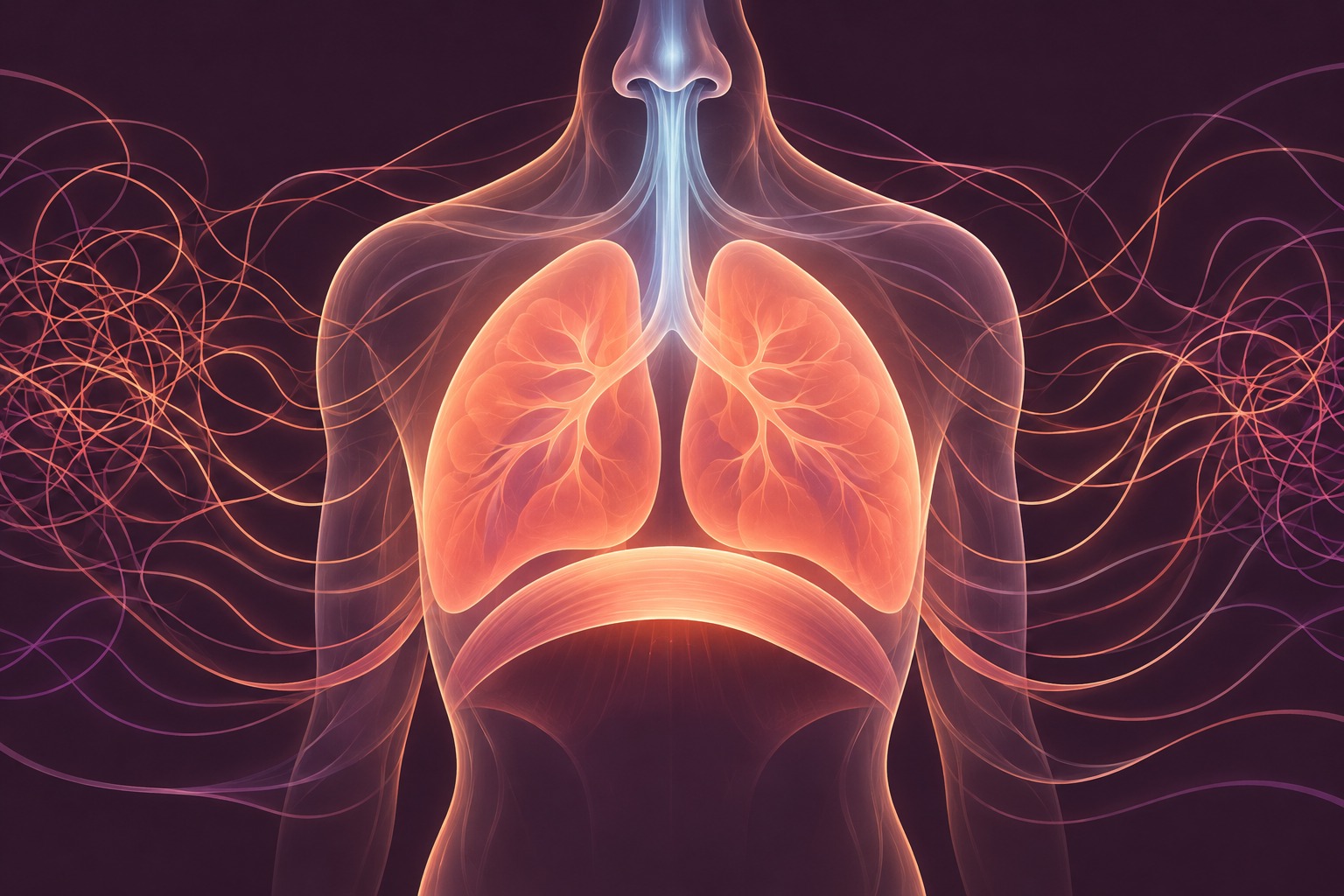
A diagram-like torso shows airflow moving through expanding lungs as the diaphragm lowers.
Breathing is automatic but can also be adjusted. In his 2023 Biohacker Summit Amsterdam talk, Christian Poulsen described breathing as a way to influence mental states, focusing on the diaphragm and respiratory muscles to release tension.
Physical health is closely connected to breathing, and mental health is too. If you can get your diaphragm muscle to move, you have the beginning of releasing tension and stress. — Christian Poulsen, Biohacker Summit 2023 Amsterdam
A starting point is to notice whether the breath feels shallow, held or easy, then see whether a comfortable, unforced breath helps settle attention. Poulsen recommended diaphragmatic and nasal breathing for respiratory function. The papers supplied here do not establish that a particular pattern will create the same emotional response for everyone.
Poulsen distinguished breath awareness from respiratory-muscle training, which uses resistance. He cited research on changes in diaphragm and abdominal muscle thickness after targeted training, and said vital capacity tends to decline after early adulthood, connecting lung function with expected lifespan. These are points from his talk, not a promise that training alone improves emotional health or extends life.
His practical emphasis was consistent practice, not owning a device. A comfortable pause is a low-tech option. Anyone considering resistance training, particularly with a respiratory or other health condition, can seek professional guidance. Breathing is a physical skill to practise. Stop if an exercise feels uncomfortable and choose another way to pause.
Using immersive technology for immediate stress relief
Meditation can be difficult to start, especially for people who struggle to sit still or direct their attention. At Biohacker Summit 2018 Stockholm, “Meditating With Virtual Reality” presented VR as a way to make guided meditation more accessible. The talk listing names Tristan Gribbin; its transcript identifies the speaker as Tristan Elizabeth, co-founder of Flow VR.
The presentation describes 360-degree nature scenes and music across six modes: Breathe, Focus, Move, Let go, Calm and Restore. The modes offer routes into a guided pause, from movement to stillness. The speaker presented VR as an immediate, immersive experience and the headset as a structured setting.
Sensory cues can help users follow a scene and mode rather than decide how to begin. The talk identified deep belly breathing, setting an intention, trusting physical movement and vocalisation to release stress. These can be adapted without a headset: breathing, movement and intention-setting do not depend on a product.
The talk describes the approach and intended use, but does not establish that VR meditation works for everyone or outperforms other forms. Immersive visuals may not suit every user, and a headset is unnecessary for practising attention or breathing. See examples of wellness technology companies and their work.
Integrating emotional and physical health optimization
An integrated approach considers feelings alongside physical health without assuming every emotion must be measured or fixed. At HOLOLIFE Summit 2025 Europe, Gray and Arina advocated collaboration between medical and natural-health fields, with personal needs guiding decisions.
For wearable users and health trackers, the question is whether information helps with a meaningful decision. Gray and Arina noted that overdiagnosis and constant tracking can add stress when minor findings become worrying. Tracking may help, but is less useful when it raises anxiety without informing action.
A meta-analysis of 17 studies involving people with physical illnesses found a small but significant association between higher emotional wellbeing and better long-term prognosis (meta-analysis of emotional wellbeing and recovery or survival). This does not prove positive feelings cause recovery, but supports treating emotional wellbeing as part of the broader health picture.
Integration might mean pairing a breathing pause with ordinary movement, or using meditation technology as an optional prompt. Persistent distress or difficulty managing daily life may call for professional support. Mental and emotional health are related, but neither needs to become an optimisation project; support should fit the person's circumstances.
For a live event setting, see HOLOLIFE Summit 2027 Amsterdam, listed for 13–14 November 2027.
Practical emotional wellness examples for daily life
These ideas draw on the talks and are options, not a checklist.
- Pause and notice. Name what is present, such as tension, sadness, calm or hope, without judging it. The 2024 study links several momentary emotions with wellbeing; it does not recommend forcing a particular emotion.
- Use the breath as an anchor. Notice whether it is shallow, held or easy. If comfortable, let the abdomen move gently; Poulsen presented diaphragmatic movement as one possible starting point for releasing tension.
- Choose an intention. Decide whether a short pause is for settling, focusing or letting go, as suggested in the VR meditation session.
- Make room for movement. Stand, stretch or shake out tension if sitting still is unhelpful. The VR talk included movement and vocalisation, not only silent stillness.
- Use technology by choice. A guided VR session may help some people focus; audio, a nature scene or quiet can also prompt practice. The question is whether the tool helps.
- Keep health routines flexible. Gray and Arina’s discussion of perfectionism is a reminder to prioritise useful habits without self-criticism over occasional exceptions.
- Review what helps. Consider whether a practice made the next part of the day easier, harder or no different. This is a check-in, not a demand to track every response.
A short routine might pair a mood check-in with a few comfortable breaths, then movement or guided meditation. Others may prefer talking with someone trusted or seeking professional support. Useful practices adapt to the person and moment.
FAQ
What are some examples of emotional wellness?
Examples include noticing an emotion before reacting, allowing mixed feelings, pausing with breathing or movement, and choosing a meditation format that helps sustain attention. It can also mean asking for support when a difficulty feels unmanageable.
How can I improve my emotional wellbeing?
Start with a small practice, such as noticing your breathing or naming what you feel; you could also try guided meditation, movement or limiting health tracking if it causes anxiety. If distress persists or affects daily life, consider speaking with a qualified professional.
What is the difference between mental and emotional health?
The terms overlap: mental health often describes psychological wellbeing and how a person thinks, feels and functions, while emotional health focuses on recognising, experiencing and responding to feelings. Neither exists apart from physical health, and the terms are not always used in the same way.
Sources
Papers
- “Emotional experience improves with age: evidence based on over 10 years of experience sampling.” Psychology and Aging (2011).
- “Emotional experiences and psychological well-being in 51 countries during the COVID-19 pandemic.” Emotion (2024).
- “The impact of emotional well-being on long-term recovery and survival in physical illness: a meta-analysis.” Journal of Behavioral Medicine (2012).
Talks
- Talk: “Meditating With Virtual Reality”, Tristan Gribbin, Biohacker Summit 2018 Stockholm.
- Talk: “Biohacking: What Went Right, What Went Wrong?”, Tim Gray and Teemu Arina, HOLOLIFE Summit 2025 Europe.
- Talk: “When ‘Just Breathing’ is Not Enough”, Christian Poulsen, Biohacker Summit 2023 Amsterdam.
This article is for general information and is not medical advice.
In this story

Comments
Loading comments…