News
Mitochondrial and Aging: Managing Cellular Energy for Longevity
By Teemu Arina ·
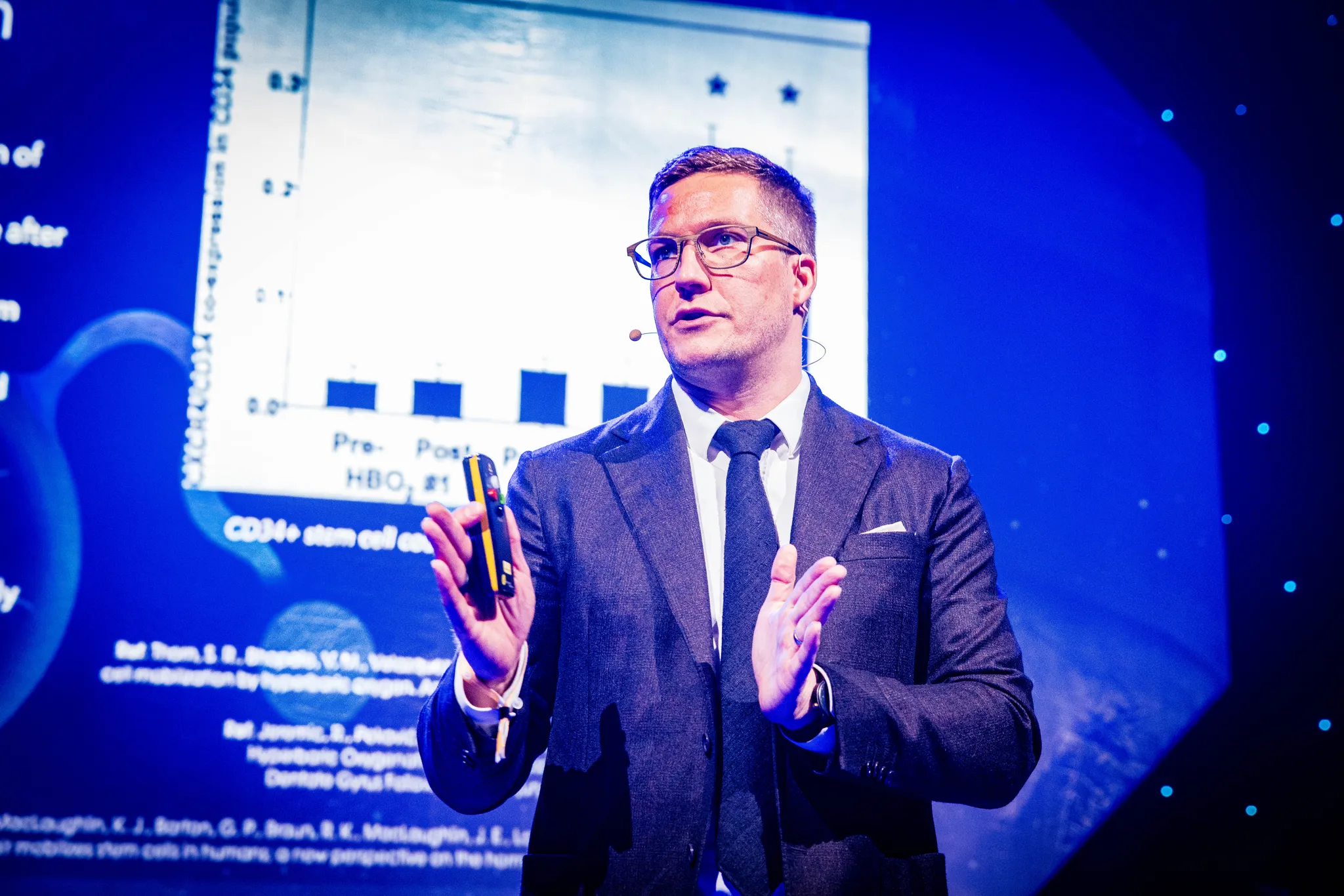
Mitochondrial and aging are closely connected. Mitochondria produce energy, manage metabolic signals, and maintain cellular quality control. Summit speakers discuss NAD, movement, sleep, and cellular maintenance, but evidence does not establish any single supplement or voltage intervention as a route to longevity.
The metabolic engine: Understanding mitochondrial and aging
Mitochondria regulate metabolism, calcium balance, and cell signaling while repairing damaged components. These quality-control processes affect tissue function and healthy aging (mitochondrial stress signalling and longevity). Age-related changes involve mitochondrial DNA, energy production, reactive oxygen species (ROS), and processes governing mitochondrial division, fusion, and removal. Mitochondrial and nuclear genes also work together to influence energy balance and stress vulnerability (mitochondrial–nuclear interactions and longevity).
Mitochondria are part of a wider aging process rather than simply wearing out. In "Extending Healthspan: 10 Hallmarks of Aging & Reversal", presented at Biohacker Summit 2022 Helsinki, Olli Sovijärvi discussed mitochondrial dysfunction alongside genomic instability, loss of proteostasis, and changes in nutrient sensing. He emphasized preserving physical and cognitive function.
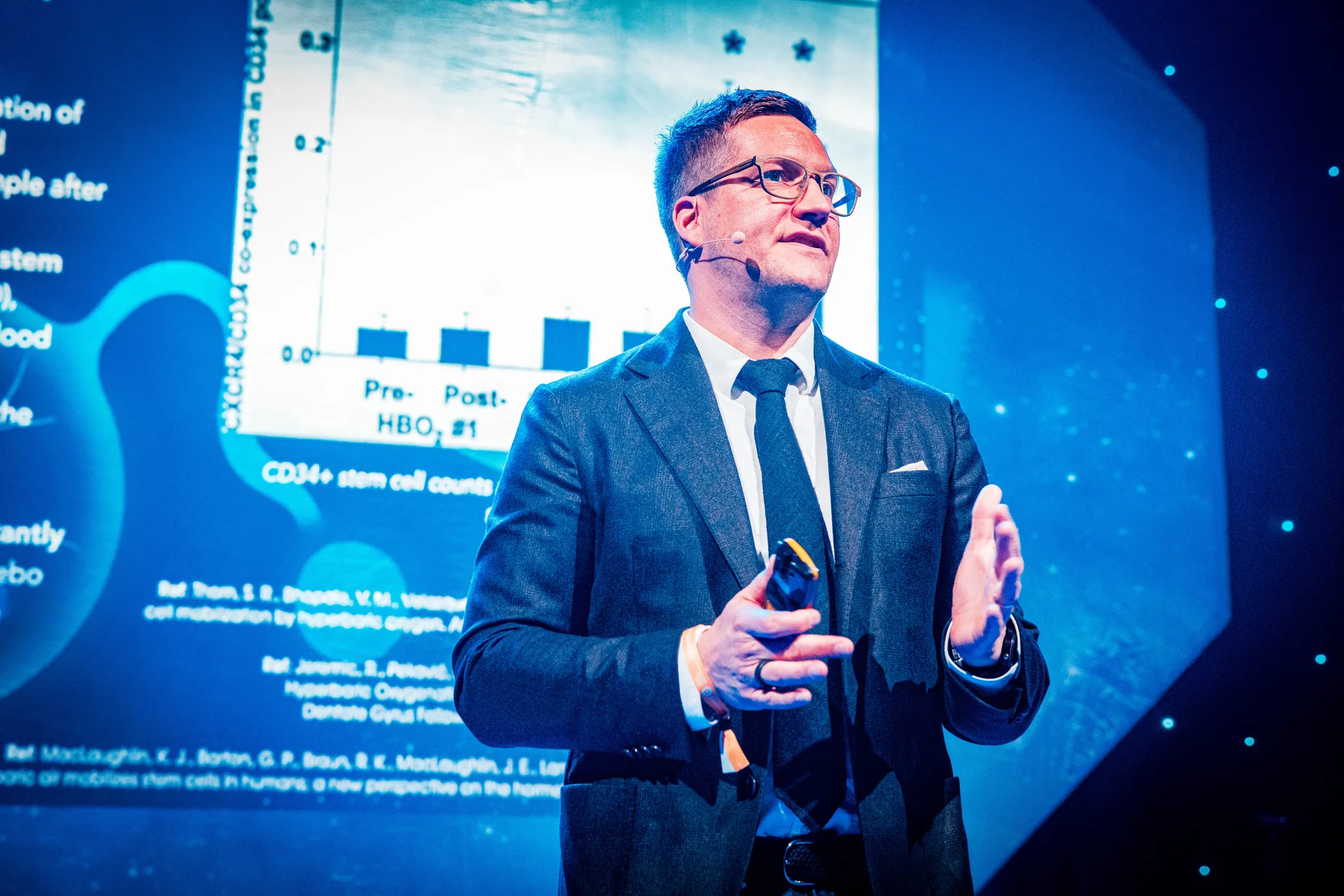
Olli Sovijärvi at HOLOLIFE Summit 2025 Europe
Successful healthy aging means having a low probability of disease and, even more importantly, maintaining high cognitive and physical function capacity.
— Olli Sovijärvi, Biohacker Summit 2022
In adults aged 24 to 91, skeletal-muscle mitochondrial respiration declined with age and was associated with aerobic fitness, muscle strength, and walking performance (mitochondrial respiration and physical function in older adults). These associations do not show that changing one mitochondrial measure will extend lifespan.
The role of NAD in mitochondrial energy production
NAD is involved in cellular energy metabolism. In "Mitochondrial NAD for Energy, Health & Longevity", delivered at Biohacker Summit 2023 Amsterdam, Baran Dilaver described it as an energy currency with roles in mitochondrial function and DNA repair, including its use by PARP proteins to respond to DNA damage.
Dilaver discussed NMN and NR, precursors the body can use to make NAD, noting claims regarding physical endurance, muscle oxygen distribution, sleep, and focus. However, the papers supplied here do not assess NMN or NR supplementation or establish that precursors restore youthful NAD levels or extend healthspan. Peer-reviewed clinical evidence for liposomal, sublingual, and intravenous NAD approaches was lacking in the context discussed. Supplement decisions are best made with a qualified health professional.
NAD is one part of mitochondrial maintenance. The 2014 review describes mitophagy, mitochondrial fission and fusion, and the mitochondrial unfolded protein response as elements of a wider quality-control and signaling system.
Cellular voltage and combating oxidative stress
At HOLOLIFE Summit 2025 Europe, Christian Burghardt presented "Longevity Medicine Reloaded: At the Atomic Level", linking aging with oxidation, acidity, and lower cellular voltage. His framing invites consideration of redox balance and the exchange of electrons, but the provided papers do not establish that raising cellular voltage extends lifespan or that alkaline treatments restore it.
Oxidation is not always harmful; mitochondria produce ROS, which can act as signals. The paper "Reconsidering mitochondria's role in aging" (reconsidering mitochondria's role in aging) notes ROS may support metabolic health and longevity through adaptive responses like autophagy. The balance and cellular response matter; evidence does not support eliminating all ROS. Burghardt's redox language is not proof that specific water, food, or topical products change cellular voltage or slow aging.
Targeting the hallmarks of aging at a cellular level

A visual representation of the interconnected biological processes that constitute the hallmarks of aging at the cellular level.
Sovijärvi presented a map of aging including mitochondrial dysfunction, genomic instability, telomere attrition, loss of proteostasis, altered nutrient sensing, senescent cells, and altered cell communication. These processes are interconnected; mitochondrial activity affects energy balance and signaling, while stress responses communicate with the nucleus to activate quality-control processes. A review discusses links between mitochondrial dysfunction, age-related tissue changes, and nutrient- and stress-sensing pathways (mitochondrial structure, function and aging).
Sovijärvi recommended nutrient-dense eating, regular movement, sleep, stress management, and avoiding habits that damage DNA. He also discussed fasting, heat, and cold exposure to engage adaptive processes. He advised exercise that creates a metabolic response without repeated exhaustion.
Focus on sleep, connecting with nature, getting sunlight, and natural movement. Exercise to create a metabolic response, but stop destroying yourself in the process.
— Olli Sovijärvi, Biohacker Summit 2022
A practical starting point is consistent sleep, regular physical activity, and sustainable eating. Targeted interventions warrant professional guidance rather than stacking supplements or stressors.
Practical strategies for mitochondrial health
The talks and papers suggest several actions:
- Move regularly and build capacity gradually. The Baltimore Longitudinal Study of Aging paper found associations between muscle mitochondrial respiration, aerobic fitness, strength, and walking performance.
- Protect sleep and recovery. Sovijärvi named sleep as a foundation of healthy aging. A repeatable sleep routine is more practical than compensating for poor recovery with supplements.
- Choose sustainable eating habits. Sovijärvi discussed nutrient-dense diets and the "80% rule" as general principles.
- Treat stress as a dose-and-recovery question. Challenges can stimulate adaptation, but Sovijärvi cautioned against exhausting exercise.
- Be selective about NAD products. Dilaver discussed NMN and NR, but the available papers do not establish their long-term benefits.
- Keep cellular-voltage claims in perspective. Burghardt's model is one speaker's framing; the cited papers do not validate alkaline water or electron-based products for extending lifespan.
Readers interested in the wider discussion can explore HOLOLIFE Summit 2027 Amsterdam, taking place on 13–14 November 2027.
FAQ
What is the mitochondrial theory of aging?
The traditional theory proposed that mitochondrial DNA mutations and excessive ROS damage cells. In "Reconsidering mitochondria's role in aging", the authors argue mitochondria are involved in aging through interacting mechanisms, as ROS can also signal and support adaptive responses.
Does CoQ10 help your mitochondria?
The provided talks and papers do not assess CoQ10 supplementation or establish if it improves mitochondrial function or longevity.
How can I improve my mitochondrial function?
Follow Sovijärvi's sustainable habits: regular movement, adequate sleep, recovery, and nutrient-dense eating. Consult a qualified health professional regarding specific supplements or health concerns.
Sources
- Mitochondrial stress signaling in longevity: a new role for mitochondrial function in aging
- Reconsidering the Role of Mitochondria in Aging
- Mitochondrial-nuclear epistasis: implications for human aging and longevity
- Skeletal muscle ex vivo mitochondrial respiration parallels decline in vivo oxidative capacity, cardiorespiratory fitness, and muscle strength
- Mitochondria at the heart of aging: structure, function, and failure
- Talk: "Mitochondrial NAD for Energy, Health & Longevity", Baran Dilaver, Biohacker Summit 2023 Amsterdam.
- Talk: "Extending Healthspan: 10 Hallmarks of Aging & Reversal", Olli Sovijärvi, Biohacker Summit 2022 Helsinki.
- Talk: "Longevity Medicine Reloaded: At the Atomic Level", Christian Burghardt, HOLOLIFE Summit 2025 Europe.
This article is for general information and is not medical advice.
In this story


Comments
Loading comments…