Biohacker Summit 2024 Helsinki
The Noble Art Of Connection: How Breath, Awareness And Belonging Reframed Biohacking
By Teemu Arina · · Updated
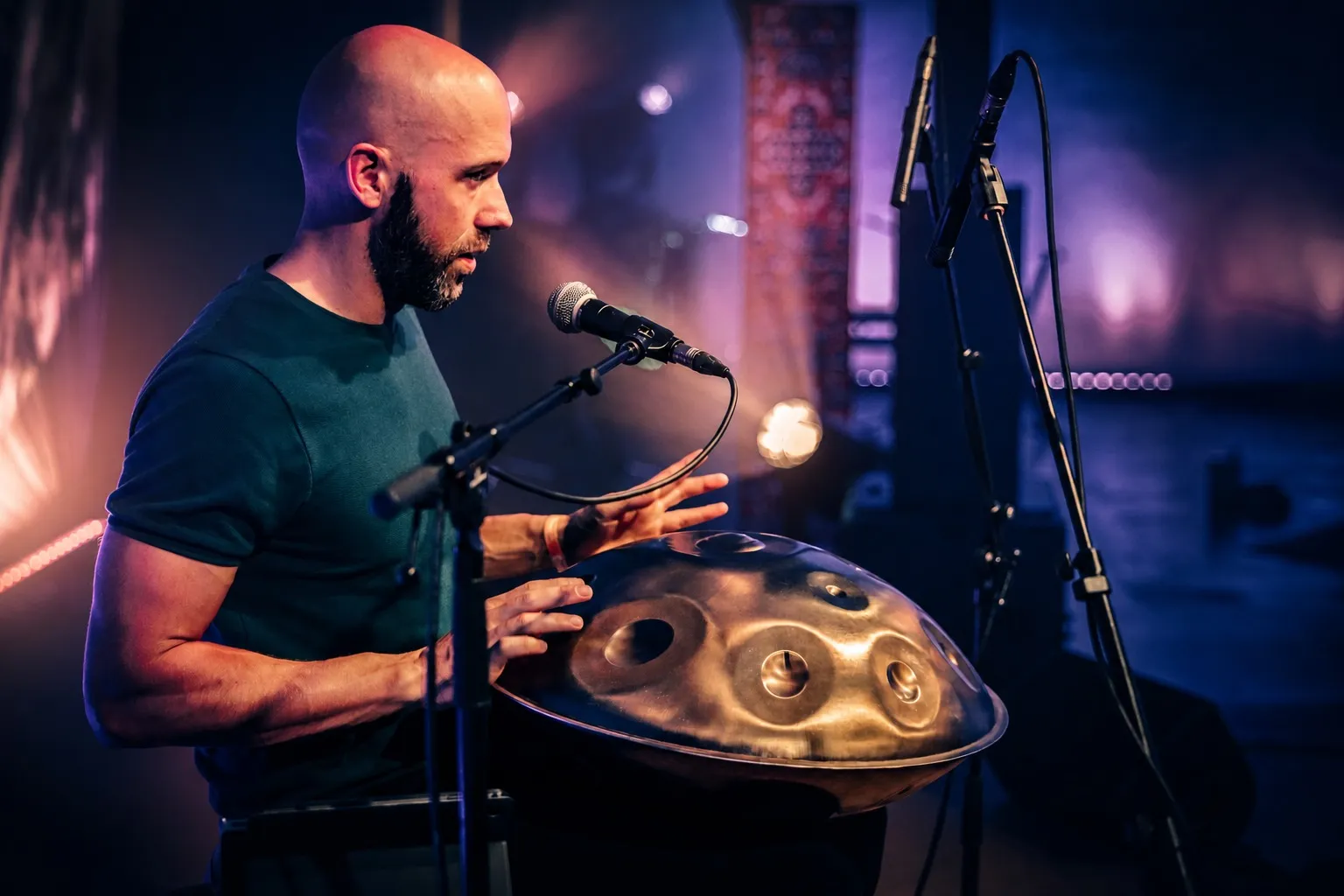
At The Biohacker Summit In Helsinki, Kasper Van Der Meulen Argued That The Real Frontier Of Performance Was Not Just Optimization, But Learning How To Regulate State From The Outside In And The Inside Out
For years, the language of biohacking has leaned toward mastery: better sleep, better focus, better recovery, better output. At the Biohacker Summit in Helsinki, held on 2 to 3 July 2024, Kasper van der Meulen offered a more human and quietly radical proposition. Beneath the supplements, metrics and routines, he said, lies a simpler truth: “Everything that you do is an attempt to improve your state.”
In his talk, The Noble Art of Connection: 3 Levels of State Regulation, delivered on Wednesday 3 July, van der Meulen drew the audience away from the cult of endless optimisation and toward a broader framework for understanding human behaviour. Every sip of water, every shift in posture, every glance at a phone, he suggested, was part of the same underlying impulse: to feel better, safer, clearer, more capable.
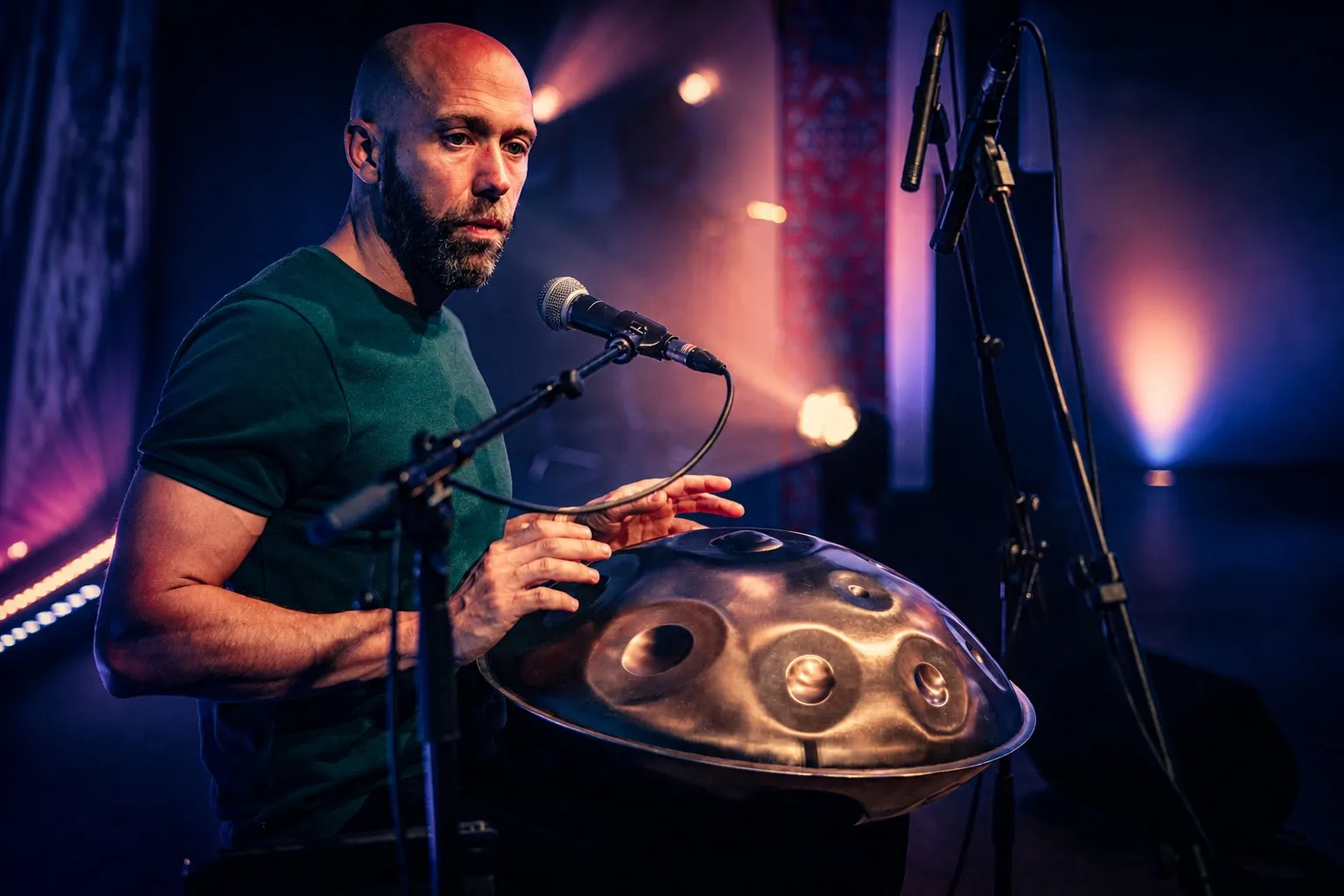
That framing did not dismiss the biohacking world gathered around him. It reinterpreted it. State regulation, in van der Meulen’s account, was the real engine behind the whole enterprise.
The State Behind The Action
The Dutch breathwork specialist, science teacher and musician built his argument on a deceptively simple line: “The right state leads to the right action naturally.”
It was a useful corrective to the moral language that often clings to energy, mood and productivity. Tiredness, he pointed out, is not a bad state if what one needs is sleep. Alertness is not always good if the moment calls for rest. Suffering arises not because a state is inherently wrong, but because it fails to match the action a person wants to take.
“The only real moments that we suffer,” he said, “are when the state that we’re in doesn’t match the things that we want to do.”
That idea landed because it replaced self-judgment with context. In van der Meulen’s telling, no experience was wasted, no emotion entirely misplaced. “Every experience you’ve ever had has proven its worth,” he said, arguing that the full range of human feeling exists for a reason, whether one attributes that to evolution, divinity or both.
The First Level: Managing The External World
Van der Meulen described the first level of state regulation as the one most familiar to the Biohacker Summit audience: changing external conditions to shape internal experience.
Here was the recognisable world of red-light blockers, adaptogens, cold showers, sunlight exposure, electrolytes, breathwork, sleep rituals, toxin reduction and nutritional fine-tuning. These were not trivial tools. In his view, they represented a conscious shift from being unconsciously manipulated by modern life to actively shaping the conditions that affect mind and body.
He also acknowledged the logic of measurement. Quantification, in this model, helps people see what is working and refine their choices. But van der Meulen was careful not to let the story end there. Optimization, he implied, can become its own trap when every variable begins to feel like a referendum on personal worth.
The Second Level: Awareness As Inner Locus Of Control
If the first level was about managing externals, the second was about learning to observe the self that reacts to them.
Van der Meulen called this the realm of awareness practice: the recognition that thoughts, moods and sensations are constantly changing, and that a person can become conscious of those changes without being wholly governed by them. This was where breath emerged not merely as a wellness tool, but as a bridge between the voluntary and involuntary, between conscious intention and the autonomic nervous system.
“Awareness of inner locus and control allows us to observe the way that we stand in the world,” he said.
This was the point at which his talk moved beyond lifestyle optimisation into something more searching. Why, he asked, are people so driven to optimise in the first place? Beneath the performance routines and precision habits, there is often a quieter question: am I safe?
For van der Meulen, much of human behaviour, including the pursuit of self-improvement, is rooted in that biological and emotional inquiry. People seek approval, security, love, health, certainty. The polished routines of high performance can sometimes conceal a more vulnerable longing to feel adequate, protected or at ease.
The Breath As Evidence Of Interconnection
Then came the turn that gave the talk its title.
Leading the audience through a brief breathing exercise he calls the “landing breath”, a pattern of four-count inhales, four-count exhales and eight-count pauses, van der Meulen shifted the room from theory to sensation. Breath, he argued, does more than regulate arousal. It reveals relationship.
He asked listeners to consider the biological intimacy of breathing itself: that each inhale balances the outer world with the inner body; that air is shared across people, generations and history; that the same elemental matter circulates through all human lives. Referencing the idea popularised in Caesar’s Last Breath, he lingered on the startling possibility that molecules exhaled in antiquity may one day be inhaled again.
The point was not poetic flourish for its own sake. It was a case for oneness grounded in physiology. We are, he argued, more alike than the social self tends to admit.
The Third Level: Unity As Safety
This brought van der Meulen to what he framed as the deepest level of state regulation: acknowledgement of unity.
Strip away title, profession, status, tribe, identity and performance, and what remains is a shared human essence. Everyone wants to be well. Everyone wants their loved ones to be safe. Everyone longs for belonging, care and stability. Beneath the outer layers, he said, the core needs are the same.
For van der Meulen, recognising that sameness produces a form of safety no supplement stack can rival. It softens defensiveness. It loosens social anxiety. It changes action at the source.
He spoke personally here, describing a life marked by anxiety, depression and neuroticism, and said that no amount of control had offered the same profound security as the felt experience of connection. When he notices self-consciousness rising in conversation, he said, he returns to a simple internal reminder: we’re breathing the same breath.
It is an almost disarming idea in a culture trained to sort, compare and rank. Yet in the context of a summit built on personal enhancement, it landed as a challenge as much as an invitation. Perhaps the most powerful upgrade is not heightened separation, but remembered belonging.
Beyond Optimization
Van der Meulen was careful not to romanticise unity at the expense of practicality. External management matters. Awareness matters. Biological optimisation matters. No one gets to transcend the need for sleep, food, work or ordinary life.
But his hierarchy was less a ladder than a widening circle. Manage the external world. Develop awareness of the internal one. Then see, if possible, that the self one is trying so hard to perfect has never been separate from the larger whole.
At a conference often associated with peak performance, Kasper van der Meulen’s presentation at the Biohacker Summit in Helsinki offered something more enduring than a new protocol. It suggested that the future of wellbeing may depend not just on becoming better regulated, but on becoming less alone.
Frequently asked questions
What does Kasper van der Meulen mean by state?
The condition underneath the action. Everything that you do is an attempt to improve your state, he told the Helsinki audience, and the right state leads to the right action naturally. Tiredness is not a bad state if what you need is sleep.
What is the first level of state regulation?
Changing external conditions to shape internal experience, which is the world most familiar to a biohacking audience: red-light blockers, adaptogens, cold showers, sunlight exposure, electrolytes, breathwork, sleep rituals, toxin reduction and nutritional fine-tuning.
What is the second level?
Awareness as an inner locus of control: learning to observe the self that reacts. Van der Meulen described the recognition that thoughts, moods and sensations constantly change, and that a person can become conscious of those changes without being wholly governed by them.
About the event
This recap is part of the Biohacker Summit 2024 Helsinki series, recorded in Helsinki on 2 and 3 July 2024. Read the summary of the whole event or join the next edition, HOLOLIFE Summit 2026 Amsterdam, on 14 and 15 November 2026.
In this story
Comments
Loading comments…