Biohacker Summit 2024 Helsinki
Women’s Cycles As Strategy, Not Sidebar
By Teemu Arina · · Updated
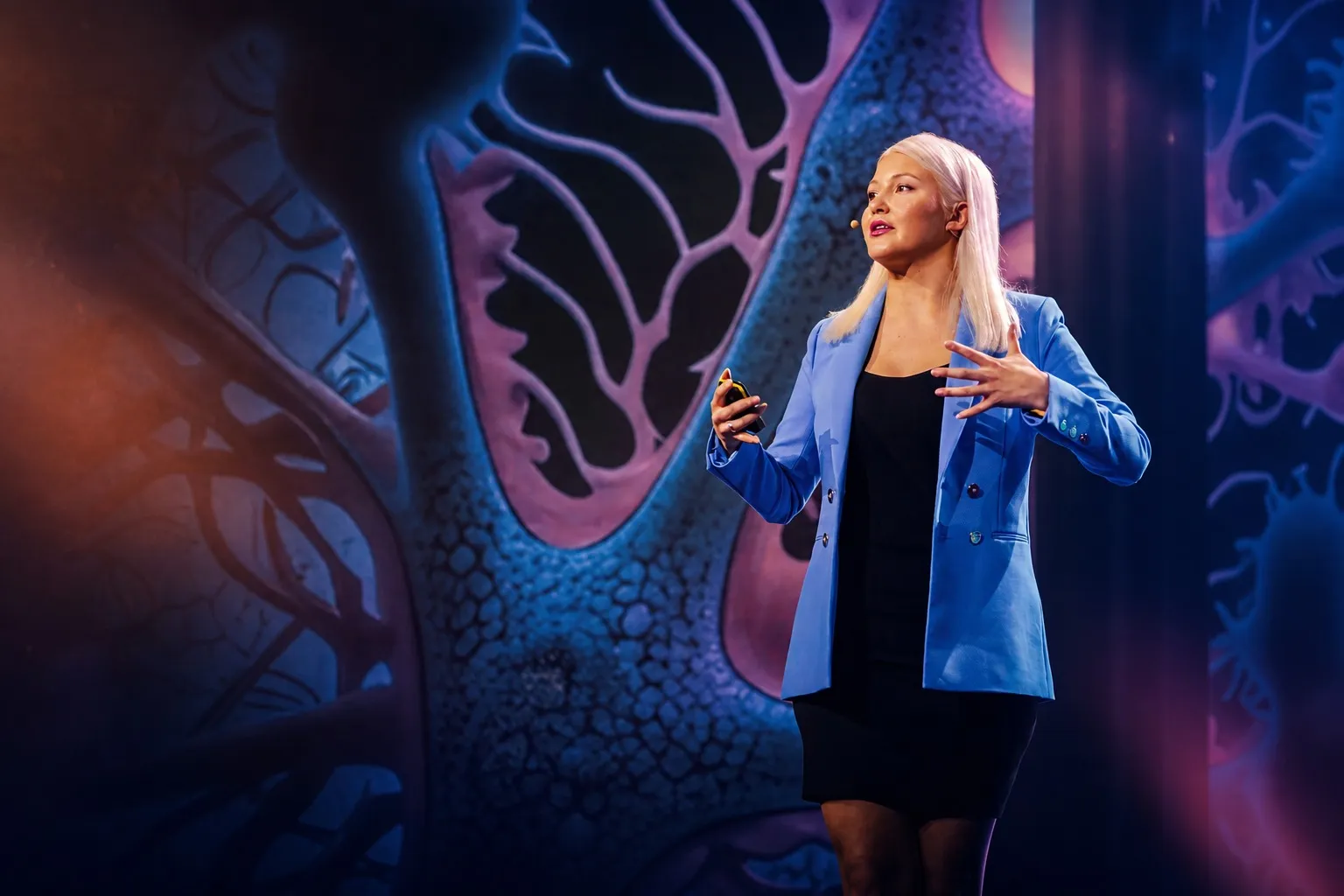
At Biohacker Summit In Helsinki, Kaisa Merelä Recast The Menstrual Cycle As A Map For Energy, Clarity, Creativity And Power
At the Biohacker Summit in Helsinki on 3 July 2024, the Finnish sexuality educator and women’s empowerment pioneer Kaisa Merelä delivered a talk that challenged one of modern life’s quietest assumptions: that women should function the same way every day.
Her presentation, Unlock Superpowers by Embracing Women's Cyclical Nature, argued the opposite. Women, she said, are “fundamentally, unchangeably cyclical”, and the failure to recognise that truth has shaped everything from work culture to self-worth. In a world built around linear output, Merelä offered a more ancient and more radical framework, one in which the menstrual cycle was not an inconvenience to be managed but an intelligence to be followed.
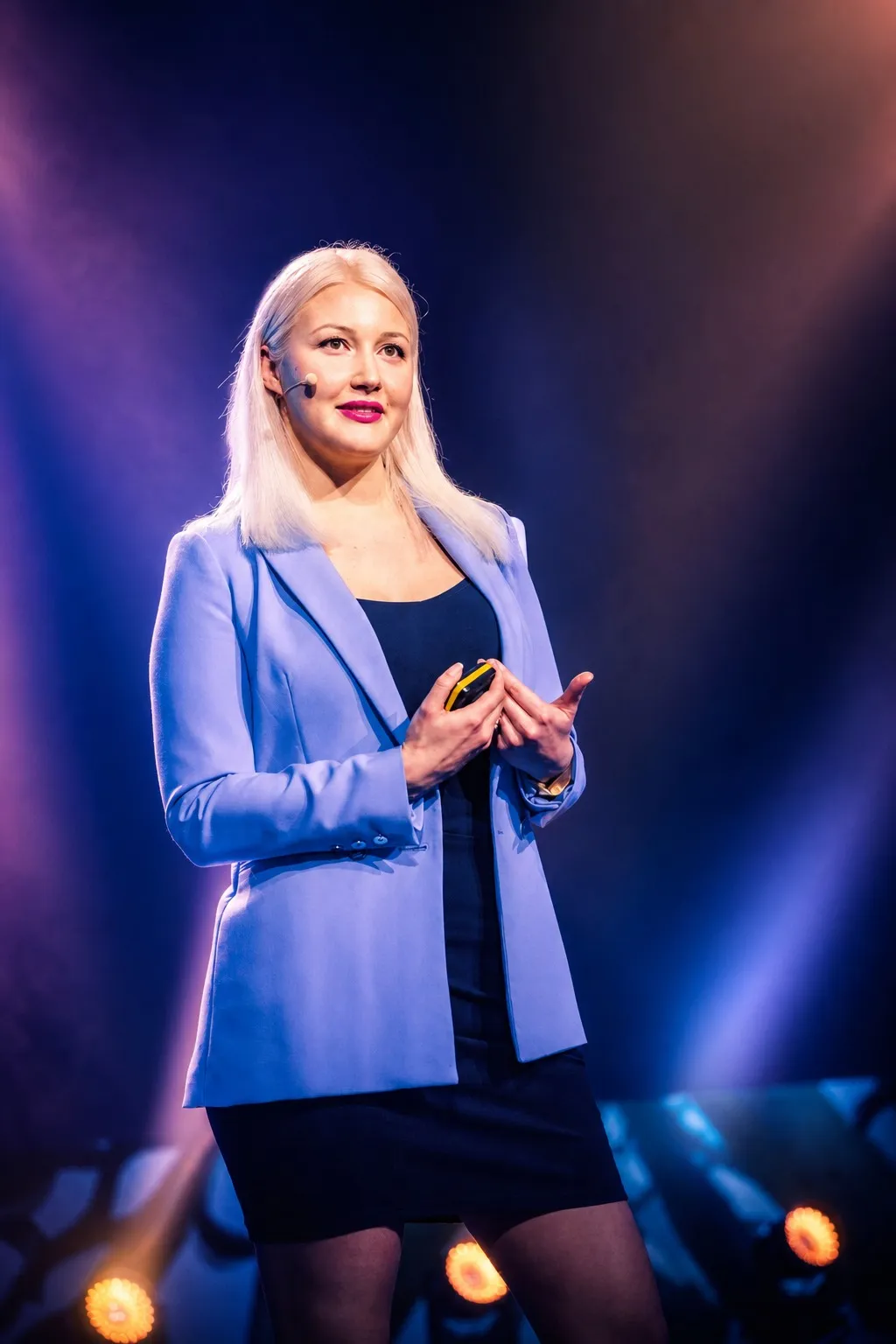
The Four Seasons Within
Merelä organised the menstrual cycle into four “inner seasons”: winter, spring, summer and fall. The metaphor was simple, intuitive and especially resonant in Finland, where seasonal extremes are lived rather than imagined. But her point was not poetic decoration. It was practical.
Inner winter, menstruation, was described as a phase of deep rest, spiritual sensitivity and inner clarity. Inner spring, the follicular phase, brought renewed optimism, ideas and experimentation. Inner summer, ovulation, held peak energy, focus, magnetism and performance. Inner fall, the luteal phase, invited emotional processing, truth-telling and boundary-setting.
Each phase, Merelä suggested, carried its own “gifts and superpowers”. The task was not to push through them uniformly, but to align with them.
“Our menstrual cycle actually holds gifts and superpowers within it,” she said.
A Critique Of The Linear World
The force of Merelä’s talk lay not only in what it celebrated but in what it criticised. She described a culture that rewards women most when they mirror masculine constancy: productive, outward, available, smiling, high-functioning. That standard, she implied, does not merely ignore women’s biology. It estranges women from themselves.
The result is a familiar emotional weather: feeling slightly off, chronically depleted, or quietly ashamed of natural fluctuation. Menstruation, in this view, has been flattened into a monthly nuisance. PMS becomes a punchline. Rest becomes weakness. Hormonal variation becomes something to disguise.
Merelä’s intervention was to name cyclical change not as defect but as design.
“The inner hack really is to accept and find the superpowers also in the more yin, feminine side of our cycle,” she said.
That line captured the heart of the talk. In a biohacking culture often obsessed with optimisation through control, Merelä proposed something more countercultural: optimisation through listening.
Inner Winter And The Lost Art Of Stopping
Her most striking argument may have been her defence of inner winter. Menstruation, she said, should be understood as the foundation of the whole cycle, a time not for heroic endurance but for pause. Deep rest, solitude, warmth and inwardness were not luxuries in this phase. They were the conditions through which insight emerged.
She spoke of the menstruating woman as an “oracle” archetype, capable of receiving visions, clarity and spiritual direction if given the chance to listen.
“Every woman has a power to their inner oracle during menstruation,” Merelä said. “If you don’t listen, you can’t hear.”
It was a provocative inversion of contemporary messaging, especially the polished advertisements that celebrate women for doing cartwheels through their periods as if bodily denial were liberation. Merelä’s point was sharper: the problem was not whether women could perform through menstruation, but why they were expected to.
Productivity, Reimagined Through Rhythm
If inner winter called for retreat, the later phases offered expansion. During inner spring, Merelä encouraged experimentation, creativity and brainstorming. During inner summer, she embraced what many workplaces already prize: confidence, sociability, stamina, sharp thinking and high output. The difference was that she situated those capacities within rhythm rather than permanence.
Ovulation, in her framing, was not the standard by which all days should be judged. It was one season among four.
That distinction mattered. It rescued women from the punishing fantasy of constant sameness and replaced it with a more adaptive model of performance: some days for ideas, some for execution, some for recovery, some for reckoning.
In inner fall, Merelä turned toward the phase often most maligned. Here, she argued, emotional intensity could serve a purpose. Irritability, sadness, anger and sensitivity were not merely symptoms to suppress but signals to process. The luteal phase, she suggested, was a time for reviewing choices, clearing emotional residue and recognising where something in life no longer aligned.
Beyond Hormones, Toward Meaning
There was a reason Merelä’s language moved so fluidly between hormones and archetypes, between physical phases and spiritual states. Her project sits at the intersection of sexuality education, embodiment and empowerment. According to her biography, she has become known in Finland for programmes and workshops that connect cycle awareness with health, relationships and entrepreneurship.
That broader philosophy was visible throughout the talk. She was not simply advocating menstrual literacy. She was making a claim about identity, agency and the right to live in accordance with one’s nature.
For women, she argued, the cycle could become an “internal guide to alignment”, shaping decisions about rest, work, movement, food, intimacy and ambition. The promise was not perfection. It was coherence.
The Politics Of Permission
What made the presentation resonate beyond wellness language was its underlying politics. To tell women that they are cyclical is also to tell them they are not failing when they cannot sustain one tempo forever. It is to challenge labour systems, social expectations and even feminist scripts that have too often mistaken imitation of masculine norms for emancipation.
Merelä did not present the cycle as a cage. She presented it as a source of permission and power.
At the Biohacker Summit, where the language of human enhancement often centres on metrics and mastery, her message landed as something both softer and more disruptive. The most powerful biohack for women, she suggested, may not be external at all. It may already be within them, repeating every month, waiting to be understood rather than overridden.
In the end, her argument was disarmingly simple: women do not need to become more machine-like to thrive. They may need, instead, to become more fully cyclical.
Frequently asked questions
What are the four inner seasons?
Kaisa Merelä organised the menstrual cycle into inner winter, spring, summer and fall. Inner winter, menstruation, she described as a phase of deep rest, spiritual sensitivity and inner clarity; inner spring, the follicular phase, brings returning energy and appetite for experiment.
What is her critique of the linear world?
That it rewards women most when they mirror masculine constancy: productive, outward, available, smiling and high-functioning. That standard does not merely ignore women's biology, she implied; it estranges women from themselves, producing a chronic sense of being slightly off or depleted.
Why does she defend inner winter?
Merelä argued menstruation is the foundation of the whole cycle, a time for pause rather than heroic endurance. Deep rest, solitude, warmth and inwardness were framed not as luxuries but as the conditions through which insight emerges, with the menstruating woman as an oracle archetype.
About the event
This recap is part of the Biohacker Summit 2024 Helsinki series, recorded in Helsinki on 2 and 3 July 2024. Read the summary of the whole event or join the next edition, HOLOLIFE Summit 2026 Amsterdam, on 14 and 15 November 2026.
In this story

Comments
Loading comments…