Biohacker Summit 2024 Helsinki
Recovery, Not Hustle, Was The Real Measure Of Performance At Biohacker Summit
By Teemu Arina · · Updated

Kristin Weitzel’s Helsinki Talk Reframed Peak Performance As A Practice Of Rest, Breath And Belief
At the Biohacker Summit in Helsinki, Finland, on Wednesday, 3 July 2024, Kristin Weitzel offered a deceptively simple thesis in her presentation, 5 Ultimate Strategies for Peak Performance & Recovery: the body does not become exceptional by being pushed without pause, but by being allowed, trained and trusted to recover.
It was a message delivered not as abstraction, but as invitation. Before she began in earnest, Weitzel asked the room to place their feet on the floor, soften their bodies and breathe only through the nose. For more than a minute, the audience followed a counted pattern of inhale and extended exhale, settling into a stillness that felt unusually radical for a conference built around optimization.
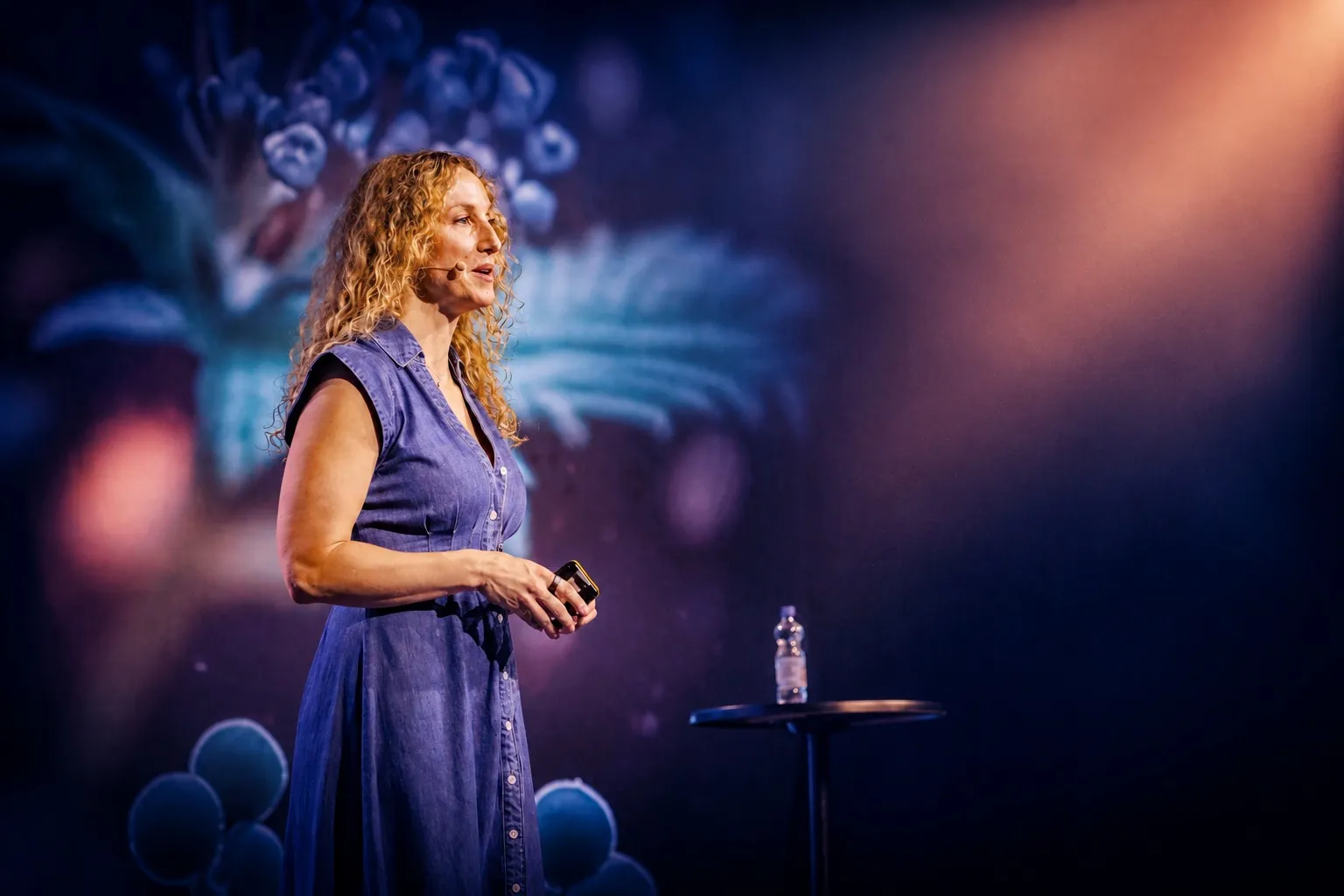
In that quiet opening sat the argument for the rest of her talk. Peak performance, Weitzel suggested, was not merely about output. It was about nervous system safety, deliberate recovery and the often neglected disciplines that make sustainable excellence possible.
A One Line Lesson From Breakdown To Clarity
Weitzel, a health and high-performance specialist known for her work in breathwork and cold exposure, grounded the session in personal experience. She described a period of professional success colliding with illness, relocation and relentless travel, culminating in a moment of profound nervous system dysregulation in a Florida hotel room before a speaking engagement.
From that rupture came the line that defined the presentation: “You are only as fit as your ability to recover.”
It landed with force because it cut against the mythology of modern high performance. In wellness circles as much as in elite sport, the bias often remains toward more: more training, more tracking, more supplements, more strain. Weitzel’s intervention was not anti-performance. It was an insistence that performance without recovery was, in the end, a form of depletion.
Sleep As The First Frontier
The first of her five strategies was sleep, presented not as a lifestyle luxury but as the base layer of health, cognition and physical capacity.
“If you’re not getting sleep right, you’re not getting it right,” Weitzel said.
Drawing on athletic research, she pointed to the benefits of extended sleep opportunity, including improved focus, speed, accuracy and overall performance. Her argument was straightforward: if elite athletes perform better with more sleep, so too do the so-called everyday performers, those juggling work, family, ambition and constant cognitive demand.
The emphasis was not only on duration, with Weitzel advocating for eight or more hours where possible, but also on preparing the body to receive sleep. Downregulation mattered. The body did not simply switch from stimulation to restoration on command. Rest had to be invited.
The Nervous System Needed Signals Of Safety
From sleep, Weitzel moved to weighted blankets and compression tools, placing them within a broader conversation about nervous system recovery. These interventions, she argued, can help create a felt sense of safety in the body, reducing stress and improving sleep quality.
“Utilizing a weighted blanket to be able to calm the nervous system so you feel safe, so you can recover,” she said.
In a culture that often treats recovery as passivity, Weitzel framed it instead as active care. Compression devices, heat and weighted inputs were not indulgences. They were practical methods for helping the body return from vigilance to regulation.
The underlying message was persuasive precisely because it was humane. Before the body can perform brilliantly, it must first stop bracing.
Breath Became Both Method And Medicine
The emotional and intellectual centre of the talk was breath. Weitzel returned repeatedly to the importance of intentional, controlled breathing as one of the least appreciated tools in human performance.
“Intentional and controlled breathing is one of the most overlooked forms of recovery,” she said.
She advocated nasal breathing in particular, arguing that it supports relaxation and focus. Longer exhales than inhales, she explained, can help slow heart rate and calm the system. She also referenced protocols such as 4-7-8 breathing, recovery breathing between training efforts and broader non-sleep deep rest practices.
“Practice nasal breathing for relaxation and focus” could have sounded like a wellness cliche in lesser hands. Here, it felt more grounded, partly because Weitzel tied it to real-world applications across athletes, dancers, university teams and high-achieving professionals. Breath was not mysticism dressed as science. It was a bridge between physiology and agency.
Cold Exposure Was About Surrender, Not Bravado
Cold exposure, another pillar of Weitzel’s work, was presented with notable restraint. In a field often prone to macho extremes, she made a careful distinction between endurance theatre and intentional recovery.
The point, she argued, was not to prove toughness by staying in punishing cold for as long as possible. It was to use cold strategically, allowing the body to adapt and then recover through a parasympathetic rebound. Better sleep, less soreness, quicker recovery and greater resilience were among the reported benefits.
Her framing was especially apt in Helsinki, where traditions of cold and heat already carry cultural weight. Rather than glamorising suffering, Weitzel spoke about surrender, precision and listening to the body.
Belief Was Not A Soft Add On But A Biological Force
The final strategy widened the lens. Recovery, Weitzel argued, was not only mechanical or metabolic. It was psychological. The stories people told themselves about who they were and what they were capable of mattered profoundly.
“What we believe about ourselves is the thing that we begin to navigate as what becomes true,” she said.
This was not the vaguest part of the presentation, but perhaps the boldest. Weitzel linked belief and positive self-talk to performance outcomes, particularly in the populations she works with, including women, dancers and athletes whose internal narratives are often shaped by precarity, comparison or invisibility.
Her point was not that belief replaces sleep, breath or physical recovery tools. It was that belief can determine whether people use those tools in a way that deepens capability or remain trapped in cycles of self-erasure. To recover well, one must also believe oneself worthy of recovery.
A More Mature Vision Of Optimization
What made Weitzel’s talk resonate at the Biohacker Summit was that it challenged the excesses of the optimization era without rejecting its curiosity. She did not dismiss trackers, protocols or performance goals. She repositioned them.
Recovery was not the reward after achievement. It was the condition that made achievement possible.
The five strategies she laid out were clear: sleep deeply, use supportive tools such as weighted blankets and compression, breathe with intention, apply cold exposure wisely and cultivate a stronger inner narrative. None was presented as magic. Together, however, they formed a compelling architecture for a more sustainable kind of human excellence.
In a conference environment often animated by the future of performance, Kristin Weitzel offered something more enduring: a reminder that the body’s greatest gains may begin not in force, but in permission.
Frequently asked questions
What was Kristin Weitzel's core argument about performance?
That the body does not become exceptional by being pushed without pause, but by being allowed, trained and trusted to recover. She grounded it in her own experience of professional success colliding with illness, relocation and travel, culminating in nervous system dysregulation before a speaking engagement.
Which strategy did she put first?
Sleep, presented not as a lifestyle luxury but as the base layer of health, cognition and physical capacity. If you are not getting sleep right, she told the Helsinki audience, you are not getting it right, and everything built on top of it inherits the deficit.
How do weighted blankets fit into recovery?
Weitzel placed weighted blankets and compression tools within nervous system recovery rather than comfort. Using a weighted blanket to calm the nervous system, she said, helps create a felt sense of safety in the body, which reduces stress and improves sleep quality.
About the event
This recap is part of the Biohacker Summit 2024 Helsinki series, recorded in Helsinki on 2 and 3 July 2024. Read the summary of the whole event or join the next edition, HOLOLIFE Summit 2026 Amsterdam, on 14 and 15 November 2026.
In this story
Comments
Loading comments…