Biohacker Summit 2024 Helsinki
Why Optimized Sitting Belonged In The Top Five Biohacks
By Teemu Arina · · Updated
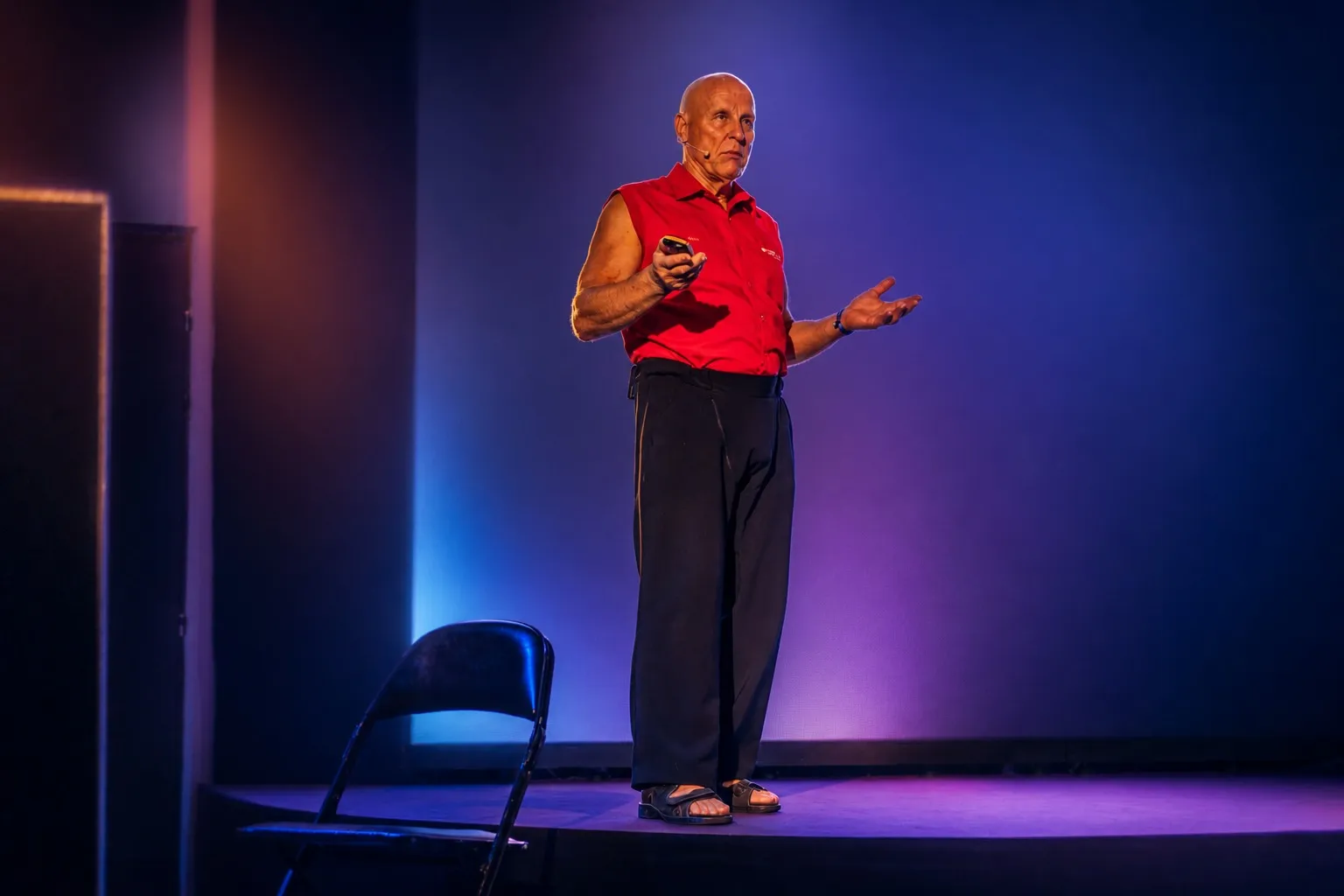
At Biohacker Summit In Helsinki, Veli-Jussi Jalkanen Argued That The Most Overlooked Health Upgrade Was Not Exotic, But The Way We Sit
At the Biohacker Summit in Helsinki on Wednesday, 3 July 2024, Veli-Jussi Jalkanen took aim at one of modern life’s most ordinary rituals and cast it as a hidden public health crisis. His presentation, Why Optimized Sitting Belongs In Top 5 Biohacks, made a forceful case that office ergonomics should sit alongside sleep, exercise and nutrition as a foundational pillar of health.
Jalkanen, a Finnish sitting health development pioneer known for designing the Salli sitting system, framed the problem in stark terms. Modern work, he suggested, had normalised a posture that quietly degrades the body over years, compressing circulation, straining the spine, stressing joints and undermining both comfort and productivity.
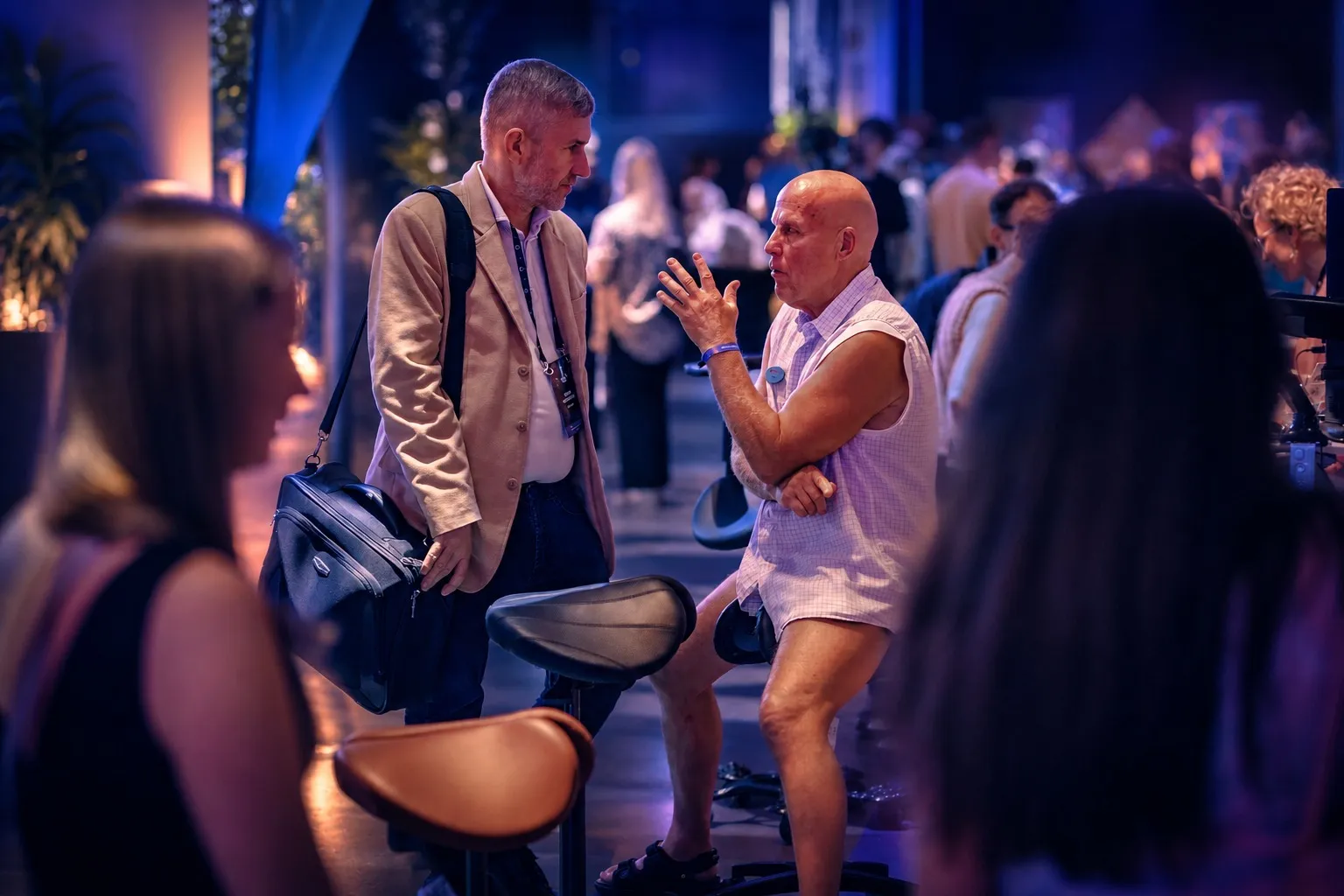
“If you become smart of that, I promise you, your productivity will be dozens of percent higher, you will look better, and you are much happier in your life,” he told the audience.
The Office, Reimagined As A Health System
Jalkanen’s argument was broader than the chair alone. Good ergonomics, he said, depended on a whole environment: a height-adjustable and width-adjustable chair, a table designed to support the arms, loose clothing that did not constrict the pelvis, breathable footwear, clear monitor positioning and, above all, conscious movement.
This was not merely a lecture about comfort. It was a critique of the standard office itself, where long hours in fixed 90-degree sitting positions had become so familiar that their harms were often treated as inevitable. Jalkanen insisted they were not.
Poor ergonomics, he argued, fed musculoskeletal disorders, reduced circulation and encouraged the collapsed, forward-leaning posture now common in desk work. “The musculoskeletal disorders, out of which sitting disorders are maybe 70, 80% after the depression, the second biggest ill care source at the moment in the world,” he said.
His proposed alternative was a workspace built to preserve upright posture, free breathing and regular micro-movement, rather than one that forced the body into stiffness.
Circulation As The Forgotten Metric
The central word in Jalkanen’s talk was circulation. Again and again, he returned to it as the thread connecting posture, energy, pelvic health, lymphatic function and long-term resilience.
“So become aware of your circulation and be healthy and well, okay?” he said.
He described circulation not as an abstract wellness slogan, but as a biological reality affected by every angle of sitting. The neck, lower back, hips, knees and pelvic floor all featured in his anatomy-heavy explanation of how pressure and tension can interfere with blood flow and lymphatic movement.
In his telling, sedentary office life was not only hard on the spine. It also compressed the body’s ability to clean, nourish and regulate itself. He paid particular attention to the lymphatic system, calling it highly sensitive to immobility, tissue stiffness and pressure from both furniture and clothing.
“This system is unbelievably clever, so that when lymph node, which is bringing dirt from different parts of your body, comes into the lymph node here, different sections, they do the processing,” he said, describing the body’s quiet internal housekeeping as if it were an elegant civic infrastructure under strain.
Why The Chair Became The Battleground
At the heart of Jalkanen’s thesis was the saddle chair, especially one with a divided seat. He contrasted it with the conventional padded office chair, which he said concentrated harmful pressure in the pelvic area, promoted a rounded lower back and restricted movement.
The divided saddle design, by contrast, was presented as a way to reduce pressure on the pelvic floor and genital region while supporting a more upright spinal position. He also stressed the importance of chairs that allow subtle swinging or micro-movements in the pelvis, helping to keep the spine, stomach, legs and pelvic organs more active during sedentary work.
The table mattered too. Jalkanen advocated height-adjustable desks with what he called a “belly pocket”, a cut-out section that allows users to sit closer while supporting their elbows and relaxing the shoulders. If the table lacked such a feature, he suggested add-on accessories to create a similar effect.
In his view, modern ergonomics had too often settled for partial solutions. A good chair without a good table, or a good table paired with restrictive clothing, still left the body compromised.
Clothing, Pelvic Health And The Taboo Of Pressure
One of the more unusual sections of the talk focused on clothing, an area Jalkanen treated not as fashion but as physiology. Tight garments, he argued, could interfere with circulation in the pelvic region, while looser designs helped maintain comfort, ventilation and vascular flow.
He spoke at length about pelvic and genital health in both men and women, arguing that prolonged compression in ordinary seated positions could have consequences far beyond discomfort. For men, he linked pressure and heat to testicular health and sexual function. For women, he warned about the risks of heat, sweat and bacterial transfer in poorly ventilated seating conditions.
The candour of that discussion gave the session some of its charge. Jalkanen was willing to go where mainstream workplace wellness rarely does, discussing the pelvis not as an embarrassment to be ignored, but as a crucial zone of circulation, hormonal health and everyday function.
Productivity, Posture And The Promise Of Feeling Better
For all its anatomical detail, the talk was anchored in a simple claim: people work better when the body is not fighting the furniture. Jalkanen linked upright posture and freer breathing to better oxygenation, improved mood and sharper performance.
He described the ideal workstation as one that allows the chest to stay open, the stomach to move naturally, the shoulders to relax and the head to remain balanced rather than pushed forward. Conventional slouching, he said, can quietly reduce breathing capacity and strain the neck, including the muscles around key blood vessels supplying the brain.
His message resonated because it touched a familiar truth. Desk work often asks people to ignore low-grade pain, numbness, stiffness and fatigue until they become normal. Jalkanen’s intervention was to insist that this normality is the problem.
Beyond The Desk, Into The Night
Near the end of the session, Jalkanen widened the frame from sitting to sleep, introducing a pillow design intended to support the head without pressing the neck. He criticised many standard pillows as too high, too hot and too likely to compromise alignment and circulation.
The principle, he said, mirrored his ergonomic philosophy elsewhere: support the body without compressing it. In this case, the goal was to keep the neck free while maintaining a straighter sleeping posture, particularly for side sleepers.
Though distinct from the talk’s central focus, the pillow segment reinforced the coherence of his worldview. Whether at a desk or in bed, health was shaped by interfaces so ordinary that most people stopped seeing them.
A Biohack Hidden In Plain Sight
There was something quietly radical in Jalkanen’s appearance at the Biohacker Summit. In a culture often drawn to supplements, devices and metabolic optimisation, he argued for a more mundane intervention: redesign the mechanics of daily life.
His case was not glamorous. It did not promise transcendence. It offered something more practical and perhaps more subversive: fewer preventable problems, better movement, clearer breathing, stronger circulation and a body less punished by the modern workday.
That was the power of the presentation. It suggested that one of the most meaningful upgrades available to knowledge workers was not hidden in a lab or locked behind a protocol. It was in the chair, the desk, the clothing, the posture and the small repeated choices that shape the body hour by hour.
At the Biohacker Summit in Helsinki, Veli-Jussi Jalkanen made optimized sitting sound less like a niche ergonomic preference and more like a forgotten public health intervention, waiting in plain sight.
Frequently asked questions
Why does Veli-Jussi Jalkanen call sitting a top biohack?
Because he treats office ergonomics as a foundational pillar alongside sleep, exercise and nutrition rather than a comfort question. Jalkanen, a Finnish sitting health developer, cast the most ordinary ritual of modern life as a hidden public health problem.
What does good ergonomics actually require?
More than a chair. Jalkanen described a whole environment: a height-adjustable and width-adjustable chair, a table designed to support the arms, loose clothing that does not constrict the pelvis, breathable footwear, clear monitor positioning and, above all, conscious movement.
Why the saddle chair?
Jalkanen contrasted the divided saddle seat with the conventional padded office chair, which he said concentrates harmful pressure in the pelvic area, promotes a rounded lower back and restricts movement. The divided design reduces pressure on the pelvic floor while supporting a more upright spine.
About the event
This recap is part of the Biohacker Summit 2024 Helsinki series, recorded in Helsinki on 2 and 3 July 2024. Read the summary of the whole event or join the next edition, HOLOLIFE Summit 2026 Amsterdam, on 14 and 15 November 2026.
In this story
Comments
Loading comments…