Biohacker Summit 2024 Helsinki
Under pressure: How hyperbaric oxygen therapy became a cutting-edge longevity tool
By Teemu Arina · · Updated
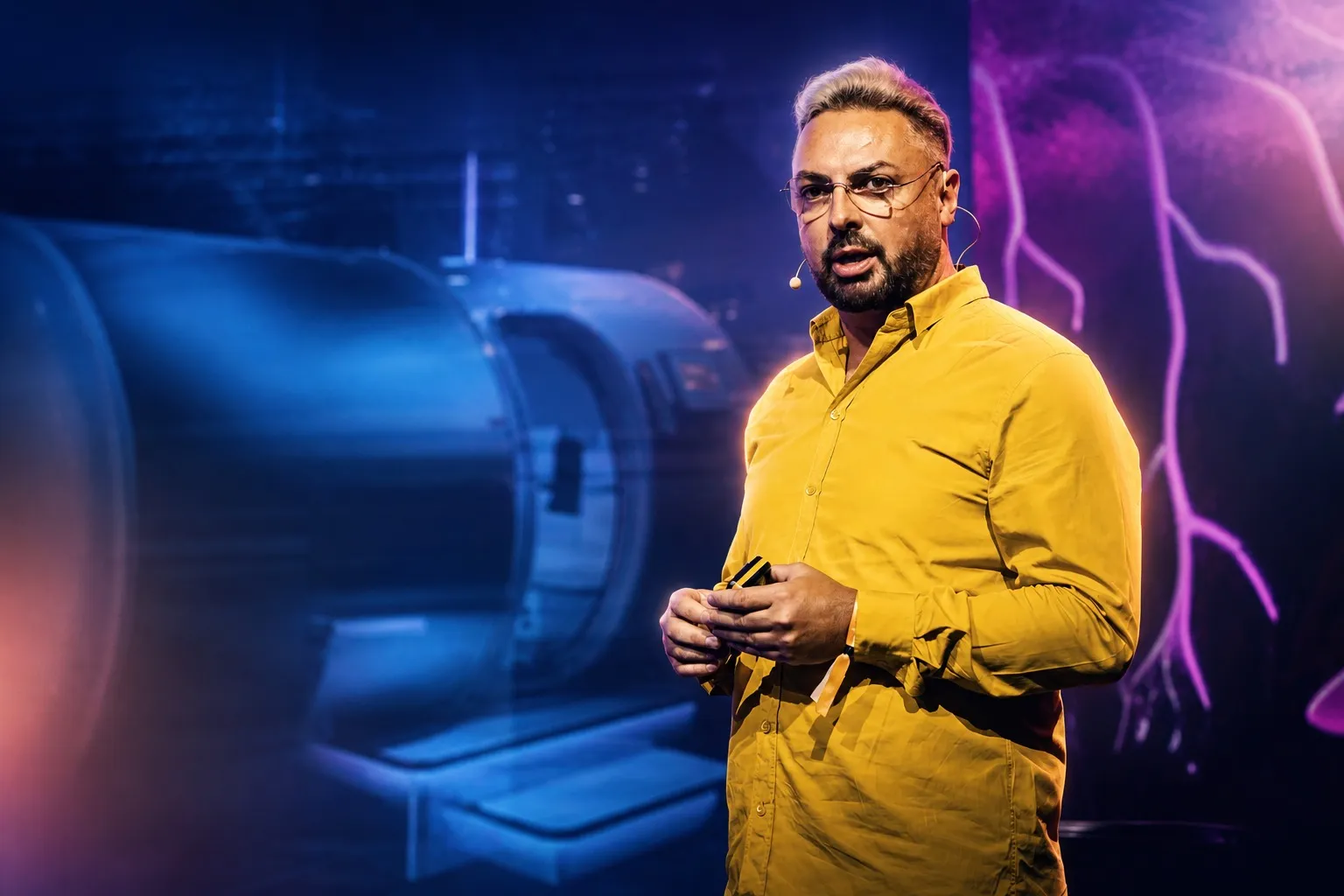
Wellness expert shares decade of experience with oxygen saturation technology at Helsinki's Biohacker Summit

The science of extreme oxygenation
When Valentin Ancuta took to the stage at Helsinki's Biohacker Summit on Tuesday, he brought with him not just 14 years of industry experience, but a compelling personal testimony to the power of hyperbaric oxygen therapy (HBOT). The CEO of Oxyhelp explained how this technology, once primarily used for medical conditions, has transformed into a sought-after biohacking tool for longevity enthusiasts.
"We use pressure to basically perfuse more oxygen into your body liquids, mainly plasma," Ancuta told the audience gathered at the three-day summit focused on optimising human performance. He explained that while red blood cells typically carry most of our oxygen, plasma – which constitutes two-thirds of our blood – normally carries only about 5% oxygen. "If we put you under pressure at two atmospheric pressure, you can saturate the plasma up to twelve times more."
From battlefield medicine to biohacking
The technology's journey from purely medical applications to wellness tool is supported by fascinating historical evidence. Ancuta referenced a 1950s study called "Life Without Blood" where researchers in the UK, struggling with liver transplant failures, discovered that animals could survive without blood when placed in pressurised environments with oxygen-saturated plasma.
Perhaps most compelling was the case of commercial diver Chris Lemons, who in 2012 survived 38 minutes without oxygen after an accident in the Baltic Sea. "It's the only single case documented in history when a person managed to stay alive thirty-eight minutes without oxygen," Ancuta said, attributing this survival to Lemons' previous saturation in a hyperbaric environment.
Shifting market trends
The transformation of hyperbaric chambers from clinical tools to consumer wellness products represents a significant market shift. "When I started this company ten years ago, it was a ratio of ninety percent commercial facilities and only ten percent private people buying the chamber," Ancuta revealed. "Now fifty to sixty percent are private people, mainly healthy individuals on a journey for longevity and well-being."
This democratisation of access reflects growing interest in preventative health approaches rather than solely treating existing conditions. Ancuta's company now serves clients ranging from health spas and longevity centres to plastic surgeons and dental clinics.
Innovation and user experience
As adoption widens, technology has evolved to address key concerns. Ancuta highlighted the limitations of soft-shell chambers, particularly CO2 buildup, which can compromise the therapeutic experience. His company's hard-shell chambers prioritise ventilation, noise reduction, and user comfort.
Recent innovations include integration with wearable technology. "People love their wearables, and we partner up with a company... They get the data from all the wearables, like a Garmin and then Apple Watch," Ancuta explained. This allows users to track their progress and understand the therapy's effects on metrics like heart rate variability and sleep quality.
Measurable results
The most striking testament to the therapy's potential came from a client testimonial Ancuta shared. A businessman from Singapore reportedly reversed his biological age from 48 to 41 through 60 hyperbaric sessions over two years, as measured by telomere length – a biomarker associated with cellular ageing.
Ancuta also shared his personal experience using the therapy to recover from a motorcycle accident. "I took my casts off after four weeks instead of eight. Recovery was much faster," he said, noting that protocols vary based on individual needs, age, and health conditions.
As the Biohacker Summit continues through Wednesday in Helsinki, Ancuta's presentation highlights the growing intersection between medical technologies and consumer wellness – where treatments once reserved for specific medical conditions are being repurposed by health-optimising individuals seeking to extend not just their lifespans, but their healthspans.
Frequently asked questions
How has the hyperbaric chamber market changed?
Valentin Ancuta, chief executive of Oxyhelp, said that when he started the company ten years ago the split was ninety percent commercial facilities and ten percent private buyers. Now, he told the Helsinki audience, fifty to sixty percent are private people on a longevity journey.
Where did hyperbaric therapy come from?
Ancuta referenced a 1950s study called Life Without Blood, in which researchers in the UK struggling with liver transplant failures found that animals could survive without blood when placed in pressurised environments with oxygen-saturated plasma.
What are the limits of soft-shell chambers?
Ancuta highlighted CO2 buildup as the key problem, which can compromise the therapeutic experience. His company's hard-shell chambers prioritise ventilation, noise reduction and comfort, and recent versions integrate with wearable devices.
About the event
This recap is part of the Biohacker Summit 2024 Helsinki series, recorded in Helsinki on 2 and 3 July 2024. Read the summary of the whole event or join the next edition, HOLOLIFE Summit 2026 Amsterdam, on 14 and 15 November 2026.
In this story
Comments
Loading comments…