Biohacker Summit 2024 Helsinki
Fasting As The Missing Discipline In An Age Of Excess
By Teemu Arina · · Updated
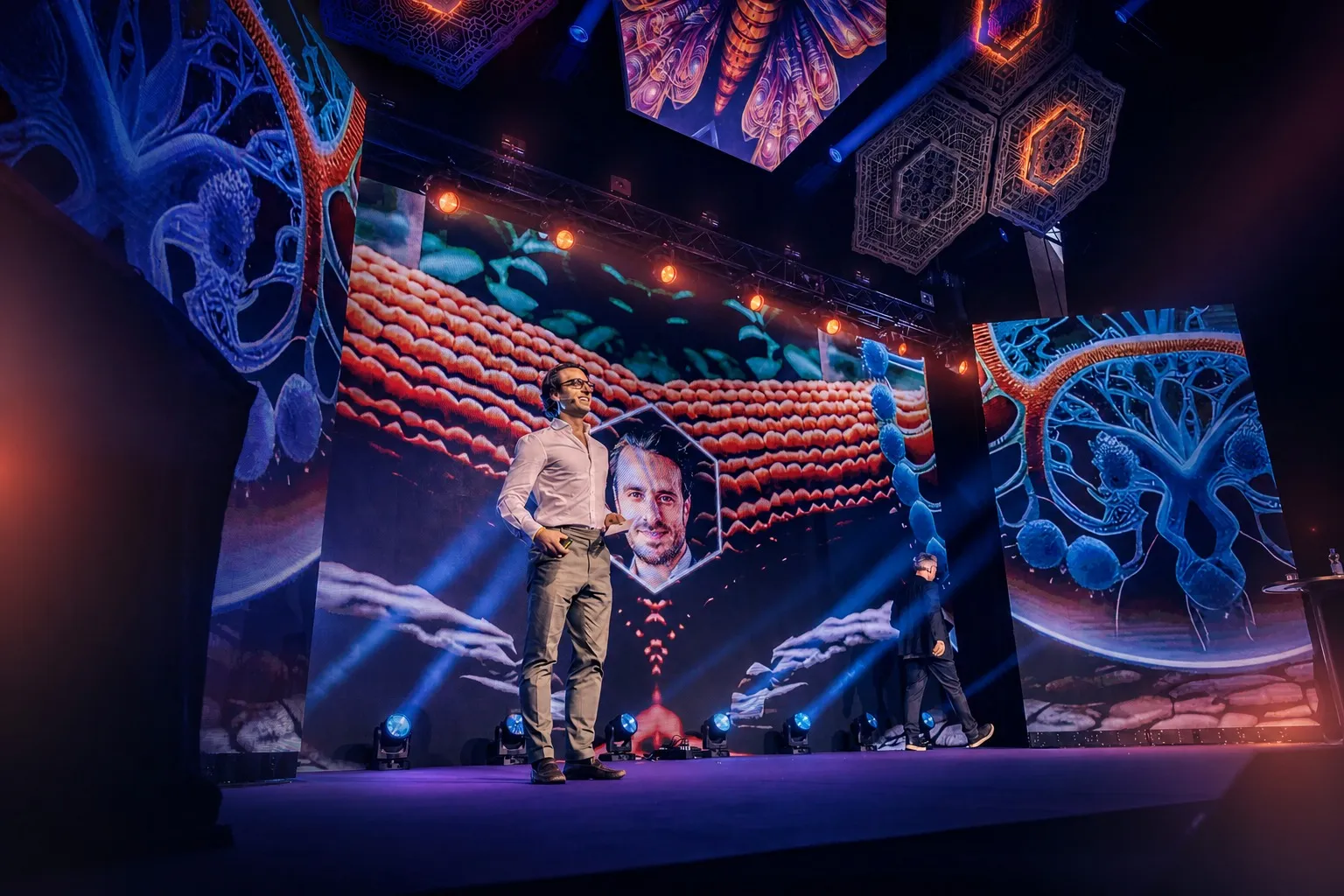
At Biohacker Summit In Helsinki, Victor Wilhelmi Made The Case That Going Without Food For Days Was Not A Fringe Obsession But A Forgotten Human Skill
There was, in Victor Wilhelmi’s presentation at the Biohacker Summit in Helsinki, Finland, on Wednesday 3 July 2024, a kind of quiet provocation. In a culture built on abundance, optimization and endless consumption, he stood before a room of self-trackers and longevity seekers to argue for the power of restraint.
His talk, Regular Fasting as Part of the Biohacker's Toolkit, did not concern the now familiar rituals of skipping breakfast or compressing meals into a narrow eating window. Wilhelmi, CEO of Buchinger Wilhelmi Clinic Marbella, spoke instead about long-term fasting, the kind that extends beyond three days and asks the body to cross a threshold modern life rarely allows it to approach.

“Fasting is really an art,” he told the audience.
It was both a slogan and a thesis. For Wilhelmi, fasting was not deprivation for its own sake, nor merely another wellness trend repackaged for a high-performance age. It was an ancient biological program, a therapeutic method refined over a century at the Buchinger clinics, and, he argued, a tool capable of resetting metabolism, sharpening the mind and restoring a body made dull by overfeeding and underuse.
An Ancient Practice Recast For The Biohacking Age
Wilhelmi’s central contention was deceptively simple: human beings were built not for permanent plenty but for fluctuation. For most of history, food arrived intermittently, and the body adapted accordingly. In that view, fasting was not an aberration. It was a buried inheritance.
He framed the argument in civilizational as well as biological terms. Nearly every major religion, he noted, had woven fasting into its moral and spiritual architecture. Pope Francis, Muhammad, Gandhi, all stood within traditions that understood abstinence not as punishment but as recalibration.
“Fasting is for the inner world what the eyes are for the outer world,” he said, quoting Gandhi.
The line landed with force because Wilhelmi was speaking to a crowd accustomed to metrics, scans and biomarkers. Yet his appeal was broader than data alone. Fasting, in his account, sat at the meeting point of science, ritual and self-examination. It offered physical gains, certainly, but also relief from the relentless noise of modernity.
“The modern mind is overstimulated, and the modern body is understimulated and overfed,” he said.
That diagnosis, more than any single study, explained the room’s attention.
The Buchinger Method And A Century Of Clinical Faith
Wilhelmi grounded his claims in family history. The Buchinger story began with his great-grandfather, Dr Otto Buchinger, a naval physician who developed severe rheumatic illness and, in desperation, undertook a 21-day water fast. According to the account Wilhelmi shared, the experience restored his mobility and changed the course of his life. From that episode emerged a clinic, then a method, then a multigenerational institution devoted to medically supervised fasting.
Today, Wilhelmi said, the Buchinger network includes clinics in southern Spain and southern Germany, serving about 7,000 people a year from roughly 60 countries. He described them as part clinic, part research laboratory, with an in-house scientific team and collaborations spanning institutions in Europe and beyond.
The protocol itself was not sold as ascetic extremism. Guests began with a reduced diet, then shifted to broths and a tightly controlled intake of around 250 calories a day, before gradually reintroducing food over several days. Fasting, in this version, was structured, supervised and deliberately paced.
It was, Wilhelmi insisted, not “a walk in the park” but “a hike in the mountains”.
The Promise Of A Metabolic Reset
The physiological case he made was broad but coherent. Long-term fasting, he said, triggered a metabolic switch from glucose to ketones, effectively turning the body into what he called a hybrid system capable of drawing deeply on stored fat. The result, he argued, was a reset for those who had become metabolically inflexible, inflamed or chronically overnourished.
He described fasting as “the great equalizer”, claiming that people with elevated cholesterol or inflammation often saw those markers improve, while people with normal readings generally remained stable. In that sense, fasting was presented less as a blunt intervention than as a regulatory one, nudging the body back toward balance.
The language was part scientific, part mechanical. Clients, he said, often compared it to bringing a car into the garage for maintenance. The metaphor was plain enough, but it captured a recurring desire in wellness culture: not simply to live longer, but to feel repaired.
Wilhelmi’s case extended to the microbiome as well. Research at the clinics, he said, suggested that gut bacteria adapted during fasting rather than collapsing into dysfunction, and that some positive changes remained detectable weeks and months later. In a field where speculative claims often outpace evidence, he sought to present fasting as one of the rarer interventions with both tradition and data behind it.
Clarity, Focus And The Hunter Brain
If metabolism was one pillar of the talk, cognition was the other. Wilhelmi spoke with particular enthusiasm about fasting’s effects on focus, mood and mental sharpness. In evolutionary terms, he argued, this made sense. A hungry organism in the wild could not afford lethargy. It had to become alert enough to find food.
That old adaptation, he suggested, remained available to modern humans. In the protected setting of a clinic, or with a carefully designed home protocol, the body could enter the heightened state without the panic that would accompany genuine famine.
He described reports of increased wellbeing that rose, rather than fell, across extended fasts, and pointed to mechanisms such as brain-derived neurotrophic factors, or BDNF, associated with exercise and fasting. One client, the designer Philippe Starck, had told him that two weeks of fasting could yield the work of three months.
Whether taken literally or as testimony to altered mental states, the point was clear. Fasting was being offered not only as a treatment for the body but as a stimulant for consciousness.
The Muscle Question That Shadows Every Fast
Wilhelmi knew where skepticism would gather. In rooms devoted to performance and longevity, one fear reliably outruns all others: muscle loss.
He addressed it head-on. Many health enthusiasts, he said, abandon the idea of fasting because they believe it will strip away hard-earned strength. To test that concern, Buchinger researchers worked with the French research body CNRS, using MRI scans before and after a 12-day fast, then again one month and four months later.
What they found, according to Wilhelmi, was that while muscle size decreased, much of that change reflected losses in water and glycogen rather than catastrophic tissue breakdown. Grip strength and other measures of muscular performance, he said, remained stable. Some participants even improved cardiorespiratory fitness.
His underlying argument returned again to evolution. A body designed to survive scarcity, he suggested, would hardly respond by immediately dismantling the machinery needed to hunt, move and endure.
Bringing The Clinic Home
One of the more practical parts of the presentation concerned a product born during the Covid years, when clients who could no longer travel asked how they might fast safely at home.
The result was a five-day home fasting kit, complete with soups, teas, supplements, ketone sticks, an app and a self-observation diary. Wilhelmi described it as a guided introduction to long-term fasting, a way of helping users push through the difficult first days until the metabolic shift to ketones takes hold.
Importantly, he said, the product had been evaluated in a randomized controlled study involving 64 participants, with results suggesting it reproduced many of the same mechanisms observed in the clinics and could be used safely.
In a wellness marketplace crowded with vague promises and improvised protocols, that claim to structure and evidence was plainly part of the pitch. But it also reflected the larger ambition behind Wilhelmi’s talk: to move fasting from the edges of curiosity into the realm of repeatable practice.
A Discipline Against The Logic Of Constant Consumption
What lingered after the presentation was not merely the promise of lower inflammation or improved metabolic markers, though those claims were central. It was the deeper cultural challenge implied by his argument.
Fasting, as Wilhelmi presented it at the Biohacker Summit, asked people to reconsider a basic assumption of affluent life: that more is nearly always better. More inputs, more supplements, more stimulation, more food. Against that logic, fasting proposed subtraction as strategy.
He ended with a line that borrowed from Silicon Valley mythology but fit the room neatly enough: “Stay hungry, stay foolish.”
It was a neat closing line, though the fuller message had already been delivered. Fasting, in Wilhelmi’s telling, was not a punishment, nor a stunt, nor a relic of religious severity. It was a skill the modern world had largely forgotten, and one he believed it now badly needed to relearn.
Frequently asked questions
What kind of fasting was Victor Wilhelmi describing?
Not the familiar ritual of skipping breakfast, but going without food for days. His argument was that human beings were built for fluctuation rather than permanent plenty, and that fasting is less a fringe obsession than a buried inheritance.
Where does the Buchinger method come from?
Wilhelmi's great-grandfather, Dr Otto Buchinger, was a naval physician who developed severe rheumatic illness and, in desperation, undertook a 21-day water fast. According to the account Wilhelmi shared, it restored his mobility and led to a clinic, a method and a multigenerational institution.
What happens metabolically during a long fast?
Wilhelmi described a metabolic switch from glucose to ketones, turning the body into what he called a hybrid system capable of drawing deeply on stored fat. He presented it as a reset for people who had become metabolically inflexible, inflamed or chronically overnourished.
About the event
This recap is part of the Biohacker Summit 2024 Helsinki series, recorded in Helsinki on 2 and 3 July 2024. Read the summary of the whole event or join the next edition, HOLOLIFE Summit 2026 Amsterdam, on 14 and 15 November 2026.
In this story

Comments
Loading comments…