Biohacker Summit 2024 Helsinki
How Old Are You On The Inside? The New Race To Measure Human Aging
By Teemu Arina · · Updated
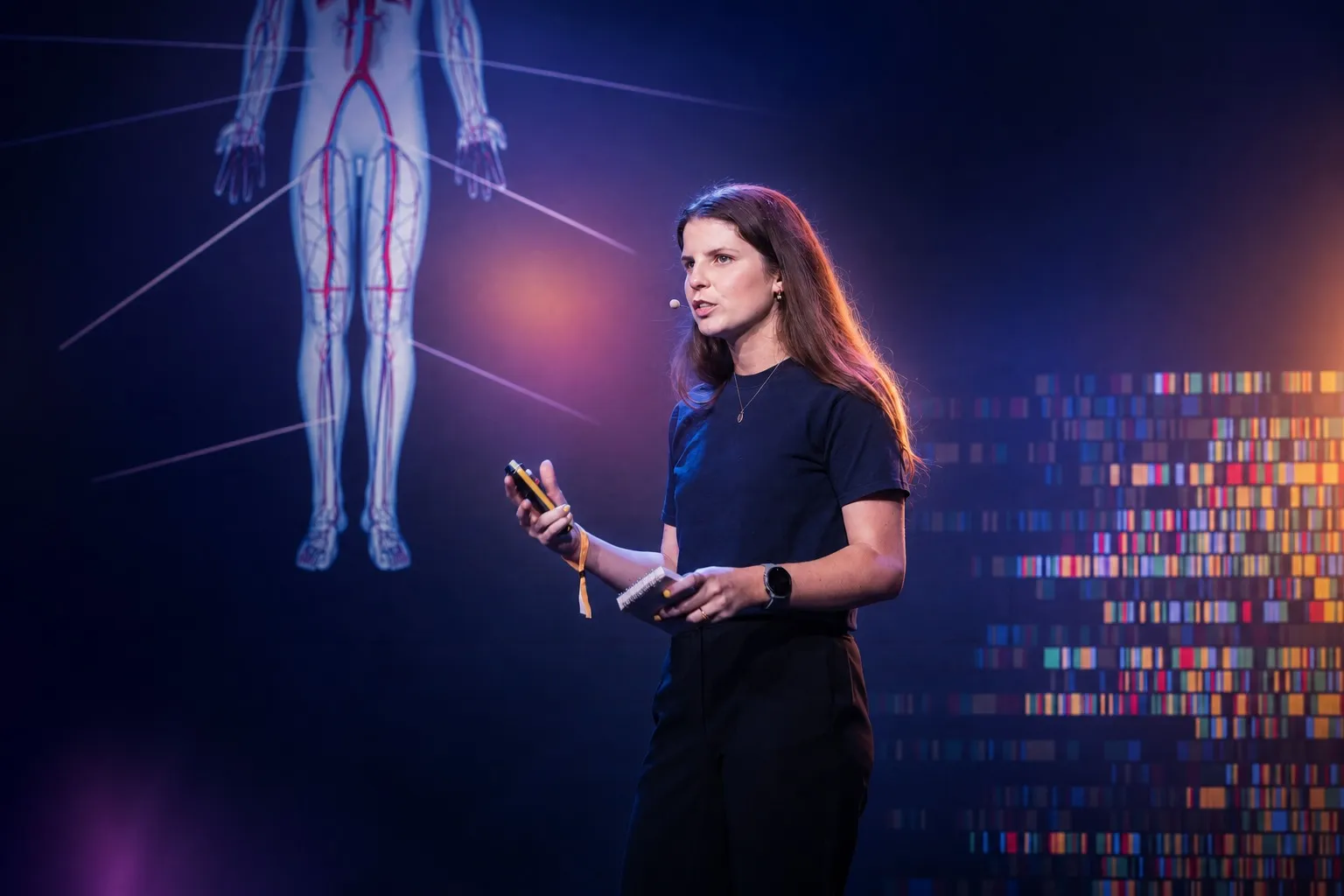
At Biohacker Summit In Helsinki, Julia Cooney Argued That The Future Of Longevity Medicine May Depend On A Single Question Asked With Far Greater Precision
On the second day of the Biohacker Summit in Helsinki, Finland, on Wednesday, 3 July 2024, Julia Cooney stepped onto the stage with a proposition that sounded at once intimate and planetary: the age that matters most may not be the one written on a passport, but the one inscribed across the body itself.
In her talk, How Old Are You on the Inside? The Importance of Biological Age, Cooney, a longevity clinician, biotech entrepreneur and founder of Zest Science, made the case that modern medicine had mastered the art of responding to illness while lagging badly at preventing it. That failure, she suggested, was not merely bureaucratic or clinical. It was civilisational.
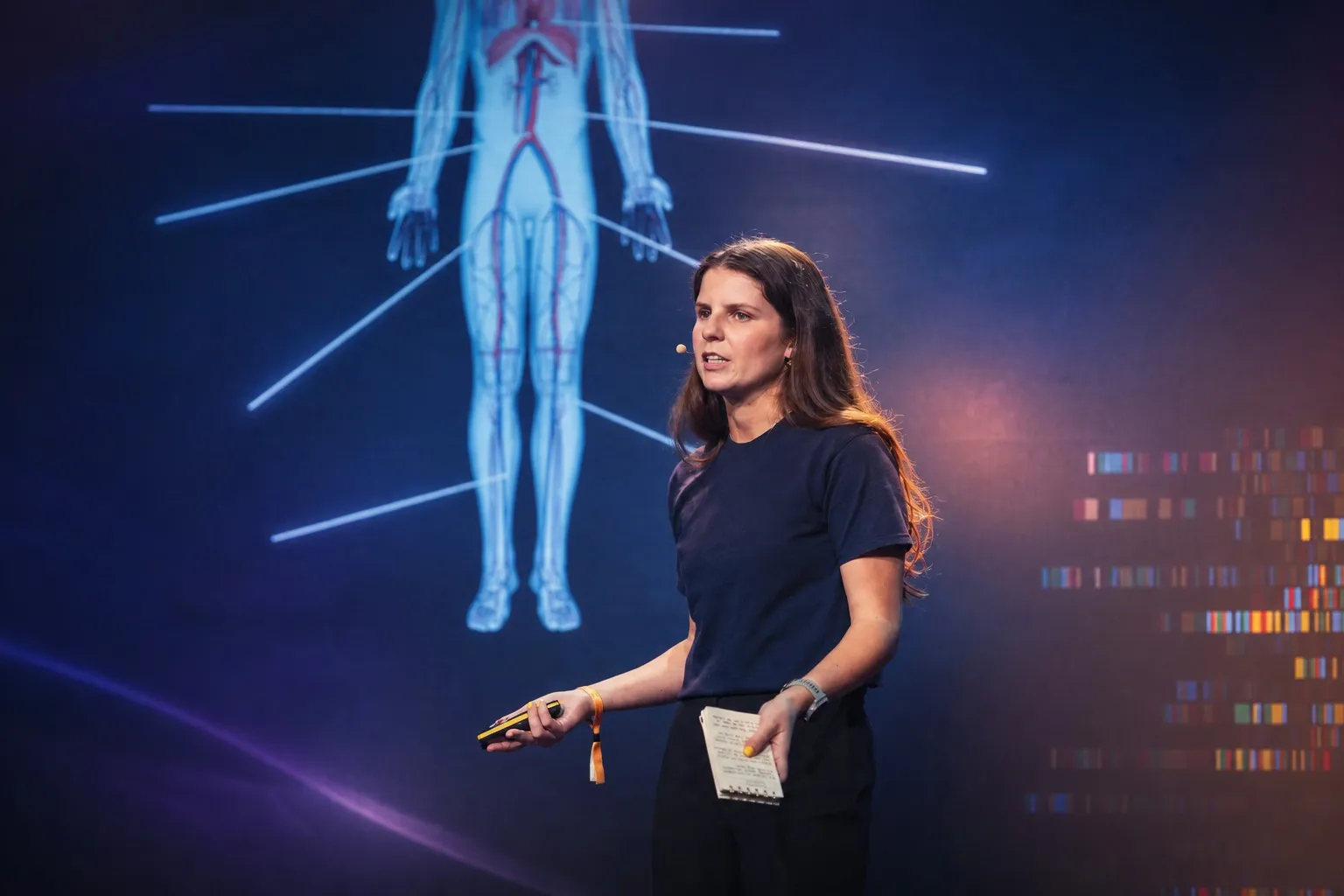
“Modern healthcare is really good at finding out what's wrong when someone is sick,” Cooney said, “but we're not so good at stopping them from getting sick in the first place.”
It was the kind of line that landed because it was recognisable. Hospitals, clinics and health systems had become highly sophisticated rescue machines. But rescue, in Cooney’s telling, came too late. By the time symptoms appeared, the deeper processes of aging and decline had already been advancing for years, often invisibly.
Biological Age Has Become One Of Longevity Science’s Most Important Battlegrounds
Cooney’s central claim was straightforward: biological age, not chronological age, may become the decisive tool in the next era of medicine.
Biological age, as she described it, reflected the extent of a person’s physical and cognitive decline. It folded together joint health, metabolic performance, cardiovascular condition, cognition and other systems into a portrait of how old a body truly was. A person of 60 who trained well, ate carefully, slept deeply and monitored their health could, in theory, possess the internal profile of someone far younger. Another, the same age on paper, might be aging faster.
That distinction has long appealed to wellness culture. But Cooney pushed it beyond self-optimisation and into the realm of drug development, regulation and scientific consequence.
“Biological age is incredibly important because it will determine the longevity drugs of the future,” she said.
That sentence carried the weight of the entire presentation. If scientists hoped to test drugs that targeted aging itself, they faced an obvious obstacle: human beings lived too long for conventional clinical endpoints. No one could reasonably wait half a century to discover whether an intervention had extended lifespan. Instead, the field needed proxies, reliable measures of whether a therapy was slowing, reversing or reshaping the aging process in real time.
That was where biological age came in. Not as a novelty score for the health-conscious, but as a possible gatekeeper for the therapeutics of tomorrow.
The Longevity Revolution Promised More Than Fantasy, But Less Than Immortality
Cooney framed the moment as historic. “We live currently in a longevity revolution,” she said, arguing that scientists had, for the first time, isolated the root causes of aging with enough clarity to begin targeting them directly.
The rhetoric of eternal youth has haunted humanity for centuries, from alchemy to anti-aging cosmetics to Silicon Valley futurism. Yet Cooney was careful to place limits on the dream. Her goal was not immortality, nor did she pretend that medicine was on the verge of abolishing death.
“The aim is not about making humans live forever,” she said. “It's about extending healthy lifespan until the limit of human lifespan, which is 100 to 120 years.”
That distinction mattered. It shifted the moral frame from fantasy to function. The question was not whether humans could live forever, but whether more of them could live well for longer, staying physically capable, cognitively intact and independent deeper into old age.
At the close of her talk, Cooney sharpened the ethical edge of that ambition. “We all have a moral and ethical obligation to age in as healthy a way as possible for as long as possible,” she said.
It was a striking formulation, at once inspiring and faintly austere. Longevity here was not just a personal project. It was social responsibility.
Measuring Aging Remained Messy, Fragmented And Incomplete
If the promise was grand, the practice remained imperfect. Much of Cooney’s talk was devoted to a problem that sits at the heart of longevity science: aging is multifaceted, but most tests capture only fragments of it.
She walked through the current landscape. Epigenetic clocks measured DNA methylation patterns and had become perhaps the best-known biological age tools. Telomere length, once fashionable, had lost some scientific shine because of weak correlation with actual mortality and disease outcomes. Molecular clocks used blood biomarkers to estimate age. Glycan-based approaches offered insight into inflammatory aging.
Each method illuminated part of the map. None, she argued, captured the whole terrain.
This was one of the more compelling strands of her presentation. Aging did not unfold uniformly across the body. A person could have strong cardiovascular fitness and poor joints, or excellent muscular health alongside emerging cognitive decline. To reduce that complexity to a single abstract number risked false confidence.
And yet the field kept trying, because it needed a metric that was measurable, repeatable and usable.
Zest’s Answer Was A Functional Age Test Built From Multiple Data Streams
The company Cooney founded, Zest, was built around what she called a “functional age” test, a composite model intended to be both scientifically useful and personally actionable.
Rather than relying on a single class of measurement, Zest combined three categories of data: blood biomarkers, digital markers from wearable devices and functional markers such as cognitive performance and grip strength.
The blood component focused on markers linked to healthspan and lifespan, selected in part because they could be measured accurately through finger-prick home testing. The digital component drew from metrics familiar to the quantified-self world, including heart rate variability, resting heart rate, maximal heart rate and VO2 max. The functional component extended further, incorporating memory testing, reaction time and proxies for strength and mobility.
Cooney described the system as both comprehensive and practical. Users received not just an overall age score, but a breakdown across the underlying markers, allowing them to see where they sat within normal or optimal ranges and where intervention might help.
That practical emphasis was one of her clearest critiques of other popular age tests. Epigenetic testing, she suggested, might produce an intriguing number while offering little guidance on what to do next.
A 40-year-old told they had the epigenetic age of 45 might feel alarmed, but not informed.
Actionability Was The Pitch, And Also The Cultural Appeal
What Cooney offered was not merely a test, but a philosophy of use. A good biological age tool, in her view, had to be responsive to intervention. If someone improved their sleep, nutrition, cardiovascular fitness or metabolic markers, they should be able to retest within months and see movement.
That idea fit neatly with the mood of the Biohacker Summit, where many attendees were less interested in diagnosis than in feedback loops. The body was not only a site of risk, but a system to be measured, tuned and improved.
Cooney argued that the Zest test was designed for that world. Blood markers provided the core predictive power, she said, but wearables added longitudinal context by capturing data over time rather than in a single clinical snapshot. Functional tests, meanwhile, helped tie biology back to lived experience.
A person with poor sleep, weak endurance and declining memory might not need an algorithm to know they felt older. But the algorithm could quantify it, track it and, crucially, help determine whether interventions were working.
The Science Was Ambitious, Though Not Without Limits
Cooney presented internal performance data suggesting Zest’s algorithm could estimate age within one to two years of chronological age for adults in the midlife range, especially between roughly 35 and 55. Accuracy dropped off at the extremes, a limitation she attributed to the shape of the training data, which drew on more than 300,000 individuals but clustered around middle-aged populations.
That admission was important. In an industry often prone to overstatement, Cooney acknowledged the blind spots. Younger users and older users remained harder to model. Some markers were still better understood than others. And the field as a whole was wrestling with an uncomfortable truth: correlation, even strong correlation, was not the same as causation.
Still, she returned repeatedly to the urgency of refining the tools. If biological age was to help decide which therapies advanced and which failed, then bad measurement would not simply be an inconvenience. It could mean discarding useful drugs or elevating weak ones.
Collaboration, Not Purity, May Decide Who Gets Aging Right
Perhaps the most thoughtful moment in the talk came near its end, when Cooney argued against methodological tribalism. Epigenetic clocks, glycan tests, digital phenotyping, blood analysis and even genetic information, she suggested, should not be treated as rivals in a zero-sum contest. The smarter path was synthesis.
Zest currently used 25 biomarkers in its model, she said, but she made clear that she saw this not as a finished system, rather as a platform open to richer forms of collaboration. Why not include epigenetic age as one signal among many? Why not add glycan data, more advanced cognitive screening or, eventually, carefully selected genetic markers?
That pluralism may turn out to be one of the most durable ideas to emerge from the session. Aging is too layered, too systemic and too individual to submit easily to a single master metric. If biological age is to become a genuine clinical instrument, it may need to behave less like a score and more like an orchestra, many signals interpreted together.
Behind The Metrics Was A More Human Question
For all the technical discussion of methylation, biomarkers, machine learning and wearables, Cooney’s presentation kept circling back to an older, simpler concern: what does it mean to live long without living well?
The longevity field often attracts caricature, rich men chasing immortality, wellness obsessives reducing existence to dashboards. But beneath the commercial language and the clinical ambition was something more universal. Most people were not really asking how to live forever. They were asking whether the last decades of life had to be marked by frailty, dependence and decline.
In Helsinki, at the Biohacker Summit, Julia Cooney answered with qualified optimism. Human lifespan, she said, may already have a known upper edge. The task now was not to transcend it, but to help more people reach it in better condition.
If that future comes, it will depend not only on miracle drugs or glossy apps, but on something more difficult: learning how to measure aging honestly enough that medicine can finally begin to treat it before the damage is done.
Frequently asked questions
What is biological age?
Julia Cooney described it as a measure of physical and cognitive decline, folding joint health, metabolic performance, cardiovascular condition and cognition into a portrait of how old a body truly is. Her claim was that it, not chronological age, may become the decisive tool in the next era of medicine.
How reliable are current biological age tests?
Imperfect, in Cooney's account. Aging is multifaceted but most tests capture only fragments of it. Epigenetic clocks measuring DNA methylation have become the best-known tools, while telomere length, once fashionable, has lost some scientific standing.
What is a functional age test?
The composite model behind Zest, the company Cooney founded. Rather than relying on a single class of measurement, it combines three categories of data: blood biomarkers, digital markers from wearable devices, and functional assessments.
About the event
This recap is part of the Biohacker Summit 2024 Helsinki series, recorded in Helsinki on 2 and 3 July 2024. Read the summary of the whole event or join the next edition, HOLOLIFE Summit 2026 Amsterdam, on 14 and 15 November 2026.
In this story
Comments
Loading comments…