Biohacker Summit 2024 Helsinki
A Neurological Map, Drawn In The Palm
By Teemu Arina · · Updated
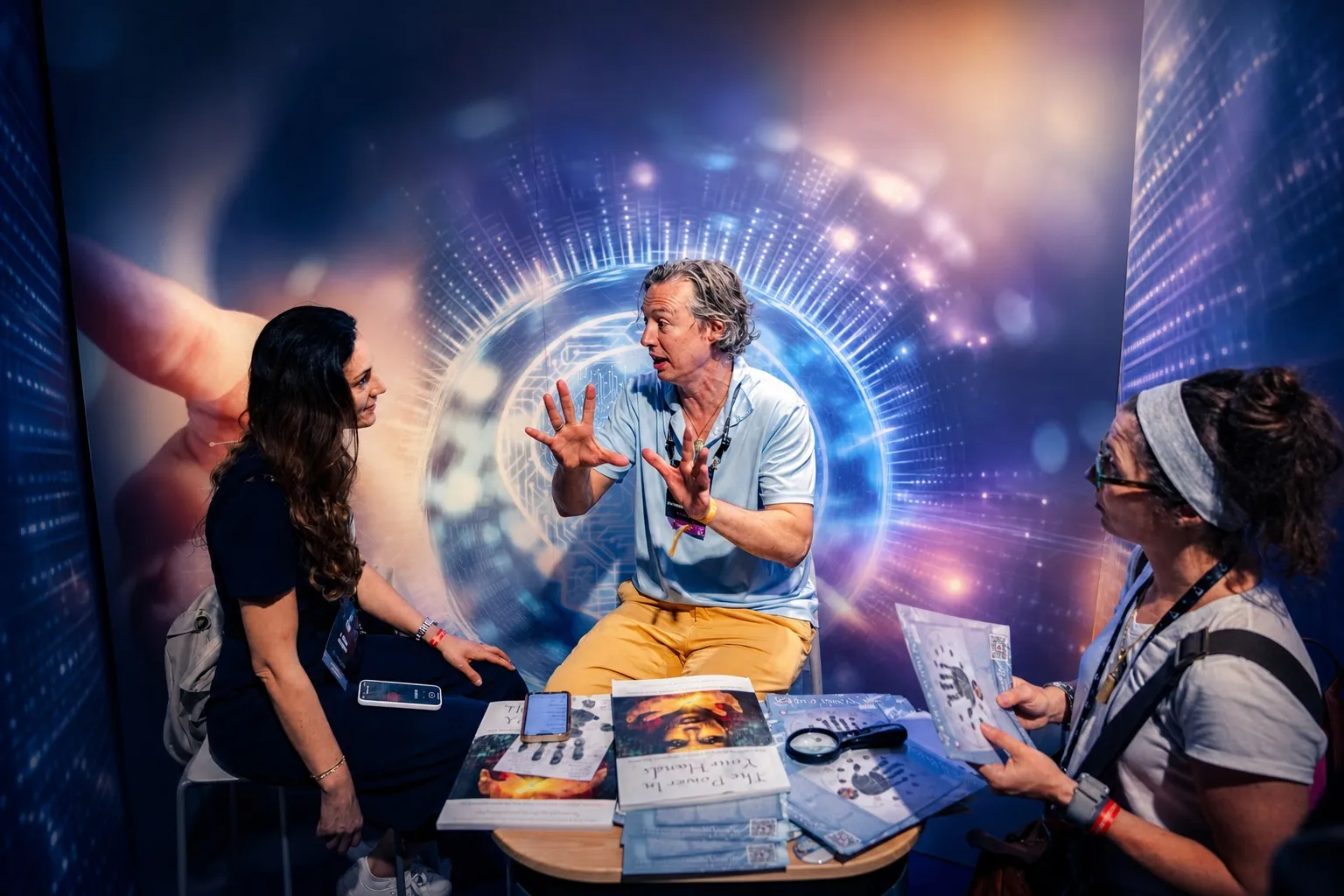
Brent Bruning At The Biohacker Summit Argued That The Hand Holds A Biological Record Of The Brain, Trauma And Human Potential
At the Biohacker Summit in Helsinki on Wednesday, 3 July 2024, Brent Bruning stood before a crowd and began with a small trick. He asked for raised hands from those who had experienced a hand reading. Then he asked the same of those who had not. Either way, hands went up. Either way, he had his opening.
“I was reading everyone’s hands just now,” he said.
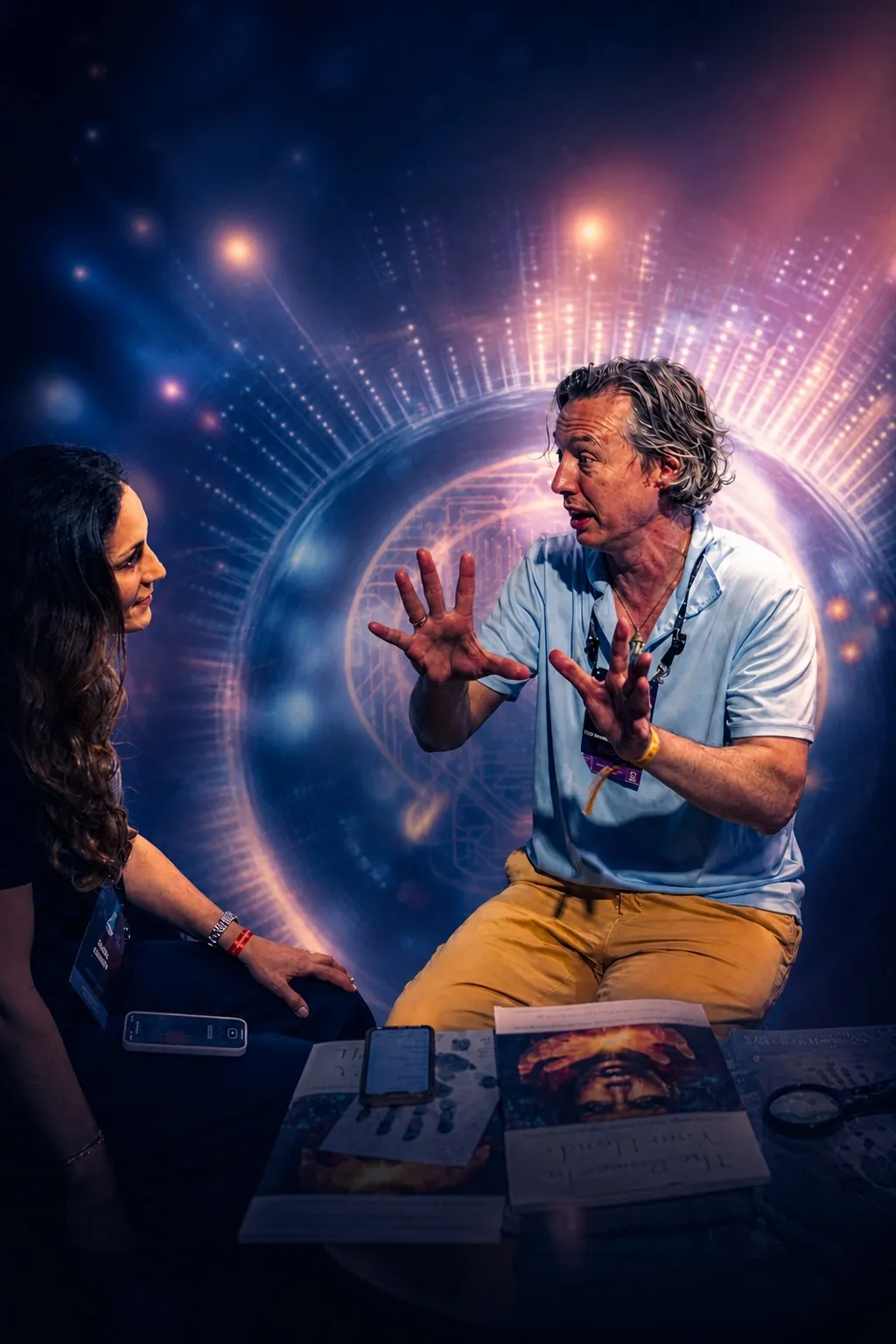
What followed in The Neurological Blueprint in Your Hands was not framed as mysticism, nor as the soft-focus language of intuition, but as a hard-edged, empirically grounded system. Bruning, a master hand analyst trained through the International Institute of Hand Analysis, presented the hand as an external map of internal life: the nervous system, the sensory cortex, emotional stress, inherited patterning, even what he called the “shadow side” of personality.
His claim was sweeping. The hand, he argued, carried a biological record of developmental stages in the brain and of the emotional architecture through which a person moves in the world.
An Argument Against Fortune-Telling
Bruning was at pains to separate his work from palmistry as popularly understood.
“There’s no tarot cards, no intuition, and I’m not going to dismiss that, because that’s valid in a different system,” he told the audience. “But this is true ten out of ten times.”
The foundation of his argument rested on scale and repetition. He cited the International Institute of Hand Analysis and its “empirical study of half a million people’s hands,” linking hand formations to recurring life patterns. He also placed his own experience within that lineage, saying he had spent years studying and cataloguing thousands upon thousands of hands.
The ambition behind the project was as striking as the method. Bruning said his mission was to use hand analysis to “biohack” health, reverse aspects of aging and help people live happier lives. In his formulation, this was not cosmetic self-improvement. It was neurological intervention by way of insight.
The Hand As The Brain’s Public Surface
The conceptual centre of the talk was the sensory cortex. Bruning described reality as something continuously processed through the body’s sensory machinery, and argued that the density of sensory representation in the hands made them uniquely legible.
He invoked the homunculus model, the familiar neurological image in which hands and lips appear grotesquely enlarged because of the volume of sensory neurons devoted to them. The point, for Bruning, was simple: if one wanted to understand consciousness, habit, reaction and personality, one had to start where the brain gave itself away most clearly.
In this reading, the hand was not an accessory to the mind. It was an extension of it.
He moved through a layered explanation of how different regions of the hand corresponded, in his system, to different kinds of processing: instinctive, emotional, relational, expressive, social and volitional. The right hand, he said, mapped to the left brain and public, structured engagement with the world. The left hand mapped to the right brain and more internal, intuitive and private forms of experience.
The result was less a reading than a taxonomy of temperament.
Trauma, Dry Skin And The Wear Of A Life
What made Bruning’s presentation resonate with the biohacking audience was not only theory but transformation. He repeatedly returned to before-and-after examples, showing faces alongside changes in the hands that he said revealed shifts in blood flow, stress and emotional nourishment.
A dry or scaly hand, he suggested, could signal trauma or deprivation. Blue colouring around certain lines could indicate strain. Horizontal markings could point to cortisol and adrenaline, signs of challenge or chronic activation. The hand, in this account, became not just a personality map but a stress ledger.
One of his more provocative assertions cut directly against the supplement-and-psychedelic ethos often adjacent to wellness culture.
“No amount of mushrooms that you throw at your system matters until you understand the architecture of the blueprint of your neurology,” Bruning said.
It was a line that captured the spirit of the talk: that interventions, however fashionable, remained secondary unless they were aligned with a person’s specific neurological needs. He offered oxytocin as one example, arguing that some people require unusually high levels of affection, touch and emotional reassurance for their system to regulate properly. When those needs are met, he said, appearance changes, mood changes, vitality changes.
The implication was radical in its intimacy. Happiness, youthfulness and resilience were not merely products of discipline. They were products of correct nourishment, emotional as much as chemical.
The Shadow Side In A Biohacking Age
Perhaps the most arresting concept in the session was Bruning’s repeated use of the term “shadow side.” By this he meant the cluster of disowned feelings and reactive patterns people hide from themselves and from others: shame, anger, guilt, rejection, fear, chronic dissatisfaction.
“You guys are all in your shadow,” he said. “It’s called earth.”
This was not, in his telling, a moral failure. It was the basic condition of a nervous system moving between sympathetic activation and parasympathetic restoration. The degree to which a person was triggered, upset or subtly dysregulated was, he argued, the degree to which they were living from that shadow.
His work, then, was not to diagnose pathology in the clinical sense but to reveal where people had become contracted, defended or neurologically narrowed. He described hand analysis as a kind of shortcut to long therapeutic effort.
“So what we’re looking at is a neurological blueprint that is a deeply satisfying work that I’ve been doing since 2007, and it’s equivalent to three years of psychotherapy,” he said.
That claim was bold enough to invite scepticism. Yet it also explained the force of his appeal. In a culture impatient for measurable change, Bruning offered a language that fused biology, psychology, trauma theory and personal reinvention into a single, visible system.
Epigenetics And The Inheritance Of Feeling
A large part of the presentation dealt with inherited stress. Bruning spoke at length about epigenetics, describing emotional patterning not simply as personal history but as ancestral adaptation. Trauma, in this view, travelled through generations and shaped where a person felt contraction, fear or inhibition.
Some inherited patterns, he suggested, once had a protective function. Fear might have been biologically useful in dangerous historical conditions. A suppression of artistic expression, confidence or power might once have served survival. But what protected one generation could limit the next.
Hand analysis, Bruning argued, made those inherited contractions visible.
He described fingerprints and finger formations as signs of appetite, reward and stress. Enlarged or strengthened areas could suggest a deep need for recognition, creativity, communication or leadership. Contracted areas could indicate a history of shame, powerlessness or defendedness around those same traits.
What mattered was not fatalism, but recognition. A pattern could be inherited without being permanent.
A Method For Change, Not Just Diagnosis
For all its diagnostic detail, Bruning insisted the point was movement. He outlined a practical framework for helping people shift out of entrenched patterns: first understanding the hand’s blueprint, then identifying the emotional triggers bound to it, then confronting those triggers through imagery, reflection and action.
He described a process of assembling what he called a “shadow board,” gathering images tied to difficult feelings and using them to build tolerance, awareness and eventually a new vision. That vision, he said, had to become concrete. Aspirations alone were not enough. People had to produce evidence in lived reality.
His examples were chosen to show just that: people who had been withdrawn, stalled or detached from purpose and then, after confronting what he saw in the hand, moved into forms of work and life that matched their internal design.
The central promise was not that everyone could become anyone. It was that each person had a specific pattern of fulfilment, and suffering often came from trying to live outside it.
The Simplest Advice Was Also The Most Humane
For all the complexity of his system, Bruning’s most memorable advice came in response to a practical audience question. What could people do immediately, on ordinary days, with no hand analyst beside them?
His answer was striking in its simplicity.
“The tip that I can give you, the number one tip that helps people break through their shadow side, is to accept that you have negative emotions and you make them okay.”
The line cut through the denser architecture of cortex mapping and hereditary patterning. Acceptance, he suggested, was not surrender but regulation. The refusal to admit anger, shame or fear pushed those emotions deeper into the body and further into the shadow. To name them without judgement was to reduce their hold.
It was perhaps the most grounded moment of the talk. Beneath the claims of predictive structure and biological coding lay a familiar truth: what is denied tends to rule us, and what is acknowledged can begin to soften.
A Future Of Pattern Recognition
By the end of the session, Bruning’s gaze had turned toward technology. He suggested that artificial intelligence could one day transform hand analysis, correlating handprint formations with medical, behavioural and psychological data at extraordinary scale, provided data protections allowed such work.
For now, that future remained speculative. But the appeal was obvious. In an age obsessed with wearables, biomarkers and predictive systems, Bruning offered an older instrument, the human hand, recast as a data-rich interface between flesh and biography.
Whether one saw in his presentation a new science, an inventive hybrid discipline or a provocative overreach, The Neurological Blueprint in Your Hands left a distinct impression at the Biohacker Summit in Helsinki. Brent Bruning did not ask the audience to believe in destiny. He asked them to look at the body as archive, the palm as evidence, and the self not as a mystery floating free of matter, but as something written, quite literally, into the hand.
Frequently asked questions
Is Brent Bruning's hand reading the same as palmistry?
He was at pains to say no. There are no tarot cards and no intuition involved, he told the Helsinki audience, and while he did not dismiss those systems, he claimed his own approach holds true ten out of ten times.
Why would hands reveal anything about the brain?
Bruning built the argument on the sensory cortex, invoking the homunculus model in which hands and lips appear grotesquely enlarged because of the volume of sensory neurons devoted to them. That density, he argued, makes the hands unusually legible.
What is the shadow side?
Bruning's term for the cluster of disowned feelings and reactive patterns people hide from themselves and others: shame, anger, guilt, rejection, fear and chronic dissatisfaction. You guys are all in your shadow, he told the room, and tied it to inherited, epigenetic patterning.
About the event
This recap is part of the Biohacker Summit 2024 Helsinki series, recorded in Helsinki on 2 and 3 July 2024. Read the summary of the whole event or join the next edition, HOLOLIFE Summit 2026 Amsterdam, on 14 and 15 November 2026.
In this story
Comments
Loading comments…