Biohacker Summit 2024 Helsinki
Biohacking’s Next Generation Began With A Simple Demand: Take Responsibility
By Teemu Arina · · Updated
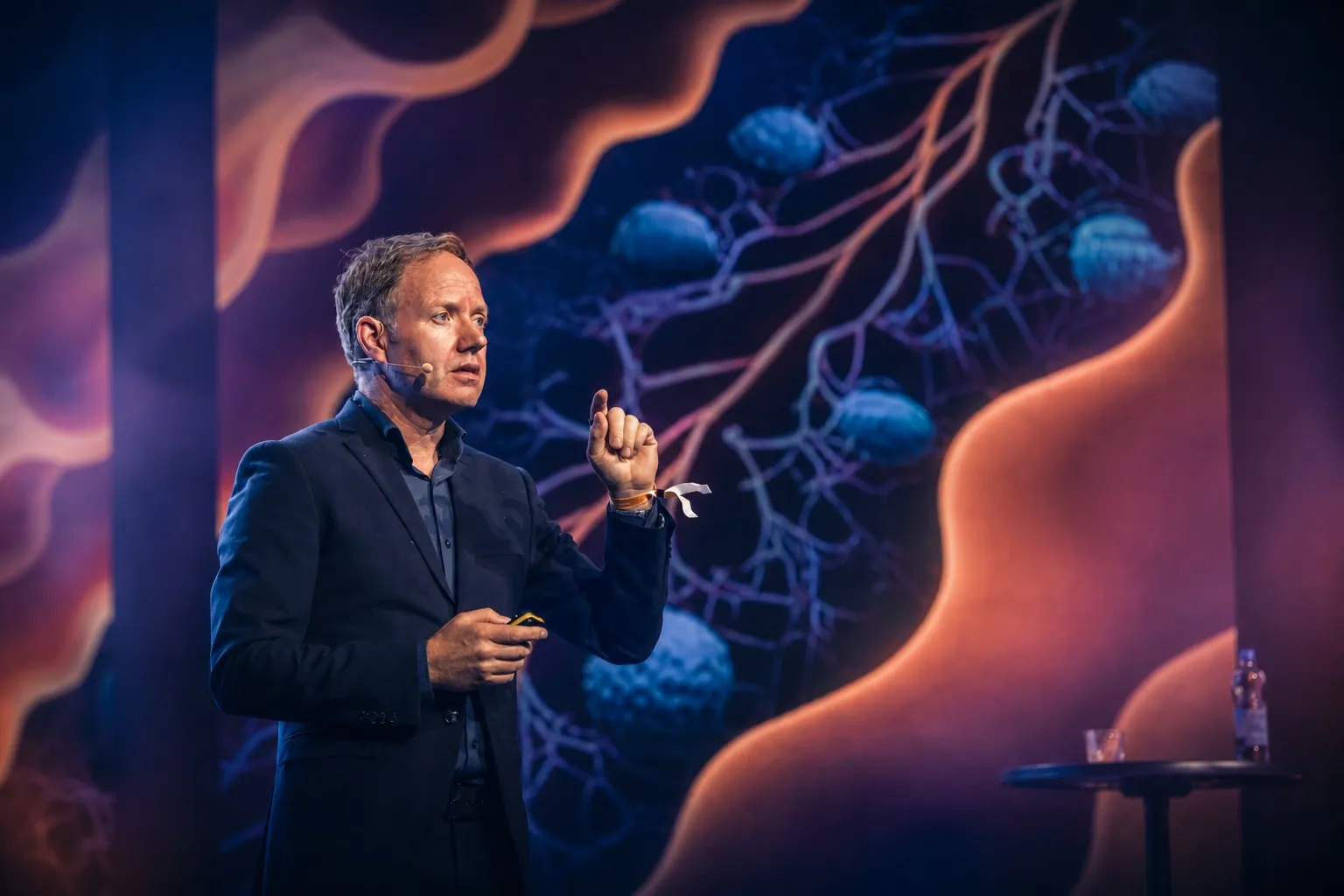
At The Biohacker Summit In Helsinki, Chris Moore Argued That The Future Of Health Would Depend Not Only On Data And Genetics, But On Whether People Were Willing To Turn Personal Optimisation Into A Shared Civic Project
In an era obsessed with longevity, Chris Moore arrived at the Biohacker Summit in Helsinki with a sharper, more unsettling proposition: living longer was no longer enough.
Speaking on 3 July 2024 at the two-day Biohacker Summit in Finland’s capital, Moore, the co-founder and chief executive of the Nordic Group, used his presentation, Biohacking: The Next Generation, to press a case that reached beyond supplements, trackers and self-experimentation. Health, he told the audience, was both intimate and public, both a private pursuit and a social duty.
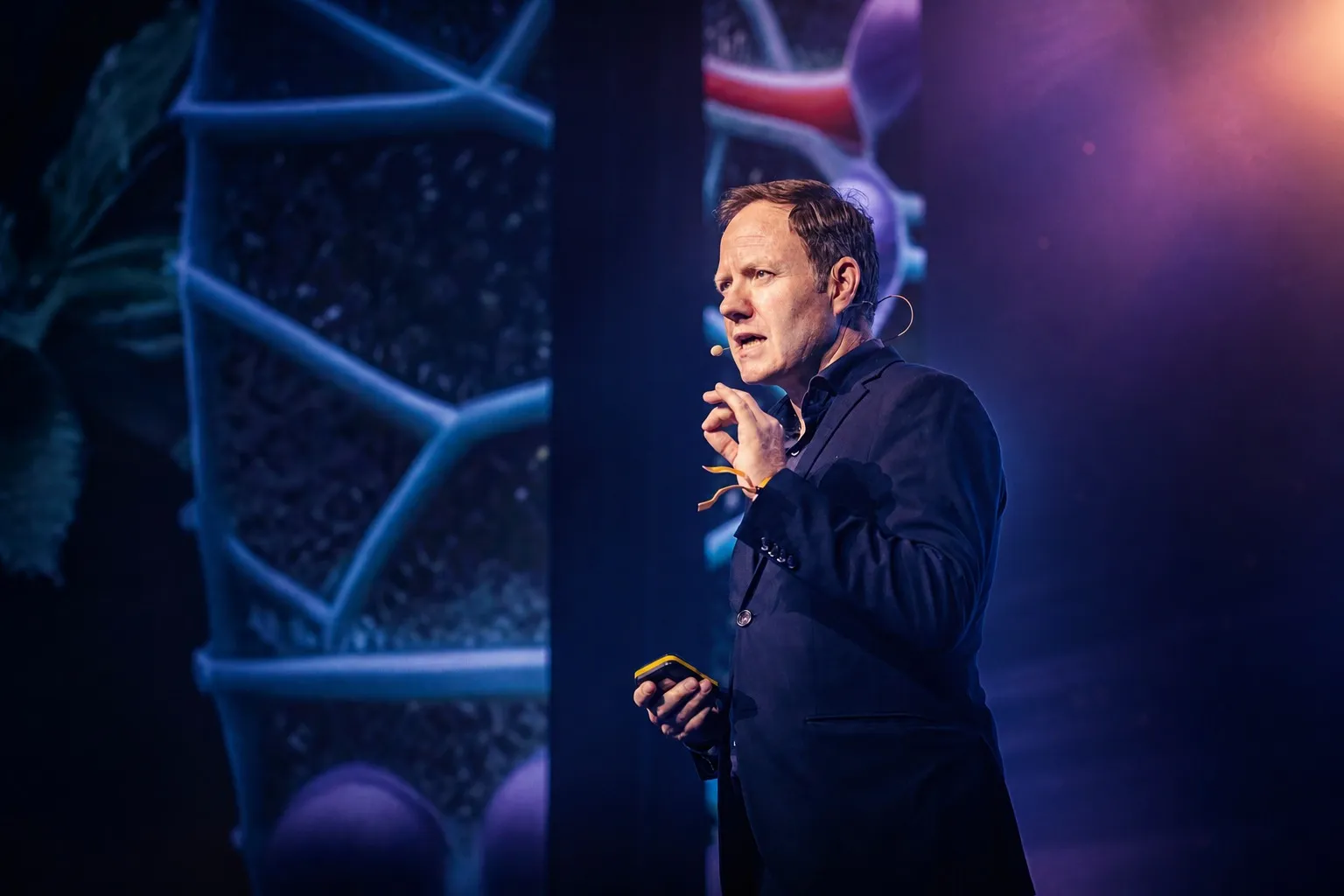
“Health is personal and it’s a social responsibility,” Moore said.
That sentence sat at the centre of his talk. Around it, he built a critique of modern healthcare, a warning about widening inequality, and a call for biohackers to become something more than early adopters of wellness technology. In Moore’s telling, they could become a tribe with a public purpose.
A Longer Life, But A Sicker One
Moore’s argument began with a paradox that has become one of the defining tensions of modern medicine. Scientific progress has extended lifespan, but not in equal measure healthspan. The result, he suggested, was a world in which people survived more, yet often lived longer with chronic disease.
He pointed to diabetes, heart disease, stroke and cancer as the now-familiar architecture of this burden, describing chronic illness not as a side effect of progress but as one of its most expensive consequences. The cost, he noted, was staggering: a global figure in the tens of trillions, and in the United States alone, roughly $1tn annually.
Behind the numbers was a moral challenge. Moore rejected the notion that healthcare systems alone could carry the future.
“We have a responsibility to be well, if we can,” he said.
This was not a plea for austerity or withdrawal of care. It was an insistence that passive medicine would not solve an active crisis. As treatment costs rise and access narrows, he warned, the world risks drifting into “a two-tier healthcare system”, where those with means buy optimisation and prevention, while others are left with belated intervention.
The Warning Signs Were Already Visible In Childhood
If the first half of Moore’s speech was a diagnosis of systemic failure, the second turned to its earliest origins.
He drew attention to deteriorating child health, citing evidence that newer generations were already entering life with worse prospects. Children’s dietary health, he argued, had not been treated with the seriousness it required. The consequences were visible in rising obesity and type 2 diabetes, and, more alarmingly, in developmental setbacks that should have been politically intolerable.
For Moore, the scandal was not only that health systems were struggling to manage chronic disease in adults. It was that societies were failing much earlier, during the foundational window in which lifelong health is shaped.
“The first thousand days of life,” from conception to age two, he argued, are decisive. During that period, stress, poor nutrition and unmanaged biological risk can alter the trajectory of a child’s development.
“Exposure to stresses or adversity during this period can result in a child’s development falling behind their peers,” he said.
The point was not rhetorical. It underpinned one of the strongest claims in his presentation: that health optimisation should begin not in middle age, after warning markers appear, but before birth.
Genetics, Preterm Birth, And The Politics Of Prevention
Moore made the case for early genetic testing with the fervour of someone who sees delay as a form of negligence. If prospective parents can identify genetic and phenotypic risks earlier, he argued, they stand a far better chance of improving outcomes for both mother and child.
He highlighted the “grow baby” programme as a practical example of what targeted intervention could achieve. In the cohort he described, preterm birth rates fell dramatically, from 11% to 1%. The figures were presented not merely as a clinical success, but as proof that prevention, if applied early and intelligently, can outperform systems built around expensive rescue.
He extended that logic to newborns, arguing that genetic testing should happen at the beginning of life, not years later when conditions have already emerged.
“Get data on yourselves that work to your benefit, so that you can see challenges occurring much earlier than they do,” Moore said.
It was a line aimed at adults, but it carried the force of his larger philosophy: the earlier the insight, the greater the chance of altering the outcome.
The Biohacker As Citizen
Moore’s most compelling move was to redefine biohacking itself.
Too often caricatured as a niche pursuit for affluent obsessives, biohacking in his framework became a discipline of attention: identifying genetic predispositions, measuring biomarkers over time, and adjusting behaviour in response to evidence. The key word was longitudinal. One test, one wearable, one moment of enthusiasm would not do. Health had to be monitored as a living process.
He urged the audience to go beyond snapshots and build a durable picture of themselves through genetic data, microbiome analysis, biochemical markers and digital tracking. This was not just self-knowledge for its own sake. It was a method for anticipating breakdown before it became illness.
Moore also suggested that the biohacking community may already be composed of people especially inclined towards this vigilance. Referring to data from the Nordic biohacker experiment, he noted a higher prevalence of the COMT AA genotype, often described as the “worrier” profile, among biohackers. That genotype may be associated with anxiety, but also with sharper memory and heightened awareness of risk.
In other words, the very people drawn to biohacking may be those least willing to wait for disease to announce itself.
From Self-Experiment To Shared Knowledge
Yet Moore’s talk was never simply an advertisement for more testing. Its deeper message was communal.
He repeatedly returned to the idea that individual optimisation, on its own, was insufficient. The real value of biohacking lay in what people could learn together, compare together and teach one another. Data became more powerful when pooled with experience. Insight became more democratic when discussed openly.
That is why his appeal to the audience at the Biohacker Summit carried an unusual political edge. He was asking people not only to measure themselves, but to help build a culture in which health knowledge circulates beyond elite circles and into wider society.
The challenge, as he framed it, was urgent. If prevention remains the privilege of the informed and the wealthy, healthcare’s future will harden into division. If, however, communities organise around shared learning, then the tools of personal optimisation might begin to serve a broader public good.
A Call To Join The Experiment
By the close of Biohacking: The Next Generation, Moore had moved from diagnosis to invitation.
He called on attendees to participate in biohacking experiments, to collect meaningful data, to understand their genetics, and to share what they learn. The purpose, he stressed, was not abstract science for its own sake, but practical, collective improvement.
There was a certain audacity in the appeal, and also a note of realism. Governments, he implied, were moving too slowly. Public health systems were reactive. The burden of change would fall first on communities willing to act before institutions caught up.
That may be the most revealing idea Moore offered in Helsinki. The next generation of biohacking, as he saw it, would not be defined by exotic gadgets or vanity metrics. It would be defined by whether people could transform self-tracking into solidarity, and private knowledge into common health.
For a movement often associated with individual control, it was an unexpectedly civic vision. And in a world growing older, sicker and more unequal, it sounded less like a lifestyle trend than a warning.
Frequently asked questions
Why does Chris Moore say living longer is not enough?
Because scientific progress has extended lifespan without extending healthspan to the same degree. The result, he argued at the Helsinki summit, is a world where people survive more but often live longer with chronic disease, naming diabetes, heart disease, stroke and cancer as the familiar architecture of that burden.
What worries him about children's health?
Moore cited evidence that newer generations are already entering life with worse prospects, and argued that children's dietary health has not been treated with the seriousness it requires. The consequences show up in rising obesity and type 2 diabetes.
What is his case for early genetic testing?
That delay is a form of negligence. If prospective parents can identify genetic and phenotypic risks earlier, Moore argued, they stand a far better chance of improving outcomes for both mother and child, and he pointed to the grow baby programme as an example of targeted intervention.
About the event
This recap is part of the Biohacker Summit 2024 Helsinki series, recorded in Helsinki on 2 and 3 July 2024. Read the summary of the whole event or join the next edition, HOLOLIFE Summit 2026 Amsterdam, on 14 and 15 November 2026.
In this story
Comments
Loading comments…