Biohacker Summit 2024 Helsinki
Taming The Lightning: Attila Mosó’s Case For Ion-Induction Therapy
By Teemu Arina · · Updated
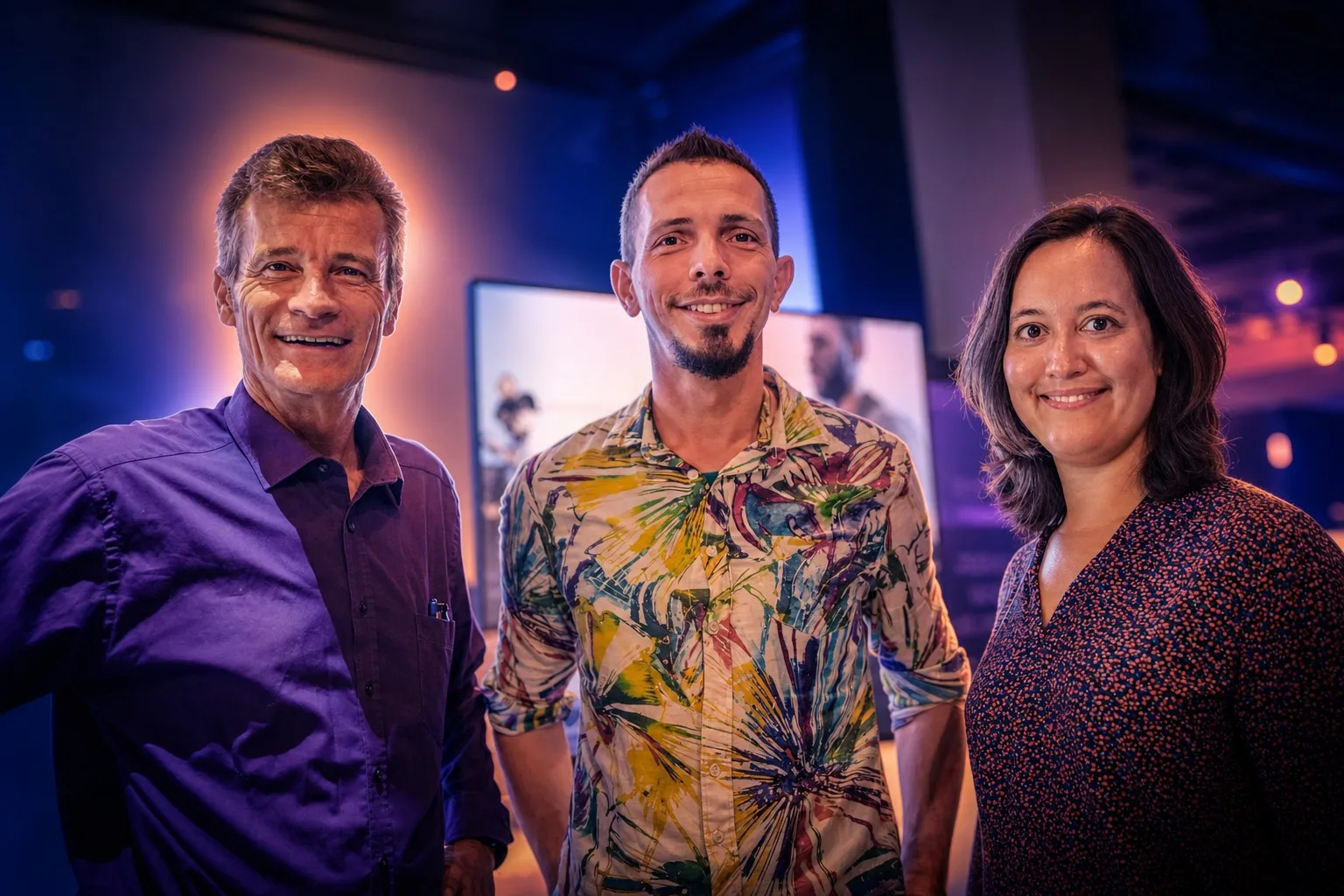
At the Biohacker Summit in Helsinki, Attila Mosó argued that ion-induction therapy could harness lightning-like pulses to support recovery, reduce inflammation and restore the body’s cellular rhythm.
A Therapy Framed As Modern Biohacking’s Missing Link
On Wednesday, 3 July 2024, at the Biohacker Summit in Helsinki, Finland, Attila Mosó took the stage with a proposition that sounded at once futuristic and elemental: what if the body could be nudged back toward health through controlled bursts of energy inspired by lightning itself?
Mosó, a nutrigenomics expert with a background in human kinesiology and nutritional science, presented “Maximizing Biohacking With Ion-Induction-Therapy” as both a technical explanation and a broader philosophical appeal. His message was not merely about a device. It was about the increasingly urgent search for equilibrium in an age of overstimulation, chronic inflammation and exhausted biology.
“Find yourself and find your place on the planet,” Mosó said, setting the tone for a talk that placed advanced therapy alongside a familiar biohacker refrain: technology should serve human resilience, not erode it.
The Central Claim: Controlled Pulses, Cellular Effects
At the heart of Mosó’s presentation was ion-induction therapy, a method he described as rooted in research dating back to the late 1970s but only recently receiving wider attention. The treatment, he said, uses short, high-energy pulses to influence the cell membrane, helping restore membrane potential and support more efficient cellular exchange.
The mechanism, as described during the talk, depended on brevity and intensity. Mosó said these pulses, lasting mere nanoseconds, created an oscillating effect on the membrane, “like a massage to the cell membrane”, encouraging it to return to a more stable and functional state.
From that cellular premise flowed the larger promise. If membrane function improved, he argued, then nutrient transport, waste removal and energy production could improve with it. Mitochondria, the tiny engines of the cell, were presented as a key target. Enhanced mitochondrial activity, he suggested, could help reduce inflammation, boost energy and improve recovery across the body.
From Sports Rehab To Post-Covid Fatigue
Mosó situated the therapy within a wide and increasingly familiar map of modern ailments. He said ion-induction therapy had originally been developed for sports rehabilitation, where rapid recovery can determine whether an athlete returns to movement or drops out of a hard-won routine. But he also cast it as relevant far beyond elite performance.
Chronic inflammation featured prominently in his argument. Inflammation, he noted, is not inherently harmful. It is part of the body’s healing response. The problem comes when it lingers, smouldering at a low level and contributing to a range of modern conditions, from metabolic dysfunction to persistent fatigue.
That framing opened onto one of the presentation’s most compelling applications: post-Covid symptoms. Mosó said emerging observations suggested the therapy may help reduce fatigue, brain fog and lingering weakness associated with long Covid, though he acknowledged that the exact causes of those symptoms remained uncertain and that more study was needed.
What he offered was not certainty, but possibility. In a wellness landscape often crowded by grand promises, that note of caution mattered.
Pain As Messenger, Not Enemy
If there was a moral centre to Mosó’s presentation, it lay in his insistence that pain should not be ignored. His remarks here were among the clearest and most grounded of the session.
“Pain is a signal to you from the body that something is not right,” he said.
It was a simple line, but one that cut through the jargon. Too often, especially in sport and high-performance culture, pain is treated as an inconvenience to be overridden. Mosó argued the opposite: compensation patterns caused by untreated pain can distort movement, create new injuries and deepen dysfunction over time.
In that sense, ion-induction therapy was presented not as a miracle intervention but as a means of helping the body return to movement without forcing it through breakdown.
The Broader Vision: No Standalone Fixes
Mosó’s strongest point may have been his resistance to reductionism. For all the technical detail around voltage, pulse duration and membrane potential, he repeatedly returned to a larger principle: health does not respond well to isolated solutions.
“Standalone things don’t work with our body. We have to connect everything with everything,” he said.
That statement placed the therapy within a broader lifestyle framework. Nutrition, recovery, physical activity, stress regulation and the rhythms of daily living were not secondary concerns in his telling. They were the conditions that determined whether any intervention would last.
He also acknowledged practical limitations. The therapy, he said, was not suitable for people with electronic implants such as pacemakers or insulin pumps, because the energy could interfere with those devices. Pregnancy and other sensitive conditions also required caution.
A Biohacking Culture Searching For Coherence
There was something revealing in the way Mosó spoke at the Biohacker Summit. His was not the language of total reinvention, but of restoration. The body, in this account, was not a machine to be endlessly upgraded. It was a system asking to be stabilised, re-energised and brought back into coherence.
“The whole idea is how to tame the lightning in order to serve us and help us to improve health and stay in the movement,” he said.
It was, perhaps, an apt metaphor for the wider biohacking moment. In a world flooded with information, stimulation and stress, the challenge is not simply to chase the newest intervention. It is to find methods that help the body endure the age we have built.
Mosó’s presentation did not claim that ion-induction therapy could do everything. In fact, his talk was most persuasive when it admitted that it could not. But as a case for one emerging tool in the recovery and inflammation space, it landed with a certain force: disciplined, systemic and alert to the truth that health rarely yields to a single fix.
What Attendees Were Left With
By the end of the session, the takeaway was clear. Ion-induction therapy, as presented by Attila Mosó at the Biohacker Summit, was offered as a high-energy, short-pulse intervention aimed at improving cell membrane activity, supporting mitochondrial function and reducing inflammation. Its proposed uses ranged from sports rehabilitation and pain management to chronic inflammatory conditions and post-Covid recovery.
Yet the deeper lesson was less about the machine than the mindset. Habits matter. Recovery matters. Context matters. As Mosó reminded the Helsinki audience, “Building habits is one of the hardest things about lifestyle changes.”
That may have been the most grounded biohacking insight of all.
Frequently asked questions
What is ion-induction therapy?
A method Attila Mosó described as rooted in research dating back to the late 1970s but only recently receiving wider attention. It uses short, high-energy pulses to influence the cell membrane, helping restore membrane potential and support more efficient cellular exchange.
What conditions did he say it addresses?
Originally developed for sports rehabilitation, where rapid recovery decides whether an athlete returns to movement, Mosó also cast it as relevant to chronic inflammation and post-covid fatigue, placing it on a wide map of modern ailments rather than elite performance alone.
How does he think about pain?
As information rather than an enemy. Pain is a signal to you from the body that something is not right, he told the Helsinki audience, and his broader point was that no single therapy works as a standalone fix.
About the event
This recap is part of the Biohacker Summit 2024 Helsinki series, recorded in Helsinki on 2 and 3 July 2024. Read the summary of the whole event or join the next edition, HOLOLIFE Summit 2026 Amsterdam, on 14 and 15 November 2026.
In this story
Comments
Loading comments…