Biohacker Summit 2024 Helsinki
Stem Cells Took Centre Stage As Christian Drapeau Made A Sweeping Case For The Body’s Hidden Repair System
By Teemu Arina · · Updated

At Biohacker Summit In Helsinki, The Stem Cell Scientist Framed Ageing Not As An Inevitable Slide, But As A Failure Of Repair
At the Biohacker Summit in Helsinki, Finland, on Wednesday, 3 July 2024, Christian Drapeau delivered a talk with an arresting promise in its title: Stem Cells - The Secret to Health & Longevity. What followed was part lecture, part manifesto, and part provocation, as Drapeau argued that stem cells should be understood not primarily as an exotic clinical intervention, but as the body’s own built-in repair machinery.
Drapeau, founder and chief science officer of STEMREGEN® and a researcher with a background in neurophysiology, presented a vision of human health organised around one central idea: “Just like you have an immune system, you have a repair system.”
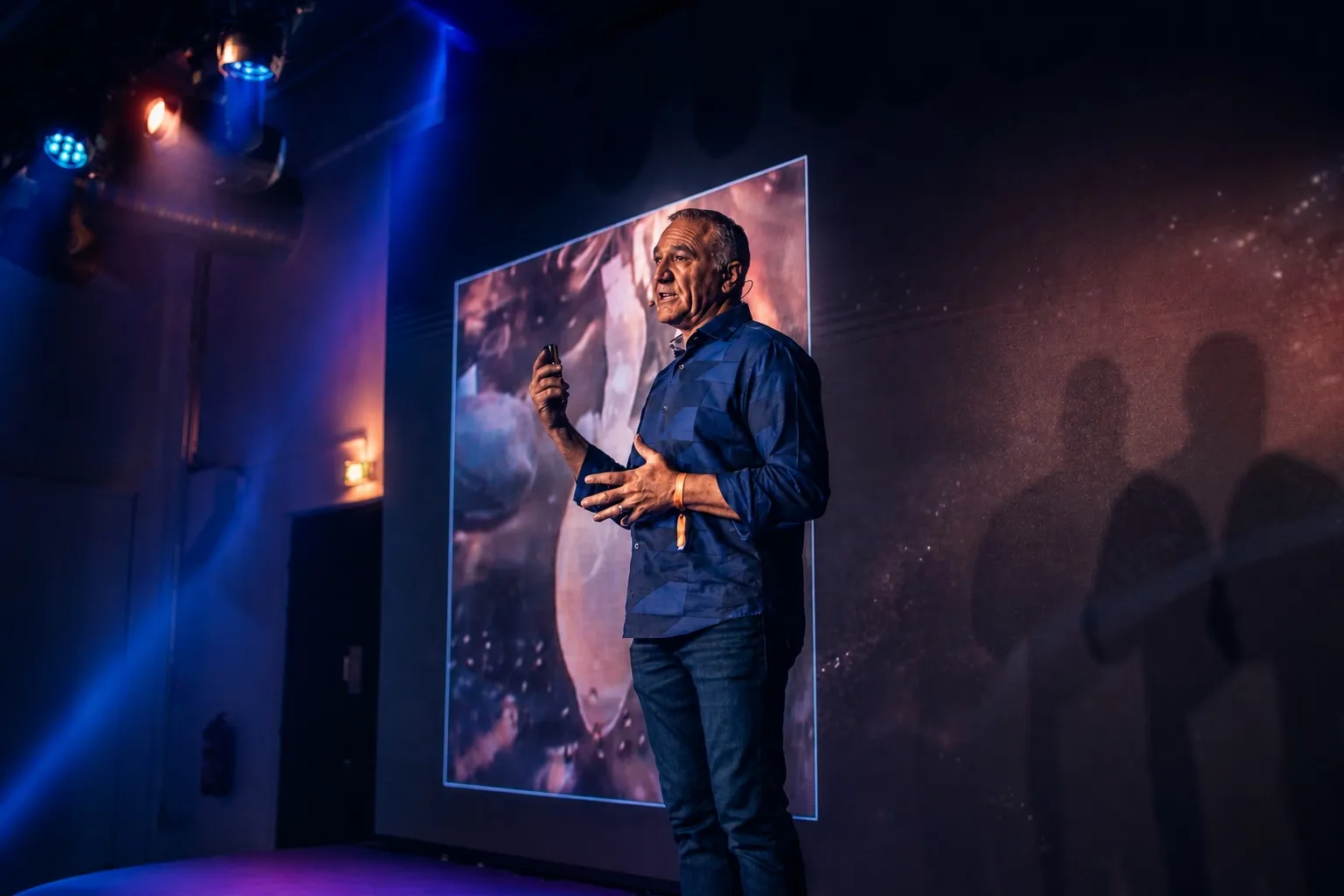
It was the kind of framing designed to shift an audience’s mental map. Stem cells, he insisted, were not merely something extracted, processed and reinfused in specialist clinics. The more important stem cells, he said, were already inside us, lodged in bone marrow, blood and fat tissue, waiting to be mobilised.
A Grand Claim For A Field Still Fighting To Be Understood
Drapeau’s rhetoric was expansive, even evangelical at times. “Stem cells and the role of stem cells in your body are definitely one of the greatest discoveries in the whole world of medicine and probably the greatest discovery that you will experience in your lifetime,” he told the audience.
His argument rested on a simple but far-reaching proposition: the body constantly sustains wear, tear and cellular loss, and stem cells function as the force that helps repair that damage. Injury, he said, triggers chemical signals that reach the bone marrow, prompting stem cells to enter circulation. Those cells then home in on damaged tissue, migrate into it, multiply and differentiate into the cells needed for repair.
From broken bones to heart attacks, from burns to tissue degeneration, Drapeau described this as a universal physiological process, one that science had identified but society had not yet fully absorbed.
To explain the lag between discovery and acceptance, he reached for medical history, citing the long delay before hand washing became standard practice in hospitals. Scientific truth, he suggested, often arrives long before institutions or public imagination are ready to accommodate it.
Ageing, In His Account, Was The Story Of A Shrinking Reserve
The most striking thread in the presentation was Drapeau’s account of ageing itself. He argued that age-related decline was driven in large part by a drop in circulating stem cells. In youth, the body can keep pace with cellular loss. Later, as that stem cell supply diminishes, repair falls behind degeneration.
His metaphor was memorable. “Think of it as a bucket,” he said. “You’re born with a bucket full of water. There’s a hole at the bottom and you’re losing water. If you have a hose to fill that bucket, you don’t care, it doesn’t matter, you have plenty of water.”
In this telling, chronic disease emerges when the refill system can no longer match the leak. Diabetes, heart disease, emphysema, neurodegeneration and other conditions of later life were presented not as isolated failures, but as different expressions of the same underlying deficit in repair capacity.
“Your stem cells are your repair system,” he said.
The Evidence He Offered Ranged From Heart Tissue To Cognitive Decline
Drapeau moved quickly through a series of studies, largely from preclinical research, to support his case that increased stem cell mobilisation could improve outcomes across multiple organs.
He described experiments in heart injury, where animals given compounds that stimulated stem cell release showed markedly better survival, less scar tissue and improved cardiac function. In diabetes research, he pointed to evidence that stem cells could migrate to the pancreas and become insulin-producing cells, and cited a small human study in which recently diagnosed patients experienced periods of insulin independence after stem cell mobilisation.
In emphysema models, he said, increased stem cell circulation was associated with reconstruction of damaged lung structures. In Alzheimer’s-related mouse models, he described findings in which animals showed improved learning and behaviour after mobilisation of their own stem cells.
The through line was always the same. “More stem cells in circulation means that you can repair better,” Drapeau said. “And then if you can put more stem cells every day, you’ll keep the health that you have today for years to come.”
Plants, Bioactives And The Promise Of Natural Mobilisation
If the first half of the talk built the biological argument, the second half turned toward Drapeau’s long-running search for plant compounds that might stimulate stem cell release naturally.
He traced that journey back to the mid-1990s, when he began studying AFA, a blue-green algae from Klamath Lake, after reports that it supported inflammation control, immunity and mental clarity. That line of inquiry, he said, led him to suspect that some plants might activate the body’s repair system in the same way others affect the immune system.
From there, he described research into Allomecroclada in Madagascar and Sea Buckthorn Berry, long used in Chinese, Mongolian and Tibetan traditions. According to Drapeau, these natural compounds became central to a supplement strategy aimed at increasing circulating stem cells within hours of consumption.
He also presented early data and case material linked to products developed through his company, including findings in chronic congestive heart failure, Parkinson’s symptoms and wound healing. The message was clear: if the body’s repair system could be activated consistently, then healthspan might be extended and functional decline delayed.
Between Scientific Possibility And Commercial Promise
There was no mistaking the ambition of the presentation, nor the commercial context that shadowed it. Drapeau’s credentials are substantial, with more than three decades in medical research and two decades focused on stem cells. Yet his talk also moved fluidly between scientific literature, sweeping interpretations of ageing, and promotion of stem cell supplements.
That duality is now familiar in the broader biohacking world, where frontier biology often shares the stage with wellness entrepreneurship. At Biohacker Summit, the appetite for such ideas was plainly strong. Drapeau’s presentation spoke directly to a modern audience drawn to longevity, self-optimisation and the hope that ageing can be slowed, redirected or even partially reversed.
Still, the emotional power of the talk lay less in product claims than in the larger promise behind them: that the body may contain greater regenerative intelligence than conventional medicine has yet fully embraced.
A Vision Of Medicine Reoriented Around Repair
By the close, Drapeau returned to the point he had made from the start. Medicine, he suggested, has become adept at managing damage but less skilled at amplifying repair. Stem cells, in his account, offered a way to rethink that imbalance.
“When it all sinks in,” he said, “nobody will have a problem without thinking, let’s tap into my stem cells.”
It was a bold conclusion, delivered at a summit built for bold conclusions. Whether all of Drapeau’s claims will withstand the scrutiny that inevitably follows such sweeping visions is a separate question. But in Helsinki, at least, he made a forceful case that the future of longevity may depend not only on fighting disease, but on understanding, preserving and mobilising the body’s own capacity to heal.
Frequently asked questions
How does Christian Drapeau define stem cells?
Not primarily as an exotic clinical intervention, but as the body's own built-in repair machinery. The body constantly sustains wear, tear and cellular loss, he argued, and stem cells are the system that keeps pace with it.
What is the bucket metaphor?
Drapeau's image for ageing as a shrinking reserve. Think of it as a bucket, he said: you are born with a bucket full of water and there is a hole in it. In youth the body keeps pace with cellular loss; later, as the stem cell supply diminishes, repair falls behind degeneration.
What evidence did he present?
Largely preclinical research across several organs. He described heart injury experiments in which animals given compounds that stimulated stem cell release showed markedly better survival, less scar tissue and improved cardiac function, and pointed to diabetes research alongside it.
About the event
This recap is part of the Biohacker Summit 2024 Helsinki series, recorded in Helsinki on 2 and 3 July 2024. Read the summary of the whole event or join the next edition, HOLOLIFE Summit 2026 Amsterdam, on 14 and 15 November 2026.
In this story

Comments
Loading comments…