Biohacker Summit 2024 Helsinki
Glucosis vs Ketosis: The Ultimate Biohack
By Teemu Arina · · Updated

At Biohacker Summit in Helsinki, Dorian Greenow argued that nutritional ketosis offered a steadier, more resilient metabolic path than the glucose-driven modern diet.
Speaking on 3 July 2024 at Biohacker Summit in Helsinki, Finland, Dorian Greenow delivered a forceful and deeply personal presentation titled Glucosis vs Ketosis: The Ultimate Biohack, framing ketosis not as a fad but as a return to metabolic design.
Greenow, founder and president of Keto-Mojo and co-founder of the Ketogenic Foundation, drew on both lived experience and scientific literature to make his case. After losing 50 pounds and reversing multiple metabolic conditions, he had built a career around advancing ketogenic education and access to testing tools. On stage, that mission came through clearly.
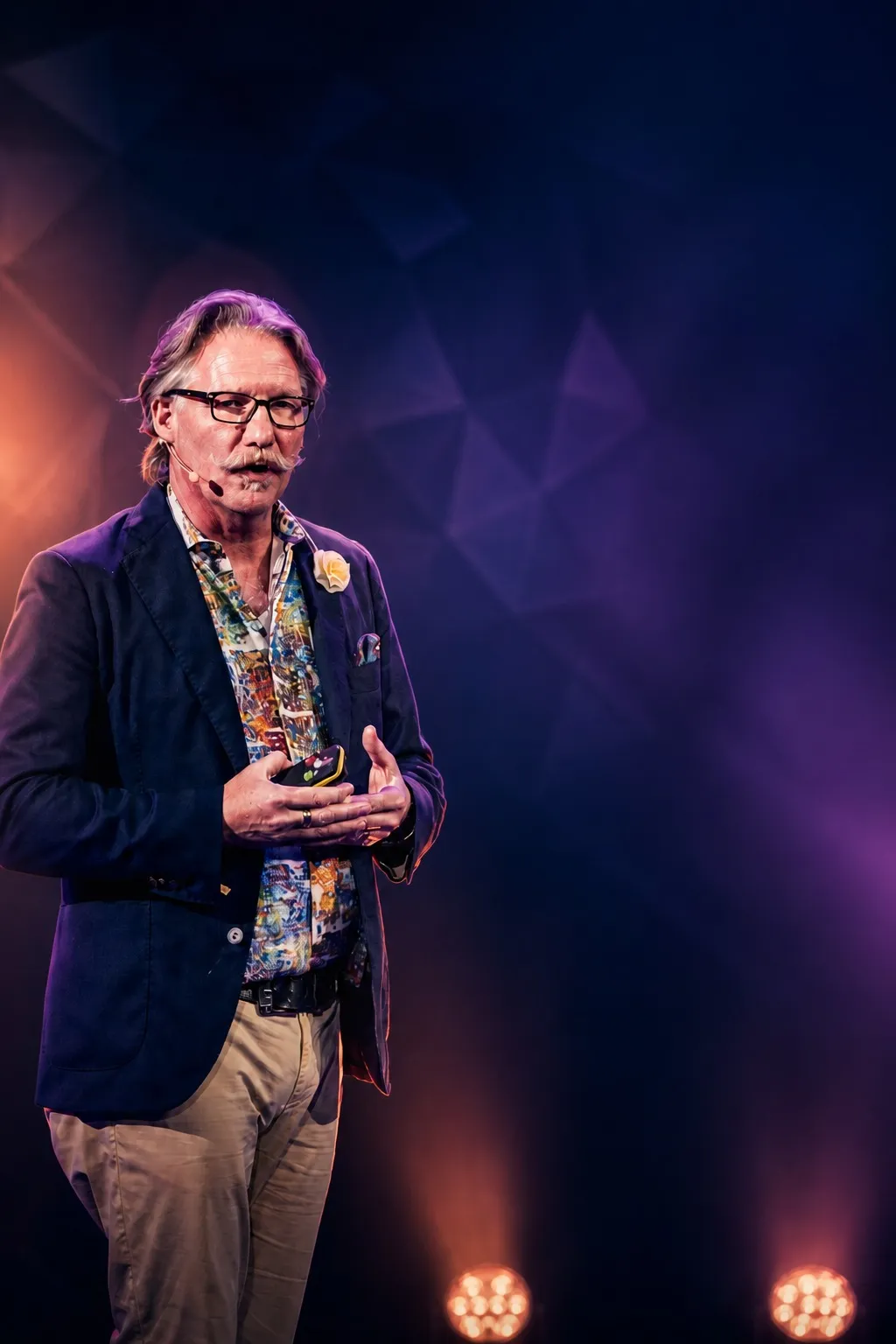
His central argument was simple: the modern carbohydrate-heavy diet had locked much of the population into a cycle of glucose spikes, insulin surges, fat storage and chronic illness, while nutritional ketosis offered a more stable and flexible alternative. In Greenow’s telling, ketones were not merely backup fuel. They were metabolic messengers, regulators and, in his memorable phrase, “a force multiplier.”
He urged the audience to start with humility. Food, he said, was never just food. It was culture, politics, ethics, economics and identity. “Be curious,” Greenow told the room, inviting listeners to challenge him, interrogate their own assumptions and do their own research. That appeal to curiosity gave the talk a broader shape than a straightforward dietary manifesto. It became, instead, an argument about agency.
From there, he mapped the contrast between what he called “glucosis” and ketosis. In a carbohydrate-fed state, he said, the body rides a rollercoaster of rising and falling blood sugar, with insulin repeatedly secreted to manage the load. In ketosis, by contrast, glucose remains comparatively stable, insulin stays lower, stored fat becomes accessible, and the body can draw on both glucose and ketones as fuel.
Greenow was especially sharp in his criticism of the standard American diet, describing it as a failed public-health experiment. He pointed to rising obesity, type 2 diabetes, mental health disorders and other non-communicable diseases as evidence that official dietary orthodoxy had not delivered on its promises. The problem, he suggested, was not only excess calories but chronic hyperinsulinemia, a near-constant state of elevated insulin driven by frequent carbohydrate consumption.
The talk ranged widely, moving from biochemistry to evolutionary history, from fetal development to elite sport. Greenow argued that ketones played a natural role throughout human life, including in pregnancy, infancy and fasting states, and suggested that this long biological inheritance challenged the idea that ketosis was somehow extreme or unnatural.
Mental health was one of the most striking themes. Greenow highlighted research suggesting that well-regulated ketogenic diets had produced meaningful improvements in conditions such as bipolar disorder, major depression and schizophrenia. For him, this was among the strongest signs that ketosis reached beyond weight loss or body composition and into the workings of the brain itself.
He also made the case for athletes, particularly endurance performers, arguing that fat adaptation allowed access to the body’s vast energy reserves and supported prolonged output without the volatility of sugar dependence. In this framing, ketosis was less a restriction than an expansion of metabolic capacity.
Questions from the audience pushed the discussion into practical territory, including women’s health, fasting, fiber, detox protocols and athletic performance. Greenow answered with a mix of conviction and caveat, at times recommending other experts, at times stressing individual experimentation. Even when he was most emphatic, he returned to the same refrain: test, observe, stay curious.
By the end, the message had crystallised into something larger than a nutritional prescription. Every meal, Greenow said, was a vote. Every choice was an intervention. “You have the choice, every single time, any single moment of the day, to make the change within your life.”
At Biohacker Summit, Dorian Greenow’s talk was not simply about ketones. It was about reclaiming metabolic control in a culture that had, in his view, lost sight of what nourishment was for.
Frequently asked questions
What is Dorian Greenow's argument for ketosis?
That nutritional ketosis offers a steadier, more resilient metabolic path than the glucose-driven modern diet. Speaking on 3 July 2024 at the Helsinki summit, he framed ketosis not as a fad but as a return to metabolic design.
Why does he call it the ultimate biohack?
Because in his framing it changes the fuel the whole system runs on rather than adding another intervention on top. The presentation was forceful and deeply personal, drawing on his own experience as much as the research he cited.
Where was this presented?
At the Biohacker Summit in Helsinki, Finland, on 3 July 2024, in a session titled Glucosis vs Ketosis: The Ultimate Biohack. Greenow is the founder of Keto-Mojo and a recurring speaker on ketogenic metabolism at these events.
About the event
This recap is part of the Biohacker Summit 2024 Helsinki series, recorded in Helsinki on 2 and 3 July 2024. Read the summary of the whole event or join the next edition, HOLOLIFE Summit 2026 Amsterdam, on 14 and 15 November 2026.
In this story


Comments
Loading comments…