Biohacker Summit 2024 Helsinki
Rewriting the Aging Blueprint
By Teemu Arina · · Updated
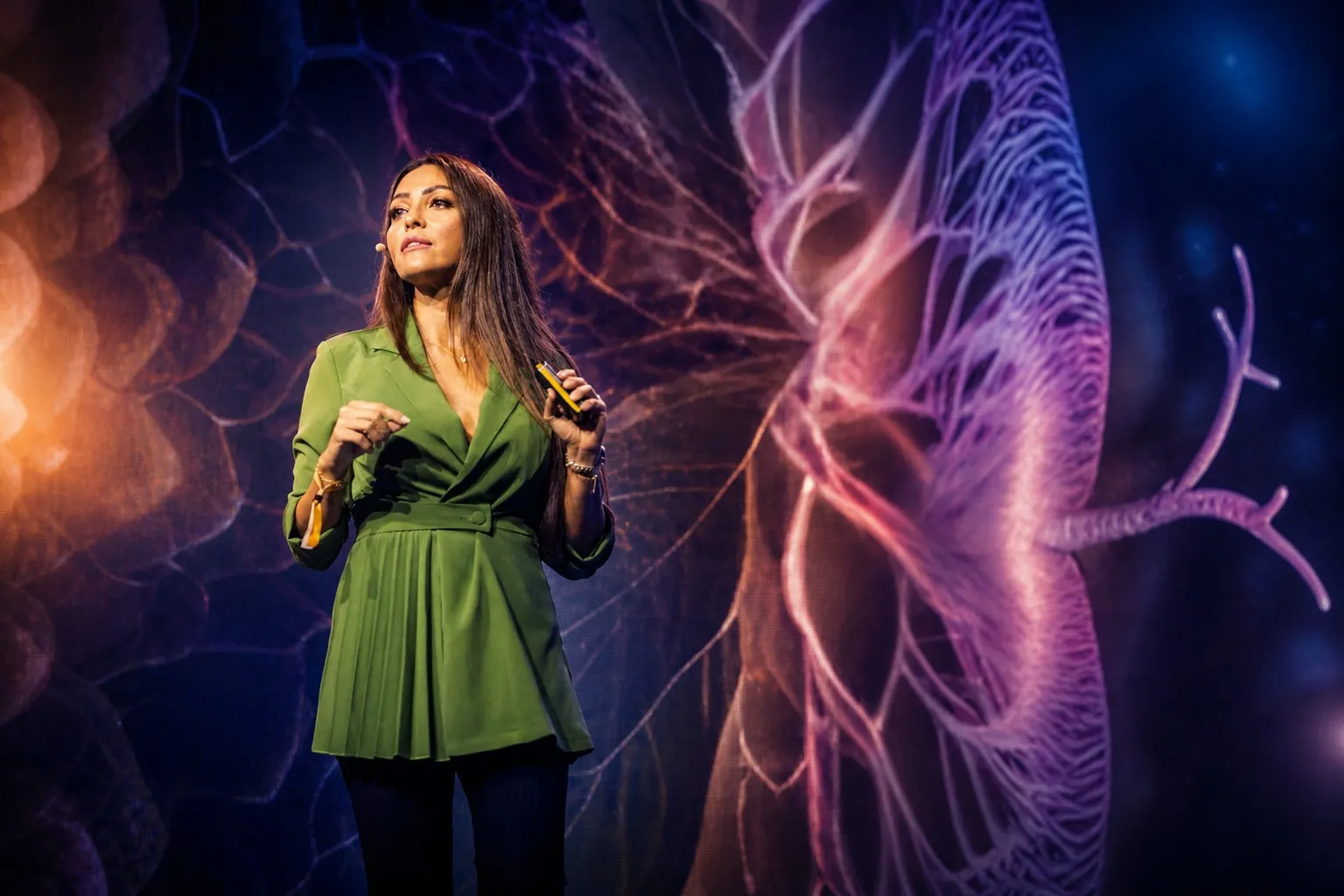
At The Biohacker Summit In Helsinki, Mary Cristine Framed Longevity As A Matter Of Biology, Discipline, And Imagination
On Wednesday, 3 July 2024, at the Biohacker Summit in Helsinki, wellness speaker Mary Cristine took to the stage with a proposition that has become the secular prayer of modern health culture: not merely to live longer, but to live younger for longer.
Her presentation, Rewriting the Aging Blueprint, moved restlessly across science, self-experimentation, inherited biology and personal reinvention. In Cristine’s telling, aging was neither fixed destiny nor cosmetic inconvenience. It was a system, one that could be studied, influenced and, to a striking degree, rewritten.
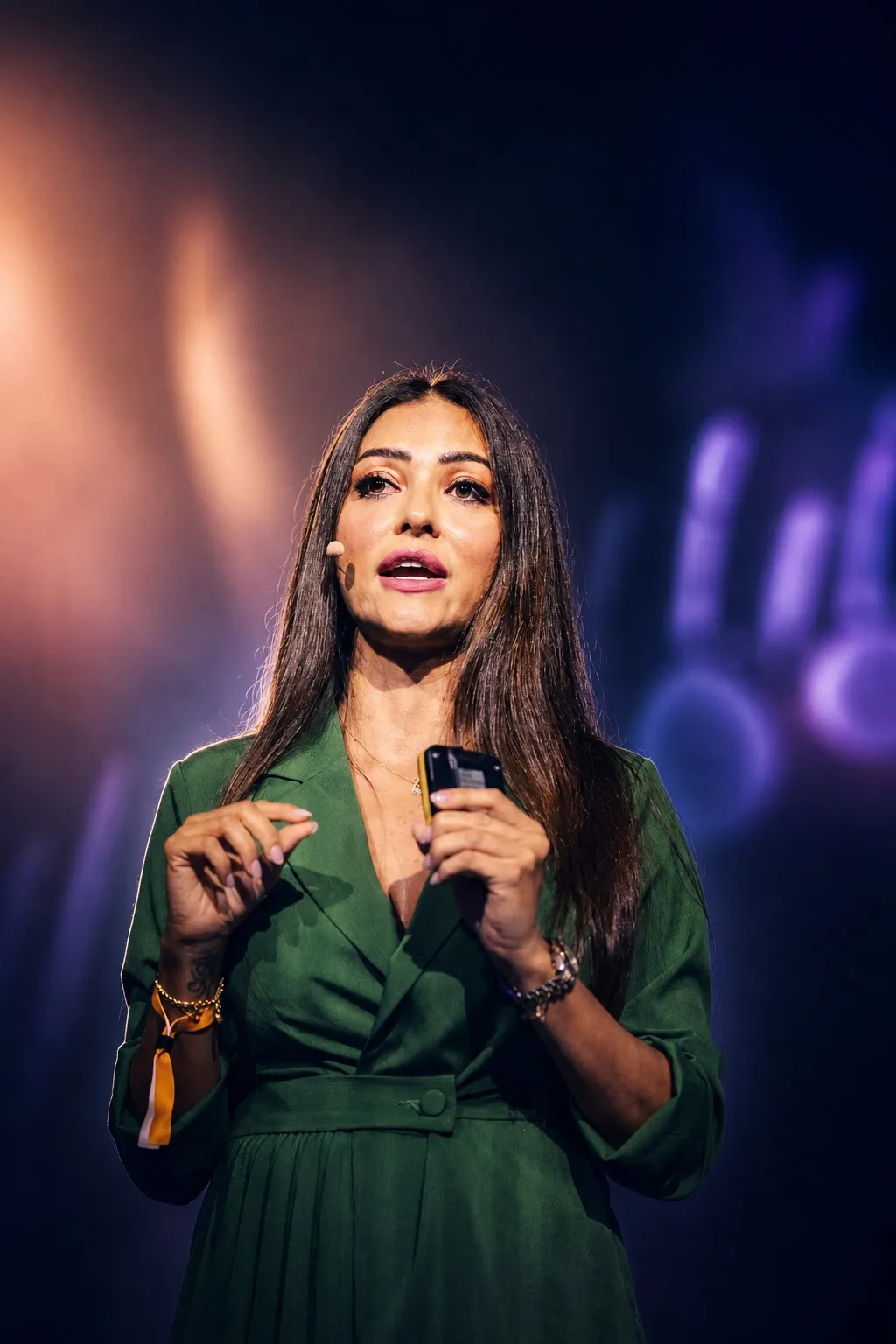
She began with a room already primed for the subject. “We’re all here at the biohack Summit because we’re here to basically find ways that we can live longer but also extend healthy human healthspan,” she said, distinguishing the quality of life from its mere duration.
The Shark Beneath The Ice
Cristine opened not with a laboratory but with the ocean. She spoke of free diving, a recent challenge she had set herself despite a fear of water, and used that experience to pivot into one of the talk’s most arresting images: the Greenland shark, an animal known for astonishing longevity.
The creature, she noted, can live for centuries. In her reading, its slow growth, efficient DNA repair and adaptation to extreme cold offer clues to the mechanics of delayed aging. “Imagine if only humans can also age that way,” she said.
It was a classic biohacker move, taking a marvel from nature and treating it as a provocation. The point was not that humans should become sharks, but that longevity is already written into life on Earth in wildly uneven ways. Aging, therefore, is not a single script. It is a set of biological possibilities.
Genetics, Skin, And The Geography Of Age
From there, Cristine turned to a more contentious and closely observed subject: why some populations appear to age differently from others. Drawing on her own mixed Asian and European heritage, she argued that Asians often age more slowly because of a combination of genetics, melanin levels, collagen structure, dietary patterns and lower glycation.
Her case was that skin aging and organ decline do not unfold uniformly across populations, and that part of the difference lies in both inherited traits and habits formed early in life. Fermented foods, hydration, stronger skin barriers and lower UV damage all featured heavily in her account.
Yet Cristine’s larger point was less about resignation to genetic fortune than about intervention. If biology gives some people an advantage, she argued, education and behavior can help narrow the gap. Nutrition, sun protection, supplementation and early prevention were presented not as vanity rituals, but as long-term tools of health preservation.
Beyond Fate, Into Epigenetics
The philosophical heart of the talk came when Cristine shifted from inherited traits to epigenetics, the idea that genes are not destiny and that environment and behavior help determine how those genes are expressed.
“We can break the generational curse,” she said, in one of the session’s most memorable lines.
In that sentence lay the emotional charge of the modern longevity movement. It is not only trying to delay wrinkles or improve blood markers. It is offering a language of release from family history, from predisposition, from the silent fatalism that has long accompanied illness and decline.
Cristine tied this idea to telomeres, the protective caps on chromosomes that have become one of anti-aging science’s most familiar symbols. She spoke about maintaining telomere length through interventions such as Astragalus root, as well as more experimental gene and peptide therapies. The science here remains a field of intense debate and ongoing research, but for Cristine it represented a frontier where molecular biology and personal agency begin to meet.
The Inner Life Of Longevity
If the first half of the presentation belonged to physiology, the second belonged to something less measurable but no less central to Cristine’s worldview: meaning.
She introduced the practice of the vision quest, a period of solitude in nature with only water, a tent and a notebook. The point, she suggested, was not deprivation for its own sake, but confrontation with the self stripped of distraction.
“The power of being able to sit with yourself and just your thoughts for an extended period of time, no food, only water, humbles you,” she said.
To illustrate the point, Cristine recounted the story of a woman she called Sally, a glamorous, wealthy former model whose life outwardly looked enviable but inwardly remained unstable and unhappy. After undertaking a vision quest, Cristine said, Sally experienced a profound shift in perspective, relationships and mental wellbeing.
Whether taken as anecdote, parable or prescription, the story revealed something essential about the presentation. Cristine was not describing longevity as a technical puzzle alone. She was describing it as a moral and psychological practice, a way of becoming equal to one’s own life.
Creating An Epic Life Story
In Cristine’s hands, anti-aging did not end at collagen, cold exposure or fermented foods. It widened into narrative. She urged the audience to write what she called a new “epic life story”, a one-page exercise in which each person imagines a hero, a villain, obstacles and, crucially, a transformed ending.
“I decided that I wanted to create a very epic life story,” she said, drawing directly from her own experience as a single mother and entrepreneur.
It was a revealing turn. In many wellness talks, self-optimization remains trapped in metrics: steps, glucose spikes, sleep scores, biological age. Cristine’s emphasis was different. The body mattered, certainly, but so did authorship. To age well, she implied, one must also live deliberately, with a coherent sense of purpose.
This was perhaps the presentation’s sharpest insight: that the fear of aging is not only fear of physical decline, but fear of an unlived life.
A Final Line That Lingeringly Landed
By the end, the session had become part lecture, part exhortation. Cristine asked audience members to stand, greet one another and embrace, a theatrical but sincere appeal to human connection amid all the molecular language.
Then came the closing line, elegant and cutting in its simplicity: “Nature gives you the face you have at 20, but it is up to you to merit the face you have at 50.”
It was less a slogan than a manifesto. At the Biohacker Summit in Helsinki, Mary Cristine presented aging as a dialogue between inheritance and action, science and soul, cells and story. Her argument was not merely that the body can be improved. It was that a longer life, to mean anything, must also become a deeper one.
Frequently asked questions
Why did Mary Cristine open with the Greenland shark?
She used free diving, a challenge she set herself despite a fear of water, to pivot to the Greenland shark, an animal that can live for centuries. Its slow growth, efficient DNA repair and adaptation to extreme cold offered her an image of longevity built into biology.
What is her argument about epigenetics?
That genes are not destiny and that environment and behavior help determine how those genes are expressed. We can break the generational curse, she said, in one of the session's most quoted lines, shifting the talk from inherited traits to what a person can still change.
What is a vision quest?
A period of solitude in nature that Cristine introduced in the second half of her talk, where the focus moved from physiology to meaning. Her broader claim was that longevity without purpose is an incomplete project, however good the biomarkers look.
About the event
This recap is part of the Biohacker Summit 2024 Helsinki series, recorded in Helsinki on 2 and 3 July 2024. Read the summary of the whole event or join the next edition, HOLOLIFE Summit 2026 Amsterdam, on 14 and 15 November 2026.
In this story

Comments
Loading comments…