Biohacker Summit 2024 Helsinki
The Youth Formula: Why Naveen Jain Said Purpose, Not Profit, Was The Real Longevity Hack
By Teemu Arina · · Updated
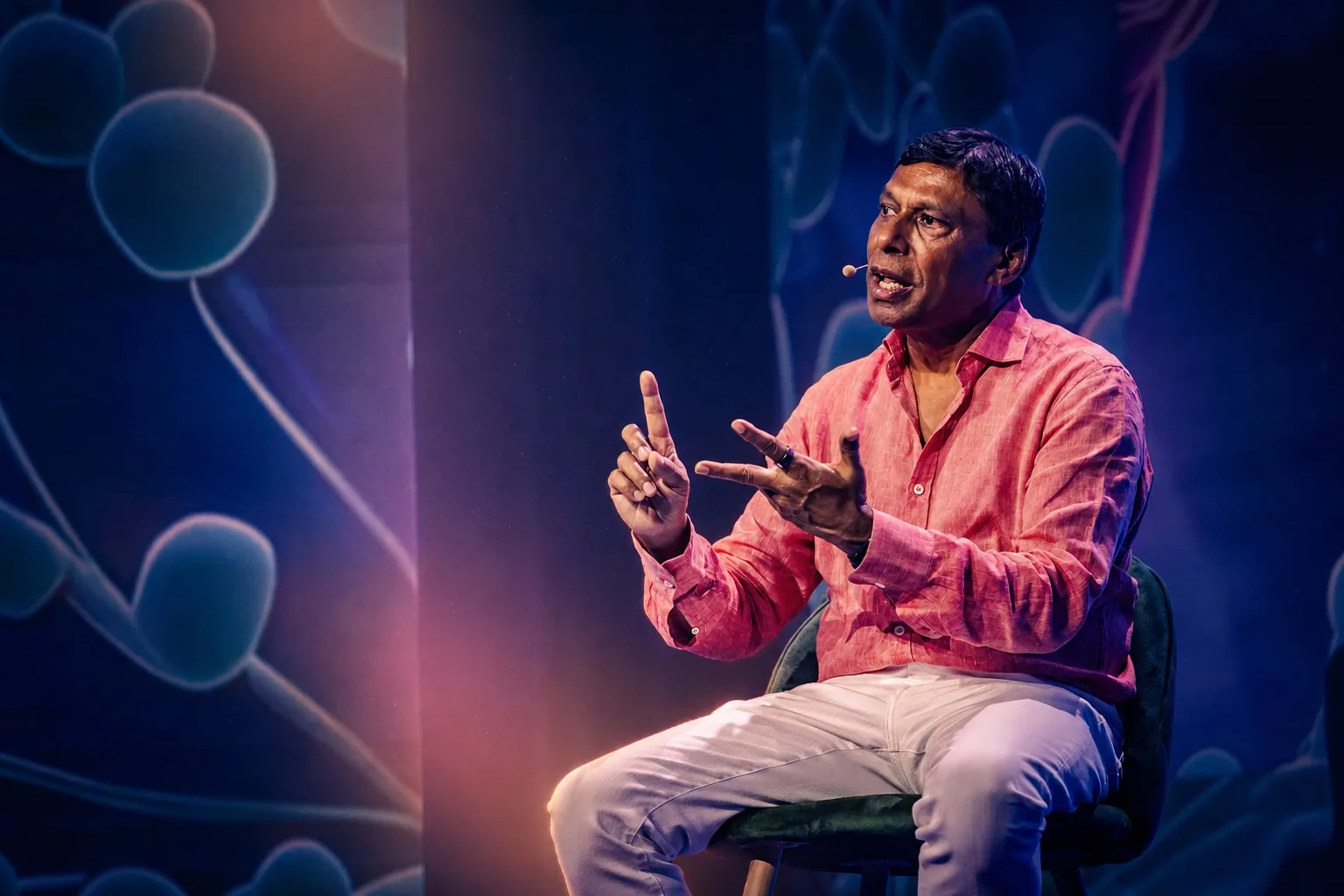
At Biohacker Summit In Helsinki, The Entrepreneur Framed Healthy Aging As A Matter Of Nutrition, Stress, Sleep, Exercise And, Above All, Meaning
On 3 July 2024 at the Biohacker Summit in Helsinki, Finland, Naveen Jain delivered a characteristically expansive talk titled The Youth Formula: Imagine a World Where Aging is Optional. But beneath the futurist sheen and the microbiome evangelism, Jain’s core message was strikingly human: a longer life meant little unless it was directed toward making other lives better.
The founder and CEO of Viome, whose work sits at the intersection of AI, diagnostics and personalized health, spoke not only about biological age, gut microbes and gene expression, but about self-worth, joy and the moral architecture of ambition. If there was a formula, it was not merely biochemical. It was existential.
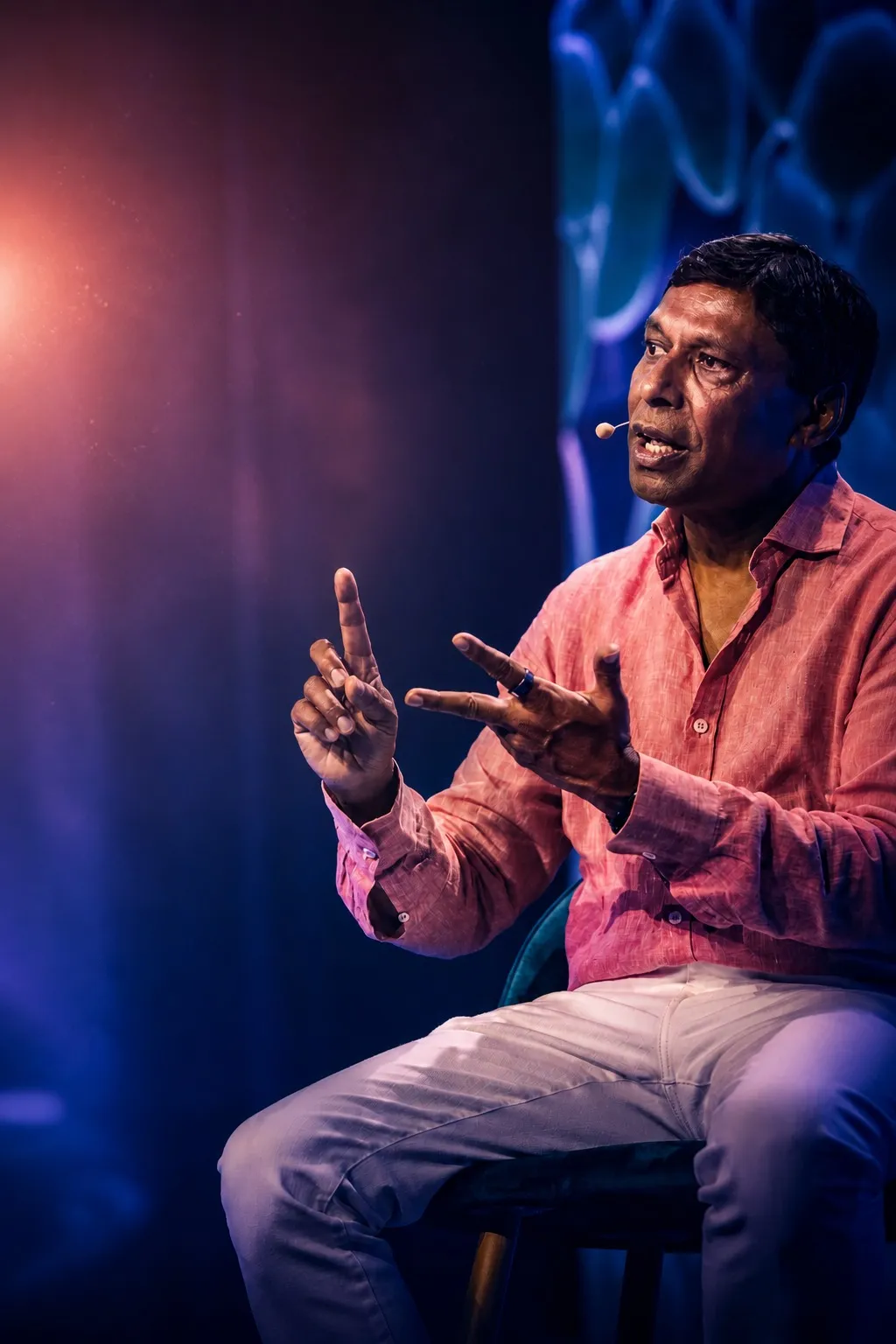
Success As Service, Not Accumulation
Jain returned repeatedly to the same proposition: that real success should be measured not by wealth, but by usefulness.
“When you find something that actually changes the lives of the people around you, even if you're an entrepreneur, ask yourself every day, what would you do to make someone's lives better?” he said.
It was a rebuke to the hollow metrics of modern striving, the follower counts, the valuations, the balances checked in private and performed in public. Money, in Jain’s telling, was neither goal nor proof of value. It was residue.
“Making money is simply a byproduct of doing things that improve people's life,” he said. “If you focus on it, you're never going to get it.”
For Jain, entrepreneurship was justified only when it widened the circle of human wellbeing. Build something that improves life at scale, he argued, and commercial success may follow. Chase money for its own sake, and both meaning and momentum slip away.
The Five-Part Architecture Of Health
Jain laid out a practical hierarchy for healthier living, a five-part model that began with nutrition and ended with purpose.
First came nutrition, which he described as foundational. But he dismissed the idea of a universal healthy diet, arguing instead that biology is deeply individual. The same food, he suggested, could nourish one person and inflame another. What mattered was not dietary ideology but biological feedback.
Second was stress. Chronic stress, Jain said, pushed the body into a fight-or-flight state that impaired digestion, weakened immunity and disrupted long-term health. The body, in survival mode, abandoned maintenance.
Third was exercise. He did not insist on punishing regimens or athletic extremes, only consistency: walking, resistance work, enough movement to support metabolic and systemic health.
Fourth was sleep, with an emphasis on quality rather than mythology. He argued that restorative sleep, especially sufficient REM and deep sleep, mattered more than rigid adherence to a universal number of hours.
And fifth, most important of all, was purpose.
This final category transformed the talk from a health seminar into something closer to a manifesto. Jain argued that those who lived with purpose lived longer and better, not simply because they were motivated, but because purpose animated the organism itself.
What Would You Do If You Already Had Everything?
Jain’s most compelling advice came not in the language of diagnostics, but in the language of soul-searching.
He urged the audience to imagine that they already possessed everything convention says they should want: wealth, stability, family, comfort. Then, stripped of scarcity and status anxiety, ask a harder question: what would still call you?
That, he suggested, was purpose.
“Find your joy, find your purpose, change your life, and you can change the world for the better,” he said.
It was an inversion of how success is typically pursued. Instead of grinding toward security in the hope that meaning might eventually emerge, Jain proposed beginning with meaning and letting the rest organize around it. Purpose was not a luxury for after success. It was the engine of it.
Self-Worth Comes From Creation
One of the strongest currents in Jain’s remarks was his insistence that identity should be built from what one creates, not what one owns.
“To me, your self worth comes from what you create, not what you own,” he said.
In an age shaped by acquisition and display, the line landed with force. Ownership, in Jain’s account, was passive. Creation was active. Possession could decorate a life, but only contribution could justify it.
He linked that idea directly to self-regard. Every day, he said, a person had to learn to “fall in love” with themselves, not in the language of vanity, but of inner steadiness. Without that foundation, the search for happiness became outsourced to other people, and with it, control over one’s emotional life.
The point was not indulgence. It was sovereignty.
The Private Language That Shapes A Life
Jain also dwelt on self-talk, on the quiet and often brutal script people run against themselves. The inner voice, he suggested, was not incidental. It was formative.
“Changing that communication that we have with ourselves changes who we are,” he said. “Our thought process changes our actions, our actions change our behavior, and our behavior changes the environment.”
This was one of the talk’s clearest insights. Longevity, in Jain’s framing, was not just a matter of biomarkers and interventions, but of narrative. The stories people told themselves about their worth, agency and mission eventually became behavior. Behavior became environment. Environment became fate.
Health Span, Not Just Life Span
The broader argument was that people should aim not merely to extend life, but to expand health span, the number of years lived with vitality, usefulness and clarity.
That distinction mattered. A longer life burdened by chronic disease was no triumph. The real prize was to remain capable: able to think, build, love, contribute and pursue one’s deepest commitments.
In that sense, Jain’s appearance at Biohacker Summit was not simply a pitch for optimization. It was a plea for alignment. Better health was valuable because it gave people more time and strength to do work that mattered beyond themselves.
A Call To Live For Something Larger
By the close of the session, Jain had moved far beyond the language of anti-aging. His message was less about escaping death than about refusing triviality.
He asked the audience to look inward, identify what they would be willing to sacrifice for, and then live in service of that vision with discipline and conviction. The challenge was not to become richer, younger-looking or more admired. It was to become more useful.
That was the real youth formula he offered in Helsinki: nurture the body, master the mind, and spend your life in contribution. Not because it looked good, not because it sold, but because a life directed toward others was, in the end, the only one that truly endured.
Frequently asked questions
What did Naveen Jain call the real longevity hack?
Purpose rather than profit. Beneath the futurist framing and the microbiome evangelism, the founder and chief executive of Viome argued that a longer life means little unless it is directed toward making other lives better.
What is his five-part architecture of health?
A hierarchy beginning with nutrition and ending with purpose. Jain dismissed the idea of a universal healthy diet, arguing that biology is deeply individual and that the same food can nourish one person and inflame another. What matters is biological feedback rather than dietary ideology.
What question did he ask the audience?
To imagine they already possessed everything convention says they should want, then ask what would still call them. He paired it with his view that self-worth comes from what you create, not what you own.
About the event
This recap is part of the Biohacker Summit 2024 Helsinki series, recorded in Helsinki on 2 and 3 July 2024. Read the summary of the whole event or join the next edition, HOLOLIFE Summit 2026 Amsterdam, on 14 and 15 November 2026.
In this story
Comments
Loading comments…