Biohacker Summit 2024 Helsinki
Biohack Your Life With Tantra
By Teemu Arina · · Updated
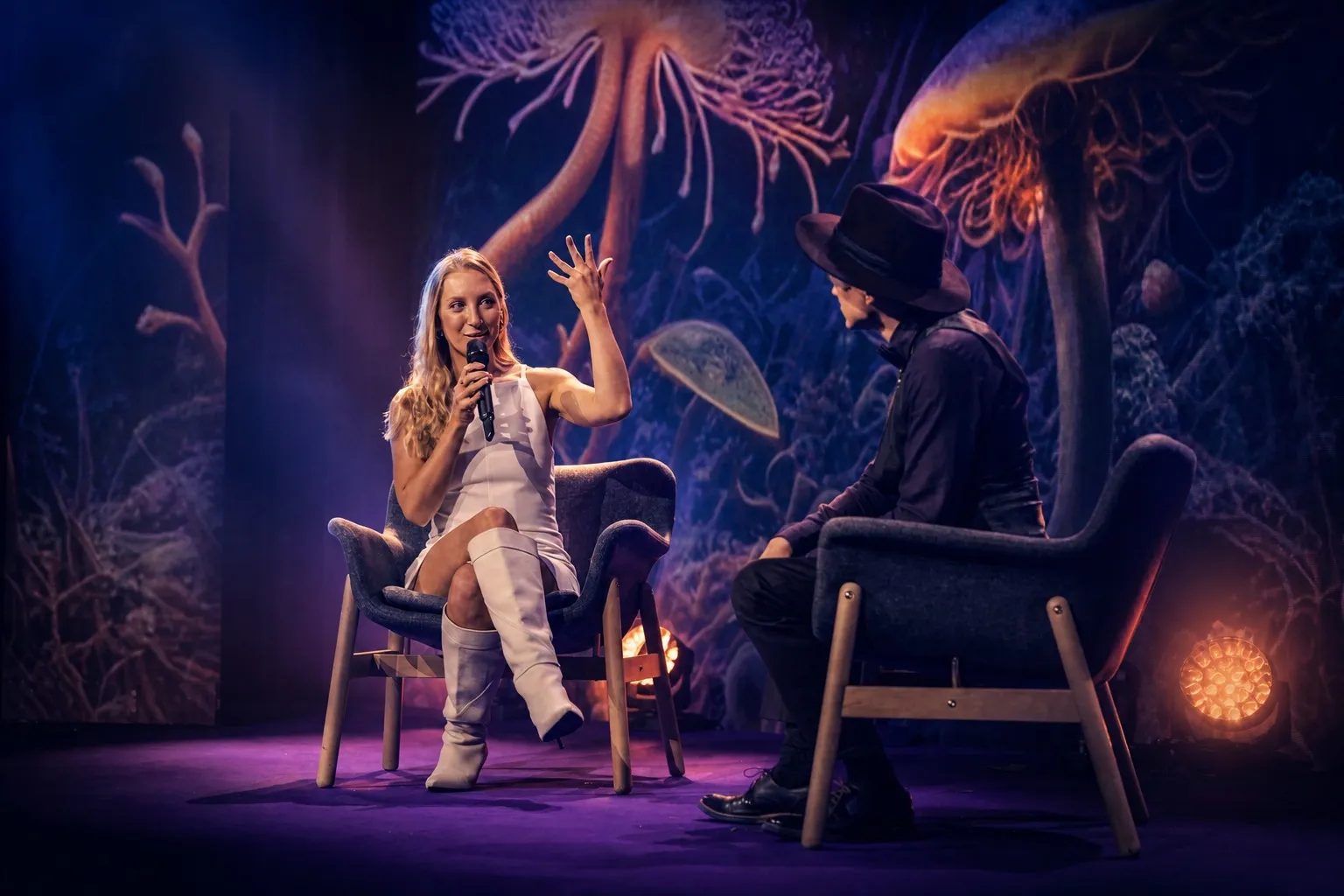
Nadine Lee Brought A Sacred, Somatic Challenge To The Biohacker Playbook
At the Biohacker Summit in Helsinki, Finland, on Wednesday, 3 July 2024, Nadine Lee stood before an audience more accustomed to glucose monitors, cold plunges and longevity stacks, and offered a provocation of a different kind. Biohacking, she suggested, could not stop at metrics, supplements or performance. If people wanted to transform their lives at the deepest level, they would have to descend into the body, into memory, into sexuality, into pain, and perhaps into the oldest frontier of all: the self.
Lee, a teacher of the feminine tantric arts and founder of Tantric Alchemy, used her talk, Biohack Your Life With Tantra, to redraw the boundaries of tantra itself. In popular culture, the word has been flattened into an erotic shorthand. In Lee’s telling, it was something far larger, older and more unsettling.
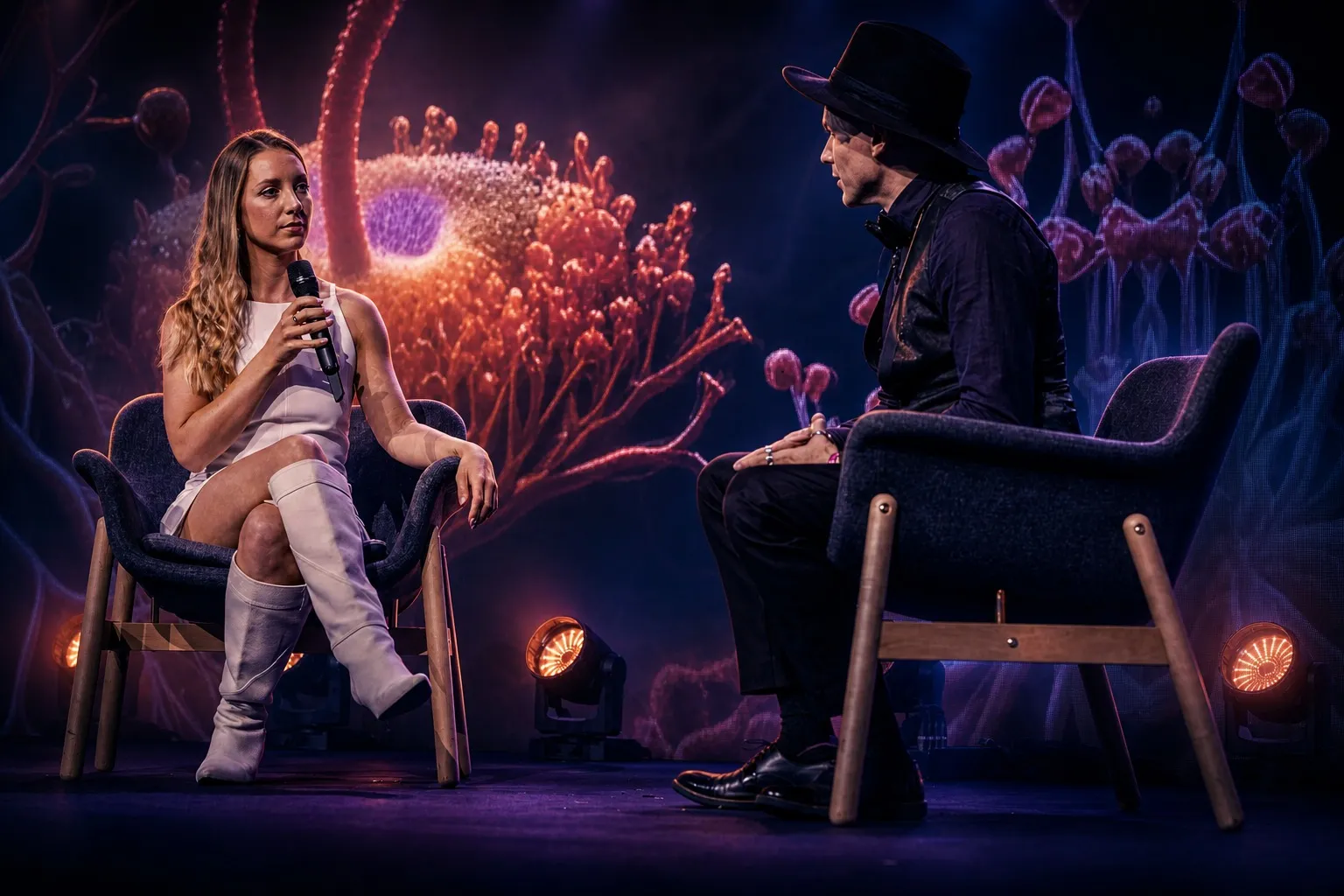
“Tantra is an ancient science that really encompasses all aspects of our existence, from our primal nature all the way up to our divinity,” she said.
That sentence set the tone for a presentation that tried to reclaim tantra from cliché and place it instead in a lineage of healing, embodiment and spiritual integration.
More Than Sex, Less Than Fantasy
Lee’s central argument was that tantra had been misunderstood by the modern west, where it is often conflated with sexual technique or exoticised intimacy. What many people now recognise as tantra, she said, is more accurately neo-tantra, a modern adaptation that foregrounds sexuality far more than classical traditions did.
In classical tantra, she argued, the work began not with a partner but with the self. The body was not an accessory to enlightenment, nor a shortcut to pleasure, but the site of purification. Before transcendence, there was excavation.
This distinction mattered because Lee’s wider project was to move tantra away from spectacle and back toward discipline. In an age that monetises desire and packages healing into digestible lifestyle content, she insisted on a more demanding premise: the body keeps score, and no spiritual practice worthy of the name can bypass that fact.
The Blocked Body And The Promise Of Kundalini
The architecture of Lee’s talk rested on a familiar tantric map of energy centres, but she framed it in language that was accessible even to a crowd less versed in spiritual terminology. The aim of tantra, she said, was to awaken Kundalini, a life force rooted at the base of the body and capable of moving upward through the system.
“The whole goal is to awaken this force within us so it can move through our entire body and open us to our highest potential,” Lee said.
Yet she suggested that this ascent was frequently interrupted. The blockage, for many, occurs in the sacral centre, the region associated with sexuality, creativity and emotional fluidity. There, personal trauma met cultural confusion. Governments, religions and media, she argued, had each played their part in distorting human sexuality, whether through repression, control or commodification.
Her diagnosis was not merely moral but somatic. Sexuality, in this account, was not just a subject of debate or shame. It was a living current in the body, one that could be constricted, redirected or wounded.
Where Trauma Lives
For Lee, tantra began with purification, and purification meant feeling.
“When we take that journey into our physical body, we have to feel the unresolved traumas,” she said.
This was perhaps the most grounded part of the presentation, and also the most arresting. Lee described trauma not as an abstract psychological event but as emotional residue held in tissue, organs and nervous system. The modern person, she implied, lives largely from the neck up, buffered by cognition and cut off from sensation. Tantra, by contrast, demanded descent into the soma.
She spoke of “emotional debris” clogging the body’s central channel, preventing energy from moving freely. Whether the wounds were severe or subtle, sexual or relational, the challenge was the same. Thinking alone would not clear them. The body had to be involved.
This framing placed tantra unexpectedly close to contemporary trauma discourse, with its emphasis on embodiment, stored stress and somatic release. But Lee’s language also reached beyond therapeutic convention. She connected sexual healing not only to wellbeing, but to consciousness itself.
Partnership As Acceleration
If solitude could reveal the self, Lee argued, partnership could expose it.
“In the tantric realm, partnership is the fast track to your evolution,” she said.
The line landed because it captured something many in the room likely recognised from their own lives: the fantasy of personal mastery often survives only until intimacy begins. Alone, one may feel calm, balanced, even healed. In relationship, dormant patterns ignite.
Lee linked these eruptions to attachment wounds, sexual imprinting and the charged force of relational energy. Desire, in her framing, was not only pleasurable. It was catalytic. It illuminated the places in us still organised by fear, avoidance, abandonment or control.
Her answer was not withdrawal but maturation. Women, she said, benefit from cultivating an inner masculine quality of presence, boundaries and clarity. Men, in turn, benefit from integrating inner feminine capacities such as emotional receptivity and vulnerability. Mature masculinity and mature femininity were not caricatures of strength and softness, but integrated states capable of intimacy without collapse.
The Shadow In The Room
Lee also drew on archetypal and Jungian language, particularly the idea of the shadow: the parts of the self rejected, buried or split off in response to shame. For women, this might include sensuality, erotic power, anger or dominance. For men, it might be grief, softness or emotional need.
Her method, as she described it, involved helping people re-encounter these exiled parts through embodiment and conscious exploration. What people judge in others, she suggested, often points to what remains unclaimed in themselves.
There was a sharp social critique inside this framework. Lee described contemporary culture as being shaped by immature expressions of both masculine and feminine energies: domination, greed and conquest on one side; victimhood, self-erasure and an obsessive pursuit of youth on the other. What tantra offered, she argued, was not merely individual healing, but a route toward relational and cultural repair.
Making The Mundane Sacred
For all its language of energy and transcendence, Lee’s closing vision was disarmingly practical. Tantra, she said, was not about escaping the human experience but sanctifying it.
“Everything becomes sacred, so the mundane becomes sacred,” she said.
That was the quiet revolution at the heart of her talk. Sexuality was not presented as indulgence, nor as scandal, nor even simply as healing, but as a portal. Not the only portal, but one of the most potent. Through it, she argued, people might encounter not just pleasure but reverence, not just release but insight, not just another self-improvement protocol but a new relationship to being alive.
At the Biohacker Summit, where optimisation is often spoken of in terms of sharper cognition, stronger metabolism and longer life, Nadine Lee proposed a harder question. What if the most consequential upgrade was not external at all? What if the real hack was to stop fleeing the body and learn, at last, to inhabit it?
In Helsinki, that idea did not arrive as a slogan. It arrived as a challenge.
Frequently asked questions
How is classical tantra different from neo-tantra?
Nadine Lee argued that what the modern west recognises as tantra is more accurately neo-tantra, a modern adaptation that foregrounds sexuality far more than classical traditions did. In classical tantra, she said, the work began not with a partner but with the self.
What is the goal of tantric practice?
To awaken Kundalini, a life force rooted at the base of the body and capable of moving upward through the system. The whole goal, Lee said, is to awaken that force so it can move through the entire body, which requires purification first.
What role does trauma play?
A central one. For Lee, purification means feeling: when we take that journey into our physical body, she said, we have to feel the unresolved traumas. She also drew on Jungian language about the shadow, the parts of the self rejected or buried in response to shame.
About the event
This recap is part of the Biohacker Summit 2024 Helsinki series, recorded in Helsinki on 2 and 3 July 2024. Read the summary of the whole event or join the next edition, HOLOLIFE Summit 2026 Amsterdam, on 14 and 15 November 2026.
In this story
Comments
Loading comments…