Biohacker Summit 2024 Helsinki
Beyond The Hype: Why One Biohacker’s “Healthy” Life Was Aging Him Faster
By Teemu Arina · · Updated

At The Biohacker Summit In Helsinki, Marko Tarnaj Offered A Bracing Corrective To Wellness Certainty: What Looks Healthy On The Surface Can Conceal A Body Under Quiet Siege
On 3 July 2024, at the Biohacker Summit in Helsinki, Finland, Marko Tarnaj stepped on stage with the kind of provocation that immediately unsettled a room full of optimization enthusiasts. He looked, by any ordinary standard, like a healthy young man. Yet, as Tarnaj told the audience, when he was 28, a GlycanAge test informed him that his biological age was 46.
The revelation, he said, landed like a personal betrayal. He had been the one going to the gym, eating well, avoiding late nights, doing the things modern health culture tells us should count for something. But biology, in his telling, had rendered a harsher verdict. Beneath the appearance of fitness lay chronic inflammation, the low-grade internal strain increasingly associated with accelerated aging and disease.
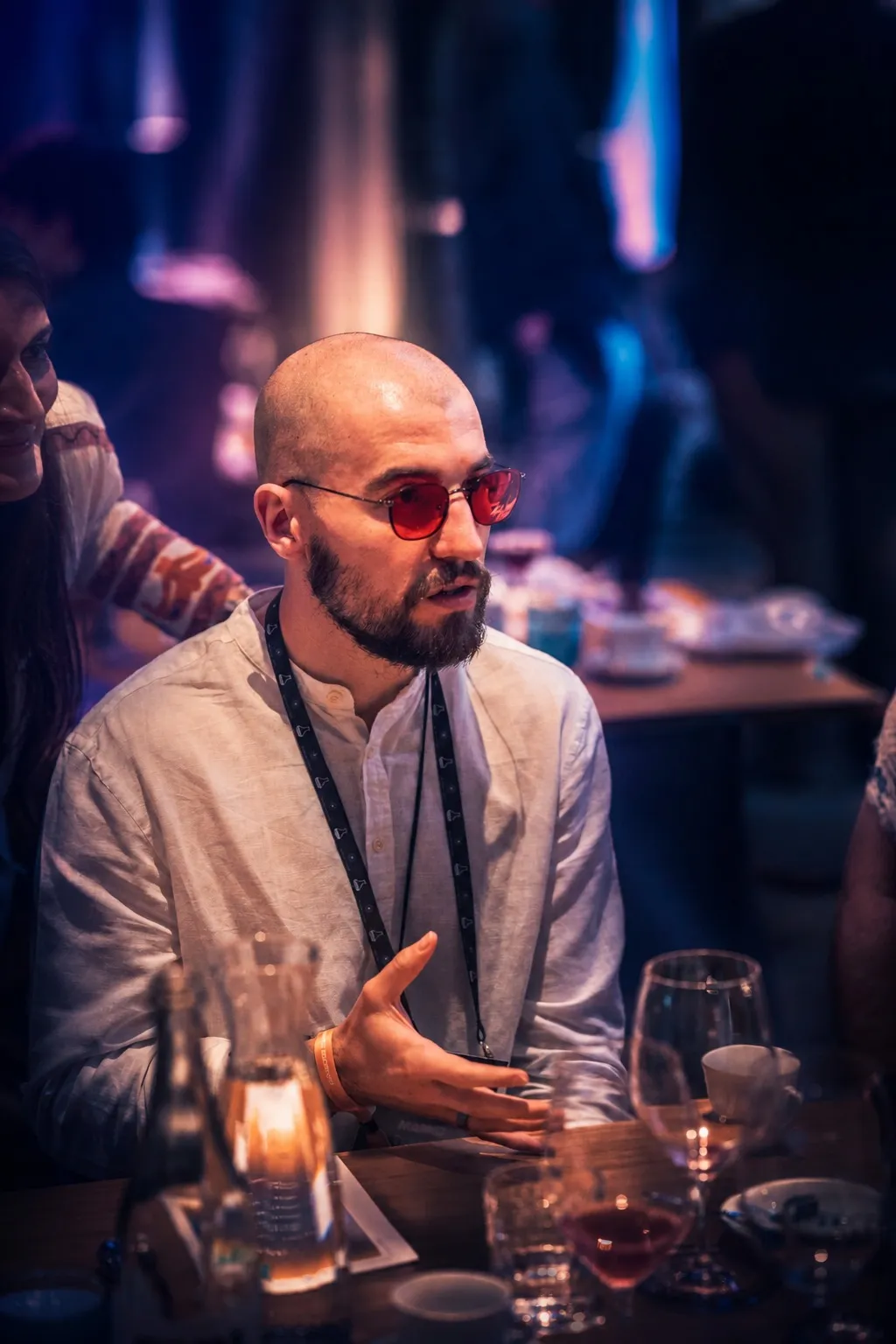
That shock became the engine of Tarnaj’s presentation, titled Beyond the Hype: Personalizing Your Path to Longevity. It was less a triumphalist biohacking sermon than a cautionary dispatch from the frontier of self-experimentation, where certainty is scarce, trends are seductive, and the body refuses to behave like a universal formula.
The Hidden Arithmetic Of Inflammation
Tarnaj, a biohacker and Head of Product at GlycanAge, framed chronic inflammation as one of the most important and least visible drivers of aging. Acute inflammation, he explained, is useful. It helps the body fight infection, clear damage, and recover from insult. But when inflammation lingers, when it becomes chronic, it can quietly reshape health over years, contributing to illness and hastening decline.
This, in essence, was the lesson his test had forced upon him. GlycanAge measures glycans, complex sugars that sit on cells and proteins and play a crucial role in how the body functions, including how the immune system behaves. In antibodies, Tarnaj said, certain glycan patterns are associated with more inflammatory states, others with less. His own results suggested that his immune system had drifted into the kind of profile more often associated with someone far older.
For a 31-year-old speaking to an audience drawn to the promises of longevity science, the point was strikingly simple: health is not always what it seems.
The Wellness Industry Loves Universals. The Body Does Not.
What made Tarnaj’s talk compelling was not merely the shock value of a bad test result. It was his willingness to dismantle the easy mythology that followed from it. If the problem was inflammation, then surely the solution was to adopt one of the wellness world’s favorite prescriptions. Fast more. Train harder. Follow the cleanest diet. Strip life to discipline.
Instead, Tarnaj described a more frustrating reality. He tried intermittent fasting after absorbing the now familiar promises circulating across social media. He expected metabolic renewal, lower inflammation, perhaps even a cleaner biological profile. What he got, he said, was six months of feeling shaky every morning, with no meaningful improvement in his inflammation markers.
The line that cut through the room was one of the clearest of the session: “Just because someone else, just because it works for someone else, it really doesn't mean that it's going to work for you.”
That may sound obvious, but it remains quietly radical in an age of algorithmic health advice, where interventions are marketed as if all bodies were merely waiting to be activated by the same routine.
Weight Loss Helped Broadly. Diets Did Not Behave So Neatly.
Tarnaj then turned to the evidence that most changed his thinking. Research he cited suggested that weight loss consistently reduced chronic inflammation in people carrying excess weight. That, at least, appeared to hold across the board. But once researchers looked beyond weight loss and into which diet might work best to further improve inflammation, the tidy narrative broke apart.
Different people responded differently. One dietary approach improved markers in some and worsened them in others. There was no universal miracle hiding behind the labels, no single menu that could be elevated above human variation.
So Tarnaj abandoned the fantasy of dramatic conversion. Rather than veering into dietary absolutism, he opted for modest adjustments: more protein, more fiber, less processed food. It was a quieter message than audiences often expect at gatherings devoted to human enhancement, but perhaps a more durable one.
Exercise Was Essential, But Recovery Was The Missing Doctrine
If Tarnaj’s account challenged the cult of fasting, it also took aim at another article of modern faith: that more exercise is almost always better.
The evidence he discussed suggested a more nuanced picture. People newly beginning to exercise could show higher inflammation at first, a reminder that training is itself a stressor, a deliberately pro-inflammatory act that asks the body to adapt. Those who had trained consistently for months appeared to have the best outcomes. But professional athletes, he noted, showed some of the highest inflammation levels of all.
His interpretation was not anti-exercise. Quite the opposite. It was anti-overreach.
Recovery, Tarnaj said during the question and answer session, mattered as much as exertion. The issue was not merely how hard one trained, but whether the body was given enough time to come back down from the inflammatory state exercise creates. Stress can sharpen and strengthen. Unrelenting stress corrodes.
For a culture that often treats exhaustion as evidence of seriousness, it was a useful rebuke.
A Personal Experiment, Not A Universal Blueprint
Tarnaj’s own story did not end in despair. After removing negative habits and tightening his routine, including cutting out alcohol for a period, he said he reduced his biological age by 10 years within six months. The improvement was substantial, but he did not present it as a reproducible protocol. Instead, he presented it as proof that careful intervention can matter, and that the interventions worth making are often those verified against the individual body rather than inherited from online consensus.
Again and again, he returned to measurement. Blood work, glucose responses, sleep tracking, vitamins, hormones, inflammation markers. Not because any single test can explain a human life, but because without feedback, health becomes guesswork dressed up as conviction.
“The human body is simply too complex to be measured with a single test,” he said, while also urging people to start somewhere.
Patience, Not Hype, Was The Real Longevity Strategy
There was something almost unfashionable in Tarnaj’s central plea. He did not promise a hack so much as a temperament: curiosity, discipline, humility, patience. At a summit built around the future of human performance, he asked the audience to resist the seductions of immediacy.
“Be patient with yourself,” he said. “And remember, it takes some time to experiment with yourself.”
He underscored the point with a line he borrowed from Picasso: “It takes a long time to become young, so be patient.”
It was the kind of quote that could have sounded trite in another setting. Here, it landed differently. Tarnaj had already demonstrated how easy it is to misread the body, how tempting it is to confuse effort with efficacy, and how often improvement depends less on adopting the latest trend than on learning, slowly, what one’s own physiology will tolerate and reward.
Adding Life To Years
What lingered after the talk was not a product pitch or a protocol, but a gentler and more demanding proposition. Longevity, Tarnaj suggested at the Biohacker Summit, was not about blindly collecting habits that look virtuous from the outside. It was about paying close attention to the body’s signals, measuring what matters, abandoning what does not work, and accepting that another person’s success may tell you very little about your own.
“This journey is about taking control of your lifestyle choices and understanding that you have the power in your own hands,” he said.
And with that, he closed on the line that best captured the spirit of the session: “Let's not just add years to our lives, but let's also add life to our years.”
For a field so often intoxicated by grand promises, it was a refreshingly human conclusion.
Frequently asked questions
What did Marko Tarnaj's test result show?
At 28, a GlycanAge test told him his biological age was 46. Tarnaj, a biohacker and head of product at GlycanAge, described the result as landing like a personal betrayal, since by any ordinary standard he looked like a healthy young man.
Why does chronic inflammation matter so much?
Tarnaj distinguished acute inflammation, which helps the body fight infection and recover from damage, from chronic inflammation, which lingers and can quietly reshape health over years, contributing to illness and hastening decline. That, in his account, was the hidden arithmetic behind his own result.
Do the standard wellness prescriptions fix it?
Not reliably. Tarnaj said weight loss consistently reduced chronic inflammation in people carrying excess weight, but that once researchers compared specific diets the tidy narrative broke apart, with different people responding differently. He noted professional athletes showed some of the highest inflammation levels.
About the event
This recap is part of the Biohacker Summit 2024 Helsinki series, recorded in Helsinki on 2 and 3 July 2024. Read the summary of the whole event or join the next edition, HOLOLIFE Summit 2026 Amsterdam, on 14 and 15 November 2026.
In this story


Comments
Loading comments…