Biohacker Summit 2024 Helsinki
Longevity Intelligence In One Line
By Teemu Arina · · Updated
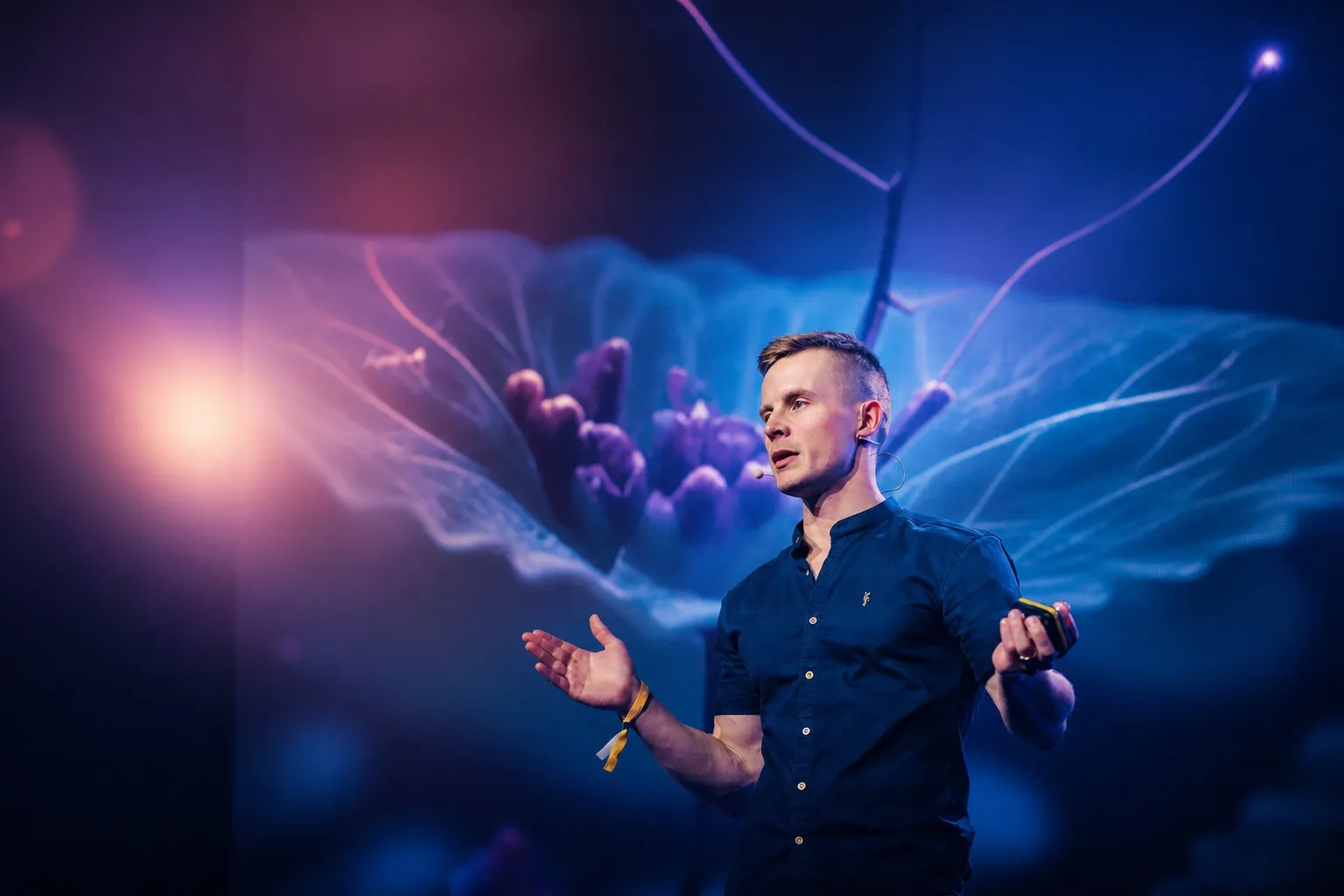
At the Biohacker Summit in Helsinki, Siim Land argued that extending life was less about wealth or wishful thinking and more about building the practical intelligence to delay disease, protect function and keep the body biologically younger for longer.
A New Vocabulary For A Longer Life
On Wednesday, 3 July 2024, at the Biohacker Summit in Helsinki, Finland, the author and anthropologist Siim Land offered a brisk but pointed framework for thinking about aging. His presentation, Longevity Intelligence: Slow Down Aging & Extend Healthspan, set out to answer a question that has become central to modern health culture: how, exactly, does a person improve the odds of living longer without spending those added years in decline?
Land’s answer was deceptively simple. “Money isn't going to extend your lifespan directly. What you need is longevity intelligence.”
By that he meant a working knowledge of the forces that shape aging: genetics, lifestyle, disease risk, biological age, biomarkers and what he called the “longevity horizon”, the long arc of health across decades.
Disease, Not Age Alone, Was The Real Foe
If there was a moral core to Land’s talk, it was this: longevity is often won by postponement. “Postponing diseases is the key to extending your actual lifespan,” he said.
He mapped the familiar killers of industrial societies with clinical clarity: heart disease, cancer, neurodegeneration and diabetes. These, he argued, were not random events falling from the sky, but conditions that often built slowly through years of unmanaged risk.
The logic was unsparing. To reach old age, one must avoid dying younger. “If you want to reach the age of 90, you need to make sure that you don't get some form of Alzheimer's or neurodegeneration in your eighties.”
The point was not merely to add years, but to widen the stretch of life lived without major disability. Centenarians, he noted, tend not to escape disease altogether. They simply encounter it later.
The Body Keeps A Long Memory
Land returned repeatedly to the idea that the body records choices over time. Cholesterol, blood sugar, inflammation, blood pressure, body composition and cardiovascular fitness all leave traces. Aging, in this view, is not only chronological. It is cumulative.
That was where his concept of the longevity horizon became especially potent. Muscle mass declines. VO2 max falls. Visceral fat rises. Blood sugar tends to creep upward. The task is not to freeze time, but to slow the slide.
He framed success as preserving youthful function deep into middle and later life. A 50-year-old with the metabolic and fitness profile of someone far younger, he suggested, was doing more than looking healthy on paper. That person was likely reducing the risk of the chronic illnesses that so often narrow old age into frailty.
The Everyday Levers Still Mattered Most
For all the futuristic language surrounding longevity, Land’s recommendations were strikingly grounded. Sleep well. Exercise for life. Maintain a healthy weight. Control cholesterol. Manage blood sugar and blood pressure. Eat well. Quit tobacco.
There was little mystery in the list, only the stern reminder that ordinary habits, sustained across decades, remained the strongest defence against extraordinary suffering.
He also stressed the value of cognitive reserve, the brain’s resilience against aging and disease. Reading, learning, problem-solving, mentally demanding work and social engagement all mattered. Protecting the brain, in his telling, was not a separate project from protecting the heart. The systems were intertwined.
Genetics Loaded The Dice, But Did Not Write The Ending
Land also brought genetics into the discussion without surrendering to fatalism. Genes such as APOE, associated with Alzheimer’s risk, and LPA, linked to cardiovascular risk, can shape vulnerability. Knowing them, he said, helps people make sharper decisions.
A poor genetic hand did not guarantee collapse. But ignorance, he implied, left people exposed twice over: first to inherited risk, and then to the preventable habits that amplify it.
Family history, too, became part of the ledger. Patterns of early heart disease, diabetes or neurodegeneration in close relatives were not destiny, but warning signals.
The Numbers That Quietly Predict The Future
One of the sharpest parts of the presentation came in Land’s distinction between normal and optimal. Lab reference ranges, he warned, often reflect what is common in the population, not what is ideal for longevity.
That meant many people could be told they were “fine” while still carrying avoidable risk. Fasting glucose, triglycerides, CRP and blood pressure were among the markers he urged people to track regularly. “Maintaining normal and even optimal biomarkers for decades reduces the risk of diseases a lot,” he said.
The emphasis was not on obsessive testing for its own sake, but on informed vigilance. Chronic disease, he reminded the audience, usually develops over decades. That is precisely why early, repeated measurement matters.
A Harder, More Useful Kind Of Hope
The force of Land’s talk lay in its refusal of easy consolation. “Life is equal to time,” he said, a line that sounded less like a slogan than an accounting principle. If that was true, then the real work of longevity was not fantasy, but stewardship.
There was, in his presentation, a democratic edge. One did not need infinite money or miracle technology to begin. One needed literacy in risk, discipline in habit and the willingness to pay attention before illness announced itself catastrophically.
At the Biohacker Summit’s tenth anniversary gathering, Siim Land presented longevity not as a luxury product but as a practice of foresight. The message was both sobering and oddly liberating: aging may be inevitable, but much of the suffering associated with it could still be delayed, diminished or, in some cases, denied.
Frequently asked questions
What does Siim Land mean by longevity intelligence?
The practical intelligence to delay disease, protect function and keep the body biologically younger for longer. The author and anthropologist framed longevity as something built rather than bought, and postponing diseases as the key to extending actual lifespan.
Which conditions is he most concerned with?
The familiar killers of industrial societies: heart disease, cancer, neurodegeneration and diabetes. Land argued these are not random events but conditions that build slowly over years, which is what makes early and sustained intervention meaningful.
What are the everyday levers he recommends?
Sleep well, exercise for life, maintain a healthy weight, control cholesterol, manage blood sugar and blood pressure, eat well and quit tobacco. There is little mystery in the list, only the reminder that ordinary habits sustained across decades remain the strongest determinants.
About the event
This recap is part of the Biohacker Summit 2024 Helsinki series, recorded in Helsinki on 2 and 3 July 2024. Read the summary of the whole event or join the next edition, HOLOLIFE Summit 2026 Amsterdam, on 14 and 15 November 2026.
In this story
Comments
Loading comments…